Attractions and Places To See around Cotton - Top 20
Best attractions and places to see around Cotton, Suffolk, England, include a variety of historical sites and religious buildings. This region offers insights into medieval history and local heritage. Visitors can explore ancient churches, castles, and other significant structures that reflect the area's past. The area provides opportunities to discover historical architecture and local culture.
Best attractions and places to see around Cotton
- The most popular attractions is The Vicarage, a man-made monument thought to date from the 1450s.…
Last updated: June 23, 2026
St Mary's Church, Woolpit
Highlight • Historical Site
The church of The Blessed Virgin Mary in Woolpit is one of the great medieval churches of Suffolk, a county blessed with some of the …
Tip by

Eye Castle
Highlight • Castle
Tip by

Sign up now to discover places like this
Get recommendations on the best single tracks, peaks, & plenty of other exciting outdoor places.
Sign up for free
Woolpit Jubilee Pump
Highlight • Monument
Tip by
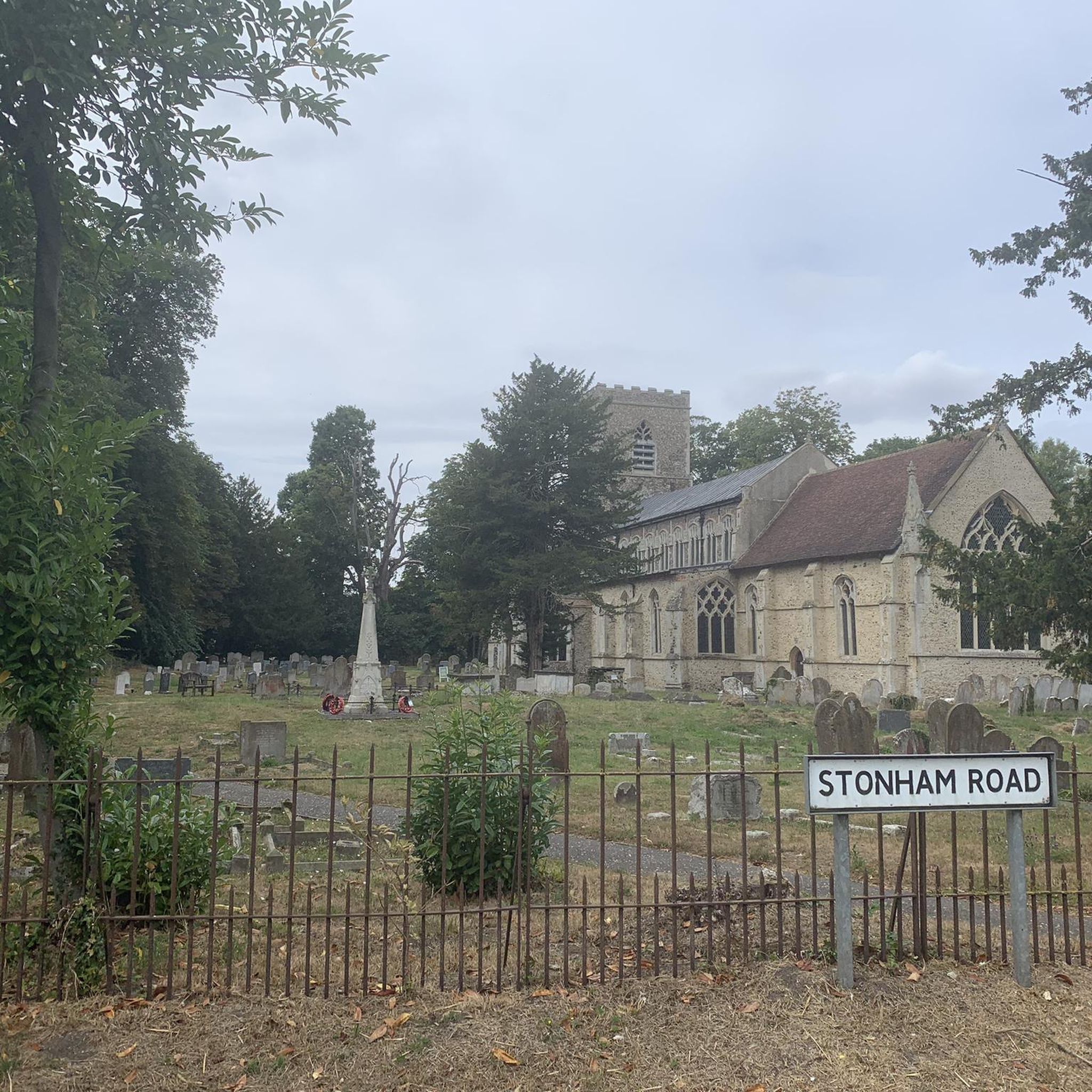
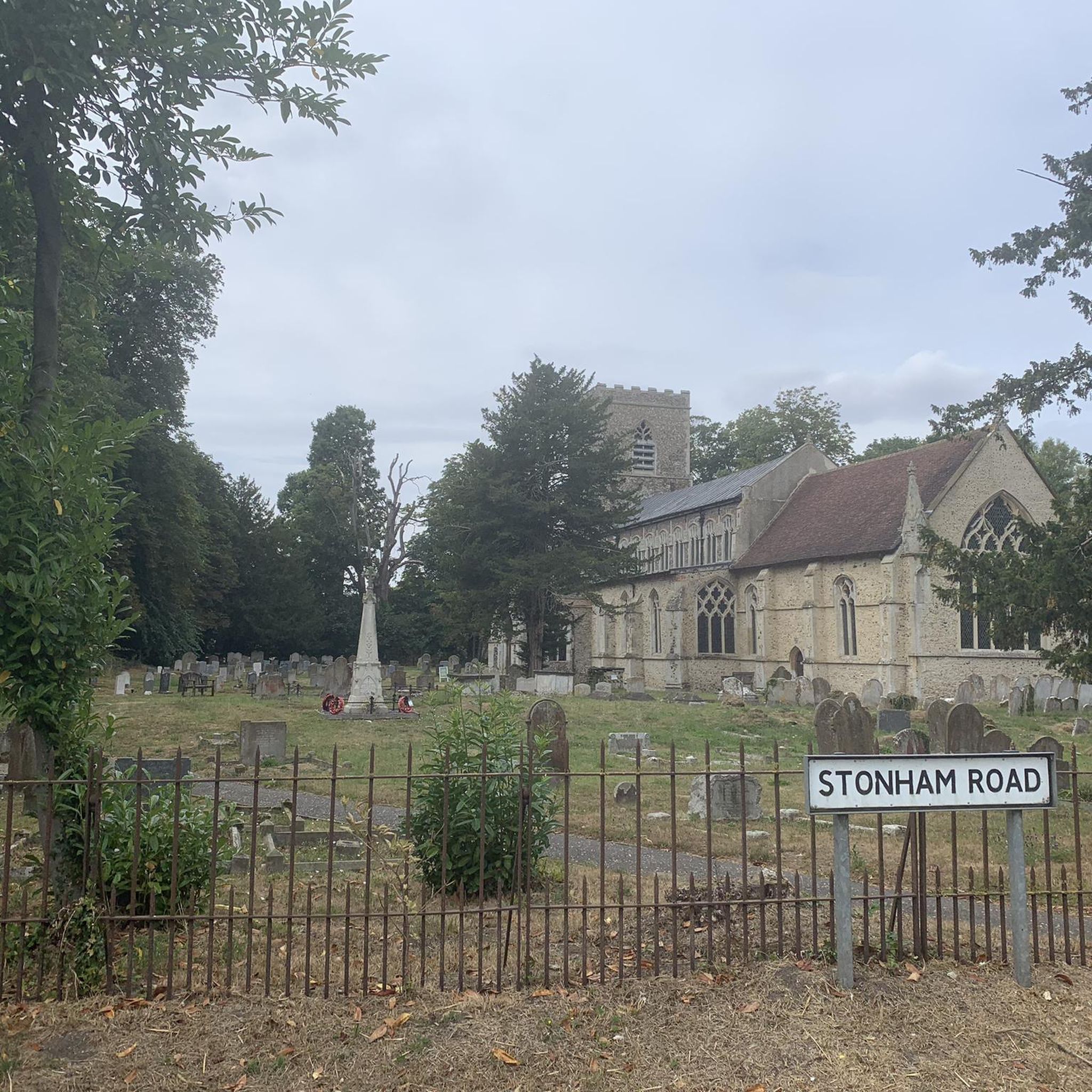
St. Mary's Church, Gislingham
Highlight • Religious Site
Tip by

Gislingham Road, Finningham
Highlight • Settlement
Tip by

Sign up for free to discover even more attractions around Cotton.
Sign up for free
Already have an account?
Start today with a free account
Your next adventure awaits.
Login or Signup


Tips from the Community

For a view of the castle turn up Castle Hill lane off the main village road to reach the car park. The castle itself is best accessed without road cleats on.
0
0

Eye Castle is one of the few surviving motte-and-bailey castles from the early Norman period. Built shortly after the Norman conquest of England in 1066, the castle was sacked and largely destroyed in 1265. Nowadays, the castle offers a more tranquil and interesting place to visit. The castle site has recently been restored, opening up new areas to explore and providing a viewing platform offering wonderful views of the church, Eye and surrounding countryside for miles around. The castle is open daily from Easter until the end of October. During the winter it is open on weekends only, subject to weather conditions. There is no entry fee. Accessible through a gate in Castle Hill, off Castle Street.
1
0
Just Another Suffolk Village. Nice enough but nothing special.
0
0
Pleasant but unexceptional Suffolk village. Just spin your wheels through it.
1
0

15th century double-hammerbeam angel roof The church of The Blessed Virgin Mary in Woolpit is one of the great medieval churches of Suffolk, a county blessed with some of the finest country churches in England. Like so many other Suffolk villages Woolpit owes its superb church to the wealth of the medieval wool trade, but there was a church on this spot centuries before Suffolk wool merchants gained their wealth. The earliest record of a church at Woolpit comes from AD 1005 when the Earl of the East Angles gave the church and manor here to the Shrine of St Edmund at Beodricsworth (Bury St Edmunds). The church remained the property of the Abbey until the Dissolution of the Monasteries. The Woolpit church originally sent 10 marks worth of tithes to support the monks of Bury, but at some point in the medieval period this sum claimed by the crown. The monks of St Edmundsbury Abbey were furious, and determined to seek reparation. Two monks disguised themselves as Scottish pilgrims and without permission left the abbey and made the long journey to Rome, where they sought and obtained a Papal charter affirming their right to the money. They were attacked and robbed on their return journey, but one of the monks hid the charter in his mug, and so preserved it. The pair's belongings had been stolen, so they had no choice but to beg their way back to the abbey. The Papal charter did the trick, however, and Woolpit's tithe once more went to help maintain sick monks. Shortly before 1087, a new church was built at the behest of Abbot Baldwin. The only remaining feature of this Norman building is the priest's door in the south wall of the chancel. The double-hammerbeam angel roof OUR LADY OF WOOLPIT Woolpit became a destination for pilgrims during the medieval period, when it held a richly decorated statue of Our Lady in its own chapel. No trace of this chapel now survives but it was probably on the north side of the chancel, where the vestry now stands. Alternatively, it may have stood at the east end of the south aisle. Pilgrims began arriving at least as early as 1211 when the Bishop of Norwich ordered that their offerings be given to St Edmundsbury Abbey. The Shrine of Our Lady of Woolpit became extremely popular during the 15th and 16th centuries. Henry VI visited twice, and Queen Elizabeth of York, wife of Henry VII, ordered that a pilgrimage be made on her behalf in 1501. In 1538 Henry VIII ordered that Catholic images be destroyed, and it seems likely that the statue was pulled down at that time. in 1551 the Court of Augmentation ordered that the chapel itself be pulled down and the material sold. A curious scene took place at Woolpit during the tumult of the English Civil War. The incumbent rector was John Watson, and when he was ordered to accept the new Puritan style of worship he refused. He was removed from his living, and the Earl of Manchester sent armed men to enforce the order. The village split into two factions, and a furious melee broke out in the church. The rector was removed, and retired to Norfolk where he died shortly after. St Mary's is worth visiting for its superb double-hammerbeam roof, decorated with carved figures of angels. Iconoclast William Dowsing did his best to destroy the angels in 1644. His deputy found 80 'superstitious Pictures' some of which he destroyed and others he ordered to be taken down. Many of the angel's heads were defaced but these were sensitively restored in the 19th century. Other highlights include beautifully carved medieval bench ends decorated with a wide variety of carved figures. These figures probably survived because the Puritans considered them heraldic symbols rather than religious. Eye-catching figures include griffins and a very mournful looking dog. Another highlight is a finely crafted south porch dating to 1430-1455. Over the porch arch is a parvise, a small chamber possibly used for storing important documents. The porch roof is vaulted with exceptionally detailed lierne vaulting and decorated bosses. The eagle lectern is a rare early Tudor relic, made around 1520 and one of just 20 surviving examples made to accept a chained Bible. A local tradition suggests that Elizabeth I gave the lectern to the church, though there is no proof of this. The queen did visit nearby Haughley Park in 1600 and sent one of her knights to visit Woolpit on her behalf. It is certainly possible that he gave the parishioners money that was used to buy the lectern. The screen is 15th century, though the gates are Jacobean. The screen is painted and gilded and retains the medieval beam made to hold the rood, or crucifix. The base of the screen is painted with figures of saints including St Withburga, St Edmund, St Etheldreda, and St Felix. The face of St Felix is actually a portrait of Henry Page, the serving rector at the time of the Victorian restoration. Over the arch is a beautifully vaulted painted dedication board, decorated with figures of angels. The large east window is a beautiful example of Decorated Gothic style, with reassembled fragments of medieval glass in the upper lights. Each end of the chancel choir stalls has a bench end with an intricate figure of a Green Man. Set against the wall is a fascinating carving of a woodwose, a wild man of the woods figure found throughout East Anglia. Most of the building is Perpendicular Gothic, dating from the mid-15th century but the chancel and south aisle are 14th century. The tower and spire were added in the 1850s by architect Richard Phipson after the medieval originals were damaged by lightning. This is actually the third tower; the first was damaged in a thunderstorm in 1602 and the second was blown down in a hurricane in 1703.
1
0
A very imposing commemorative pump in the centre of the village of Woolpit, Suffolk, erected to mark the Jubilee of Queen Victoria. Each wooden pillar carries the carved wooden effigy of a renowned British queen, and the pump itself is capped by what seems to be a lion couchant - or maybe it's a dog couchant. The pump is in a boxed wooden housing, with a padlocked inspection door at the back, and the wrought iron handle with its system of levers, is chained. There's some decorative ironwork on the wooden housing, some of which has been lost, especially around the spout. The spout itself is made of lead. Around the top of the pump, each face in turn carries the words: "All noblest things are still the commonest"; "Every place has"; "Water light and air and"; God's abounding grace". The front face carries a carved crown and the inscription:A Well of Remembrance Victoria By the Grace of God Queen and Empress 1837 1897
1
0

Stunning church with wonderful carved wooden gargoyles and angels inside and beautiful graveyard outside
0
0

Finningham is a village and civil parish in the Mid Suffolk district of Suffolk in the East of England, located approximately 7.5 miles north of Stowmarket and 16 miles from the county town of Ipswich. In 2011 its population was 480.
0
0
Frequently Asked Questions
What historical sites can I explore around Cotton, Suffolk?
The region around Cotton is rich in history. You can visit Eye Castle, a rare surviving motte-and-bailey castle from the early Norman period, which has been restored and offers a viewing platform. Another significant site is St Mary's Church, Woolpit, known for its 15th-century double-hammerbeam angel roof and medieval bench ends. Don't miss The Vicarage, an impressive building thought to date from the 1450s with a timber frame and Georgian facade.
Are there any castles to visit near Cotton?
Yes, Eye Castle is a prominent historical site near Cotton. It's one of the few remaining motte-and-bailey castles from the early Norman period. The site has been restored, offering new areas to explore and a viewing platform with views of Eye and the surrounding countryside. It is generally open daily from Easter until the end of October, and on weekends only during winter, subject to weather conditions.
What religious buildings are notable in the Cotton area?
Two notable religious buildings include St Mary's Church, Woolpit, which is celebrated for its 15th-century double-hammerbeam angel roof and beautifully carved medieval bench ends. Also, St. Mary's Church, Gislingham is a pleasant historical church in a village dating back to at least the 9th century.
Are there family-friendly attractions around Cotton?
Yes, several attractions are suitable for families. St Mary's Church, Woolpit offers a fascinating glimpse into medieval history with its unique architecture and carvings. The Vicarage, an ancient timber-framed building, can also be an interesting stop for families exploring historical architecture.
What kind of outdoor activities can I do near Cotton?
The area around Cotton offers various outdoor activities. You can find numerous hiking, cycling, and mountain biking routes. For hiking, explore trails like 'The River Gripping, Combs & Badley loop from Stowmarket' or 'Mellis Common Nature Reserve – Mellis Common loop from Mellis'. Cyclists can enjoy routes such as 'Poppy Fields loop from Bacton' or 'Mellis Common loop from Gislingham'. For more details on these and other routes, visit the Hiking around Cotton, Cycling around Cotton, and MTB Trails around Cotton guide pages.
Are there accessible attractions for wheelchairs near Cotton?
Yes, the Woolpit Jubilee Pump is noted as wheelchair accessible. This imposing commemorative pump in the center of Woolpit village was erected to mark Queen Victoria's Jubilee and features carved effigies and decorative ironwork.
What do visitors enjoy most about the attractions around Cotton?
Visitors appreciate the rich historical context and architectural beauty of the area. Highlights like St Mary's Church, Woolpit are praised for their stunning carved wooden gargoyles and angels. Eye Castle is valued for its historical significance and the panoramic views from its viewing platform. The overall appeal lies in discovering medieval history and local heritage.
Can I find hiking trails near the attractions?
Absolutely. The region offers several hiking opportunities. For example, you can explore 'The River Gripping, Combs & Badley loop from Stowmarket' (11.2 km, moderate) or 'Mellis Common Nature Reserve – Mellis Common loop from Mellis' (10.6 km, moderate). These trails allow you to combine visits to historical sites with scenic walks. More hiking routes can be found on the Hiking around Cotton guide page.
Are there any unique man-made monuments to see?
Beyond the historical buildings, the Woolpit Jubilee Pump is a unique man-made monument. Erected for Queen Victoria's Jubilee, it features carved wooden effigies of British queens and decorative ironwork, making it a distinctive historical landmark in Woolpit village.
What is the best time to visit Eye Castle?
Eye Castle is open daily from Easter until the end of October. During the winter months, it is open on weekends only, and access may be subject to weather conditions. Visiting during the warmer months (Easter to October) will generally offer more consistent access and pleasant weather for exploring.
Where can I find information about cycling routes near Cotton?
For cycling enthusiasts, there are various routes available. Options include the 'Poppy Fields loop from Bacton' (20.7 km, easy) and the 'Mellis Common loop from Gislingham' (11.3 km, easy). These routes provide a great way to explore the countryside around Cotton. You can find more detailed information and additional routes on the Cycling around Cotton guide page.
What kind of views can I expect from attractions in the area?
From Eye Castle, you can enjoy wonderful views of the church, the town of Eye, and the surrounding countryside for miles around, thanks to its restored viewing platform. While other attractions are more focused on historical architecture, the castle provides a scenic vantage point.

Get inspired with the komoot mobile app


Explore more
Still not found the Highlight you’re looking for? See guides of the top attractions in other regions:
