The 8 Most Amazing Peaks around Wroxeter And Uppington
Best mountain peaks near Wroxeter and Uppington are found within the Shropshire Hills National Landscape, a region known for its diverse and picturesque terrain. While Wroxeter and Uppington are historically rich villages, the significant hills are a short distance away. This area features prominent hills that serve as natural landmarks and popular destinations for outdoor enthusiasts. The landscape offers a range of natural beauty, historical sites, and opportunities for outdoor activities.
Best mountain peaks around Wroxeter And Uppington
- The most…
Last updated: June 24, 2026
The Wrekin summit
Highlight • Summit
Tip by

The Wrekin Hillfort
Highlight • Viewpoint
Tip by

Sign up now to discover places like this
Get recommendations on the best single tracks, peaks, & plenty of other exciting outdoor places.
Sign up for free
Wellington Rotary Toposcope on the Wrekin
Highlight • Monument
Tip by

Needle's Eye, The Wrekin
Highlight • Summit
Tip by

The Ercall Bluebell Woods
Highlight • Natural Monument
Tip by
Sign up for free to discover even more peaks around Wroxeter And Uppington.
Sign up for free
Already have an account?
Start today with a free account
Your next adventure awaits.
Login or Signup
Tips from the Community


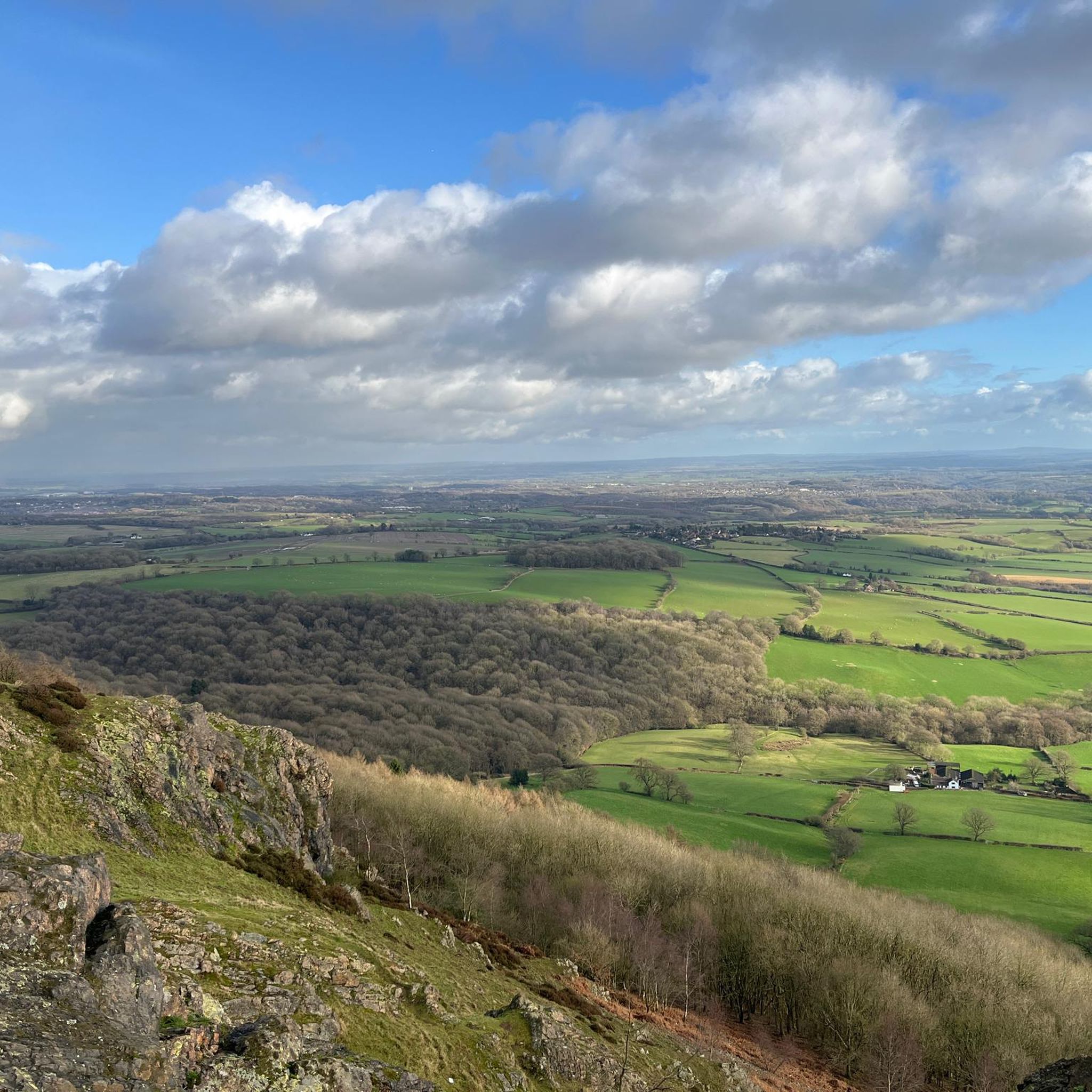
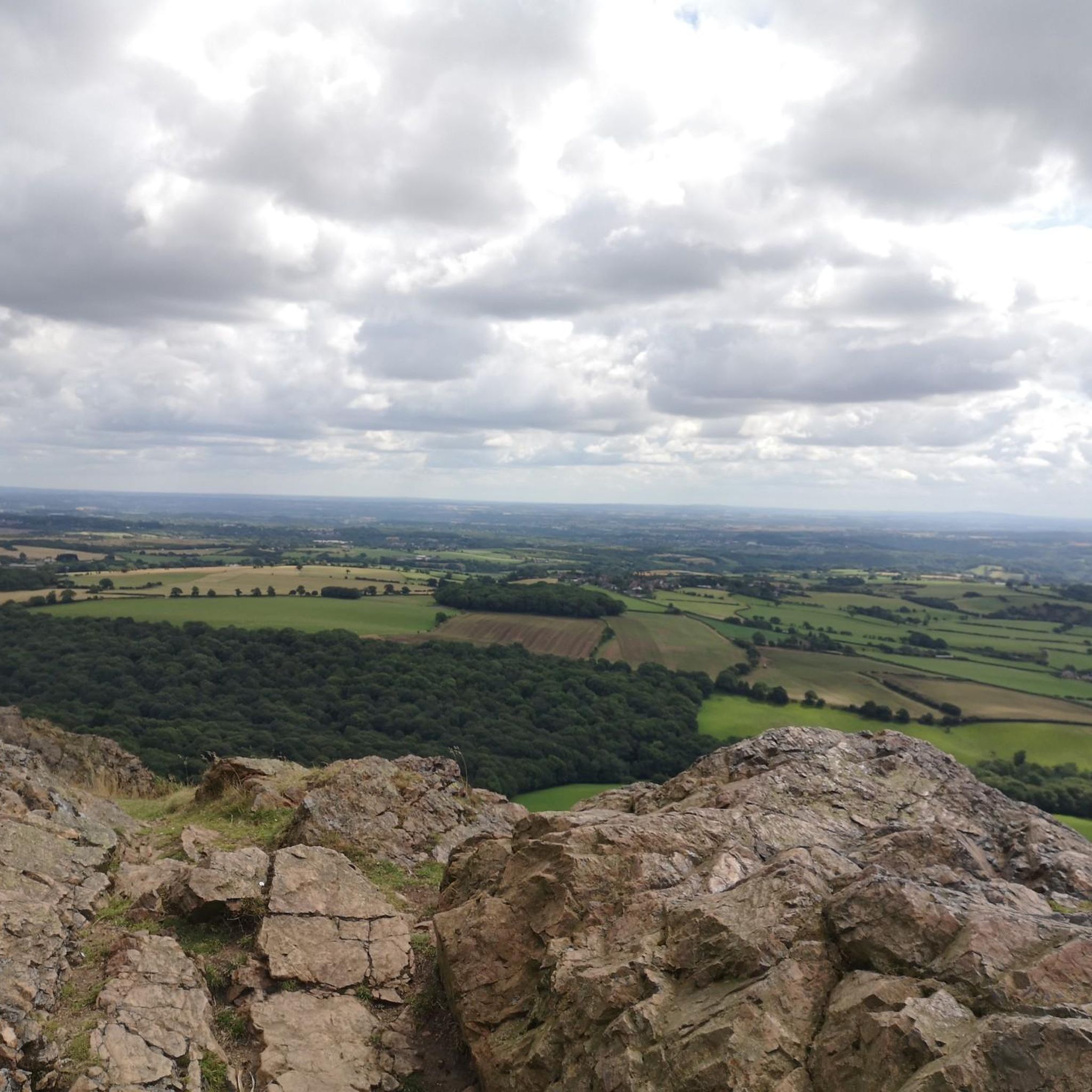
Rising to 407 metres, The Wrekin is a prominent landmark, its visibility from the M54 signalling the entrance to Shropshire. Unlike some of the local hills, The Wrekin was never a volcano in its own right, despite its conical shape, but is composed of various igneous rocks and volcanic processes. The ridgeline either side of The Wrekin makes for some great running, with fabulous views in every direction.
0
0

When I was at University in Brum in my first year I stayed with a lovely couple in Ward End. They used the local expression "all round the Wrekin". It was used to describe someone explaining something in a convoluted or complex way. Since then, I have had a fascination with the place and wanted to visit. Anyway, that was in the early 1970s - I finally got there in 2021 - better late than never!
1
0


On top of Wrekin showing distances to surrounding places, touch to tick you have been here.
1
0

To commemorate Queen Elizabeth II’s Silver Jubilee in 1977, the Wellington Rotary Club commissioned a Toposcope to be positioned near the Wrekin’s summit. The result was a large steel disc that is positioned onto a stone cairn. Inscribed onto the Toposcope through 360 degrees are 41 locations with their distance from the Wrekin. The original intention was that all of the locations should visible from the Wrekin’s summit. However, this isn’t the case. One of the locations – Mount Snowdon – cannot be seen as the bulk of Cadair Berwyn is in the way. It also doesn’t explain why the particular 41 locations were chosen, but the reason might be down to the Ordnance Survey and its Trigonometrical Stations. Of the locations, 39 are or were the site of an OS trig station. Only Buildwas (Ironbridge) Power Station and Trench Pool do not fall into this criterion. However, it is easy to argue that both have enough local interest and significance for them to been included on the Toposcope. By 2005, the original Toposcope had seen better days. It is not only open to the elements but it is also an easy perch for someone looking for a rest after the climb to the summit or to pose for a photograph. The 30 years of battering and buffing had eroded and worn away the inscriptions. Therefore, a replacement Toposcope was made, which now sits on the same cairn as the original.
0
0
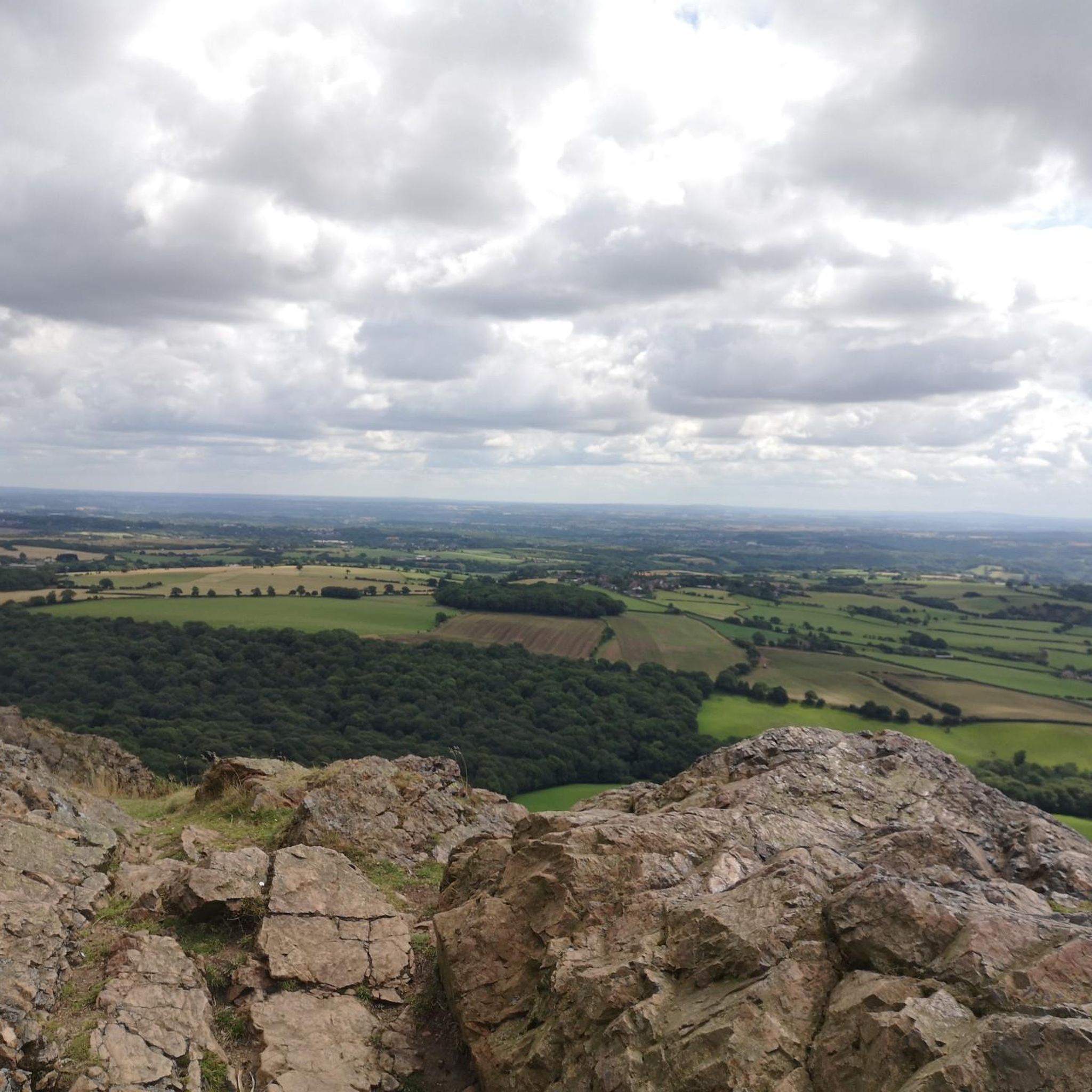
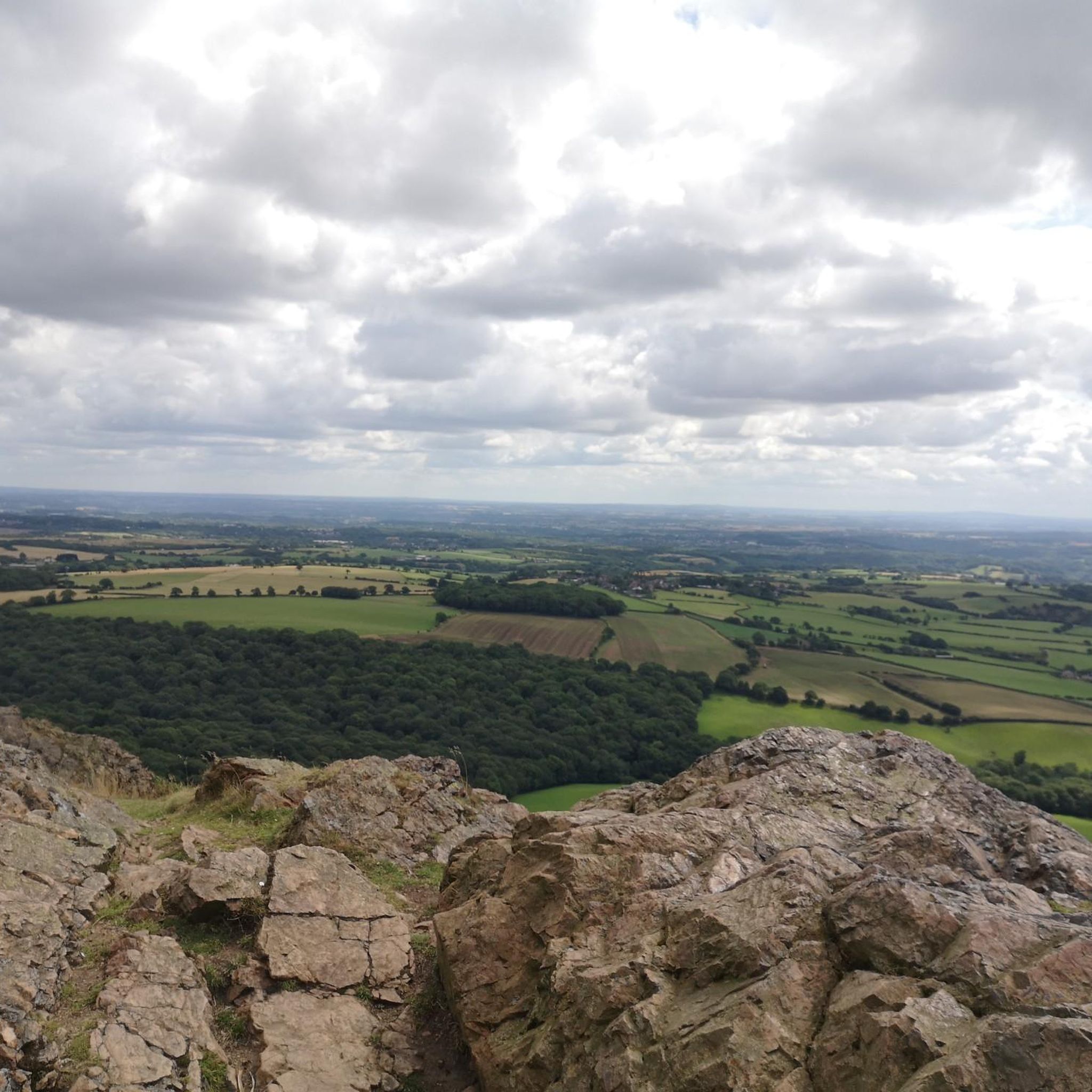
From top nice view on Telford, Shrewsbury and Shropshire Hills
1
0
Frequently Asked Questions
What are the most popular mountain peaks to visit near Wroxeter and Uppington?
The most popular and iconic peak in the vicinity is The Wrekin summit, known for its panoramic views and Iron Age hillfort. Visitors also highly appreciate The Ercall Bluebell Woods, especially in spring, for its natural beauty and wildlife.
What kind of views can I expect from the peaks in the Shropshire Hills National Landscape?
The peaks in the Shropshire Hills National Landscape offer breathtaking panoramic views. From The Wrekin summit, on a clear day, you can see across 20 counties in England and Wales. The Long Mynd provides far-reaching vistas across Shropshire and into Wales, while Caer Caradoc offers spectacular views of the Shropshire Hills, Wenlock Edge, and even The Wrekin and Long Mynd. The Stiperstones provide dramatic views over the Shropshire Hills and Mid Wales.
Are there any historical sites or features on these mountain peaks?
Yes, several peaks boast significant historical features. The Wrekin Hillfort is an Iron Age hillfort, believed to be the capital of the Cornovii tribe. Caer Caradoc also features an Ancient British Iron Age or late Bronze Age hillfort. The Long Mynd includes ancient features like the 5,000-year-old Portway ridgeway route and Bronze Age burial mounds. The Stiperstones area also has remnants of Roman-era lead mining.
What natural features and wildlife can I expect to see on these peaks?
The region is rich in natural beauty. The Ercall Bluebell Woods are famous for their bluebells in spring and diverse wildlife. The Wrekin is surrounded by lush woodlands. The Long Mynd is a heath and moorland plateau with diverse habitats. The Stiperstones are characterized by unique jagged quartzite summit tors and are a National Nature Reserve, home to rare birds and insects.
What outdoor activities can I do near these mountain peaks?
The area offers a variety of outdoor activities. You can find numerous trails for walking, running, gravel biking, and mountain biking. For running, explore routes like 'The Wrekin loop from Little Wenlock' or 'The Wrekin Summit – The Ercall Nature Reserve loop' which you can find more about in the Running Trails around Wroxeter And Uppington guide. Mountain biking enthusiasts can check out trails like 'The Wrekin summit – The Wrekin Hillfort loop' in the MTB Trails around Wroxeter And Uppington guide.
Are there family-friendly mountain walks near Wroxeter and Uppington?
Many of the trails on The Wrekin are accessible and popular for families, especially the main path up from the Forest Glen, which is well-surfaced. The Ercall Bluebell Woods also offer pleasant, less strenuous walks. For more extensive family adventures, the Long Mynd, particularly around Carding Mill Valley, provides varied terrain suitable for different ages and abilities.
What is the best time of year to hike the mountain peaks in this region?
Spring (April-May) is particularly beautiful, especially for seeing the bluebells in The Ercall Bluebell Woods and other woodlands. Summer offers longer daylight hours and generally good weather for hiking. Autumn provides stunning foliage. While accessible year-round, always check weather conditions, as winter can bring colder temperatures and potentially challenging conditions on higher, more exposed peaks like The Stiperstones or Long Mynd.
Are the trails on these peaks dog-friendly?
Generally, the trails in the Shropshire Hills National Landscape are dog-friendly. However, it's always recommended to keep dogs on a lead, especially in areas with livestock, ground-nesting birds, or near cliff edges. Specific areas like the Long Mynd, managed by the National Trust, have clear guidelines for dog walkers. Always follow local signage and respect wildlife.
Where can I find less crowded mountain trails in the Wroxeter area?
While The Wrekin can be popular, especially the main ascent paths, you can find quieter public footpaths around its base and through the Ercall woods. For a more expansive and often less crowded experience, consider the Long Mynd or The Stiperstones. These areas offer vast open spaces and numerous trails, allowing for a more tranquil hiking experience away from the busiest spots.
What is the significance of the <a href="https://www.komoot.com/highlight/3673927" target="_blank" rel="noopener">Wellington Rotary Toposcope on the Wrekin</a>?
The Wellington Rotary Toposcope on the Wrekin is a distinctive steel disc located near the summit. Commissioned in 1977, it indicates the distances to 41 locations, many of which were once Ordnance Survey trig stations. It serves as a unique landmark and a point of interest for visitors, allowing them to identify distant features visible from the Wrekin's impressive vantage point.
How challenging are the mountain peaks around Wroxeter and Uppington?
The difficulty varies. The Wrekin summit offers a challenging but manageable climb, with the start of the main trail being the steepest section. The Long Mynd has extensive opportunities for walking with varied terrain, from gentle slopes to steeper valleys. Caer Caradoc is known for its steep slopes and rugged ascent, while The Stiperstones offer a wild and dramatic landscape that can be challenging, especially around its jagged tors.
Are there any unique geological features to explore?
Yes, the region is geologically fascinating. The Wrekin is primarily composed of ancient volcanic rocks from the Uriconian series, dating back approximately 680 million years. The Long Mynd is renowned for its unique geology, including ancient rock formations and early Ediacaran fossils. Caer Caradoc features craggy, volcanic rocks that are part of the Church Stretton Fault line. The Stiperstones are characterized by unmistakable rugged outlines and unique jagged quartzite summit tors, formed by millennia of freezing and thawing.
Most popular routes around Wroxeter And Uppington
Most popular attractions around Wroxeter And Uppington

Get inspired with the komoot mobile app


Explore more
See even more amazing summits around Wroxeter And Uppington with these guides:
