Chipping Warden and Edgcote
Chipping Warden and Edgcote
The best walks and hikes around Chipping Warden and Edgcote
4.4
(211)
1,355
hikers
201
hikes
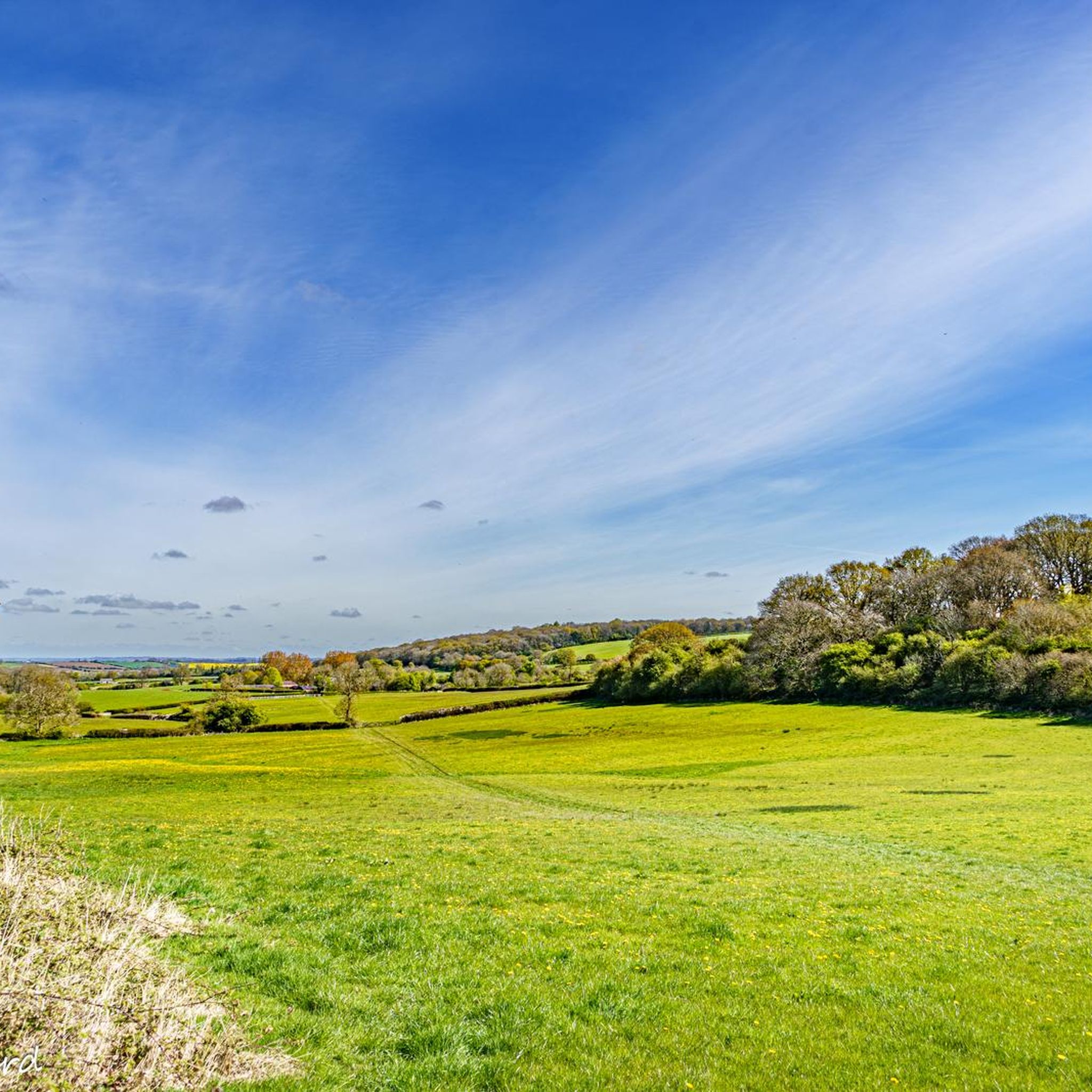
Hiking around Chipping Warden and Edgcote offers a diverse landscape characterized by undulating countryside, grassy valleys, and woodland areas. The region features a mix of field paths, hard surfaces, and bridleways, often traversing or running alongside the infant River Cherwell. Hikers can also explore unique features such as a disused railway line and the atmospheric "Tunnel of Trees." This area provides a blend of natural beauty and historical context, suitable for various fitness levels.
Best hiking trails around Chipping Warden…
Last updated: July 6, 2026
5.0
(1)
7
hikers
15.8km
04:08
110m
110m
Moderate hike. Good fitness required. Easily-accessible paths. Suitable for all skill levels.
4.7
(3)
17
hikers
3.68km
00:56
10m
10m
Easy hike. Great for any fitness level. Easily-accessible paths. Suitable for all skill levels.

Sign up for free
3.0
(1)
5
hikers
11.2km
03:00
130m
130m
Moderate hike. Good fitness required. Easily-accessible paths. Suitable for all skill levels.
8
hikers
8.87km
02:23
110m
110m
Moderate hike. Good fitness required. Easily-accessible paths. Suitable for all skill levels.
5.0
(1)
5
hikers
Moderate hike. Good fitness required. Easily-accessible paths. Suitable for all skill levels.
Get access to more routes and recommendations from other explorers.
Sign up for free
Already have an account?
Our route recommendations are based on thousands of hikes, rides, and runs completed by other people on komoot.
Start today with a free account
Your next adventure awaits.
Login or Signup
Tips from the Community

It was obvious that this section had been particularly muddy and, although it had almost dried out in places, it had been badly churned up by horses and parts were unrideable, however there was a very technical alternative route to one side through the trees.
0
0
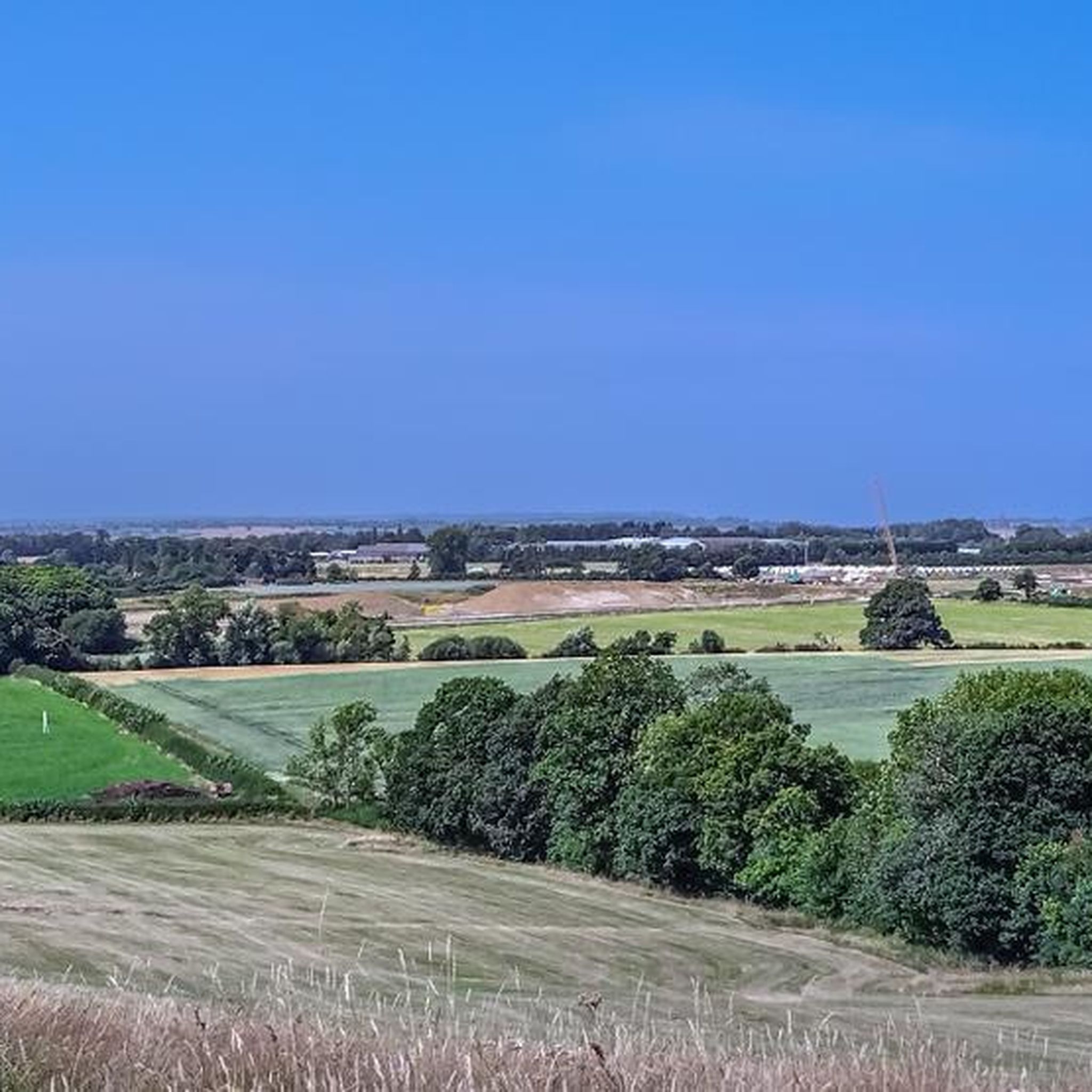
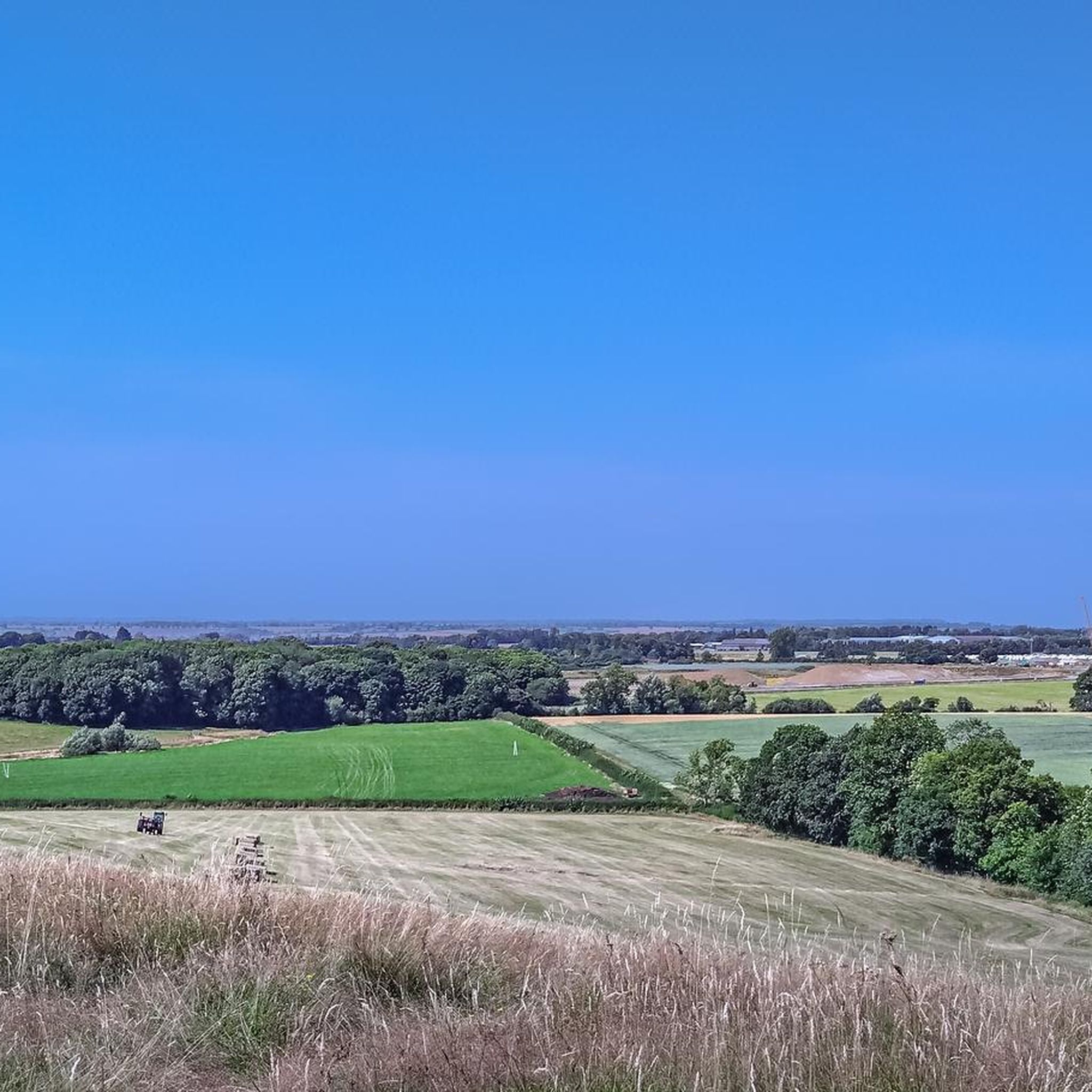
Crossing the disused railway line - unfortunately the cutting was obscured by trees.
0
0
Got caught out following what appeared to be the route only to find the proper, direct route was obscured.
0
0


Run through the quintessential English village of Chacombe, situated on the border between Oxfordshire and Northamptonshire. The village features a wealth of picturesque thatched cottages as well as pubs and a beautiful church.
1
0


Chacombe is a pretty Northamptonshire village with many characterful old buildings, including its 14th-century parish church and Chacombe Priory. Walkers can seek refreshment at the traditional George and Dragon pub, which also serves good food. The Jurassic Way long-distance footpath passes through the village.
0
0

The parish church of ST. MARY THE VIRGIN, a large and imposing building in the local ironstone, consists of a nave of four lofty arches, a chancel with vestry at its north-east corner, north and south aisles which contain chapels at their eastern ends, a battlemented west tower, and a south porch. The south aisle is the Prescote and Williamscot aisle; the north aisle was called the Bourton aisle during the period of its use by the inhabitants of Bourton. The vestry contains a priest's chamber in its upper story. The oldest parts of the present building are the east portion of the south wall of the south aisle which contains a three-light window of c. 1300. From the early 14th century onwards the chancel, south aisle, nave, and, in the 15th century, the north aisle were successively rebuilt, and the chancel arch was enlarged to match the nave arcade; the two aisles were in the 15th century extended to form chapels, which over-lap the chancel. Mouldings on the nave arcade and on the tower and chancel arches are continuous to the ground without capitals. The porch dates from the 14th century and replaced an earlier porch; the tower was added in the late 14th century. In the Middle Ages there was a chapel or chantry of St. Fremund, perhaps in the parish church, to which money was bequeathed in the 15th and 16th centuries. In 1549 the chapel, described as the late chantry chapel of St. Fruenna (sic) was sold by the Crown to George Owen and William Martin, together with its ground, lead, glass, iron, and stones. Probably the chantry was pulled down and the materials re-used. All memory of it had been lost by the end of the 19th century. The identification of the south or Prescote aisle of Cropredy church with St. Fremund's chapel was made by W. Wood in 1893, presumably on the grounds of its association with Prescote. In 18256 Cropredy church was repewed: the middle of the church was left as open sittings for the poor and surrounded by 'sleeping-boxes' and partitions were put up between the nave and the chancel and between the north chapel and the chancel. New inner and outer doors were installed in the porch, and the musicians' gallery was enlarged; the font was recased. The work was done mainly by a local contractor, Charles Cook. Some old materials were used in the work, the fine 14th century rood-screen being cut into pieces and used for railings. The blocked doorway which gave access to the rood-loft can be seen above the pulpit. A west porch, of which the upper part was timber-framed, was removed in the period 182550. Though Bishop Wilberforce thought the church 'very handsome' in 1855, by 1875 the vicar said that it was only in a 'tolerable' state of repair and much required reseating. In 1877 an extensive restoration was carried out under the direction of E. W. Christian. The lead of the roofs was relaid; the internal walls were restuccoed; the dilapidated south-east turret over the tower staircase was rebuilt; the gallery at the west end was removed and the tower arch opened; the level of the chancel floor, then mostly of lias, was raised and encaustic tiles laid down; the church was completely reseated and a mixed array of benches and chairs removed, extra seats having been installed in 1855 for the children of the new National school. A blocked double piscina in the south wall of the sanctuary was opened, as was an aumbry opposite. The church was again reseated in 1914, when the oak pews were designed by the architect Guy Dawber; the chancel was repaired in 1922; a hotwater heating system was installed in 1925 in place of slow-combustion stoves. The chancel and south aisle roofs were releaded in 1934. The church possesses an ancient oak chest, probably of the 13th century, with three iron clasps and locks; the carved wooden pulpit is late-medieval in character, but is said to have had the date 1619 carved on it. The pre-Reformation brass lectern is in the form of an eagle, and is the only one of its kind in the county outside Oxford. According to village tradition the eagle was hidden in the Cherwell to preserve it from the parliamentary troops on the eve of the battle of 1644, remaining there some 50 years; it had certainly emerged by 1695. In 1841 the eagle was 'sadly mutilated and the feet used as ornaments to a wooden desk'. One of the three lions which form the eagle's feet is of bronze and replaces a lost brass one. Some weapons and armour from the battlefield of 1644 hang in the north aisle. A brass chandelier for the chancel and a litany desk were among gifts given at the restoration of 1877. The medieval octagonal font was returned to the church in the mid 19th century after a long sojourn in the vicarage garden. There is also an octagonal font presented by Mrs. Tonge in 1853. Mural paintings discovered during the restoration of 1877 'perished from exposure to the weather and the workmen', except for the remains of a Doom over the chancel arch and one figure on the north wall of the north aisle. The north aisle had representations on one side of the north door of the Seven Deadly Sins and on the other of the Seven Works of Mercy, each in a medallion with a text, and there were portions of leaf and interlacing patterns in the chancel. The medieval rood-screen was reconstituted in 1877, furnished with new panels and a moulded crest, and re-erected on the south side of the chancel. A medieval screen is still in place at the east end of the south aisle; it contains many times over the initials A.D., probably for Anne Danvers (d. 1539), wife of John. The church has in the north aisle one fragment of 15th-century glass showing the head of a crowned female saint. The east window by Lavers, Barrand, and Westlake was given by the vicar and wardens in 1877. There are further memorial windows painted by Messrs. Heaton, Butler, and Bayne. In the south aisle and chapel are monuments to members of the families of Danvers and Gostelow of Prescote, and Calcott, Taylor, and Loveday of Williamscot. An inscription no longer existing but recorded in the early 18th century was to Elizabeth, wife of Richard Danvers (1482). Sir John Danvers (d. 1721) is commemorated by a brass plate in the floor of the south chapel and by a large marble monument, which formerly blocked a window in the south aisle but was moved to the north wall of the church. On the south chapel wall is a freestone monument to Walter Calcott (d. 1582) and his wife Alice, the inscription being largely defaced. In the south wall of the south aisle are two sepulchral arches, in one of which are the remains of a stone figure of a knight in chain armour. In the nave is a brass to Priscilla Plant of Great Bourton (d. 1637). In the chancel are memorials to a vicar, Francis Stanier (d. 1725), and his wife Mary; and to William Taylor of Williamscot (d. 1733) and his wife Abigail. The peal of six bells with a sanctus was cast in 1686 and 168990, by the Bagleys of Chacombe (Northants.). The tenor was evidently recast, for its inscription says that it was given by Calcott Chambre; the two brothers of that name were lords of Williamscot in the late 16th and early 17th century. In 1706 three bells and the sanctus bell were broken, and were ordered to be new cast with their own metal. The bells were rehung and their fittings renewed by Messrs. Warner in 1913. The church already had a clock in 1512 which was perhaps the clock repaired in 16945 and sold for 5s. in 171920; a new clock had been made for 6 in 171314 by an unnamed Daventry clockmaker. The clock surviving in 1966 was made by John Moore & Sons, Clerkenwell, in 1831; it was bought partly by subscription from Cropredy and Bourton and partly by subventions (18316) from the rent of the bell charity. The bell charity dates from at least 1512, when Roger Lupton, Vicar of Cropredy, gave 6 13s. 4d. to find a person to keep Cropredy parish clock going hourly, and to ring bells at specified times. In 1614 the charity was stated to be also for the repair of the church. Two separate quarter yardlands in Wardington bought with the endowment in 1513 and 1517 were confiscated under the Chantries Act and sold to William Harrison, but were restored to the trustees in 1557. At the inclosure of Wardington in 1762 the trustees were awarded 14 a., subsequently known as Bell Land, which in 1823 brought in an income of 32. The money was divided equally between the churchwardens of Cropredy and Bourton and the excess of the income over the sum paid to the parish clerk for ringing and winding the clock (4 10s.) saved Cropredy from raising its full church rate for many years. In 1966 the curfew was rung twice weekly at 6 p.m., and it was stated that a bell had been rung until recent times at 6 a.m. The church plate, besides a silver chalice of 1570 and a pewter paten, alms-dish, and flagon (the two last given by Mr. Holloway in 1666), includes what may be a small oval tin pyx, claimed to be the only medieval pyx still in existence in England, but is more probably a seal-skippet. A churchyard cross was demolished in the Civil War. There is a sundial on the south wall of the church. Probably the most imposing tomb in the churchyard is that of John Chamberlin (1817) , and the oldest are two of 1631. In 1923 Mrs. George Barr, wife of Cropredy's vicar, gave 100 of which the income was to be used for mowing the churchyard; to this her husband added 50 in 1926. In 1966 the income was 6 10s. The churchyard may once have extended further east, in which direction many human bones were dug up in the 19th century. A burial ground adjoining the Mollington lane was consecrated in 1950. A mission hall, designed by W. E. Mills, was built near the church in 18879.
0
0
Frequently Asked Questions
How many hiking trails are available in Chipping Warden and Edgcote?
There are over 200 hiking routes around Chipping Warden and Edgcote. This includes a diverse selection, with 91 easy trails, 117 moderate options, and 5 more challenging routes, ensuring something for every fitness level.
Are there family-friendly hiking options in the area?
Yes, many routes are suitable for families. For an easier option, consider the Hiking loop from Cropredy, which is just over 3.6 km and has minimal elevation gain. The area's varied terrain, including field paths and woodlands, offers pleasant walks for all ages.
Can I bring my dog on the trails around Chipping Warden and Edgcote?
Generally, dogs are welcome on the trails. However, as many routes traverse "grassy valleys with sheep" and open countryside, it's advisable to keep dogs on a lead, especially near livestock, and to follow the Countryside Code.
What kind of landscapes and natural features can I expect to see?
The region is characterized by its "very nice undulating countryside" and "glorious open countryside with very fine views." You'll encounter "grassy valleys with sheep," sections along the infant River Cherwell, and varied woodland areas. Unique features like a disused railway line and the atmospheric "Tunnel of Trees" are also part of the landscape, as seen on routes like the Disused Railway Line Crossing – Tunnel of Trees loop from Edgecote Lodge.
Are there any historical sites or landmarks to explore along the hiking routes?
Yes, the area is rich in history. You can explore charming villages with ancient churches, such as the Church of St Peter and St Paul in Chipping Warden and the 13th-century Church of St James in Edgcote. The region is also part of the Battlefields Trail, connecting significant historical events. Nearby attractions include Banbury Cross and Wroxton Abbey and Gardens.
Are there any circular walks available?
Yes, many of the routes in Chipping Warden and Edgcote are circular, offering convenient starting and ending points. Examples include the popular Tunnel of Trees – Chacombe Parish Church loop from Wardington and the Grassy Valley with Sheep loop from Eydon.
What do other hikers enjoy most about hiking in Chipping Warden and Edgcote?
The area is highly rated by the komoot community, with an average score of 4.4 stars from over 180 reviews. Hikers often praise the diverse landscape, including the undulating countryside and peaceful valleys, as well as the well-maintained paths and the blend of natural beauty with historical interest.
What is the best time of year to go hiking in this region?
The region's "glorious open countryside" and varied paths make it enjoyable throughout much of the year. Spring and autumn offer pleasant temperatures and beautiful scenery, with changing foliage. Summer provides longer daylight hours, while winter walks can be picturesque, though some paths may be muddy.
Are there any longer walks for experienced hikers?
Yes, for those seeking a longer challenge, routes like the Tunnel of Trees – Chacombe Parish Church loop from Wardington cover nearly 16 km. The area also incorporates sections of established long-distance paths like the Millennium Way and the Jurassic Way, offering extended hiking opportunities.
What kind of terrain can I expect on the trails?
The paths offer a diverse hiking experience, including a mix of field walking, hard surfaces, bridleways, and tracks through trees. You'll encounter minor inclines and undulating terrain, but generally, the routes are accessible and well-defined.
Are there any lakes or reservoirs nearby that I can visit?
Yes, the area features several water bodies. You can find Grimsbury Plantation Reserve and Reservoir and Wormleighton Reservoir, which offer additional natural points of interest during your visit.
Most popular routes around Chipping Warden and Edgcote
Most popular attractions around Chipping Warden and Edgcote

Get inspired with the komoot mobile app


Explore more
Browse the best Hikes in other regions.
