Attractions and Places To See around Rollright - Top 20
Best attractions and places to see around Rollright include a variety of historical sites and natural monuments within the Cotswolds region. This area offers a range of experiences, from ancient stone circles to market towns and significant battle sites. Visitors can explore over 20 distinct points of interest, providing insights into the region's past and natural beauty. The landscape features rolling hills and traditional English villages.
Best attractions and places to see around Rollright
- The most popular attractions is The King Stone, a man-made monument that dates back to the Bronze Age. It is believed to have been a marker for ancient trade routes or a ceremonial site.
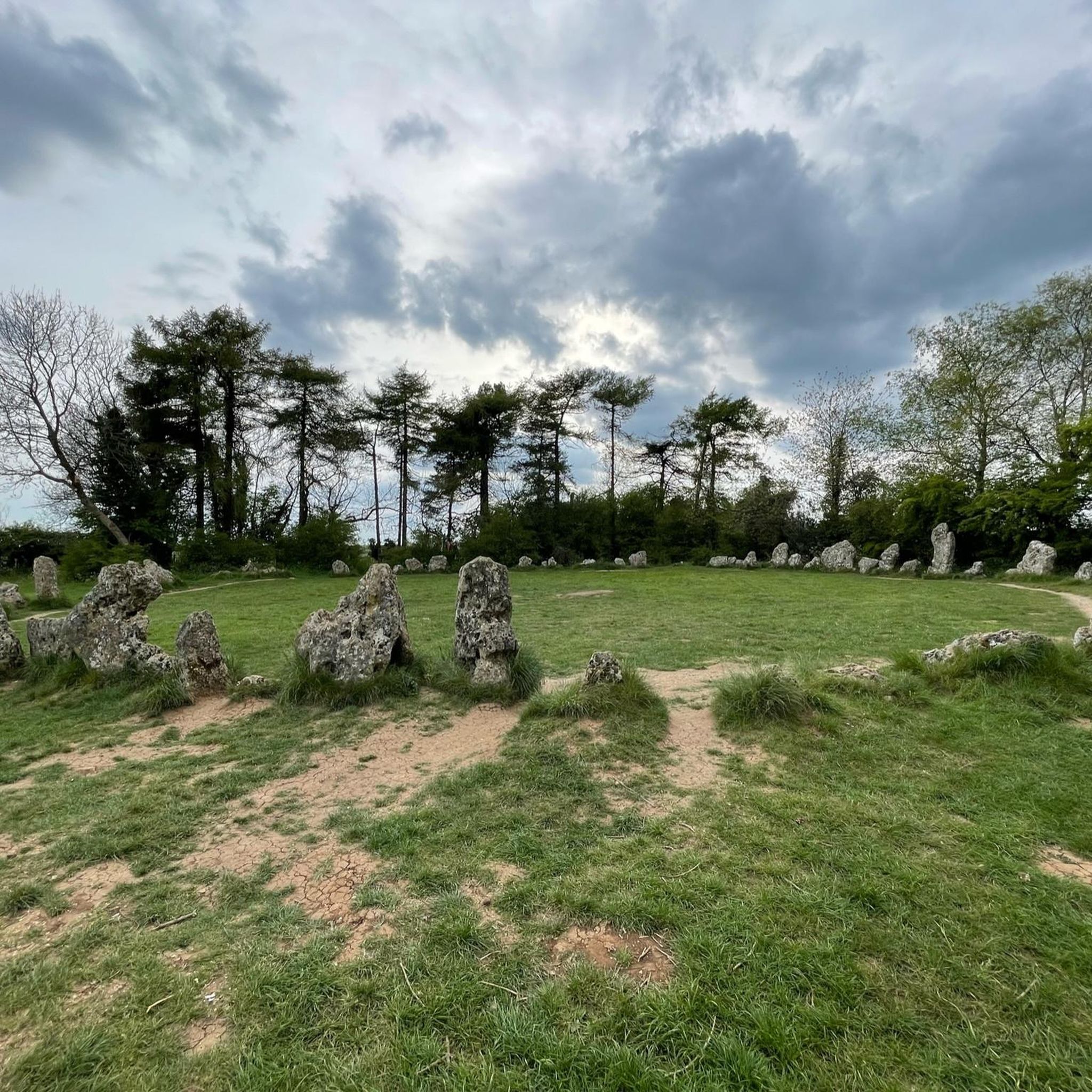
- Another must-see spot is The Rollright Stones Stone Circle, a historical site and natural monument. This ceremonial stone circle was erected around 2,500 BC and consists of numerous weathered limestone stones.
- Visitors also love Battle of Stow Monument, a man-made monument marking the site of the last major battle of the First English Civil War. It offers a historical viewpoint into a significant event.
- Rollright is known for its historical sites, ancient monuments, and charming settlements. The area provides a variety of attractions to see and explore, including religious buildings and viewpoints.
- The attractions around Rollright are appreciated by the komoot community, with over 120 upvotes and 50 photos shared by visitors.
Last updated: August 25, 2026
The King Stone
Highlight • Monument
Tip by

Moreton-in-Marsh — Market town
Highlight • Settlement
Other famous visitors to the town include J. R. R. Tolkien, author of the Lord of the Rings trilogies. The Bell Inn supposedly inspired Middle Earth's pub the Prancing Pony.
Tip by

Sign up now to discover places like this
Get recommendations on the best single tracks, peaks, & plenty of other exciting outdoor places.
Sign up for free
The Rollright Stones Stone Circle
Highlight • Historical Site
The number of stones has changed over the years. Legends refer to stones having been taken away (to make bridges and the like), and it is likely that this created most of the gaps now visible. The stones are famously uncountable, but originally may have numbered about 105 standing shoulder to shoulder.
Tip by

St Peter and St Paul Church, Broadwell
Highlight • Religious Site
Tip by
Battle of Stow Monument
Highlight • Monument
Prelude
The year of 1646 began badly for Charles I. On no side was there the smallest break in the gloom that surrounded him. He had no army, and there was but small chance of his being able to raise one. All his resources were exhausted. Without money, without arms, without supplies, his fate was clear. But, what was still worse, if possible, was the disunion among the Royalists: Charles' quarrel with his nephews, although patched up, might break out again at any minute.
It was obvious to all, Royalists or Parliamentarians, that whatever the rights or wrongs of the struggle might originally have been, its continuance could do no good to either party, and only aggravated the prevailing discontent.
Lord Astley left Oxford on 22 December 1645, to go round the different garrisons in the West Midlands, trying to raise an army. His task was a difficult one, and not the less so by his extreme want of money. Had Astley a good supply of this, he might have raised a fairly formidable force, without it he could do nothing with the drunken dissolute bands of robbers who formed the bulk of the soldiers in the Royalist garrisons. Astley arrived at Worcester early in 1646. One of his first acts was to march out to Madresfield. The Royalist garrison there had been besieged since October, by men from the Gloucester and Evesham Parliamentary garrisons, but it had held out, and Astley was now able, with a party from the Worcester garrison, to drive off the besiegers and raise the siege.
Astley went from Worcester to Ludlow, intending to unite with Sir William Vaughan, but the presence of Parliamentarian troops and the floods arising from the breaking up of the great frost and the thaw made movement impossible, and prevented Astley from attempting anything. He fell back towards Bewdley. On 5 February 1646, Chester surrendered. Lord Byron had held out to the last and had to yield from want of fuel and of food. Horses, dogs, and cats had been eaten, and Byron was unable to do more. He had held the place for sixteen weeks, and there was no hope of relief.
The fall of Chester was a serious blow to the Royalist cause, in that it set free a large force who would now operate upon the other Royalist garrisons. Astley, finding that it was useless to look towards Chester, set to work to collect men to go to the relief of the King at Oxford (see Siege of Oxford (1646)). But he was too late. In the Cotswolds, barring his way, was Sir Thomas Morgan, the governor of the Gloucester garrison, with a formidable force. On his right flank was John Birch, the governor of Hereford, with a force more than equal to any that Astley could bring into the field, while in his rear, pushing him onwards towards Morgan and Birch, was Sir William Brereton, his army now able to act as Chester had fallen.
Astley had visited Stafford and other garrisons to collect his force. He had tried to relieve the besieged High Ercall Hall, but had failed. At last, he perceived that, if he was to join the Charles I at Oxford, the time had come to do so. Therefore, in the beginning of March, he gave orders for all the men from the different garrisons who would join him, to rendezvous at Bridgnorth; here he collected some 3,000 men.
Astley was in dire need of money, so much so that he had to borrow from the corporation of Bridgnorth to pay his personal expenses there. It may be imagined to what straits the Royalists were reduced when it is said that out of these more than half were "reformado" officers, that is, officers of regiments that had either ceased to exist, from being destroyed or disbanded, or become so reduced in numbers there was no need for such officers. They formed a desperate band of broken men, who had all to gain by plunder and everything to lose by peace.
Having collected his men Astley advanced from Bridgnorth to Kidderminster. Some sort of a post, probably a look-out post, to watch any movement of men, was kept at Trimpley. A skirmish took place near Kidderminster, as the registers show that Captain Charles Dungham and one of his soldiers were killed and buried.
From Kidderminster, Astley marched to Worcester, where he halted for a few days, and his troubles began. He was aware that Morgan and Birch were waiting for him at Broadway, and Brereton was moving up in his rear and pressing him forward. Astley's task was a difficult one. Evesham had a Parliamentary garrison and the River Avon could not be crossed there. In the hills, on his road to Oxford, were Morgan and Birch, waiting for the first sight of his men to unite and fall on him; while still nearer Oxford, if he got past these forces, Charles Fleetwood was waiting between Stow (Stow-on-the-Wold) and Oxford to intercept any Royalist attempt to relieve Astley, or to cut off any of Astley's men who got past Morgan.
Astley's first move quite deceived his opponents. He sent some of his men forward towards Evesham, but with the main body he marched back to Droitwich, thus leading Brereton to think he was about to attack him. Then making across country by Feckenham and Inkberrow to Bidford and Cleve Prior, he crossed the Avon, and pushed down Buckle Street to Honeybourne, leaving Morgan at Broadway on his right, he marched past his flank to Campden, Blockley, Bourton-on-the-Hill, for Stow.
Battle Edit
Battle viewpoint
On 20 March, Morgan, finding that Astley had out-manoeuvred him, made a series of attacks on his rearguard, harassing and delaying their march, so as to give time for Birch to come up in front and Brereton to advance in the rear. Astley, by pushing on, had reached Donnington, a village in Gloucestershire about two miles from Stow-on-the-Wold.
Astley chose a low hill just to the west of Donnington to make his last stand. Brereton having now come up, Morgan attacked the wearied Royalists in the dark, two hours before dawn, on the 21 March. Birch in front, and Morgan in the rear tried to surround the Royalists. Morgan charged Astley's rear with 200 firelocks and 400 horse. He was repulsed twice, and Astley nearly succeeded in breaking through the ring that was surrounding him. But as Astley pressed through Morgan's men in the rear, Birch pressed his charges home in the front. Still Astley showed a stubborn resistance. Birch's horse was shot under him, his regiment had 32 men killed. The Royalists fought a running retreat into the streets of Stow.
In spite of all the Royalist efforts, the ring gradually tightened round Astley. At last, seeing a possible way of escape, some of the Royalists broke and fled; through their broken ranks Birch's horse rode in; there was nothing then left but to surrender.
Aftermath
With the surrender, and the last Royalist field army ceased to exist. Lord Astley, Sir Charles Lucas, Colonel Corbet, Colonel Gerrard, Colonel Molesworth, Lieutenant Colonel Broughton, and Major Billingsley were among the prisoners. Out of the 3,000 men Astley had with him Morgan returned 1,600 prisoners. Many were killed, more were wounded, the rest dispersed. Those who had broken through were possibly the worst off; they were overtaken, cut down and killed by Fleetwood's dragoons. All the Royalist arms and ammunition were taken.
The rout was complete; Astley's force, which he had collected with so much care and manoeuvred with so much skill, was destroyed. Astley fully recognised this. Worn out by his marches, his manoeuvres and his fight, he sat down on a drum and, addressing Morgan's men, said:
You have done your work, boys, and may go play, unless you will fall out among yourselves.
This was a fitting epitaph to the last major battle of the First Civil War from the man who is often quoted for his soldiers' prayer at the first major battle. So ended the last Royalist field army, because as Clarendon wrote in his history:[5] "There remained from that time no possibility for the King to draw any other troops into the field". Charles had fought from August, 1642, to March, 1646, with the result that the Parliament only had to reduce the few strongholds that still held out for him. When this was done Parliament's military victory was completed.
Tip by
Sign up for free to discover even more attractions around Rollright.
Sign up for free
Already have an account?
Start today with a free account
Your next adventure awaits.
Login or Signup

Tips from the Community

Beautiful medieval church dating back to the 12th and 14th centuries, located in the small village of Broadwell.
1
0
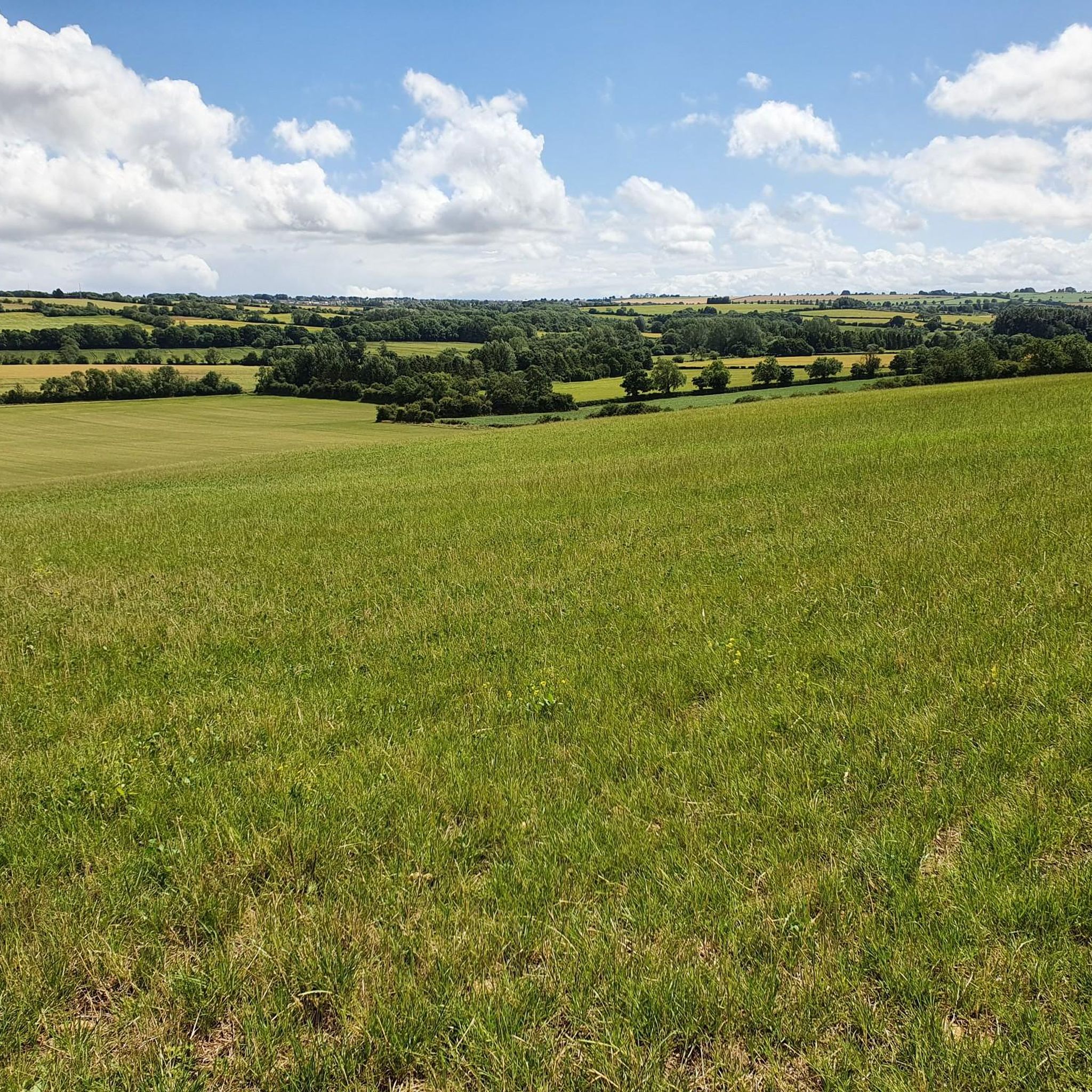
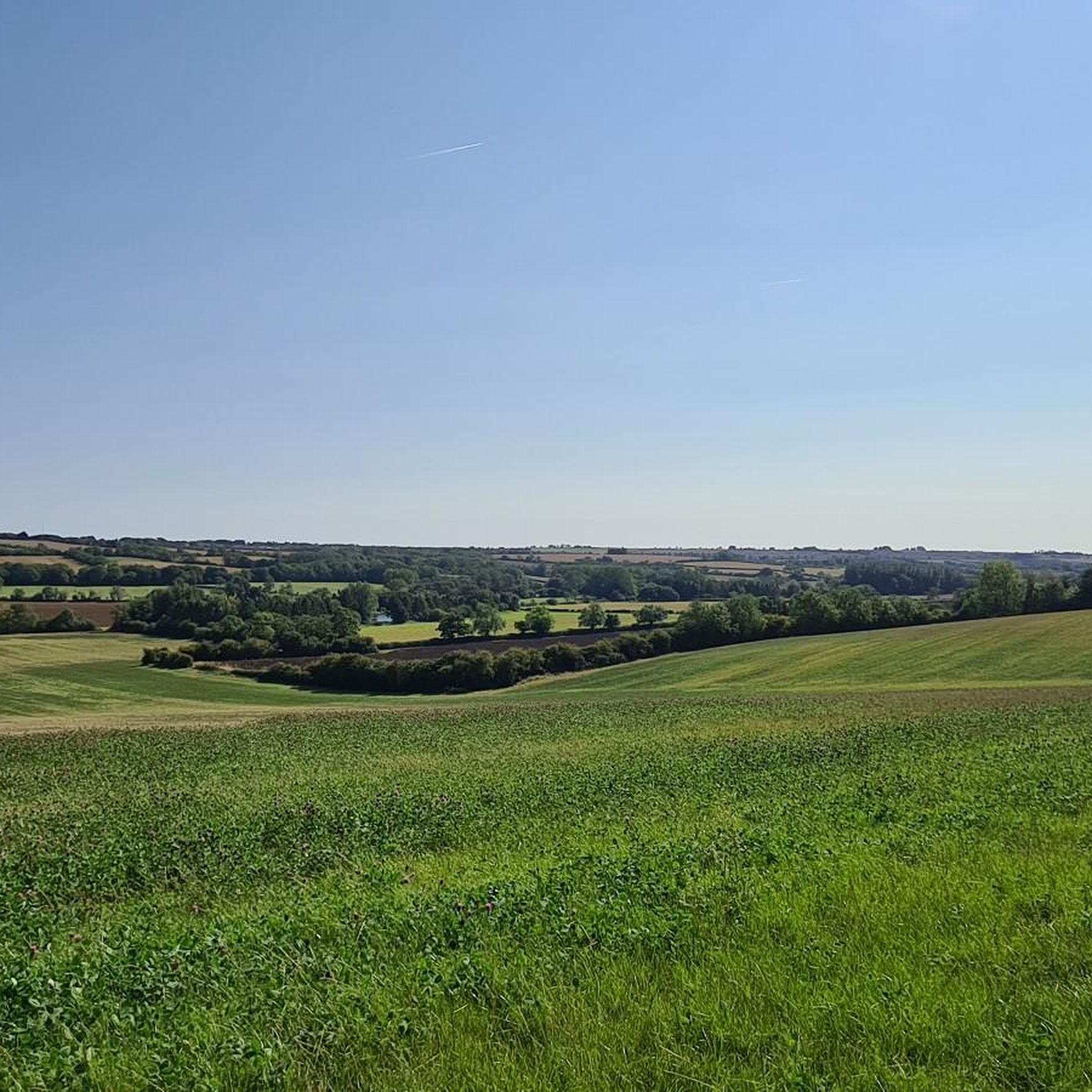
This is the location in which the Battle of Stow took place on the early morning of the 21st of Marsh in 1646. It was the last battle of the First English Civil War.
1
0
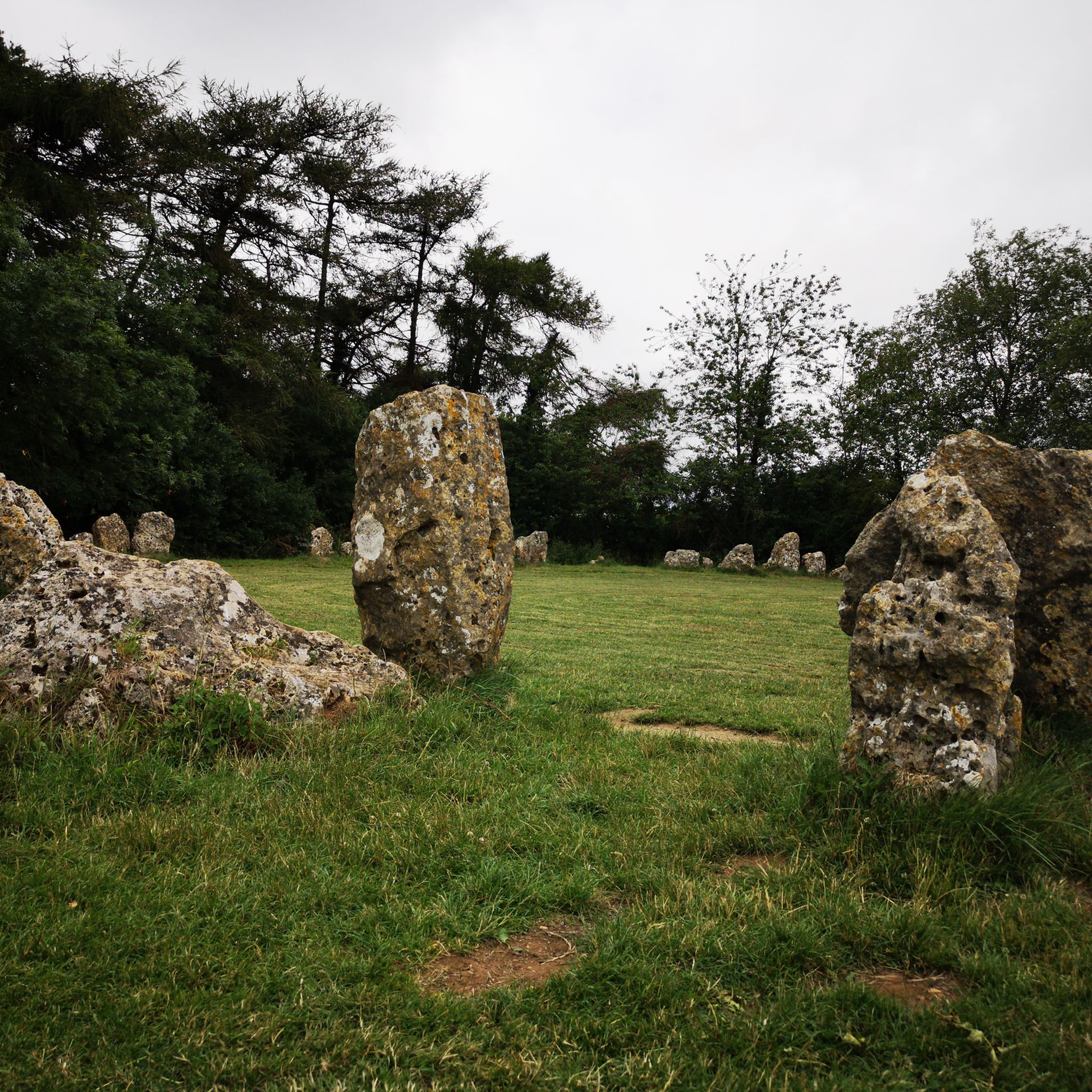
The King Stone is a standing stone in the Cotswolds, England, which dates back to the Bronze Age. It is believed to have been a marker for ancient trade routes or a ceremonial site.
2
1

Remember to always keep a pace when going up a big hill
0
0

Moreton-in-marsh was a lovely Victorian coaching town that is now a car park. Where once a wide open high street allowed cafes, pubs, and shops to spill out onto the street, now residents line up their rangerovers side-by-side, flanking either side of an extremely busy road that disects the town.
2
0

This large medieval cruciform church, with a north and south transept, dates back to the 12th to 14th centuries and reflects the importance of Broadwell (or Bradwell) at that time. Nowadays it stands in a small village of a few houses, with another small village, Kencot, just beyond the eastern church wall. In the 12th century Broadwell had a population of about 2,000. Did the Black Death kill the village in 1349 or was it the collapse of the Knights Templar, Broadwell's benefactors? There is no evidence of the Black Death but the building of this church and its recorded history does coincide with the rise in power of the Knights Templar after the First Crusade and the gift of land in Broadwell to them in 1185 followed by the building of the spire using their money in about 1260. By then the Knights Templar had built a vast international financial and military empire, such that the monarchs of Europe were indebted to them. King Philip IV of France pressurised Pope Clement V to declare the Knights Templar heretical and the Grand Master, Jacques de Molay, was burnt at the stake in Paris in 1314. A timescale perfectly in tune with the building of this large and magnificent church and, possibly, the decline of Broadwell village. The church doesn’t face east but north-east, which accords with the Templar’s practice of aligning churches with sunrise on the Patronal Saint’s day, 29th June, for the Saints Peter and Paul. All monastic orders ceased under Henry VIII and churches supported by them often fell into disrepair because villages could not adequately maintain them. Broadwell appears to have fared better as the manor held rich farming estates. The next major reconstruction came with the Victorian Restorers and one, E.G.Bruton, worked on Broadwell in 1873. He stripped the medieval plaster and paintings off the walls and reroofed the nave, chancel and transepts with a steeper pitched roof.
1
1
In the spring of 1646, King Charles I of England was getting ever more desperate to hold the Royalist cause together whilst waiting for the long promised relief forces from Ireland, Scotland and France. Sir Jacob Astley took command of the Royalist forces in the west and began to gather up the remnants from the handful of Royalist garrisons still left in the West Midlands to create a new field army. At this point in the war, Royalist morale was low. However, Astley, a stalwart of the Royalist commanders and an experienced soldier, was able to cobble together a force of 3,000. While returning to Oxford he was intercepted and defeated at Stow-on-the-Wold. Prelude The year of 1646 began badly for Charles I. On no side was there the smallest break in the gloom that surrounded him. He had no army, and there was but small chance of his being able to raise one. All his resources were exhausted. Without money, without arms, without supplies, his fate was clear. But, what was still worse, if possible, was the disunion among the Royalists: Charles' quarrel with his nephews, although patched up, might break out again at any minute. It was obvious to all, Royalists or Parliamentarians, that whatever the rights or wrongs of the struggle might originally have been, its continuance could do no good to either party, and only aggravated the prevailing discontent. Lord Astley left Oxford on 22 December 1645, to go round the different garrisons in the West Midlands, trying to raise an army. His task was a difficult one, and not the less so by his extreme want of money. Had Astley a good supply of this, he might have raised a fairly formidable force, without it he could do nothing with the drunken dissolute bands of robbers who formed the bulk of the soldiers in the Royalist garrisons. Astley arrived at Worcester early in 1646. One of his first acts was to march out to Madresfield. The Royalist garrison there had been besieged since October, by men from the Gloucester and Evesham Parliamentary garrisons, but it had held out, and Astley was now able, with a party from the Worcester garrison, to drive off the besiegers and raise the siege. Astley went from Worcester to Ludlow, intending to unite with Sir William Vaughan, but the presence of Parliamentarian troops and the floods arising from the breaking up of the great frost and the thaw made movement impossible, and prevented Astley from attempting anything. He fell back towards Bewdley. On 5 February 1646, Chester surrendered. Lord Byron had held out to the last and had to yield from want of fuel and of food. Horses, dogs, and cats had been eaten, and Byron was unable to do more. He had held the place for sixteen weeks, and there was no hope of relief. The fall of Chester was a serious blow to the Royalist cause, in that it set free a large force who would now operate upon the other Royalist garrisons. Astley, finding that it was useless to look towards Chester, set to work to collect men to go to the relief of the King at Oxford (see Siege of Oxford (1646)). But he was too late. In the Cotswolds, barring his way, was Sir Thomas Morgan, the governor of the Gloucester garrison, with a formidable force. On his right flank was John Birch, the governor of Hereford, with a force more than equal to any that Astley could bring into the field, while in his rear, pushing him onwards towards Morgan and Birch, was Sir William Brereton, his army now able to act as Chester had fallen. Astley had visited Stafford and other garrisons to collect his force. He had tried to relieve the besieged High Ercall Hall, but had failed. At last, he perceived that, if he was to join the Charles I at Oxford, the time had come to do so. Therefore, in the beginning of March, he gave orders for all the men from the different garrisons who would join him, to rendezvous at Bridgnorth; here he collected some 3,000 men. Astley was in dire need of money, so much so that he had to borrow from the corporation of Bridgnorth to pay his personal expenses there. It may be imagined to what straits the Royalists were reduced when it is said that out of these more than half were "reformado" officers, that is, officers of regiments that had either ceased to exist, from being destroyed or disbanded, or become so reduced in numbers there was no need for such officers. They formed a desperate band of broken men, who had all to gain by plunder and everything to lose by peace. Having collected his men Astley advanced from Bridgnorth to Kidderminster. Some sort of a post, probably a look-out post, to watch any movement of men, was kept at Trimpley. A skirmish took place near Kidderminster, as the registers show that Captain Charles Dungham and one of his soldiers were killed and buried. From Kidderminster, Astley marched to Worcester, where he halted for a few days, and his troubles began. He was aware that Morgan and Birch were waiting for him at Broadway, and Brereton was moving up in his rear and pressing him forward. Astley's task was a difficult one. Evesham had a Parliamentary garrison and the River Avon could not be crossed there. In the hills, on his road to Oxford, were Morgan and Birch, waiting for the first sight of his men to unite and fall on him; while still nearer Oxford, if he got past these forces, Charles Fleetwood was waiting between Stow (Stow-on-the-Wold) and Oxford to intercept any Royalist attempt to relieve Astley, or to cut off any of Astley's men who got past Morgan. Astley's first move quite deceived his opponents. He sent some of his men forward towards Evesham, but with the main body he marched back to Droitwich, thus leading Brereton to think he was about to attack him. Then making across country by Feckenham and Inkberrow to Bidford and Cleve Prior, he crossed the Avon, and pushed down Buckle Street to Honeybourne, leaving Morgan at Broadway on his right, he marched past his flank to Campden, Blockley, Bourton-on-the-Hill, for Stow. Battle Edit Battle viewpoint On 20 March, Morgan, finding that Astley had out-manoeuvred him, made a series of attacks on his rearguard, harassing and delaying their march, so as to give time for Birch to come up in front and Brereton to advance in the rear. Astley, by pushing on, had reached Donnington, a village in Gloucestershire about two miles from Stow-on-the-Wold. Astley chose a low hill just to the west of Donnington to make his last stand. Brereton having now come up, Morgan attacked the wearied Royalists in the dark, two hours before dawn, on the 21 March. Birch in front, and Morgan in the rear tried to surround the Royalists. Morgan charged Astley's rear with 200 firelocks and 400 horse. He was repulsed twice, and Astley nearly succeeded in breaking through the ring that was surrounding him. But as Astley pressed through Morgan's men in the rear, Birch pressed his charges home in the front. Still Astley showed a stubborn resistance. Birch's horse was shot under him, his regiment had 32 men killed. The Royalists fought a running retreat into the streets of Stow. In spite of all the Royalist efforts, the ring gradually tightened round Astley. At last, seeing a possible way of escape, some of the Royalists broke and fled; through their broken ranks Birch's horse rode in; there was nothing then left but to surrender. Aftermath With the surrender, and the last Royalist field army ceased to exist. Lord Astley, Sir Charles Lucas, Colonel Corbet, Colonel Gerrard, Colonel Molesworth, Lieutenant Colonel Broughton, and Major Billingsley were among the prisoners. Out of the 3,000 men Astley had with him Morgan returned 1,600 prisoners. Many were killed, more were wounded, the rest dispersed. Those who had broken through were possibly the worst off; they were overtaken, cut down and killed by Fleetwood's dragoons. All the Royalist arms and ammunition were taken. The rout was complete; Astley's force, which he had collected with so much care and manoeuvred with so much skill, was destroyed. Astley fully recognised this. Worn out by his marches, his manoeuvres and his fight, he sat down on a drum and, addressing Morgan's men, said: You have done your work, boys, and may go play, unless you will fall out among yourselves. This was a fitting epitaph to the last major battle of the First Civil War from the man who is often quoted for his soldiers' prayer at the first major battle. So ended the last Royalist field army, because as Clarendon wrote in his history:[5] "There remained from that time no possibility for the King to draw any other troops into the field". Charles had fought from August, 1642, to March, 1646, with the result that the Parliament only had to reduce the few strongholds that still held out for him. When this was done Parliament's military victory was completed.
3
1

The King Stone was erected in early to middle Bronze Age, probably around 1,500 BC. Rather than relating directly to the much older Neolithic Stone Circle, the King Stone was likely erected as a permanent memorial to the Bronze Age round cairn 17m across with a central chamber, which lies immediately to the north-east set exactly on the top the ridge.
1
0
Frequently Asked Questions
Are there family-friendly attractions around Rollright?
Yes, several attractions in the Rollright area are suitable for families. Both The King Stone and The Rollright Stones Stone Circle are historical sites that can be explored by all ages. Additionally, the market town of Moreton-in-Marsh offers a lively atmosphere with its market and historic buildings, making it a pleasant family outing.
What historical sites can I visit in the Rollright area?
The Rollright area is rich in history. You can explore ancient monuments like The King Stone, dating back to the Bronze Age, and The Rollright Stones Stone Circle, erected around 2,500 BC. For more recent history, visit the Battle of Stow Monument, marking a significant English Civil War battle, or the medieval St Peter and St Paul Church, Broadwell.
What outdoor activities, like hiking, are available near Rollright?
The Rollright area offers excellent opportunities for outdoor activities, particularly hiking. You can find various routes, including the moderate 7.5 km "Rollright Stones loop — The Cotswolds" or easier options like the 3.7 km "King's Men Stone Circle – The King Stone loop from Little Rollright." For more hiking options, explore the Hiking around Rollright guide and the Easy hikes around Rollright guide.
Are there cycling routes near the attractions in Rollright?
Yes, there are several cycling routes available. You can find moderate to difficult routes, such as "The Pear Tree loop from Hook Norton" (18.7 km, moderate) or longer rides like "Moreton-in-Marsh — Market town – Kingham Village loop from Hook Norton" (100.7 km, difficult). Discover more options in the Cycling around Rollright guide.
What do visitors enjoy most about the Rollright Stones?
Visitors frequently praise the unique atmosphere and historical significance of The Rollright Stones Stone Circle. Many enjoy the great views and find it a peaceful spot for a picnic. The weathered limestone stones and the ancient legends surrounding them create a memorable experience.
Is there parking available near the Rollright Stones?
While specific parking details aren't provided in the highlight tips, ancient sites like the Rollright Stones often have small, informal parking areas nearby or require parking in a designated lay-by. It's advisable to check local signage upon arrival.
Are there any accessible attractions for wheelchair users in the Rollright area?
Yes, Moreton-in-Marsh — Market town is noted as wheelchair accessible. Its wide high street and market area can be navigated, offering an inclusive experience for visitors.
What is the best time of year to visit Rollright?
The Cotswolds, including Rollright, are beautiful year-round. Spring and summer offer pleasant weather for exploring the outdoor sites and enjoying the green landscape. Autumn brings vibrant colours, while winter can offer a stark, atmospheric beauty, though some facilities might have reduced hours. Always check the local weather forecast before your visit.
Are there pubs or cafes in the Rollright area?
While specific pubs and cafes directly adjacent to the ancient stone sites are not listed, the nearby market town of Moreton-in-Marsh is known for its many inns, pubs, and hotels that welcome visitors, some with significant historical connections. You'll find options for food and drink there.
How long should I plan to spend visiting the Rollright Stones?
Most visitors find that an hour or two is sufficient to explore The Rollright Stones Stone Circle and The King Stone, allowing time to appreciate the history and views. If you plan to combine your visit with a walk or a picnic, you might extend your stay.
Can I bring my dog on walks near Rollright?
Many walking trails in the Cotswolds, including those around Rollright, are dog-friendly. However, it's always recommended to keep dogs on a lead, especially near livestock or protected historical sites like the Rollright Stones, and to follow the Countryside Code. Always check specific trail guidelines if available.
What kind of natural features can I expect to see around Rollright?
The Rollright area is part of the Cotswolds, characterized by rolling hills and traditional English villages. While The Rollright Stones Stone Circle is a man-made monument, it is set within a natural landscape, offering great views and a sense of natural monument. The region's beauty lies in its gentle, pastoral scenery.
Most popular routes around Rollright
Most popular attractions around Rollright

Get inspired with the komoot mobile app


Explore more
Still not found the Highlight you’re looking for? See guides of the top attractions in other regions:
