The best walks and hikes around Compton Verney
4.6
(428)
3,138
hikers
215
hikes
Hiking around Compton Verney offers a network of trails through varied landscapes. The region is characterized by gentle, rolling countryside, featuring water bodies like Compton Pools and historic structures such as the Stone Bridge. Elevations are generally low, with routes traversing open fields and woodlands. Many of the compton verney walks are suitable for a range of abilities.
Best hiking trails around Compton Verney
- The most popular hiking route is Compton Pools – Stone Bridge at Compton Verney loop from…
Last updated: October 8, 2026
4.7
(14)
73
hikers
Easy hike. Great for any fitness level. Easily-accessible paths. Suitable for all skill levels.
4.7
(13)
69
hikers
6.75km
01:47
70m
70m
Easy hike. Great for any fitness level. Easily-accessible paths. Suitable for all skill levels.

17
hikers
4.33km
01:09
40m
40m
Easy hike. Great for any fitness level. Easily-accessible paths. Suitable for all skill levels.
12
hikers
3.35km
00:54
40m
40m
Easy hike. Great for any fitness level. Easily-accessible paths. Suitable for all skill levels.
4
hikers
10.7km
02:51
110m
110m
Moderate hike. Good fitness required. Easily-accessible paths. Suitable for all skill levels.
Get access to more routes and recommendations from other explorers.
Already have an account?
Our route recommendations are based on thousands of hikes, rides, and runs completed by other people on komoot.
Start today with a free account
Your next adventure awaits.
Tips from the Community

Naked Venus is a sculpture by Erika Verzutti and is one of the exhibits in the Compton Verney Sculpture in the Park Exhibition. "For Compton Verney, Verzutti releases a new work as part of her long standing Venus series which references the Venus of Willendorf. Discovered in Austria at the beginning of the 20th century, this artefact was made around 25,000 years ago, and is often regarded as the mother of all sculpture. Here, Venus reclaims the female gaze, positioning Venus as a powerful figure in the landscape." Source: https://www.comptonverney.org.uk/whats-on/sculpture-in-the-park/
1
0
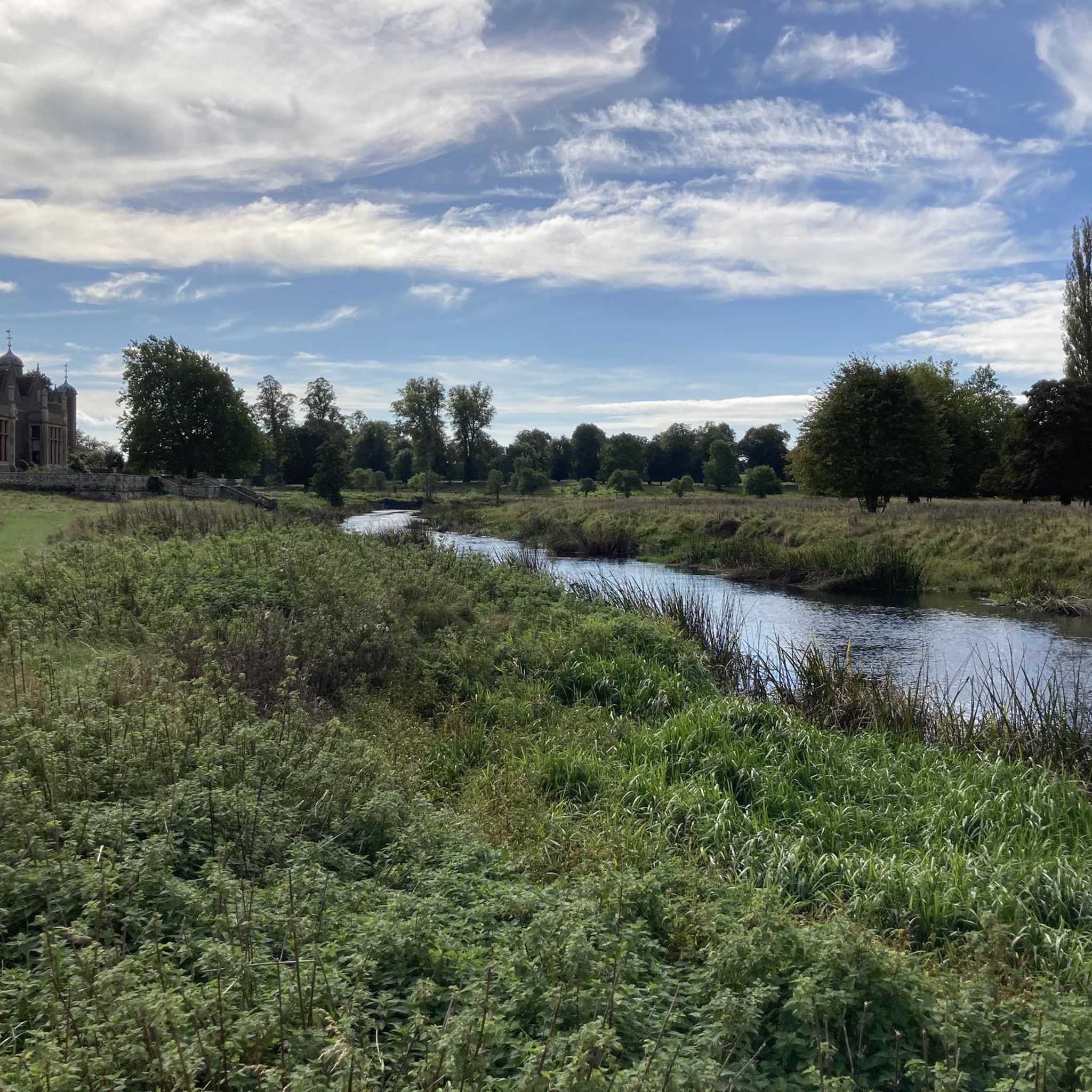
There are great views of 'Compton Pools' from many vantage points along this route. The pools are really lakes as they were turned into a single expanse of water by Lancelot Capability Brown circa 1769. The hills, the house and the bridges provide a beautiful backdrop to the lakes.
1
0
"The Ice House was built in 1772 by ‘Capability’ Brown during the extensive remodelling. An Ice House was a ‘must have’ accessory of the day amongst leading gentry, with growing demand for refrigerated food, sorbets and ice creams. Ice was cut in blocks from the lake during the winter and dragged up to the Ice house. A drain at the bottom allowed water from the melted ice to escape. The structure was built mainly underground where the temperature is more consistently cool. The Ice House at Compton Verney was originally thatched, but after 1817 there are no further records of re-thatching or repair and the Ice House was either abandoned or possibly covered in earth and grass – an approach seen with other Ice Houses – as this was how it was found when the present owners took over Compton Verney in the 1990s. Clearance of the Ice House at Compton Verney started in 2008. The Ice House has now been fully restored" Source: Wikipedia en.wikipedia.org/wiki/Compton_Verney_House
1
0
"Combroke Village is also known as Combrook and, less frequently, as Combrooke. Its history is closely linked with that of the nearby Compton Verney estate, for which it once served as the estate village, providing living accommodation for a number of the servants. The village dates from at least the time of Henry I, circa 1086, when a small medieval church was built in the village. There is, however, no separate reference to it in the Domesday book. By 1279, following a stocktaking by Edward I known as the Hundred Rolls, Combrook was identified as located in the Kineton hundred. It remained part of the Kineton parish until 1858, when it was separated from Kineton and united with the ecclesiastical parish of Compton Verney. A number of the buildings in the village have a similar style, most easily seen in the church. The original church was modified in Tudor times, with the chancel being rebuilt again in 1831. The present building was erected in 1866, to a design by John Gibson, paid for by the Dowager Lady Margaret Willoughby de Brook of Compton Verney, keeping the existing chancel. John Gibson went on to design the Victorian neo-Elizabethan estate houses and the horse drinking troughs in the village in the same style as that of the church. A number of the other houses in the village are thatched, with clear signs of original thatched roofs visible on several other dwellings. Until the sale of the Compton Verney estate in 1929, Combrook was a "closed" village, entirely owned by the Lord of the Manor, who could determine who lived there, and Combrook today is still considered to be one of the best-preserved estate villages in the country. The largest house in Combrook once served as the school, and there has been a school on the site since at least 1641. The building which now serves as the village hall was built as the village school in 1855, and seems to have served as a design template for John Gibson's style for the church and estate houses. The village school was closed in 1966." Source: Wikipedia https://en.wikipedia.org/wiki/Combrook
1
0
"The church of St Mary & St Margaret at Combrook is an entirely 19th century creation but one of considerable charm and eccentricity. Most of it dates from 1866 to the design of John Gibson, though the chancel remains from a simpler structure of 1831. The church is unusual in both it's shape and detailing, from the wide but low-pitched facade to the multi-gabled aisle walls. The west door and bell turret above are adorned with somewhat over-large demi-figures of angels. The stonework attractively blends white stone with rich golden-brown ironstone details. The interior is dark and largely brick-lined with some small stained glass windows by Willement, Powells and Burlison & Grylls." Source: https://warwickshirechurches.weebly.com/combrook---ss-mary--margaret.html
1
0


Lobbington Meadow is an unimproved species-rich hay meadow which faces north east on the banks of the River Dene and exhibits ridge and furrow topography. The meadow overlies Lias clays and shales which have given rise to a calcareous soil. This is reflected in the herb-rich vegetation which is the lady’s bedstraw Galium verum variant of the crested dog’s-tail Cynosurus cristatus-common knapweed Centaurea nigra grassland. This grassland type was once widespread and common in some parts of Britain, particularly the Midlands, but due to agricultural improvement it has declined severely during the twentieth century. In several counties in the East Midlands it has almost disappeared and in Warwickshire very few sites are known. The meadow has an exceptionally herb-rich tight sward and the density of herbs is very striking. Among the wide range of grass species present, characteristically none appear dominant. The most abundant species are crested dog’s-tail, red fescue Festuca rubra, common bent Agrostis capillaris and sweet vernal grass Anthoxanthum odoratum. Yellow oat-grass Trisetum flavescens, quaking grass Briza media and meadow barley Hordeum secalinum are also frequent. Herbs characteristic of this type of grassland and found in abundance in this meadow include common knapweed and lady’s bedstraw and locally abundant, spiny restharrow Ononis spinosa, salad burnet Sanguisorba minor and pepper saxifrage Silaum silaus. Cowslips Primula veris are frequent and dwarf thistle Cirsium acaulon, is occasional. County rarities present m the meadow include dropwort Filipendula vulgaris and green-winged orchid Orchis morio. 4.68 ha Site of Special Scientific Interest (SSSI)
0
0
The site of The Church of St Mary and St Margaret, a Medieval chapel which was largely rebuilt as a parish church in the 19th century. The chancel was rebuilt in 1831 and the nave in 1866. It stands in Combrook. Church. 1866. By John Gibson, incorporating chancel of 1831 with alterations. MATERIALS: coursed limestone rubble with ironstone dressings; steeply pitched old and renewed tile roof. PLAN: 2-bay chancel and 5-bay nave with lean-to aisles and bellcote. c1300 style. Coped gables. EXTERIOR: chancel has a 3-light traceried east window; north and south sides have straight-headed 2-light windows. Aisles have diagonal buttresses and 2-light windows with head stops to hood moulds in gabled half-dormers. West entrance has elaborate open-work cusped gable on shafts with foliated capitals and large angel corbels; rose window above. Gable has bellcote with spire and weather-vane; angels to angles. INTERIOR: flower-pot shaped font is possibly medieval. STAINED GLASS: east window by Willement c1866; good glass to west window.
1
0
Frequently Asked Questions
How many hiking trails are there around Compton Verney?
There are over 200 hiking routes available around Compton Verney, offering a wide range of options for different abilities and preferences. The majority, around 114, are classified as easy, with 98 moderate and a few more challenging routes.
Are there easy walks suitable for beginners or families with children?
Yes, Compton Verney is ideal for easy walks. Over half of the routes are classified as easy, traversing gentle, rolling countryside. A great option for families is the Compton Pools loop from Combrook, which is 2.1 miles (3.4 km) and takes about 54 minutes to complete.
Are there circular walks available near Compton Verney?
Many of the routes around Compton Verney are circular, allowing you to start and end at the same point. For example, the popular Compton Pools – Stone Bridge at Compton Verney loop from Compton Verney CP is a 3.8-mile (6.1 km) circular trail that explores the scenic Compton Pools and the historic Stone Bridge.
What kind of views can I expect on the trails around Compton Verney?
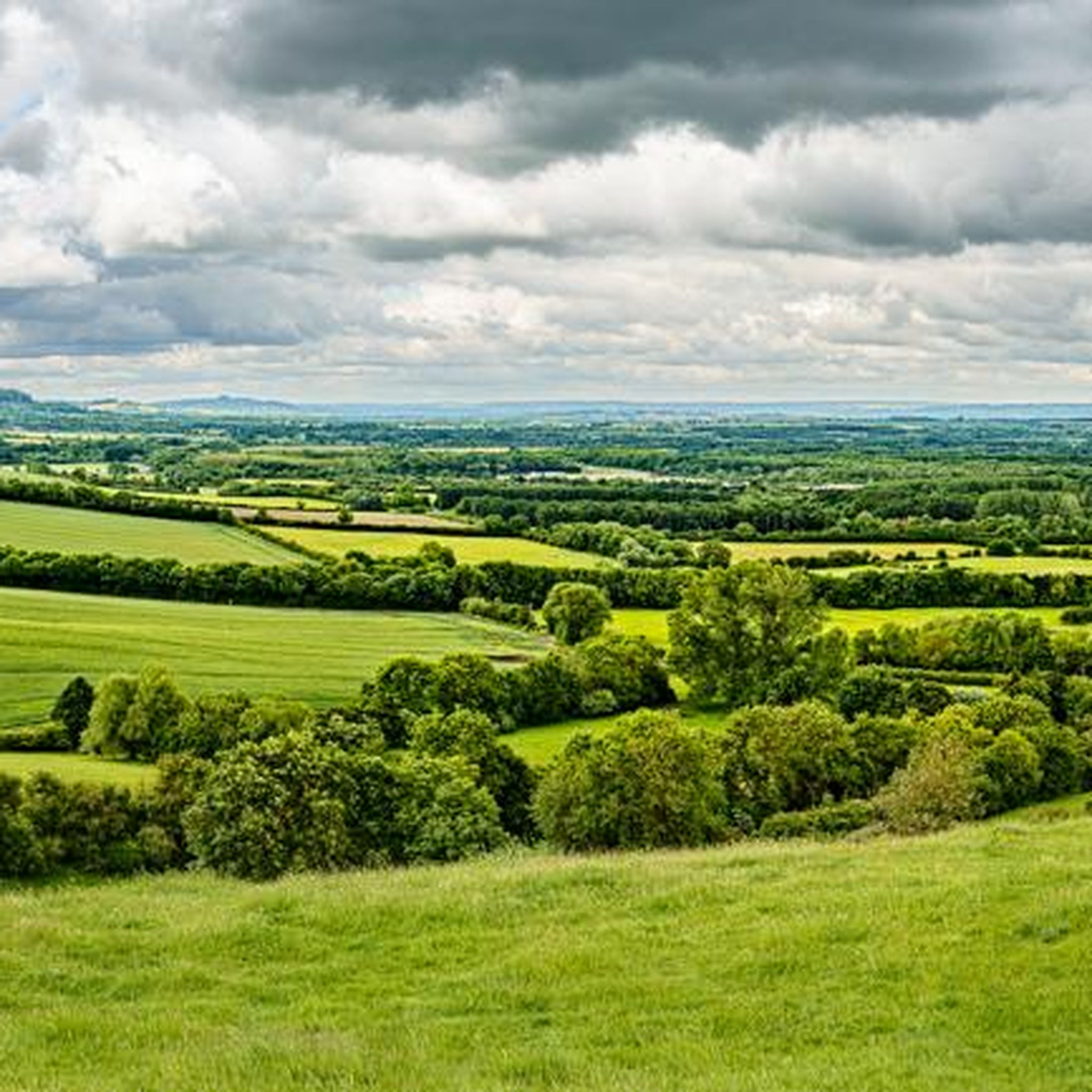
The trails around Compton Verney offer pleasant views of the region's gentle, rolling countryside, open fields, and woodlands. Many routes feature picturesque water bodies like Compton Pools and glimpses of historic structures such as the Stone Bridge.
Are the hiking trails around Compton Verney dog-friendly?
Generally, the trails around Compton Verney are suitable for dog walking, especially those traversing open fields and woodlands. However, it's always recommended to keep dogs on a lead, particularly near livestock or in nature conservation areas, and to check specific route details for any restrictions.
Where can I park when hiking around Compton Verney?
Several routes start from designated parking areas. For instance, the Compton Pools – Stone Bridge at Compton Verney loop begins from Compton Verney CP (Car Park). Other routes, like the Kineton War Memorial – Pittern Hill Trig Point loop, start from Kineton CP. Always check the specific tour details for parking information.
What can I see along the hiking trails or nearby attractions?
Beyond the natural beauty of Compton Pools and the Stone Bridge, you can explore several historical sites and natural monuments. Notable attractions include Charlecote Park, the historic Battle of Edgehill Site, and the serene Bishops Bowl Lakes.
Are there any challenging or long-distance hikes in the area?
While the area is known for its gentle terrain, there are a few more challenging routes. For a moderate, longer hike, consider the Pittern Hill Trig Point – Kineton loop from Combrook, which covers 6.8 miles (10.9 km) and includes more elevation gain than other local trails.
What do other hikers enjoy most about hiking in Compton Verney?
The area is highly rated by the komoot community, with an average score of 4.5 stars from over 300 reviews. Hikers often praise the peaceful countryside, the well-maintained paths, and the scenic beauty of Compton Pools and the historic Stone Bridge.
Is public transport available to access the hiking trails?
While some villages like Combrook and Kineton, which serve as starting points for hikes, may have limited bus services, direct public transport to all trailheads can be infrequent. It's advisable to check local bus schedules in advance or consider driving to access the wider network of trails.
What is the best time of year to hike around Compton Verney?
Compton Verney offers pleasant hiking experiences throughout the year. Spring brings blooming wildflowers, summer provides lush green landscapes, and autumn showcases beautiful foliage. Winter walks can be crisp and quiet, though paths might be muddy. The gentle terrain makes it accessible in most conditions.
Are there any cafes or refreshment stops along the trails?
While the trails themselves might not have direct refreshment stops, many routes pass through or near villages like Combrook or Kineton, where you can find local pubs or cafes. It's always a good idea to carry water and snacks, especially on longer routes, and plan your stops in advance.
Most popular attractions around Compton Verney

Get inspired with the komoot mobile app


Explore more
Browse the best Hikes in other regions.
