Attractions and Places To See around Weedon Bec - Top 20
Best attractions and places to see around Weedon Bec include a mix of historical landmarks and natural features. This historic village in West Northamptonshire is situated along the Grand Union Canal and near the River Nene, offering canalside walking opportunities. Its past as a transportation hub and military depot adds to its unique character. The area provides diverse points of interest for visitors to explore.
Best attractions and places to see around Weedon Bec
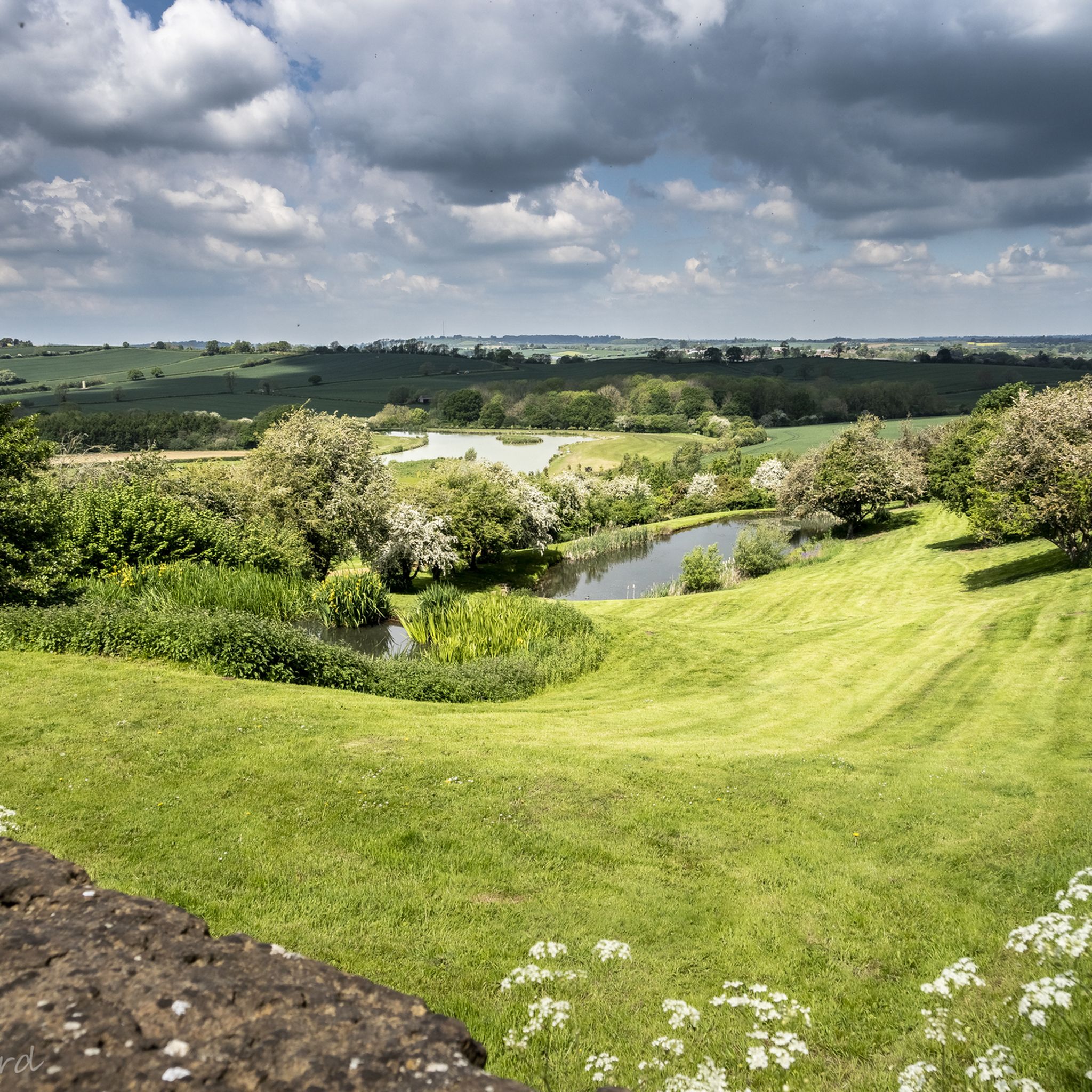
- The most popular attractions is Daventry Country Park Reservoir, a lake that features a trail around its perimeter. This park offers a large reservoir, a cafe, an adventure playground, and accessible bird hides.
- Another must-see spot is Harlestone Firs, a forest with miles of criss-crossing paths. It is suitable for walks and offers access to a garden center nearby.
- Visitors also love Borough Hill B-17 Bomber Memorial Bench, a man-made monument commemorating a USA AF B-17 bomber crew. This memorial bench provides a factual account of the 1944 crash.
- Weedon Bec is known for historical sites, natural features, and religious buildings. The region offers a variety of attractions to see and explore, from military history to tranquil forest walks.
- The attractions around Weedon Bec are appreciated by the komoot community, with 11 upvotes and 9 photos shared by visitors.
Last updated: October 9, 2026
Canons Ashby House and Priory Church
Highlight • Castle
Built by the Drydens using the remains of a medieval priory, the house and gardens have survived largely unaltered since 1710 and are presented as they were during the Victorian era.
The warm, welcoming house features grand rooms, stunning tapestries and Jacobean plasterwork, contrasting with the domestic detail of the servants' quarters.
Stroll in the historic parkland and catch glimpses of early medieval landscapes, while a wander through the priory church reveals the story of the canons of Canons Ashby."
Cit. nationaltrust.org.uk/canons-ashby#Overview
Tip by

Borough Hill B-17 Bomber Memorial Bench
Highlight • Monument
The Norton B-17
On the 15th of December 1944 B-17G Flying Fortress 43-38973 of the 305th Bomb Group, 422nd Bombardment Squadron based at Chelveston was returning from a bombing mission over the mashalling yards at Kassel in Germany.
It had been badly damaged and one engine was out. The aircraft managed to return from the raid but once over the coast it began to have difficulty in maintaining height. The problems were compounded by a complete blanket of fog over England.
Not sure of their position they flew lower and lower and eventually collided with the Air Ministry GEE mast on Borough Hill Daventry. The port wing was severed during the collision and the aircraft crashed at Norton Fields killing the crew of nine.
On August the 24th 2014 Sywell Aviation Museum carried out an excavation to locate the remains of the aircraft. All artefacts recovered during this excavation may be viewed in a special display within the museum.
On the 24th of August 2015 a memorial service was held at the Daventry War Memorial and a plaque was unveiled to the crew by the son and grand daughter of the ball gun turret operator Sgt. Burry.
The USAF was represented at the memorial service by Lieut.Col Ford, Commander of the 422nd Medical Squadron USAF from RAF Croughton and sir Tim Boswell, Deputy Lord Lieut. of Northamptonshire representing the county.
Tip by

Sign up now to discover places like this
Get recommendations on the best single tracks, peaks, & plenty of other exciting outdoor places.
Harlestone Firs
Highlight • Forest
There is roadside parking in front of the main entrance, though this can get full quickly on a nice day or at the weekend. An ice cream van parks here most busy days, selling the local Gallone's ice cream, along with all the classics.
You can also visit the garden centre 328 feet (100 m) down from the forest entrance, where there is a cafe, shops and toilets.
Tip by

Daventry Country Park Reservoir
Highlight • Lake
Tip by

All Saints' Church, Braunston
Highlight • Religious Site
The building is generally of roughly coursed rubble, but has been much restored. The vestry was added about 1860, and the restoration of the chancel took place in 1887–8, when its south wall was rebuilt. The nave was restored in 1890, the old high closed pews and a west gallery erected in 1791 being then removed. The present seating dates from 1928. The tower is said to have been taken down to its foundations and rebuilt in 1728–9, but the old materials appear to have been used again.
The earliest work in the building dates from c. 1150, to which period the half-round responds of the chancel arch belong: they have moulded bases and scalloped capitals with square chamfered abaci or imposts continued along the wall on the nave side. The extent of the nave of the 12th century church was probably the same as at present, but in the first half of the 13th century a south aisle was added and the chancel rebuilt as now existing. The south arcade and chancel arch are of this period (c. 1225–30), and the south doorway is also probably contemporary, though in appearance rather earlier in style. At the beginning of the 14th century a north aisle was added to the nave, and about a century later the tower appears to have been erected, followed shortly after by the addition of the clearstory. New windows were inserted in the chancel and south aisle, the east end of the aisle refaced or rebuilt, and the porch added. All this later work apparently extended over a considerable period towards the end of the 14th and the beginning of the 15th century. All the walls are plastered internally.
The chancel has a chamfered plinth, but is without buttresses. At the east end of the north wall is the only remaining 13th-century window, a single lancet, (fn. 107) the hood of which has notch-stops. The fourcentred east window and one in the rebuilt south wall are of three cinquefoiled lights, and there is a square-headed window of two trefoiled lights west of the modern priest's doorway. A round-headed north doorway, now opening into the vestry, may belong to the 12th-century church. The unmoulded trefoiled piscina recess has a slot for a wooden shelf, but the bowl is new; below the south-east window is a rectangular aumbry. The chancel arch is of two chamfered orders without hood-mould. The roof is modern, with flat-boarded ceiling.
The nave arcades are of three bays, with pointed arches of two chamfered orders, those of the 13thcentury south arcade springing from cylindrical piers with circular moulded capitals and bases, and from similar half-round responds. The arches have plain hood-moulds on each side. The piers and responds of the later north arcade are octagonal, with deeper moulded capitals and the hood-moulds of the arches have head-stops.
The south doorway is a good example of early 13th-century work, with semicircular arch of two orders, and hood-mould enriched on the underside with a continuous line of dog-tooth. The inner order has a keel-shaped moulding springing from plain chamfered imposts on nook-shafts with moulded bases, and simple water-leaf (west) and foliated capitals. There are traces of colour on the wall on either side the opening inside the porch, and a scratch dial at the top of the west jamb.
The south aisle is lighted by two windows in the south wall, one on each side of the porch, that to the east being of three lights similar to those in the chancel, and the other a square-headed window of two trefoiled lights. There is also a single-light trefoiled window of c. 1350 in the west wall, but the east wall is blank. In the north aisle are two 14thcentury square-headed windows respectively of three and two cinquefoiled lights, and west of the blocked doorway a modern window of two lights. The end walls are blank.
There are three pointed clearstory windows on each side, all of two cinquefoiled lights, with tracery and hood-moulds, and above them a hollow-moulded string. The low-pitched east gable has a modern apex cross, and stands high above the chancel roof.
The tower is faced with ashlar, and is of three stages, with moulded plinth and diagonal buttresses the height of the lower stage. The pointed bellchamber windows are of two trefoiled lights with quatrefoil in the head, and the tower terminates with a plain moulded parapet behind which the tiny spire is scarcely seen. There is no vice. The two lower stages are blank on the north and south, but on the west there is a square-topped doorway with plain lintel, and above it a second lintelled opening with wooden door; over this again is a glazed pointed opening with central mullion, the whole arrangement apparently dating from the 18th-century rebuilding. There is no arch to the nave, the west wall of which is pierced by a square-headed doorway.
The font is of 12th-century date, and consists of a large rectangular bowl with plain sides and shafted angles with cushion capitals and moulded bases; the capitals have a line of pellets at the angle.
The modern Gothic oak pulpit was formerly in Wisbech parish church.
In the floor at the east end of the south aisle are the brass effigies of Kenelme Cheseldyn of Uppingham (d. 1596) and his wife Winefred, daughter of Francis Say of Wilby, Northants, and an armorial brass plate to Edward Cheseldyn of Braunston (d. 1642). A large blue floor-slab in front of the chancel arch has the indents of a single figure and an inscription.
There are considerable traces of mediæval paintings on the east and south walls of the south aisle. In the middle of the east wall is an image bracket about 6 ft. 6 in. above the floor, which probably supported a figure of our Lady of Sorrows, of which the painting formed the background. An angel with outstretched wings is depicted on either side and on a medallion at the north end are a cross and the instruments of the Passion. On the south wall are portions of a text and fragments of a painting in red and black of the Mass of St. Gregory. It depicts an altar with chalice and paten, and about the altar four candlesticks and a patriarchal cross.
There is a stone coffin in the south aisle, and in the churchyard is preserved a grotesque stone figure (fn. 116) of the type known in Ireland as 'Sheela-na-gigs,' which was found in use, face downward, as a doorstep into the church.
There are four bells in the tower: the treble is by Thomas Newcombe (II) of Leicester (c. 1562–80), inscribed 'S. Thoma,' the second dated 1710, the third by Hugh Watts of Leicester (c. 1593–1615), inscribed 'Praise the Lord,' and the tenor by Thomas Norris of Stamford, 1660.
The plate consists of a cup of 1570–71; a paten of 1640–41; an undated paten with makers' marks 'R-S' only, and a pewter flagon.
Tip by
Sign up for free to discover even more attractions around Weedon Bec.
Already have an account?
Start today with a free account
Your next adventure awaits.
Tips from the Community

The area is great, lots of paths and variety, but the route given sticks to busy roads where you have to keep your dog on a lead. It also directs you down a private drive with no public right of way. Come to the area and follow your nose, not this route.
0
0

Great to walk around looks very impressive
0
0


"A tranquil Tudor manor house set in rare terraced gardens, with the 'antient' Dryden family at its heart Built by the Drydens using the remains of a medieval priory, the house and gardens have survived largely unaltered since 1710 and are presented as they were during the Victorian era. The warm, welcoming house features grand rooms, stunning tapestries and Jacobean plasterwork, contrasting with the domestic detail of the servants' quarters. Stroll in the historic parkland and catch glimpses of early medieval landscapes, while a wander through the priory church reveals the story of the canons of Canons Ashby." Cit. https://www.nationaltrust.org.uk/canons-ashby#Overview
2
0

The church of ALL SAINTS consists of chancel 23 ft. by 17 ft. 6 in., with vestry on the north side, clearstoried nave 41 ft. 8 in. by 17 ft. 6 in., north aisle 9 ft. 6 in. wide, south aisle about 8 ft. wide, south porch, and west tower 11 ft. square, all these measurements being internal. The tower is surmounted by a short leadcovered spire. The width across nave and aisles is 40 ft. All the roofs are leaded and of low pitch, with overhanging eaves. The building is generally of roughly coursed rubble, but has been much restored. The vestry was added about 1860, and the restoration of the chancel took place in 1887–8, when its south wall was rebuilt. The nave was restored in 1890, the old high closed pews and a west gallery erected in 1791 being then removed. The present seating dates from 1928. The tower is said to have been taken down to its foundations and rebuilt in 1728–9, but the old materials appear to have been used again. The earliest work in the building dates from c. 1150, to which period the half-round responds of the chancel arch belong: they have moulded bases and scalloped capitals with square chamfered abaci or imposts continued along the wall on the nave side. The extent of the nave of the 12th century church was probably the same as at present, but in the first half of the 13th century a south aisle was added and the chancel rebuilt as now existing. The south arcade and chancel arch are of this period (c. 1225–30), and the south doorway is also probably contemporary, though in appearance rather earlier in style. At the beginning of the 14th century a north aisle was added to the nave, and about a century later the tower appears to have been erected, followed shortly after by the addition of the clearstory. New windows were inserted in the chancel and south aisle, the east end of the aisle refaced or rebuilt, and the porch added. All this later work apparently extended over a considerable period towards the end of the 14th and the beginning of the 15th century. All the walls are plastered internally. The chancel has a chamfered plinth, but is without buttresses. At the east end of the north wall is the only remaining 13th-century window, a single lancet, (fn. 107) the hood of which has notch-stops. The fourcentred east window and one in the rebuilt south wall are of three cinquefoiled lights, and there is a square-headed window of two trefoiled lights west of the modern priest's doorway. A round-headed north doorway, now opening into the vestry, may belong to the 12th-century church. The unmoulded trefoiled piscina recess has a slot for a wooden shelf, but the bowl is new; below the south-east window is a rectangular aumbry. The chancel arch is of two chamfered orders without hood-mould. The roof is modern, with flat-boarded ceiling. The nave arcades are of three bays, with pointed arches of two chamfered orders, those of the 13thcentury south arcade springing from cylindrical piers with circular moulded capitals and bases, and from similar half-round responds. The arches have plain hood-moulds on each side. The piers and responds of the later north arcade are octagonal, with deeper moulded capitals and the hood-moulds of the arches have head-stops. The south doorway is a good example of early 13th-century work, with semicircular arch of two orders, and hood-mould enriched on the underside with a continuous line of dog-tooth. The inner order has a keel-shaped moulding springing from plain chamfered imposts on nook-shafts with moulded bases, and simple water-leaf (west) and foliated capitals. There are traces of colour on the wall on either side the opening inside the porch, and a scratch dial at the top of the west jamb. The south aisle is lighted by two windows in the south wall, one on each side of the porch, that to the east being of three lights similar to those in the chancel, and the other a square-headed window of two trefoiled lights. There is also a single-light trefoiled window of c. 1350 in the west wall, but the east wall is blank. In the north aisle are two 14thcentury square-headed windows respectively of three and two cinquefoiled lights, and west of the blocked doorway a modern window of two lights. The end walls are blank. There are three pointed clearstory windows on each side, all of two cinquefoiled lights, with tracery and hood-moulds, and above them a hollow-moulded string. The low-pitched east gable has a modern apex cross, and stands high above the chancel roof. The tower is faced with ashlar, and is of three stages, with moulded plinth and diagonal buttresses the height of the lower stage. The pointed bellchamber windows are of two trefoiled lights with quatrefoil in the head, and the tower terminates with a plain moulded parapet behind which the tiny spire is scarcely seen. There is no vice. The two lower stages are blank on the north and south, but on the west there is a square-topped doorway with plain lintel, and above it a second lintelled opening with wooden door; over this again is a glazed pointed opening with central mullion, the whole arrangement apparently dating from the 18th-century rebuilding. There is no arch to the nave, the west wall of which is pierced by a square-headed doorway. The font is of 12th-century date, and consists of a large rectangular bowl with plain sides and shafted angles with cushion capitals and moulded bases; the capitals have a line of pellets at the angle. The modern Gothic oak pulpit was formerly in Wisbech parish church. In the floor at the east end of the south aisle are the brass effigies of Kenelme Cheseldyn of Uppingham (d. 1596) and his wife Winefred, daughter of Francis Say of Wilby, Northants, and an armorial brass plate to Edward Cheseldyn of Braunston (d. 1642). A large blue floor-slab in front of the chancel arch has the indents of a single figure and an inscription. There are considerable traces of mediæval paintings on the east and south walls of the south aisle. In the middle of the east wall is an image bracket about 6 ft. 6 in. above the floor, which probably supported a figure of our Lady of Sorrows, of which the painting formed the background. An angel with outstretched wings is depicted on either side and on a medallion at the north end are a cross and the instruments of the Passion. On the south wall are portions of a text and fragments of a painting in red and black of the Mass of St. Gregory. It depicts an altar with chalice and paten, and about the altar four candlesticks and a patriarchal cross. There is a stone coffin in the south aisle, and in the churchyard is preserved a grotesque stone figure (fn. 116) of the type known in Ireland as 'Sheela-na-gigs,' which was found in use, face downward, as a doorstep into the church. There are four bells in the tower: the treble is by Thomas Newcombe (II) of Leicester (c. 1562–80), inscribed 'S. Thoma,' the second dated 1710, the third by Hugh Watts of Leicester (c. 1593–1615), inscribed 'Praise the Lord,' and the tenor by Thomas Norris of Stamford, 1660. The plate consists of a cup of 1570–71; a paten of 1640–41; an undated paten with makers' marks 'R-S' only, and a pewter flagon.
0
0
Memorial bench with inscription "In memory of the USA AF B-17 Bomber crew who lost their lives on December 15, 1944." The Norton B-17 On the 15th of December 1944 B-17G Flying Fortress 43-38973 of the 305th Bomb Group, 422nd Bombardment Squadron based at Chelveston was returning from a bombing mission over the mashalling yards at Kassel in Germany. It had been badly damaged and one engine was out. The aircraft managed to return from the raid but once over the coast it began to have difficulty in maintaining height. The problems were compounded by a complete blanket of fog over England. Not sure of their position they flew lower and lower and eventually collided with the Air Ministry GEE mast on Borough Hill Daventry. The port wing was severed during the collision and the aircraft crashed at Norton Fields killing the crew of nine. On August the 24th 2014 Sywell Aviation Museum carried out an excavation to locate the remains of the aircraft. All artefacts recovered during this excavation may be viewed in a special display within the museum. On the 24th of August 2015 a memorial service was held at the Daventry War Memorial and a plaque was unveiled to the crew by the son and grand daughter of the ball gun turret operator Sgt. Burry. The USAF was represented at the memorial service by Lieut.Col Ford, Commander of the 422nd Medical Squadron USAF from RAF Croughton and sir Tim Boswell, Deputy Lord Lieut. of Northamptonshire representing the county.
0
0
Daventry Country Park is a popular park ideally situated in the urban fringe of Daventry, within one mile of the town centre and easily accessible by car, bicycle or on foot with the benefit of cycle ways and footpaths from the surrounding areas. With a large reservoir, a cafe selling hot and cold food, an adventure playground, outdoor gym equipment, numerous picnic spots, a nature trail, accessible bird hides, and a wealth of wildlife, Daventry Country Park is a great family day out. The Park has been awarded the Country Parks Accreditation and also holds a Green Flag Award recognising it as being among the best green spaces in the country.
0
1

Great for a walk with the dog, with friends or just on your tod. There are miles of criss-crossing paths to explore with access to the golf course on the far side (away from main entrance). There is roadside parking in front of the main entrance, though this can get full quickly on a nice day or at the weekend. An ice cream van parks here most busy days, selling the local Gallone's ice cream, along with all the classics. You can also visit the garden centre 328 feet (100 m) down from the forest entrance, where there is a cafe, shops and toilets.
2
0
Frequently Asked Questions
What historical landmarks can I explore in Weedon Bec?
Weedon Bec is rich in history. You can visit the Royal Ordnance Depot, a vast military complex built in 1802, which played a significant role in British military history. Another notable site is the Borough Hill B-17 Bomber Memorial Bench, which commemorates a USA AF B-17 bomber crew that crashed in 1944. The village also features the historic Church of St. Peter and St. Paul, with parts dating back to the 12th century.
What natural features can I enjoy around Weedon Bec?
The area around Weedon Bec offers several natural attractions. The Grand Union Canal runs through the village, providing pleasant canalside walking opportunities. The River Nene also flows through Weedon Bec, with a 'pocket park' in the Puddlebank area offering access to the riverbank. Just a short distance away, you can explore Daventry Country Park Reservoir, which features a trail around its perimeter, and Harlestone Firs, a forest with miles of criss-crossing paths.
Are there opportunities for walking or hiking near Weedon Bec?
Yes, Weedon Bec is an excellent starting point for walks and hikes. You can enjoy easy walks along the Grand Union Canal or explore the paths at Harlestone Firs. For more structured routes, komoot offers several guides, including Easy hikes around Weedon Bec and Hiking around Weedon Bec, which feature routes like the 'Path to the Church loop from Flore' and 'Everdon Church – Preston Capes Castle loop from Everdon'.
Can I go cycling around Weedon Bec?
Absolutely! The region around Weedon Bec is suitable for cycling. You can find various routes, including moderate touring bicycle trails. Check out the Cycling around Weedon Bec guide for options like the 'Nene Whitewater Centre – Upton Country Park Gravel Path loop from Bugbrooke Meadow' or the 'Nether Heyford Village Sign – Gayton Junction loop from Bugbrooke Meadow'.
What are some family-friendly attractions in Weedon Bec?
Families will find several engaging spots. Daventry Country Park Reservoir is a popular choice with an adventure playground, accessible bird hides, and a cafe. Jubilee Fields in Weedon Bec also features a children's play area. For a historical outing, the Borough Hill B-17 Bomber Memorial Bench offers a poignant educational experience.
Are there dog-friendly places to visit or walk around Weedon Bec?
Yes, Weedon Bec is very dog-friendly. Jubilee Fields is a great spot for dog walking. Harlestone Firs is also highly recommended for walks with your dog, offering miles of criss-crossing paths. Many of the canalside paths along the Grand Union Canal are also suitable for dogs.
Are there any significant religious sites in the area?
Weedon Bec and its surroundings host several historic religious buildings. The Church of St. Peter and St. Paul in Weedon Bec itself has a history spanning over 1300 years, with a remarkable 12th-century Norman west tower. Nearby, you can also visit St Mary's Church, Canons Ashby, which is part of a former Augustinian priory, and All Saints' Church, Braunston, known for its 12th-century font and medieval paintings.
What is the best time to visit Weedon Bec attractions?
Weedon Bec attractions can be enjoyed year-round. Spring and summer offer pleasant weather for canalside walks and exploring outdoor sites like Daventry Country Park Reservoir and Jubilee Fields. Autumn provides beautiful foliage for forest walks at Harlestone Firs. Even in winter, many paths remain accessible for invigorating walks, though some outdoor facilities might have reduced hours.
Are there any accessible attractions near Weedon Bec for wheelchairs?
Yes, Daventry Country Park Reservoir is known for its accessibility, featuring accessible bird hides and paths around the lake. The park is designed to be inclusive, making it a good option for visitors using wheelchairs.
What facilities are available at Daventry Country Park Reservoir?
Daventry Country Park Reservoir offers a range of facilities for visitors. These include a cafe selling hot and cold food, an adventure playground for children, outdoor gym equipment, numerous picnic spots, a nature trail, and accessible bird hides. It's a well-equipped park for a full day out.
Where can I find cafes or refreshments near walking routes?
If you're walking at Harlestone Firs, there's a garden center nearby with a cafe, shops, and toilets. Daventry Country Park Reservoir also has a cafe on-site. In Weedon Bec village itself, you'll find local establishments for refreshments after exploring the canal or historical sites.
Most popular routes around Weedon Bec

Get inspired with the komoot mobile app


Explore more
Still not found the Highlight you’re looking for? See guides of the top attractions in other regions:
