Attractions and Places To See around Paddlesworth - Top 20
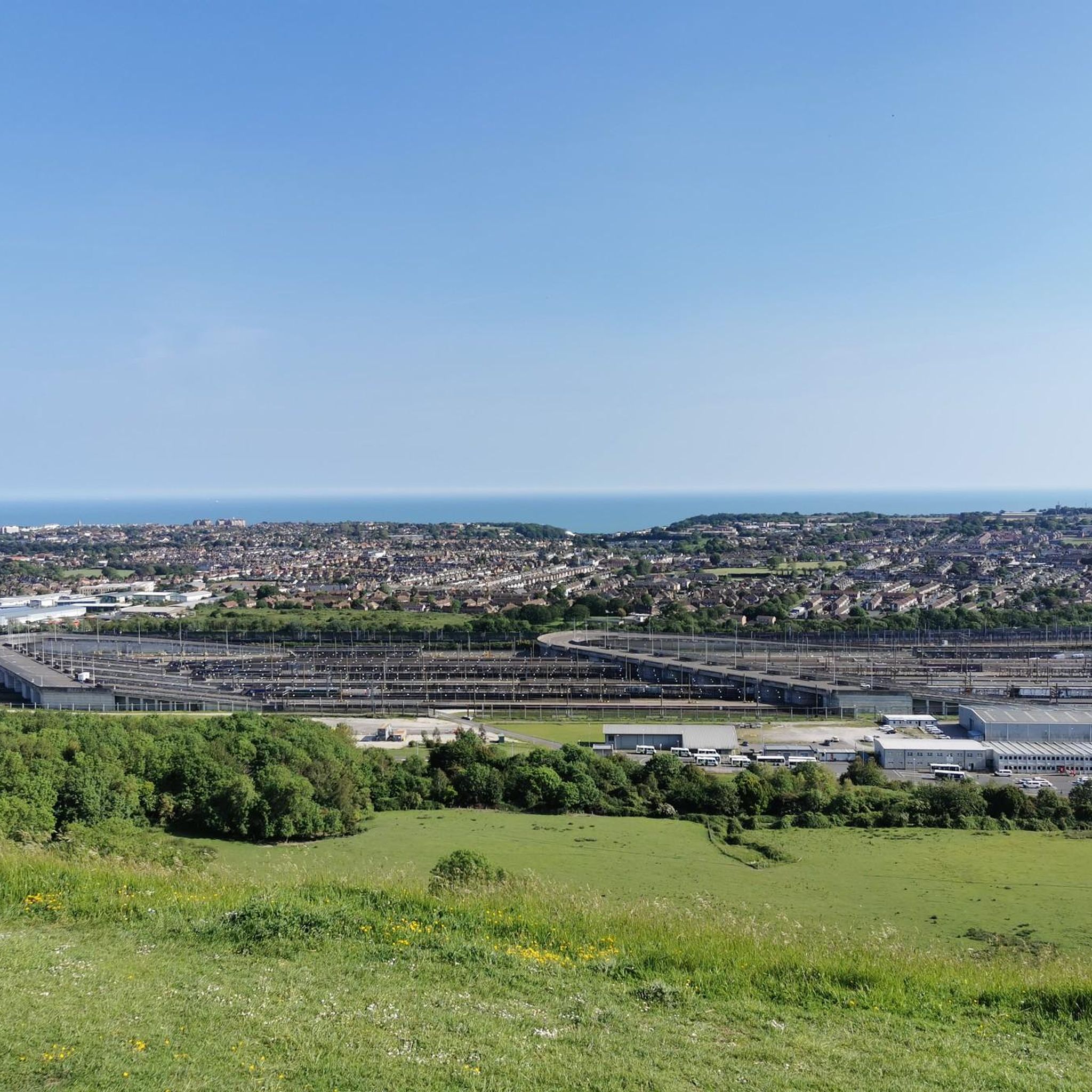
Best attractions and places to see around Paddlesworth, a hamlet in Kent, England, offer a mix of historical landmarks, natural beauty, and cultural points of interest. Situated within the Kent Downs National Landscape, the area features ancient woodlands, chalk grasslands, and a rugged coastline. Visitors can explore sites ranging from early Norman churches to significant World War Two memorials and coastal parks. The region provides diverse opportunities for exploration and discovery.
Best attractions and places to see around Paddlesworth
- The…
Last updated: October 9, 2026
Folkestone Harbour
Highlight • Structure
Tip by

Battle of Britain Memorial
Highlight • Monument
Tip by

Sign up now to discover places like this
Get recommendations on the best single tracks, peaks, & plenty of other exciting outdoor places.
Abbot's Cliff Sound Mirror
Highlight • Monument
Abbot’s Cliff sound mirror | Sound Mirrors (andrewgrantham.co.uk)
Tip by

Lower Leas Coastal Park
Highlight (Segment) • Beach
It also boasts an amphitheatre which hosts theatre and musical performances during the warmer months, and is right next to the beach.
Tip by
The Boardwalk at Folkestone Seafront
Highlight • Cycleway
Tip by

Sign up for free to discover even more attractions around Paddlesworth.
Already have an account?
Start today with a free account
Your next adventure awaits.
Tips from the Community

Most people who pass by such a war memorial commemorating the victims will not have experienced the horrors of war firsthand. A dialogue invented by the writer Paul Harding might help. It is from a medieval detective novel, and the following exchange takes place: "Tell me, brother, when you went to war in France with your little brother, were you happy?" Athelstan felt his heart leap. "Of course." He smiled thinly. "I was young then. My blood was boiling, and I longed for great adventures." "And when you found your brother dead and cold as ice on the battlefield and returned to England... what was there?" Athelstan looked out into the courtyard; it was slowly getting dark. "In the Gospel, Sir John, Christ says that at the end of the world, the heavens will shake, and the planets will fall to earth in blazing fire." Athelstan closed his eyes. He felt Francis's spirit quite clearly. “When I found my brother dead in the field,” he continued, “it was as if heaven had fallen to earth for me.” (Source: “The House of the Red Butcher” by Paul Harding)
0
0


The Boardwalk at Folkestone Seafront is a striking feature constructed from reconditioned railway sleepers. It stretches 800 meters across the shingle beach, linking the Harbour Arm and Station with the Lower Leas Coastal Park. This pathway not only connects various parts of the seafront but also brings visitors closer to the water’s edge. Along the route, you’ll find public artworks from the Folkestone Triennial, such as AK Dolven’s suspended bell ‘Out of Tune’ and Lubaina Himid’s ‘Jelly Mould Pavilion’. The Boardwalk is part of a larger regeneration project aimed at revitalizing the harbour area, making it a vibrant space with new restaurants, bars, cafes, and pathways. The use of old railway sleepers ties the new development to the harbour’s historical roots, while the landscaping and design ensure durability against the marine environment.
0
0
As a memorial to the many dead, such monuments - usually called "war memorials" in English - are still very important today. "Now, Lord, you let your servant depart in peace, as you have said..." says the so-called "Hymn of Simeon" (Luke 2, verse 29). However, the people who are remembered here did not depart in peace, but became victims of war and tyranny. Therefore, instead of the previously most common "war memorial", the term "fallen memorial" is now sometimes used in German to emphasize the aspect of remembering the victims. In addition, each of these countless memorials has a timeless, permanently valid message: to remind our current and all future generations - again and again - to keep the peace.
2
1

Built in 1810 (and later expanded) on the site of a former fishing village. Now mostly an area of leisure, a handful of fishing boats still operate from here and sell in the nearby fish market.
3
0
Lovely area, i can recommend Sandy's Fish and chips, which is slightly hidden in 2-3 Back Street, Fish was fresh and tasty. https://www.sandysfishandchips.co.uk/
2
1

The Lower Leas Coastal Park is home to the largest free adventure play area in the South East. It also boasts an amphitheatre which hosts theatre and musical performances during the warmer months, and is right next to the beach. The park is split into three zones, with the formal zone comprising pine avenues, gardens and flowers blooming all year. The fun zone has several different play areas, while the wild zone is a haven for quiet recreation, where sensitive habitat management allows wildlife to thrive.
3
0

The Battle of Britain Memorial is a national memorial to the men who fought in the Battle of Britain between 10th July and 31st October, 1940. The site is a place of peaceful remembrance and has an interactive visitor centre. You experience wonderful views over the Channel too. The memorial is free to enter but you do have to pay for the scrambling experience. For opening times and more information, visit: battleofbritainmemorial.org.
1
0
Frequently Asked Questions
What natural features and outdoor spaces can I explore around Paddlesworth?
Paddlesworth is nestled within the Kent Downs National Landscape, offering ancient bluebell woodlands, chalk grasslands, and a rugged coastline. You can visit Lower Leas Coastal Park in Folkestone, which features gardens, play areas, and direct beach access. Another great option is The Warren, Folkestone, a country park with sandy beaches, wildflower meadows, and footpaths along the East Cliffs. Cheriton Hill also provides scenic views and is known for its chalk grassland.
Are there historical sites or cultural landmarks to visit near Paddlesworth?
Yes, the area is rich in history. You can explore the 11th-century St Oswald's Church in Paddlesworth itself, or the 900-year-old St Benedict's Church on the Pilgrim's Way. The Battle of Britain Memorial commemorates those who fought in World War Two, offering an interactive visitor center and Channel views. Other significant sites include Dover Castle, the Western Heights fortifications, and the historic Abbot's Cliff Sound Mirror, a precursor to radar.
What family-friendly attractions are available in the Paddlesworth area?
Families will enjoy the Lower Leas Coastal Park, which boasts the largest free adventure play area in the South East, an amphitheater, and beach access. The Battle of Britain Memorial also has an interactive visitor center that can engage older children. Folkestone Harbour is a vibrant spot with cafes and a paddling pool for children.
Where can I find scenic viewpoints around Paddlesworth?
For panoramic views, visit the Battle of Britain Memorial, which offers extensive vistas over the English Channel. Cheriton Hill is another excellent spot for scenic views, particularly known for the White Horse millennium project. The Kent Downs National Landscape itself provides numerous picturesque spots with rolling hills and coastal scenery.
What kind of outdoor activities, like hiking or cycling, can I do near these attractions?
The area around Paddlesworth is ideal for outdoor activities. You can find various hiking routes, such as the 'Hawkinge and North Downs Way Loop' or the 'View of Peene Quarry loop from Cheriton'. For cycling, options include the 'Sandgate Castle – Saltwood Castle loop' or the 'WW2 Inland Pillbox – Terlingham Vineyard loop'. Explore more detailed routes and their difficulties on the hiking guide or cycling guide for Paddlesworth.
Are there specific walking trails recommended near Paddlesworth?
Yes, there are several walking trails catering to different abilities. Popular options include the 'Hawkinge and North Downs Way Loop' (moderate, 8.7 km) and the 'WW2 Inland Pillbox – Kent Battle of Britain Museum loop from Hawkinge' (moderate, 8.8 km). For an easier walk, consider the 'Kent Battle of Britain Museum – WW2 Inland Pillbox loop from Hawkinge' (easy, 5.3 km). You can find more details and other routes in the hiking guide for Paddlesworth.
What are some notable churches or ancient religious sites in the vicinity?
Paddlesworth is home to St Oswald's Church, an Early Norman Anglican parish church dating back to the 11th century. Nearby, you can visit St Benedict's Church, a 900-year-old Norman church situated on the Pilgrim's Way. Further afield, the Knights Templar Church in Dover features the foundations of a small medieval church, and St John's Commandery is a 13th-century flint-walled chapel.
Where can I find places to eat or drink near the attractions?
The regenerated Folkestone Harbour is a vibrant hub with plenty of cafes, pubs, and food trucks, especially on a sunny day. In Paddlesworth itself, The Cat and Custard Pot is the local public house. Many of the surrounding towns and villages, such as Folkestone and Dover, also offer a wide range of dining options.
Is Paddlesworth a good destination for history enthusiasts interested in wartime events?
Absolutely. The area played a significant role in wartime history. The Battle of Britain Memorial is a national tribute to the pilots who fought in 1940. Folkestone Harbour was a crucial transit point during the Dunkirk evacuations. You can also explore the Abbot's Cliff Sound Mirror, a pre-radar acoustic mirror, and the Dymchurch Martello Tower, built to defend against Napoleonic invasion threats.
What makes Folkestone Harbour a popular spot for visitors?
Folkestone Harbour has undergone significant regeneration, transforming it into a lively area. Visitors enjoy promenading, dining at numerous cafes and pubs, and taking in the views. It's also historically significant as a transit point for 44,000 people during the Dunkirk evacuations in World War Two, adding a layer of historical interest to its modern appeal.
Are there any beaches or coastal parks to enjoy near Paddlesworth?
Yes, the region offers several coastal spots. The Lower Leas Coastal Park in Folkestone provides direct beach access. The Warren, Folkestone, features sandy beaches along the East Cliffs. Other nearby beaches include Hythe Beach, Sunny Sands Beach (Folkestone), and Samphire Hoe Beach (Dover), all offering opportunities for outdoor enjoyment.
What is the best time of year to visit Paddlesworth for outdoor exploration?
The warmer months, typically spring through early autumn (April to October), are generally best for outdoor exploration around Paddlesworth. During this time, the weather is more favorable for hiking, cycling, and enjoying coastal parks and beaches. The Kent Downs are particularly beautiful when wildflowers are in bloom, and the Lower Leas Coastal Park hosts theatre and musical performances.
What do visitors particularly enjoy about the attractions around Paddlesworth?
Visitors frequently praise the blend of historical significance and natural beauty. The vibrant atmosphere and dining options at Folkestone Harbour are highly appreciated. The peaceful remembrance and extensive views at the Battle of Britain Memorial also receive positive feedback. Many enjoy the diverse landscapes, from the chalk grasslands of the Kent Downs to the coastal paths and beaches, often highlighting the opportunities for walking and exploring.
Most popular attractions around Paddlesworth

Get inspired with the komoot mobile app


Explore more
Still not found the Highlight you’re looking for? See guides of the top attractions in other regions:
