Attractions and Places To See around Naunton Beauchamp - Top 20
Best attractions and places to see around Naunton Beauchamp include a mix of historical landmarks and natural features within Worcestershire. This area offers insights into local history through its ancient structures and provides opportunities to explore woodlands and green spaces. Visitors can discover sites with centuries of history and significant natural reserves.
Best attractions and places to see around Naunton Beauchamp
- The most popular attractions is Pershore Old Bridge, a historical site that served as a key crossing point for traders between London and Worcester. Originally built in the 1400s, it has undergone various repairs over centuries to form the grand structure seen today.
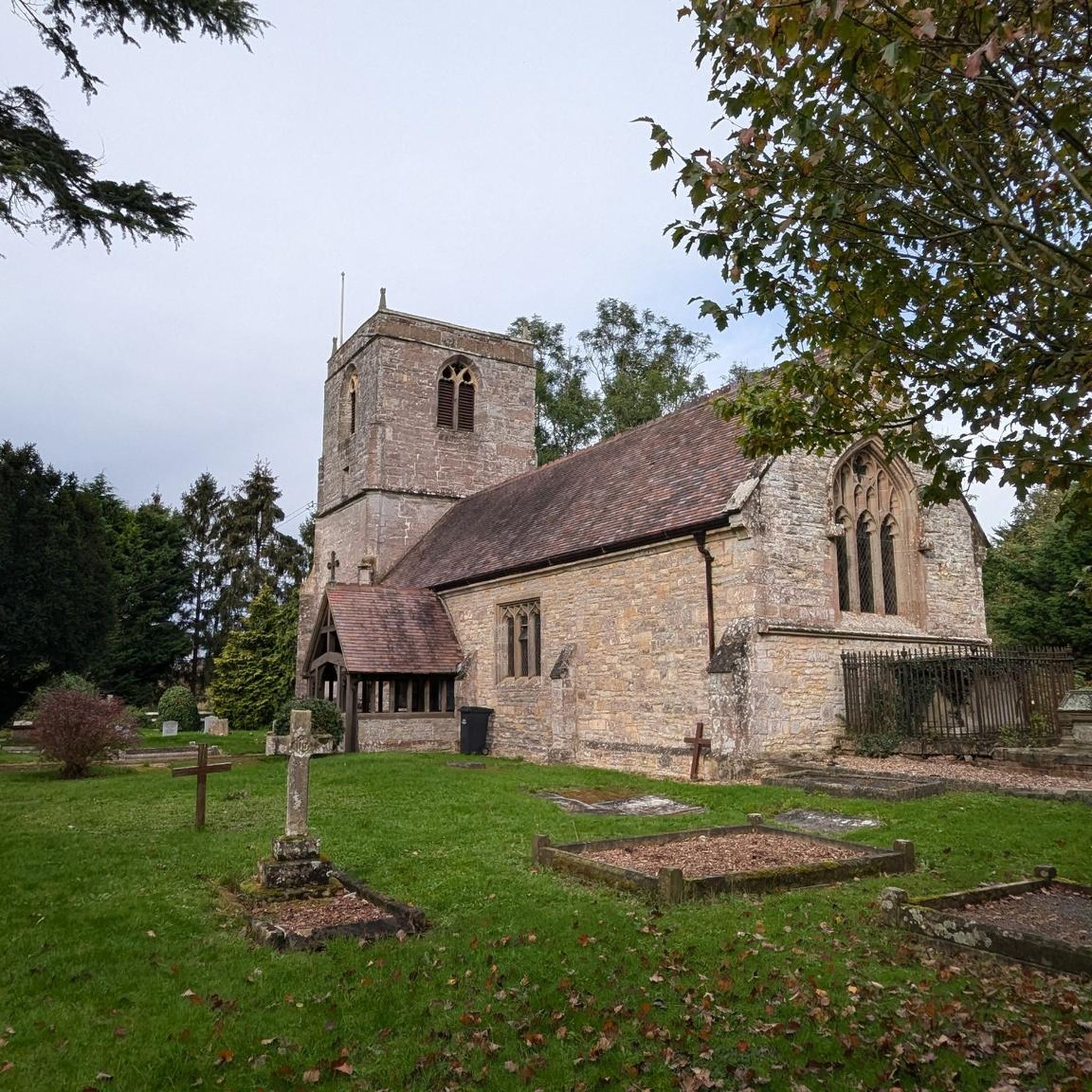
- Another must-see spot is St John the Baptist Church, Grafton Flyford, a historical site and religious building. Largely rebuilt in 1875, its tower dates back to the 14th century, and the chancel features a 15th-century east window.
- Visitors also love Grafton Wood Nature Reserve, a significant natural monument and ancient woodland. It is known as the home of the only colony of brown hairstreak butterflies in the Midlands, with conservation efforts increasing their numbers.
- Naunton Beauchamp is known for its historical sites, religious buildings, and natural monuments. The area offers a variety of attractions to see and explore, from ancient bridges to protected woodlands.
- The attractions around Naunton Beauchamp are appreciated by the komoot community, with 47 upvotes and 17 photos shared by visitors.
Last updated: July 2, 2026
Pershore Old Bridge
Highlight • Historical Site
Tip by

St John the Baptist Church, Grafton Flyford
Highlight • Historical Site
The church, with the exception of the 14th-century tower, was entirely rebuilt in 1875, but the old work appears to have been very largely re-used. The modern work is already getting into a very bad state of repair.
The chancel has a 15th-century east window of three lights with a segmental pointed head. In the north wall is a square-headed 14th-century window of two ogee trefoil-headed lights. In the south wall are two square-headed two-light windows and a priest's door, mostly modern. On this side is a single sedile with a cusped head, and near it a pointed piscina with the bowl missing. An internal string-course, largely modern, is carried round the chancel. The chancel arch is of two chamfered orders dying into the wall; the voussoirs are small and regular and are of late 13th or early 14th-century date.
In the north wall of the nave is a pointed 14thcentury arch of two chamfered orders opening into a small chapel with a single-light window on the east and west. Further west is a pointed window of the same date with two lights and a traceried head. In the south wall are two windows, each of two lights and similar to that on the north of the chancel; between them is a plain pointed door. All these features have apparently been restored and reset.
The 14th-century tower is faced with ashlar and three stages high with low diagonal buttresses to the western angles of the ground stage. The tower arch is acutely pointed and of two chamfered orders. This stage rests on a deeply moulded plinth and has a pointed 15th-century west window of three cinquefoiled lights. The second stage is lighted by loops only, but the third stage has a pointed 14th-century window of two trefoiled ogee lights in each face. The parapet is embattled, with carved gargoyles at the angles of the string and panelled and crocketed pinnacles rising above them. From within it rises a low octagonal pyramid of stone capped by a truncated pinnacle set diagonally.
The fittings include a 17th-century communion table with turned legs, a 15th-century semi-octagonal pulpit (on a modern base) having a moulded rail and traceried heads to the panels, and a modern font. In the north chapel is a broken marble monument to Roger Stonehall, who died in 1645. Under the tower are roughly designed paintings on boards of the evangelistic symbols with black letter labels, perhaps of the 16th century; here is also a painted achievement of the royal arms of Charles II inscribed 1687 C.R. In the tracery of the east window are some fragments of 15th-century glass tabernacle work and in the north chancel window are two shields, one with the arms of Mortimer and the other imperfect with those of Beauchamp. In the west window are fragments of white and yellow 15th-century glass in the tracery.
There are five bells, all cast by John Martin in 1676: the tenor is inscribed, 'All men that here my roring sound repent before you ly in ground, M. Robert Baker 1676'; the fourth, 'We wish in heven theer souls may sing that caused us six here for to ring, Amell Doxly, Richard Haynes C.W. 1676'; the third, 'Be it known to all that doth wee see John Martin of Worcester, he made wee 1676'; the second, 'All prayse and glory be to God for ever 1676'; and the treble, 'Jesus be our good speed, God Save the King 1676.'
The plate includes a cup and cover paten, London, 1571, and a plate, London, 1679, inscribed 'Grafton Flyford.'
The registers are in one volume as follows: baptisms 1676 to 1813, burials 1676 to 1812, marriages 1678 to 1777.
Tip by

Sign up now to discover places like this
Get recommendations on the best single tracks, peaks, & plenty of other exciting outdoor places.
Sign up for free
Grafton Wood Nature Reserve
Highlight (Segment) • Natural Monument
Jointly owned with Butterfly Conservation, Grafton has been at the heart of one of Worcestershire’s great conservation successes. The wood is the centre of the only colony of brown hairstreak butterflies in the Midlands. These elusive butterflies, on the wing in August and September, have been the subject of a long-term project to ensure their survival. By working with local landowners and encouraging appropriate maintenance of hedgerows, volunteers from both conservation charities have helped the butterflies to increase in range and in numbers.
Grafton Wood is an ancient semi-natural broad-leaved woodland and, until the 1950s was traditionally managed as coppice-with-standards that provided materials for products such as broom handles, pea sticks, hedge-laying, clothes pegs, spars for thatching and firewood. Our management today aims to replicate this tradition and involves widening the rides through the woodland, coppicing and creating glades. We also ensure that there are scrubby areas containing the young blackthorn bushes that are vital for brown hairstreaks to survive.
The majority of the canopy at Grafton is ash and oak although we also have a small-leaved lime coppice stool that we think must have originally started as one lime tree at least a thousand years ago. In many places there is a dense shrub layer of field maple, hawthorn and hazel. The two compartments of conifers that were planted in the 1960s have largely been removed in 2010.
It’s not just brown hairstreak butterflies that visitors to Grafton Wood should keep a look out for. The wood is also important for other woodland butterflies including silver-washed fritillaries and white admirals. After careful surveying of the habitat and flowering species in the wood pearl-bordered fritillaries were released into the woodland in 2011 in the hope that they would then naturally re-colonise the wood after a 30 year absence. Notable moths include drab looper, rosy footman, Devon carpet and waved black.
Many fungi have been recorded in the wood and it also supports a distinctive flora including herb-Paris, adder’s-tongue fern, violet helleborine, spurge laurel and bird’s-nest orchid. Birds including buzzard, goldcrest, treecreeper, lesser and great spotted woodpeckers are regularly seen in the wood and the adjacent meadows and orchards are important for green woodpeckers. Bechstein’s bats were recently discovered in the wood and the colony is thought to be the most northerly breeding roost in the UK.
Tip by
Inkberrow Millennium Green
Highlight • Viewpoint
Inkberrow is on the A422 main road about half way between Worcester and Stratford-upon-Avon in the English West Midlands.
The entrance can be found at the bottom of the hill down the lane past the church. In the centre of the village, by the village green, go towards the Old Bull Inn, past the lychgate entrance to St Peter's Church, and down the hill. (approx 250 yards from the A422).
The Millennium Green was officially opened in June 2000. It was supported by Inkberrow Parish Council, The Millennium Commission, English Heritage, The Countryside Agency, Worcestershire County Council and Aqua Vitae 21. It has since been designated a Special Wildlife Site and is now in the
Higher Level Stewardship scheme administered by Natural England.
The Green is some 8.3 acres in extent, divided into two fields. It is owned and managed as a charity - the Inkberrow Millennium Green Trust - with the land vested in the Official Custodian of Charities. The Trust deeds require that the Green be open and "be able to be enjoyed by people of all ages and physical abilities, be an attractive place for people to exercise, pursue leisure activities and pastimes consistent with shared enjoyment of the whole of the land" and to "include significant 'natural' areas where people can enjoy nature and wildlife at first hand".
The Green is managed by the Trustees to meet these objectives, including regular work to sustain, restore and enhance a variety of habitats with ecological and social benefits for the Inkberrow community. The Trustees work in conjunction with outside agencies, such as Historic England and Natural England to ensure compliance with requirements such as those contained in the Ancient Monuments and Archaeological Areas Act (1979) and the Higher Level Stewardship (HLS) agreement.
Tip by
Church of St Peter, Little Comberton
Highlight • Historical Site
Tip by

Sign up for free to discover even more attractions around Naunton Beauchamp.
Sign up for free
Already have an account?
Start today with a free account
Your next adventure awaits.
Login or Signup
Tips from the Community

Beautiful medieval bridge over river Avon. Incredibly well preserved given its age.
0
0

The old bridge is picturesque, and its also a great place to while away an hour or two by the river.
0
0

Such a beautiful place full of wildflowers and ponds. It is a circular walk. With a slow pace and rest on the bench at the top, it will take you about 30 minutes to walk around. Surrounded by meadows and benches all over the place. Beautiful little village
0
0

Great church on the descent in Pershore direction. Beautiful mosaics inside
0
0
Quiet Anglican church with some gorgeous mosaics inside. Nice brown signpost on the nearest A-Road, so you won't miss the turn.
0
0

Park free at the bridge. Make sure you walk to Wick and back. Footpath starts at the old bridge, then across field to the village.
0
0

The church of ST. PETER consists of a chancel 30¾ ft. by 16 ft. with north and south chapels, nave 38 ft. by 16 ft. with north porch and south chapel, and west tower 14¼ ft. by 12½ ft. All measurements are internal. The 12th-century church appears to have consisted of a nave and chancel of the same size as the existing ones, and of these the north nave wall and the base of the south chancel wall are still standing. A window was inserted in the north nave wall in the 14th century and the west tower built. Early in the following century the chancel was largely rebuilt. The north porch was added in 1639. The church has been drastically restored and the side chapels are modern additions. The east wall is of ashlar with two-stage diagonal buttresses and an old gable cross. The early 15thcentury east window is of three lights with a pointed traceried head. In the north wall is a square-headed window of three trefoiled lights. The external hood has the letter S in the centre of the head and voluted stops bearing the letters T and P. Further west are two modern arches to the north chapel. In the south wall is a three-light early 15th-century window similar to that on the north, and west of it is a modern arch opening to the south chapel or transept. In the same wall is a trefoil-headed piscina with the bowl cut away; the wall itself is partly of 12thcentury rubble masonry. The timber chancel arch is modern, as is the north chapel; built into the east wall is a two-light early 15th-century window with a quatrefoil in the head and in the north wall is a later square-headed window, both being formerly in the chancel wall. The south chapel is entirely modern with a three-light south window. The chancel roof retains a few old timbers. The nave has five windows in the north wall, three of them being early 12th-century single-light openings but much restored. The easternmost window is square-headed and of late date, and the third window is of two lights, pointed and of the 14th century. The jambs of both cut into the early 12th-century opening between them. The westernmost 12th-century window has an external cable moulding round the head. The north door is of similar date with a semicircular tympanum externally, ornamented with a plain cross and four whorls on each side. The rear arch is plain and round. At the east end of the south wall are two modern arches opening into the south chapel and west of them three modern windows, the last two being of two lights and coupled together; the rear arches, however, spring from ancient jambs. The south chapel has a modern arch on the east opening into the chancel chapel, and in the south wall are two two-light windows, of which the eastern is largely ancient and the western mainly modern. The masonry of the north nave wall is 12th-century rubble, but the south wall, though much restored, appears to be later. The west tower opens into the nave by a depressed four-centred arch with moulded capitals and bases to the responds; in the west wall is a three-light 14thcentury window with restored tracery and a pointed head, the external hood has large 'ball-flower' stops. The tower is four stages high, divided by stringcourses and faced with ashlar; it has diagonal buttresses at the angles, a moulded plinth and embattled parapet. The latter has crocketed pinnacles at the angles and gargoyles at the angles of the parapet string. The bell-chamber is lighted by a 14th-century threelight window in each face with external labels and head-stops. The north porch has stone side walls with benches and a timber front and gable with a segmental-headed outer door; on the face is inscribed 'A [inverted capital L], EP 1639.' The font has a circular stem and a plain octagonal bowl with a modern cross cut in one face. The other fittings are modern and include a carved oak reredos. In the coupled windows on the south of the nave and in the south-east window of the south chapel are some fragments of ancient glass. In the chancel are a number of old tiles, mostly with conventional designs, but some bearing the arms of the Confessor, of the Berkeleys and the Hungerfords. There are six bells: the tenor, fourth and treble cast by J. Taylor, 1866; the fifth inscribed, 'Richard Neale, Thomas Young Ch-wardens 1750'; the third, 'Abel Rudhall cast us all 1750'; and the second 'Prosperity to this parish A.R. 1750.'
0
0

This was a key crossing point for traders between London and Worcester. Originally built in the 1400s, various repairs have taken place over the centuries to create the grand structure we see today. There is a popular picnic spot nearby, from which the Pershore Bridges Circular Walk begins. See : https://www.komoot.com/guide/712082 for more inspiration.
1
0
Frequently Asked Questions
What historical landmarks can I visit near Naunton Beauchamp?
You can explore Pershore Old Bridge, a significant historical site that served as a crucial crossing point for traders between London and Worcester since the 1400s. It's also a popular picnic spot and the starting point for the Pershore Bridges Circular Walk.
Are there any notable churches or religious sites in the area?
Yes, two prominent religious sites are St John the Baptist Church, Grafton Flyford, which features a 14th-century tower and 15th-century windows despite being largely rebuilt, and St Peter's Church, Inkberrow, believed to have roots in Saxon times with a current structure dating from the 13th century.
Where can I experience nature or go for a walk near Naunton Beauchamp?
For nature lovers, Grafton Wood Nature Reserve is an ancient woodland known for its conservation efforts and unique wildlife. Another option is Inkberrow Millennium Green, offering a pleasant circular walk through wildflowers and ponds.
What kind of wildlife can I expect to see in the natural reserves?
Grafton Wood Nature Reserve is particularly famous as the home of the only colony of brown hairstreak butterflies in the Midlands. These elusive butterflies are typically seen in August and September. The reserve also supports other woodland butterflies like silver-washed fritillaries and white admirals, along with various birds and fungi.
Are there walking trails suitable for different difficulty levels?
Yes, the area offers a variety of walking trails. You can find easy hikes around Naunton Beauchamp, including routes like the 'St Peter's Church, Abberton – Wooden Bridge Near Flyford loop' or the 'Grafton Wood – Grafton Wood Nature Reserve loop'. For more options, explore the Easy hikes around Naunton Beauchamp guide.
What outdoor activities are available besides walking?
Beyond walking, you can explore mountain biking trails. There are several MTB routes around Naunton Beauchamp, such as the 'Pershore Old Bridge – Bredon Hill Summit loop' or the 'Inkberrow Millennium Green – St Peter's Church, Inkberrow loop'. More details can be found in the MTB Trails around Naunton Beauchamp guide.
Are there family-friendly attractions around Naunton Beauchamp?
Many attractions in the area are considered family-friendly. Both Pershore Old Bridge and St John the Baptist Church, Grafton Flyford offer historical interest, while Grafton Wood Nature Reserve provides an opportunity to explore ancient woodlands and spot butterflies, which can be engaging for families.
Are there any wheelchair-accessible trails or attractions?
Inkberrow Millennium Green is designed to be enjoyed by people of all ages and physical abilities, including those using wheelchairs. Its trust deeds specifically state it should be an attractive place for people to exercise and enjoy nature, with significant 'natural' areas.
When is the best time to visit Naunton Beauchamp for nature activities, especially butterfly spotting?
If you're interested in seeing the brown hairstreak butterflies at Grafton Wood Nature Reserve, the best time to visit is typically in August and September when they are on the wing.
What do visitors particularly enjoy about the attractions around Naunton Beauchamp?
Visitors appreciate the blend of historical significance and natural beauty. For instance, Pershore Old Bridge is enjoyed for its historical context and as a pleasant picnic spot. St John the Baptist Church, Grafton Flyford is noted as a great cycling stop with benches. The tranquility and wildlife, especially the butterflies, at Grafton Wood Nature Reserve are also highly valued.
Are there any hidden gems or lesser-known natural spots to discover?
Inkberrow Millennium Green, while accessible, offers a serene and beautiful experience with wildflowers and ponds, making it a lovely spot for a quiet circular walk away from more crowded areas. It's a designated Special Wildlife Site.
Most popular routes around Naunton Beauchamp

Get inspired with the komoot mobile app


Explore more
Still not found the Highlight you’re looking for? See guides of the top attractions in other regions:
