The best walks and hikes around Zandt
4.4
(193)
732
hikers
83
hikes
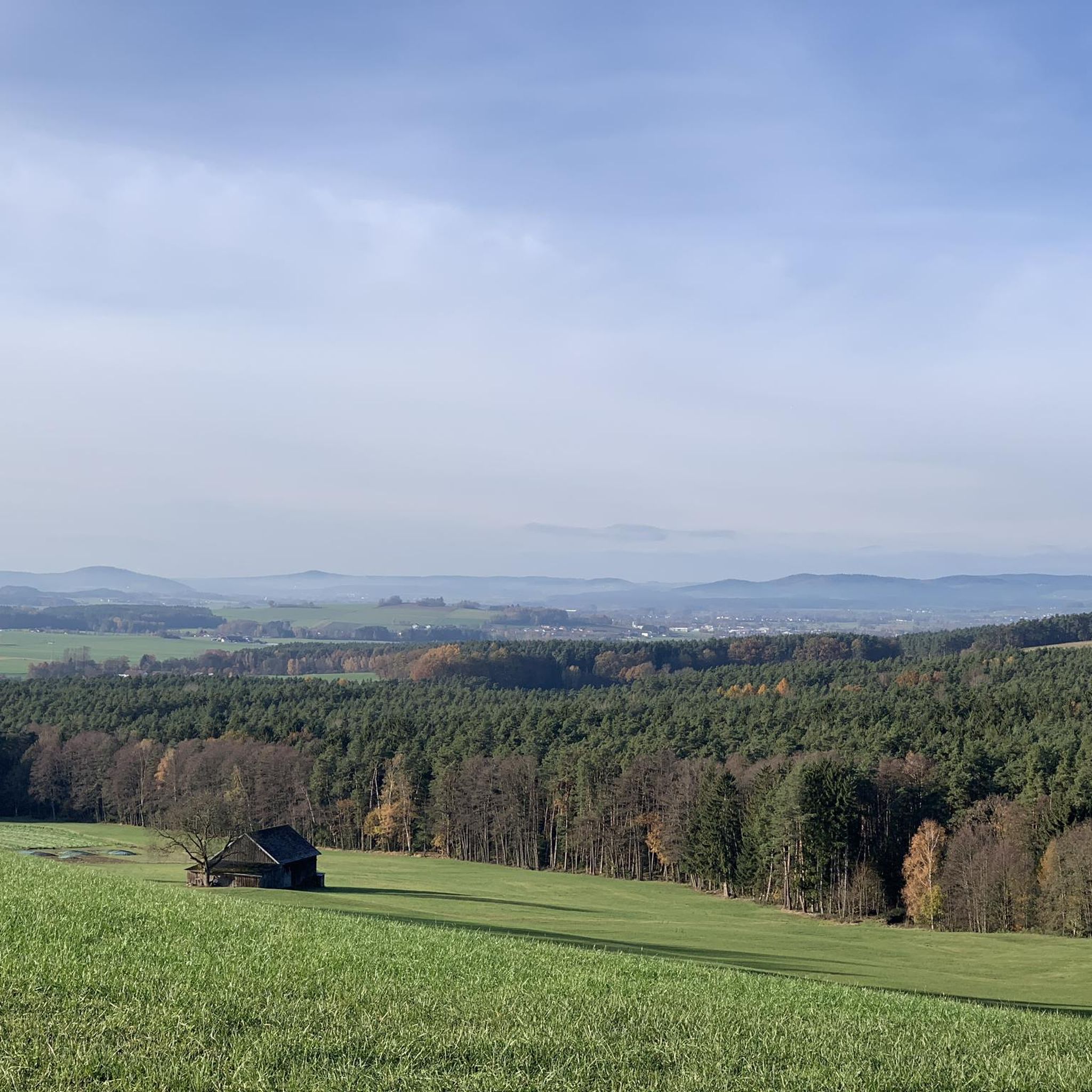
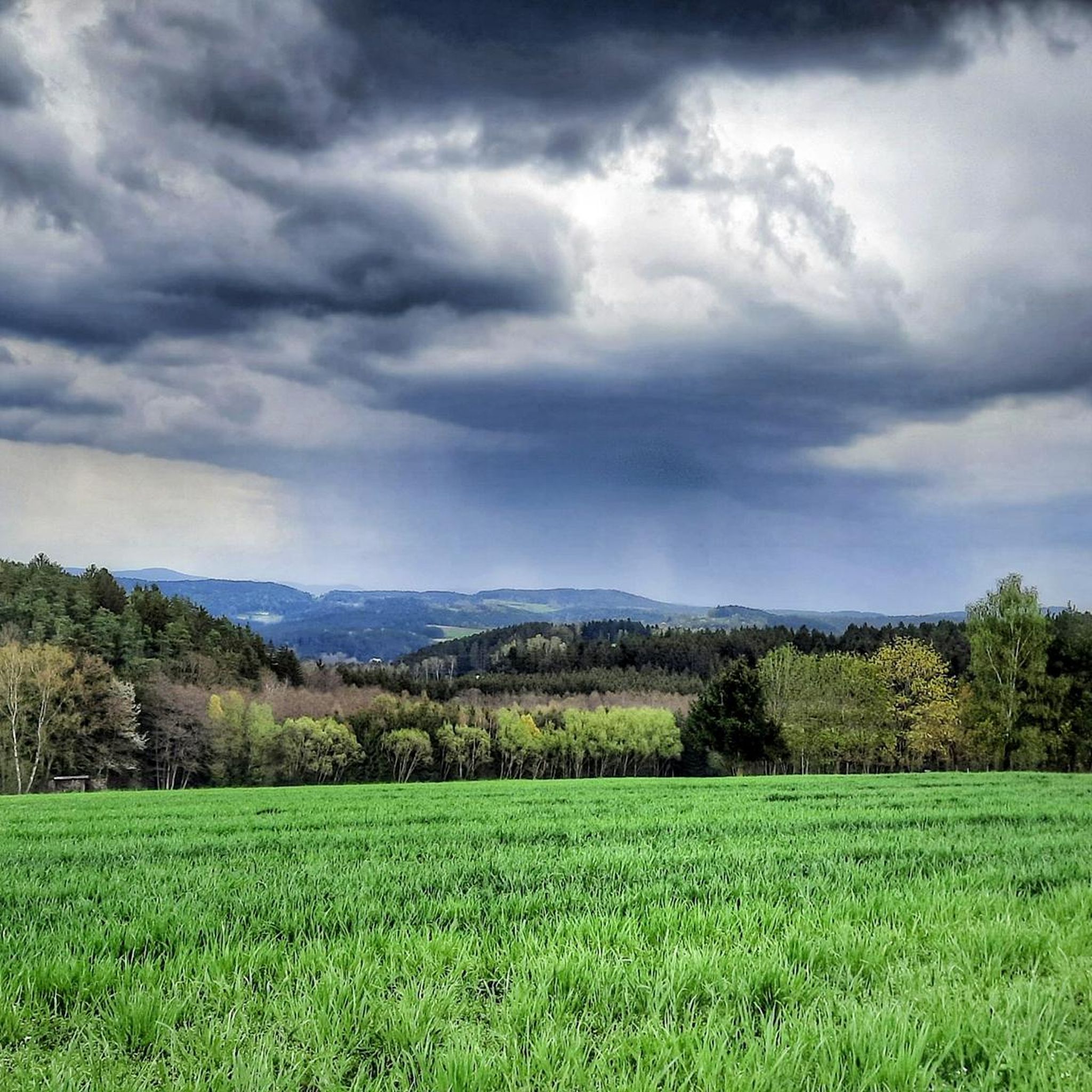
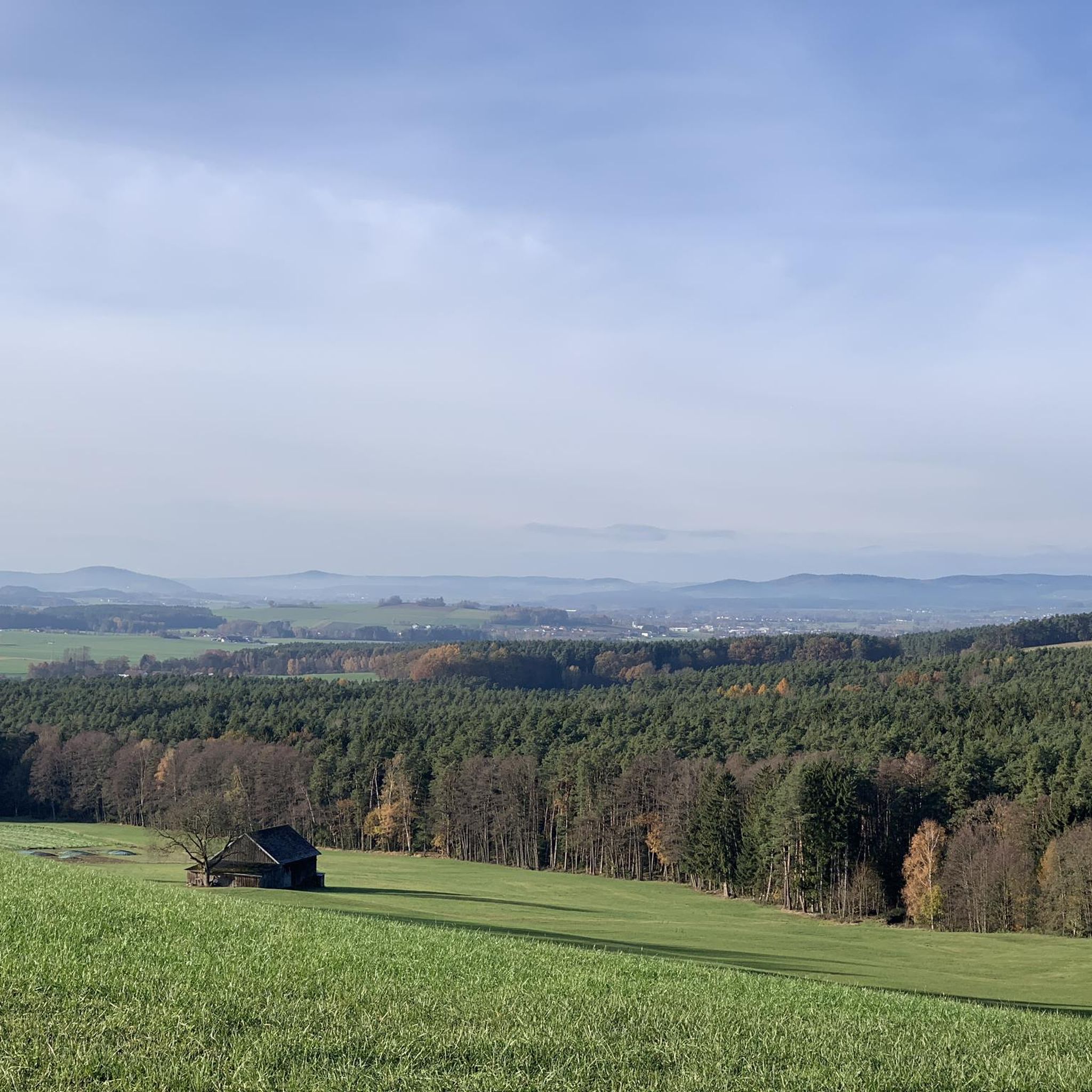
Hiking around Zandt offers access to the varied landscapes of the Bavarian Forest. The region is characterized by forested hills, valleys, and streams, providing a mix of terrain for outdoor activities. Notable features include rock formations and small ponds, contributing to diverse hiking experiences. The area offers a network of trails suitable for exploring its natural environment.
Best hiking trails around Zandt
- The most popular hiking route is Small Pond – Bench by the Stream loop from Zandt, a 7.6 miles (12.2 km) trail that takes 3 hours 20 minutes to complete. This moderate route features varied terrain through the local landscape.
- Another top favourite among local hikers is View of Vilzing – Chapel (1995) loop from Zandt, a moderate 5.2 miles (8.4 km) path. This trail offers views of Vilzing and passes a chapel.
- Local hikers also love the Landgasthof Pfahlhof – View of Hohenbogen loop from Zandt, a 4.1 miles (6.6 km) trail leading through forested areas, often completed in about 1 hour 51 minutes.
- Hiking around Zandt is defined by forested hills, valleys, and rock formations. The network offers options for various ability levels, from easy walks to moderate ascents.
- The routes in Zandt are highly rated by the komoot community with an average score of 4.4 stars from around 170 reviews. More than 700 hikers have used komoot to explore Zandt's varied terrain.
Last updated: October 13, 2026
4.7
(17)
63
hikers
6.25km
01:44
110m
110m
Easy hike. Great for any fitness level. Easily-accessible paths. Suitable for all skill levels.
4.6
(15)
39
hikers
8.37km
02:14
100m
100m
Moderate hike. Good fitness required. Easily-accessible paths. Suitable for all skill levels.

3.6
(5)
25
hikers
6.56km
01:51
140m
140m
Easy hike. Great for any fitness level. Easily-accessible paths. Suitable for all skill levels.
3.5
(4)
23
hikers
5.11km
01:27
110m
110m
Easy hike. Great for any fitness level. Easily-accessible paths. Suitable for all skill levels.
4.6
(23)
67
hikers
10.6km
02:52
140m
140m
Moderate hike. Good fitness required. Easily-accessible paths. Suitable for all skill levels.
Get access to more routes and recommendations from other explorers.
Already have an account?
Our route recommendations are based on thousands of hikes, rides, and runs completed by other people on komoot.
Start today with a free account
Your next adventure awaits.
Tips from the Community

In August 2026, the pond was completely dry.
0
0


Parish Church of the Assumption of Mary This neo-Romanesque hall church was built in 1880. It consists of a nave, a narrow, three-sided choir supported by buttresses to the north, and a three-story facade tower to the south. The top story, with its chamfered corners, houses the clock tower and the bell cage, and is topped with a pointed spire. The interior of the nave is spanned by a wooden flat ceiling, while that of the choir has a cross-ribbed vault. The church's furnishings include a high altar, on whose reredos a crescent-shaped Madonna is depicted. The Madonna is framed by the figure of St. Florian to the left and St. Sebastian to the right. The left side altar contains figures of St. Anne (center) and the princely apostles Peter with the keys to heaven (left) and Paul (right). The right altar depicts John the Baptist (center), St. Joseph with a White Lily (left) and St. John of Nepomuk (right). Of the original four gaff heads at the top of the oval granite baptismal font, which was created around 1320, two are still preserved. In 2022 and 2023, St. Mary's Church was renovated inside and out. Source: Excerpts from www.wikipedia.de
2
0
Zandt Castle In a document dated between 1216 and 1223 from the Oberaltaich Monastery, Heinrich and Friedrich "de Zant" are mentioned. They most likely settled here. A relationship with the Regensburg patrician Zante family is certainly assumed. After the extinction of the family, which held its property as a fief of the Regensburg Diocese, Hans I. Sattelboger and his cousin Friedrich were granted the "hoffmarch ze Sant" in 1382. Jörg Ramsperger succeeded them as owners in 1424, and from 1439 onward, Friedrich III. Thierlinger remained in possession of Zandt until 1536. At the end of the 19th century, bankers purchased the castle property, which was subsequently destroyed. Since 1949, the former Hofmark residence has served as a nursing home for the elderly, still operated by the Bavarian Red Cross. There is no evidence of the appearance of the oldest structure, presumably dating to the 13th century. A castle-like structure can be assumed to have existed by the 14th century at the latest. In 1399, a chapel for weekly mass was donated by Konrad II Sattelboger. In 1425, a "seat" was explicitly mentioned for the first time, which was referred to as a "castle" in 1441. This was apparently preceded by a restoration of the structure, which had probably been damaged in the Landshut War of Succession. After the destruction in 1633 or 1641, restoration measures and extensive new construction were probably carried out in the farmyard. In the late 18th and 19th centuries, the main building was doubled in size to the south, and after 1851, the entire complex was redesigned in the Gothic Revival style. The complex is an elongated, two-story building measuring 46.5 x 13.5 m. The northern section, located lower on the slope, is built on a high base. The gables are crowned by neo-Gothic stepped gables. The northeastern of the two corner towers, as well as its crenellated crown, also date back to the reconstruction after 1851. In the center of the western eaves rises the six-story, 18-meter-high octagonal stair tower, also with a neo-Gothic crenellated crown. The courtyard adjoining the southwest was enclosed on all sides and accessible via a three-story gate tower on the north side. Only the two-story building with a high hipped roof between the castle and the gate tower, which already existed in 1550, is well preserved. The other buildings have been demolished or significantly altered. Source: Excerpts from www.ebidat.de
2
0
Parish Church of St. Martin The first Romanesque religious building in Miltach was built between 1050 and 1100. Around 1400 the apse was demolished and the current choir was built in the same place. Around the middle of the 18th century the church was given a baroque makeover, mainly by raising the tower. There were two reasons for the renewed expansion and redesign in 1974: the lack of space for churchgoers and the dilapidated structure of the nave. After initial concerns, the State Office for Monument Preservation gave its consent to the demolition of the rear part and the subsequent new construction. The official laying of the foundation stone took place on September 8, 1974 by cathedral canon Martin Lehner. The topping-out ceremony was celebrated on October 25 of the same year. Auxiliary Bishop Karl Flügel consecrated the parish church on August 8, 1976. The high altar from 1760, a Rococo structure with free-standing round and square columns, is extended to the sides with passageways underneath. The figure of St. Andrew on the left and St. James on the right stand as altar guards. The center of the high altar is a painting depicting the patron saint of the parish church, St. Martin. The picture with the well-known motif of the cloak being divided was painted by Ignaz Anton Sollfleisch from Cham. At the top, the high altar ends with a so-called mercy seat, a depiction of the Holy Trinity. To the left of the altar is the figure of St. Florian (1763), to the right is the plague saint Sebastian (1754), and St. Barbara (around 1980), the latter as a replacement for the statue stolen around 1960. The left side altar is a reconstruction of the altar that burned on December 9, 1986. The Gothic Madonna of the Radiance and Child (1480) was also completely destroyed in this disaster. The other two figures, Saint Francis Xavier on the left and Saint Nepomuk on the right, were restored by carving. The altarpiece shows Saint Gertrude von Hefta, painted by Georg Achtelstetter from Cham in 1923. The right side altar (1760) received a picture of Saint Nicholas in 1987, a copy from the church in Haag near Hohenschambach. The golden apples and the book on the altar pillars as well as the miter above the altar testify that it was already dedicated to Saint Nicholas before 1923. Source: Excerpts from www.pfarrei-miltach.de
2
0

Hofmark Castle built in the 16th century. Today used as a retirement home
0
0

Idyllic little pond on the outskirts of Zandt.
0
0

Seating group. Quartz rock with stairs to climb
0
0
Frequently Asked Questions
What kind of terrain can I expect on hiking trails around Zandt?
Hiking around Zandt features a diverse landscape of forested hills, valleys, and streams. You'll encounter varied terrain, including notable rock formations and small ponds, characteristic of the Bavarian Forest region.
Are there easy hiking trails suitable for beginners or families in Zandt?
Yes, Zandt offers a good selection of easy trails. Nearly half of the routes, 45 out of 83, are classified as easy. An excellent option is the Landgasthof Pfahlhof – View of Hohenbogen loop from Zandt, which is 6.6 km long and leads through forested areas.
Are there any circular hiking routes in Zandt?
Many of the trails around Zandt are designed as loops, offering convenient circular routes. For example, the popular Small Pond – Bench by the Stream loop from Zandt is a moderate 12.2 km trail, and the View of Vilzing – Chapel (1995) loop from Zandt is an 8.4 km moderate option.
What are some natural landmarks or viewpoints to see while hiking in Zandt?
The Zandt area is known for its natural features. You can explore the impressive Großer Pfahl rock formation, or enjoy views of Vilzing from trails like the View of Vilzing – Chapel (1995) loop from Zandt. The Landgasthof Pfahlhof – View of Hohenbogen loop from Zandt also offers views of Hohenbogen.
Are there any trails that pass by water features like ponds or rivers?
Yes, several trails incorporate water features. The Small Pond – Bench by the Stream loop from Zandt specifically highlights a small pond. You can also find the Lake Blaibach and the Lower Regen river nearby, which may be accessible from various routes.
What do other hikers say about the trails in Zandt?
The hiking trails in Zandt are highly regarded by the komoot community, holding an average rating of 4.4 stars from around 170 reviews. Hikers often praise the varied terrain and the natural beauty of the Bavarian Forest.
How many hiking trails are available in the Zandt region?
There are over 80 hiking trails available around Zandt, offering a wide range of options for different skill levels and preferences. This includes 45 easy and 38 moderate routes.
Are there any specific trails that lead to a pub or restaurant for a stop?
While specific pub stops aren't detailed for every route, the Landgasthof Pfahlhof – View of Hohenbogen loop from Zandt starts near Landgasthof Pfahlhof, suggesting opportunities for refreshments. Similarly, the Wirtshaus zum Bräu – Brauweiher Pond loop from Zandt begins near Wirtshaus zum Bräu, indicating a potential stop.
What is the typical duration for a hike around Zandt?
Hike durations vary depending on the route's length and difficulty. Easy trails like the Landgasthof Pfahlhof – View of Hohenbogen loop from Zandt (6.6 km) can take around 1 hour 51 minutes. Longer, moderate routes such as the Small Pond – Bench by the Stream loop from Zandt (12.2 km) typically require about 3 hours 20 minutes.
Are there any historical or cultural points of interest along the trails?
Yes, you can find points of interest that reflect the region's history. For instance, the View of Vilzing – Chapel (1995) loop from Zandt passes by a chapel. Additionally, near the Großer Pfahl rock formation, you can find the Old loading station of the quartz quarry at the Großer Pfahl, offering a glimpse into the area's industrial past.
Are there any trails that feature unique rock formations?
Absolutely. The region is known for its rock formations. The Pfahl Rock Formation – Himmelsstiege to Pfahlfelsen loop from Harrling specifically highlights a rock formation. You can also visit the prominent Großer Pfahl rock formation, which is a significant natural monument in the area.
Most popular attractions around Zandt

Get inspired with the komoot mobile app


Explore more
Browse the best Hikes in other regions.
