The best walks and hikes around Peckforton
4.5
(599)
3,803
hikers
181
hikes
Hiking around Peckforton explores the Peckforton Hills, a sandstone ridge forming part of the Mid Cheshire Ridge. The landscape features rugged sandstone outcrops, dense woodlands, open heathland, and rolling hills. These geological formations provide panoramic views across the Cheshire Plain, extending to the Welsh mountains and the Pennines. The area offers varied terrain suitable for different fitness levels.
Best hiking trails around Peckforton
- The most popular hiking route is Beeston Castle Gates – View of Beeston Castle loop from Burwardsley…
Last updated: October 9, 2026
4.6
(27)
152
hikers
7.83km
02:11
150m
150m
Moderate hike. Good fitness required. Easily-accessible paths. Suitable for all skill levels.
4.4
(15)
101
hikers
7.38km
02:08
180m
180m
Moderate hike. Good fitness required. Mostly accessible paths. Sure-footedness required.

5.0
(14)
107
hikers
15.5km
04:21
320m
320m
Moderate hike. Good fitness required. Easily-accessible paths. Suitable for all skill levels.
4.9
(9)
84
hikers
3.02km
00:54
90m
90m
Easy hike. Great for any fitness level. Easily-accessible paths. Suitable for all skill levels.
4.6
(13)
67
hikers
12.1km
03:15
160m
160m
Moderate hike. Good fitness required. Easily-accessible paths. Suitable for all skill levels.
Get access to more routes and recommendations from other explorers.
Already have an account?
Our route recommendations are based on thousands of hikes, rides, and runs completed by other people on komoot.
Start today with a free account
Your next adventure awaits.

Tips from the Community

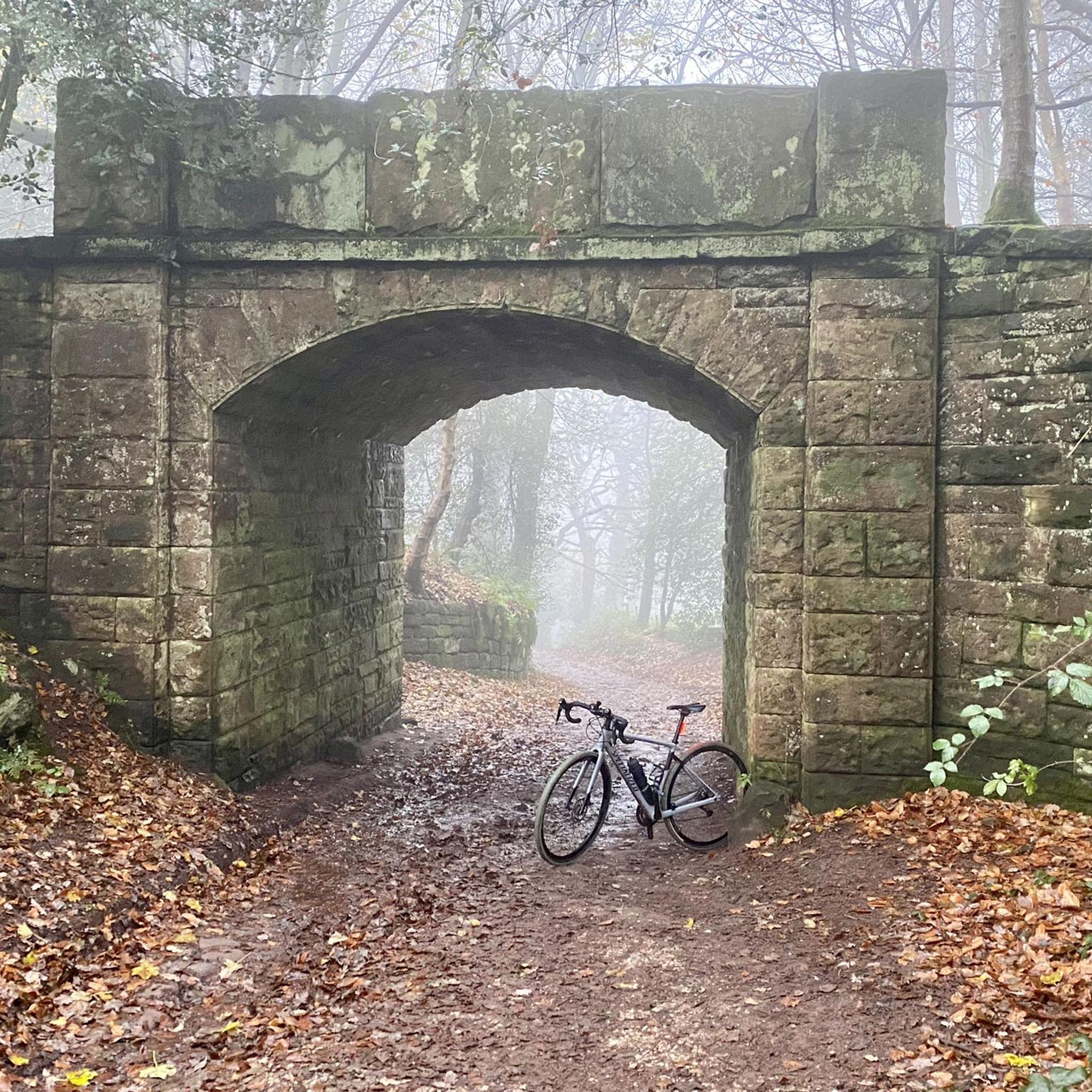
An old estate track / packhorse route built between quarry sites with sandstone setts and cobbles so it wouldn't wash away on the steep slope.
0
0
Beeston Castle is a former royal castle that sits on a rocky sandstone crag about 107 metres above the Cheshire Plain. It was built in the 1220s by Ranulf de Blondeville, the 6th Earl of Chester, after he returned from the Crusades. Because of its dramatic position it was known as the Castle of the Rock. The site itself is much older, with Bronze Age and Iron Age earthworks that were later reused by the medieval builders. In 1237 Henry III took it over and it stayed in crown hands. It was garrisoned by Simon de Montfort during the Barons War in 1264 to 1265, then retaken by the future Edward I. It was kept in good repair until the 16th century, when it was considered to have no further military use, but it was pressed into service again in the English Civil War and was partially demolished in 1646 after a siege. It is now a ruin owned by English Heritage. The gatehouse is still impressive, and on a clear day you can see from the Pennines to the Welsh mountains. There is also a famous legend that the treasure of Richard II was buried in the grounds, but despite many searches it has never been found.
0
0
It was built in 1839 as a chapel of ease to St Oswald's in Malpas, because the local population was growing quickly. The architect was Edmund Sharpe from Lancaster, who was well known for his Gothic Revival churches. The land was donated by Sir Philip Grey Egerton of Oulton, and the money was raised by public subscription. Around £2,000 was collected in total, but only £700 of that was spent on building the church itself. Another £300 went towards a house for the minister, and the rest was invested to provide an income for him. The church also received a grant of £120 from the Incorporated Church Building Society. It was consecrated on the 7th of January 1840 by John Sumner, the Bishop of Chester, and it became a separate parish church in its own right in 1869. It is Grade II listed and is still an active parish church. In the churchyard, overlooking the crossroads, there is a war memorial.
0
0

A good Christian welcome of the Sermon on the Mount sort - tea, coffee and milk offered for anyone who drops in 😊. Make it yourself and place a donation in the offering box. And a toilet round the back 😊! Church blesses the community 😊👏👏. Well done and thank you!
0
0


Great place to visit, amazing views on a clear day.
0
0

Frequently Asked Questions
Are the hiking trails around Peckforton suitable for families and children?
Yes, the area offers several family-friendly options. For a shorter, manageable walk, consider the Hiking loop from Burwardsley. At just under 2 miles (3 km), it's an easy trail with minimal elevation gain, making it ideal for little legs. The paths through the woodlands are generally well-maintained.
Can I bring my dog on the trails in the Peckforton Hills?
The Peckforton Hills are a great place to walk with a dog. The trails through the woodlands and across the heathland offer plenty of space. However, be aware that you may encounter livestock in fields, so it's important to keep your dog on a lead in these areas. Always follow local signage regarding dogs.
Where can I find the best views in the Peckforton area?
For some of the most rewarding views, head for the higher points along the Sandstone Trail. The climb to Raw Head on The Pheasant Inn – View from Rawhead loop from Burwardsley offers panoramic vistas across the Cheshire Plain. On a clear day, you can see as far as the Welsh hills.
Are there any easy circular walks available?
There are many circular walks that start and end in the same place. For a moderately easy loop with excellent scenery, the View of Beeston Castle – Peckforton Hills loop from Beeston is a popular choice. It's under 5 miles (7.4 km) and provides lovely views without being overly strenuous.
What is the terrain like on the Peckforton trails?
The terrain is varied. You'll encounter a mix of wide, well-maintained woodland paths, steeper rocky sections on the sandstone ridges, and open heathland. Some paths can be muddy and slippery after rain, so sturdy footwear with good grip is recommended, especially for routes with significant elevation change.
Where are the best places to park for a walk in the Peckforton Hills?
There are several informal parking options for accessing the trails. Many walkers use the roadside parking available near the Pheasant Inn in Burwardsley or along Stone House Lane for access to Bulkeley Hill. There is also a car park at Beeston Castle (charges may apply), which is a good starting point for several routes. Arrive early on weekends as spaces can fill up quickly.
Are there any walks that include a pub stop?
Yes, several routes are conveniently located near pubs. The Pheasant Inn in Burwardsley is a very popular starting and ending point for many hikes in the Peckforton Hills, allowing you to enjoy refreshments after your walk. Always check opening times in advance.
How many hiking trails are there around Peckforton?
You can explore over 175 different hiking routes around Peckforton. The trails are almost evenly split between easy and moderate difficulty, with a handful of challenging routes for those seeking a tougher climb. This variety ensures there's a walk for every fitness level.
What do other hikers say about the trails in Peckforton?
The area is highly regarded by the komoot community. Hikers often praise the stunning views from the sandstone ridges, the beauty of the dense woodlands, and the historical atmosphere created by Beeston and Peckforton castles. The well-marked sections of the Sandstone Trail are also frequently mentioned as a highlight.
Can I get to the Peckforton trails using public transport?
Accessing the trailheads directly via public transport can be challenging as the area is quite rural. The nearest train stations are in Chester, Crewe, or Delamere, from which you would likely need to take a taxi or a limited local bus service to get closer to villages like Beeston or Burwardsley. It's best to check local bus timetables for services to the area before you travel.
Are there any long-distance hiking options in the area?
Yes, the Peckforton Hills are traversed by the Sandstone Trail, a 34-mile (55 km) long-distance path. You can tackle a significant portion of it with a route like the View of Beeston Castle – Beeston Castle Gates loop from Burwardsley, which covers about 7.5 miles (12 km) and incorporates parts of this famous trail.
Most popular attractions around Peckforton

Get inspired with the komoot mobile app


Explore more
Browse the best Hikes in other regions.
