The best cycling routes around Weinbergen
4.6
(1811)
6,724
riders
22
rides
Touring cycling around Weinbergen offers routes through picturesque wine-growing regions characterized by rolling hills covered in grapevines and scenic river valleys. The landscape features historic towns and charming villages nestled among the vineyards. Routes often follow riverbanks or dedicated cycle paths, providing varied terrain suitable for different skill levels.
Best touring cycling routes around Weinbergen
- The most popular touring cycling route is Mühlhausen City Walls – Thuringian Tuscany loop from Seebach, a 16.4 miles (26.4 km) trail that takes…
Last updated: August 13, 2026
4.6
(14)
78
riders
Easy bike ride. Great for any fitness level. Mostly paved surfaces. Suitable for all skill levels.
4.5
(24)
41
riders
25.7km
01:38
160m
160m
Moderate bike ride. Good fitness required. Mostly paved surfaces. Suitable for all skill levels.

Sign up for free
16
riders
Moderate bike ride. Good fitness required. Mostly paved surfaces. Suitable for all skill levels.
5.0
(3)
15
riders
13.6km
00:49
20m
20m
Easy bike ride. Great for any fitness level. Mostly paved surfaces. Suitable for all skill levels.
5.0
(2)
13
riders
33.9km
02:02
160m
160m
Moderate bike ride. Good fitness required. Mostly paved surfaces. Suitable for all skill levels.
Get access to more routes and recommendations from other explorers.
Sign up for free
Already have an account?
Our route recommendations are based on thousands of hikes, rides, and runs completed by other people on komoot.
Start today with a free account
Your next adventure awaits.
Login or Signup
Tips from the Community

The inner, oldest city wall of Mühlhausen was almost 2.8 kilometers long (of which 2.2 kilometers are preserved to this day) and enclosed an area of around 50 hectares. This area had the shape of a slightly rounded and not entirely regular rectangle, whose maximum east-west extent is almost twice as long (1000 meters) as its maximum north-south extent (500 meters). Its original structure included the four main gates, namely the Görmartor in the northeast, the Erfurter Tor in the southeast, the Felchtaer Tor in the southwest, and the Frauentor, named after the Marienkirche (=Frauenkirche), in the northwest, as well as probably four posterns: the Eselspforte and the Burgpforte on the north side, and the - unnamed - postern at the exit of Brunnenkreßstraße and another, only inferred, postern to Spielbergstraße on the south side. It is unclear whether the original main access to the castle via Breitenstraße was already closed with the construction of the wall between the castle and the city before 1251 or only after the demolition of the castle from 1256 onwards. As material for the inner (and later also outer) city wall, including the gates and towers, the travertine found in Mühlhausen and quarried here was used, a geologically young freshwater limestone. The inner city wall was constructed as a double-shell masonry. Its thickness up to the height of the rampart varies between approximately 1.5 meters and - reached only exceptionally - a maximum of 2 meters. Source: https://www.muehlhausen.de/tourismus/erkunden/sehenswuerdigkeiten/besondere-baudenkmaeler/stadtmauer/
1
0
The Inner Frauen Gate (Innere Frauentor) in Mühlhausen is an important relic of the medieval city fortifications and one of the city's most significant historical structures. It is located in the northwest of the old town and formerly served as one of the central entrances to the city. Merchants, travelers, and visitors entered the city through this gate, thus playing an important role both economically and militarily. The Frauen Gate owes its name to the street that led directly to St. Mary's Church, the so-called Frauenkirche (Church of Our Lady). Architecturally, it is a so-called double gate system, consisting of a high gate tower and a gatehouse situated in front of it. Between these two parts was a narrow, specially secured area known as the zwinger. This construction method served defensive purposes, as attackers could be trapped between the gates in an emergency and repelled more easily. The original gate was built in the Middle Ages, presumably in the 13th century. After a city fire, it was rebuilt in 1655 in the form in which it can still be seen today. Over time, the city structure changed, and parts of the fortifications were demolished or added to. For example, another Frauen Gate disappeared in 1830, the outline of which is still indicated in the street paving today. Today, the Inner Frauen Gate is the only preserved gate of Mühlhausen's inner city wall and thus a particularly valuable testimony to the city's history. It is part of one of the best-preserved medieval city fortifications in Germany and attracts many visitors. Together with the remaining sections of the wall, it provides a vivid impression of how strongly fortified and organized medieval cities once were.
1
0
In the 14th century, an outer city wall was built to protect Mühlhausen's suburbs. Of the three original gate towers, only the 15th-century tower of the outer Frauentor remains today. Anyone entering the gate from the west has an impressive view of the city. The gate features late Gothic details, such as a barrel vault with decorated keystones. In addition, remnants such as a painted niche, arched windows, brackets for the gate, and traces of the portcullis are still visible on the outside.
1
0

The very well-preserved Frauentor (Women's Gate) in the city wall is also worth seeing.
0
0

Small and beautiful town with a large town entrance sign.
0
0

A really great cycle path along the Riedgraben
1
0
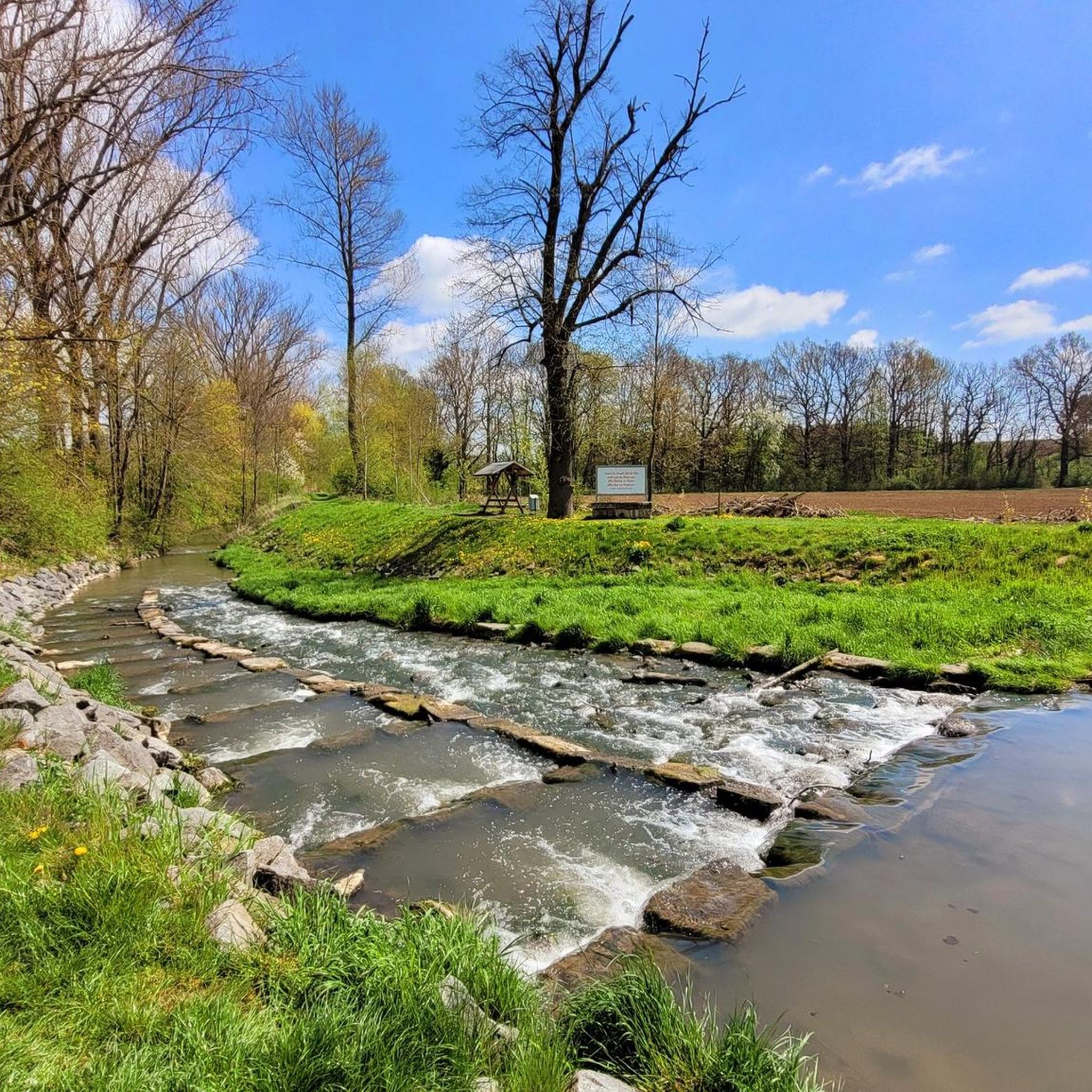
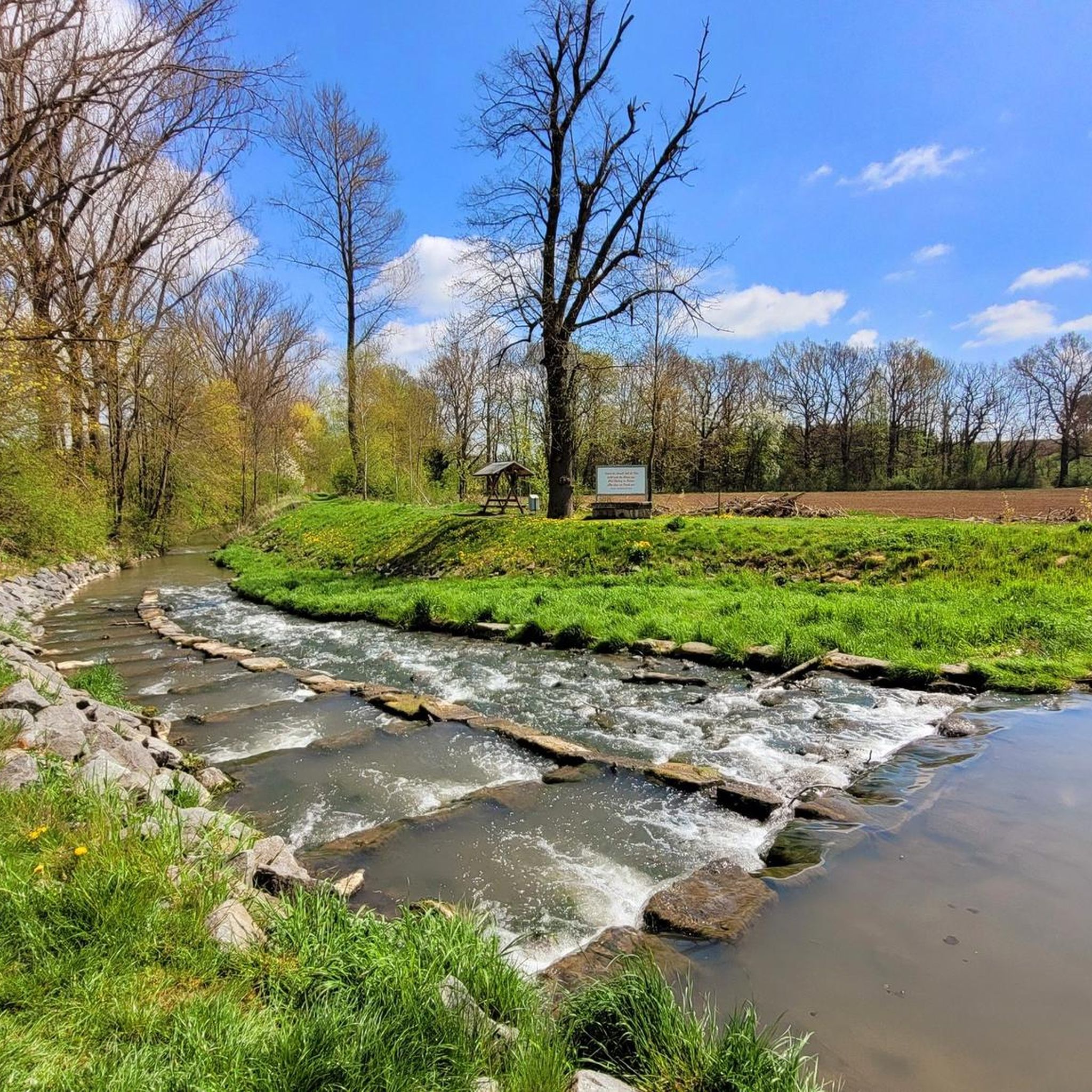
The weir is beautifully embedded in nature
0
0
Frequently Asked Questions
How many touring cycling routes are available in Weinbergen?
There are over 20 touring cycling routes available in Weinbergen, offering a variety of experiences through picturesque wine-growing regions. These routes are highly rated by the komoot community, with an average score of 4.7 stars from over 1,700 reviews.
What kind of landscapes can I expect while touring cycling in Weinbergen?
Touring cycling in Weinbergen offers diverse landscapes, primarily characterized by rolling hills covered in grapevines and scenic river valleys. You'll encounter historic towns, charming wine villages, and often follow idyllic cycle paths along riverbanks, such as those found in the Rhine, Moselle, Main, and Tauber valleys. The region's geology also creates impressive scenery with outstanding locations for viticulture.
Are there easy touring cycling routes suitable for beginners or families in Weinbergen?
Yes, Weinbergen offers many easy touring cycling routes perfect for beginners and families. For instance, the Wooden Shelter Rest Area – St. Martin Church Görmar loop from Großgrabe is an easy 7.9-mile (12.7 km) trail through gentle terrain. Many paths follow river banks or former railway lines, making them mostly paved and accessible for all skill levels.
Are there more challenging touring cycling routes in Weinbergen?
While many routes are easy, Weinbergen also offers more challenging options. There are 4 difficult routes available, which may include moderate climbs or longer distances, providing a good workout while still enjoying the scenic vineyards and historic areas. The region's varied terrain ensures there's something for every ability level.
What are some notable attractions or points of interest along the touring cycling routes?
The Weinbergen region is rich in attractions. Along your rides, you can explore charming wine villages, medieval castles, and historic towns. Specific highlights include the Großer Steingraben gorge, the serene Hünenteich lake, and the Reisersches Valley, known for its Unstrut Sculpture Trail. Historic sites like the Opfermoor Archaeological Site also dot the landscape.
Can I find circular touring cycling routes in Weinbergen?
Yes, many touring cycling routes in Weinbergen are designed as loops, allowing you to start and end at the same point. Examples include the popular Mühlhausen City Walls – Thuringian Tuscany loop from Seebach and the Volkenroda Monastery – Thousand-Year-Old Oak loop from Grabe. These circular routes are convenient for day trips and exploring the region's diverse scenery.
What is the best time of year to go touring cycling in Weinbergen?
The best time for touring cycling in Weinbergen is generally from spring to autumn. The warmer months offer pleasant weather for exploring the vineyards and river valleys. Autumn is particularly beautiful as the grapevines change color, and many wine festivals take place, offering opportunities for wine tastings at local wineries.
Are there options for parking or public transport near the touring cycling routes?
Yes, many touring cycling routes in the Weinbergen region are accessible by both car and public transport. Historic towns and villages often provide parking facilities, and some routes are designed to connect with public transport hubs, especially in well-developed wine regions like the Rhine and Moselle valleys. It's advisable to check specific route details for the most convenient access points.
Are there places to eat or stay along the touring cycling routes in Weinbergen?
Absolutely. The Weinbergen region, encompassing various German wine areas, is well-equipped with amenities for cyclists. You'll find numerous charming wine villages with traditional taverns (Straußenwirtschaften), cafes, and restaurants offering local cuisine and wine. Accommodation options range from cozy guesthouses to hotels, especially in the historic towns along the routes, making multi-day tours very feasible.
What do other touring cyclists enjoy the most about touring cycling in Weinbergen?
The area is highly rated by the komoot community, with an average score of 4.7 stars. Reviewers often praise the picturesque landscapes of vineyards and river valleys, the well-maintained and accessible cycle paths, and the opportunity to combine cycling with cultural experiences like visiting historic towns, castles, and enjoying local wine tastings. The blend of natural beauty and cultural richness is a major draw.
Are there any less crowded touring cycling routes in Weinbergen?
While popular regions can attract many visitors, Weinbergen also offers opportunities to find quieter routes. Exploring areas slightly off the main tourist trails or choosing routes during off-peak times (early mornings or weekdays) can lead to a more serene experience. The Wooden Shelter Rest Area – Thuringian Tuscany loop from Grabe, for example, offers a peaceful ride through gentle landscapes.
Most popular routes around Weinbergen
Most popular attractions around Weinbergen

Get inspired with the komoot mobile app


Explore more
Browse the best Cycling routes in other regions.
