Attractions and Places To See around Weston And Weedon - Top 20
Best attractions and places to see around Weston And Weedon include a blend of historical landmarks, natural features, and cultural sites. Weston-super-Mare offers coastal attractions like its famous pier and extensive beaches, alongside museums and nature reserves. Weedon Bec, on the other hand, is rich in history with its Royal Ordnance Depot and the Grand Union Canal, set amidst the Northamptonshire countryside. The region provides diverse opportunities for exploration, from Victorian piers and historical houses to tranquil nature reserves and canal-side walks.
Best attractions and places to see around Weston And Weedon
- The most popular attractions is Canons Ashby House and Priory Church, a castle that features a tranquil Tudor manor house set in terraced gardens. This Grade I listed Elizabethan manor house has remained largely unaltered since 1710.
- Another must-see spot is Battle of Edgcote, a viewpoint and historical site. This location marks the site of a significant battle during the Wars of the Roses in 1469.
- Visitors also love Fane of Pastoral Poetry, a man-made monument. This small octagonal temple was originally built in 1727 and offers a unique historical perspective.
- Weston And Weedon is known for its historical landmarks, natural beauty, and cultural experiences. Visitors can explore everything from Victorian piers and museums to ancient churches and scenic canal paths.
- The attractions around Weston And Weedon are appreciated by the komoot community. With more than 60 upvotes and 43 photos, these spots offer diverse experiences for explorers.
Last updated: July 6, 2026
Canons Ashby House and Priory Church
Highlight • Castle
Built by the Drydens using the remains of a medieval priory, the house and gardens have survived largely unaltered since 1710 and are presented as they were during the Victorian era.
The warm, welcoming house features grand rooms, stunning tapestries and Jacobean plasterwork, contrasting with the domestic detail of the servants' quarters.
Stroll in the historic parkland and catch glimpses of early medieval landscapes, while a wander through the priory church reveals the story of the canons of Canons Ashby."
Cit. nationaltrust.org.uk/canons-ashby#Overview
Tip by

Fane of Pastoral Poetry
Highlight • Monument
Tip by

Sign up now to discover places like this
Get recommendations on the best single tracks, peaks, & plenty of other exciting outdoor places.
Sign up for free
Samson and the Philistine Statue, Grecian Valley, Stowe
Highlight • Monument
-Book of Judges 15:15
Today the statue originally known as Samson and the Philistine is restored to the Grecian Valley, a landscape that was once enriched with acquaintances from the mythical antiquity of Hercules and the pastoral dream of the late eighteenth century. The tranquil pasture land, a testament to ‘Capability’ Brown who designed this, the first man-made valley in Britain, conceived its own world, and was based on its own ethos of creation: everything is possible.
Lord Cobham, the owner of the estate at the time, interpreted this through a group of statues depicting the twelve labours of Hercules, to represent the notion of victory through physical combat, martial strength and patriotism. This iconography was a fashionable statement of support for the Glorious Revolution and Whig ideology.
Now, the Grecian Valley is a place where Samson and the Philistine can be Hercules and Cacus, the former slaying the fire breathing giant; or indeed Cain and Abel, if the ass’s jaw is mistaken for a rib. Over time the statue has been named after all three, a journey now manifested in its single, still and silent form. All of these myths are reborn at Stowe today, proof that anything really is possible.
Tip by

Circle of the Dancing Faun, Grecian Valley, Stowe
Highlight • Historical Site
The site in the Grecian Valley is thought to have been the location for the Dancing Faun, which Bevington suggests was moved here by 1751. An engraving by Thomas Rowlandson, thought to be of Stowe, shows a dancing faun surrounded by shepherds and shepherdesses, therefore the two figures were returned to the site based on this evidence. Archaeological excavations in 1994 unearthed a single mortared rubble stone base for a statue (155030), which may or may not have been that for the faun. However, the two returned statues were placed some 10 metres north of this base to form part of a circle of 5 statues (the number is somewhat conjectural and suggested by Parks and Gardens Curator Richard Wheeler).
heritagerecords.nationaltrust.org.uk/HBSMR/MonRecord.aspx?uid=MNA148078
Tip by
Chipping Warden Parish Church and Market Cross
Highlight • Religious Site
The village sits on the Jurassic Way long-distance trail. Walkers in need of a pitstop will be delighted that there are two pubs: the Griffin and the Rose and Crown.
Tip by

Sign up for free to discover even more attractions around Weston And Weedon.
Sign up for free
Already have an account?
Start today with a free account
Your next adventure awaits.
Login or Signup


Tips from the Community

The Fane of Pastoral Poetry is a small octagonal temple of ashlar stone, four sides pierced by semi-circular headed arches. The building originally had a steeply domed roof it is now maintained as a roofless ruin. The temple was built by Gibbs in about 1726-7 on the site now occupied by Queen Caroline's Monument and was known as the Gibbs building. It was originally surrounded by the eight Rysbrack British Worthies. Plans were prepared by Borra to convert it to a Temple of Diana but this was never carried out. It was demolished and re-erected in a simpler form on its present site in the mid 1760's. Also known as the Belvedere and in the sale catalogues as the Egyptian Building. Small roofless structure 1727/3 by Gibbs, as The Belvedere. Re-erected on present site 1760's. Ashlar stone with moulded cornice. Octagonal, 4 sides pierced by semi-circular headed arches, with keyblocks, stepped architraves and impost mouldings. Blank oculi in angled faces. In a glade in the wood at the far end of the Grecian Valley is the small open-sided temple or belvedere designed by Gibbs for Lord Cobham, and first set up as part of the early, western phase of the garden in September 1729. It was originally known simply as ‘Gibbs’s Building’ and stood on a mound (accommodating an ice-house) in an almost exactly opposite relationship to the house, to the south-west, where it provided a viewpoint towards the Rotondo and the Queen’s Theatre, and housed the series of busts by Rysbrack (Bacon, Hampden, Locke, Milton, Newton, Shakespeare, Queen Elizabeth and William III) which were later transferred to the Temple of British Worthies in the Elysian Fields. Gibbs’s Building was repositioned by Earl Temple in the 1760s to frame a view of Wolfe’s Obelisk, which he had recently set up outside the gardens to the north, and was rechristened the Fane of Pastoral Poetry. The building also provided framed prospects over the surrounding park, reached via the shady groves of the Grecian Valley. Van Nost’s lead figure of Thalia, the Muse of Pastoral Poetry, was placed just to the north of it. The statue was one of his series of Apollo and the Nine Muses which was removed from the South Vista in the 1740s (see p. 24), but she no longer survives at Stowe. The four terms once outside the Fane are now at Port Lympne. Statue - Muse of Pastoral Poetry - was installed on Tuesday the 4th December 2018. This statue is a direct copy of the c18th lead statue of Heroic Poetry located on the Grenville Column which is attributed to van Nost. Originally (1720s) this statue was locatd on the south front parterre. Source: https://heritagerecords.nationaltrust.org.uk/HBSMR/MonRecord.aspx?uid=MNA130213
0
0
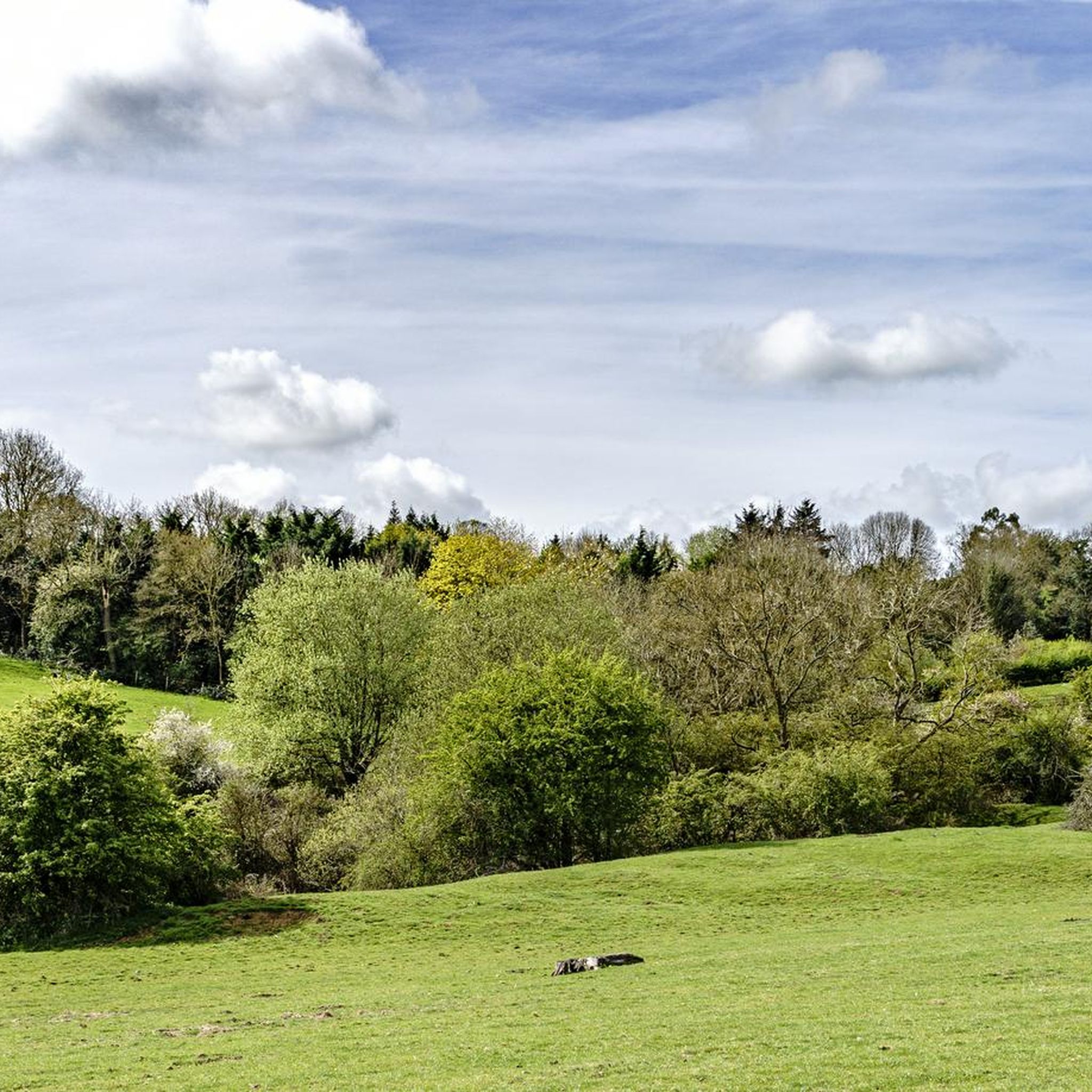
During his tenure as Head Gardener at Stowe, Brown created the Grecian Valley, a long sweeping view out across the landscape from the Temple of Concord and Victory. Within the valley, Brown carefully situated a series of statues, including the Circle of the Dancing Faun. The group of statues, with the Dancing Faun in the centre, represent the shepherds and shepherdesses from the nearby village of Dadford. Folklore says they came to Stowe and danced and played music with the faun when he came to life at night, before turning to stone again when the sun rose. Barry Smith, Head of Gardens and Estates at Stowe, explained that ‘The statues of the shepherds and shepherdess are painted in polychrome, whilst the faun is bare stone, to differentiate between real and mythical people.’ The Seeley guidebook from 1766-1798 noted about the figures ‘…The Circle of the Dancing Faun, surround with the statues of shepherds and shepherdesses…and every shepherd tells his tale, under the hawthorn in the dale…’. The sculptures in the Grecian valley did not, unfortunately, remain in their places for very long. Throughout the nineteenth century, the Buckingham family lost a vast amount of wealth, and so they began to sell off possessions. Lady Mary Arundell, the 1st Duke of Buckingham’s sister, recalled in a letter the removal of the Circle of the Dancing Faun, and the faun’s replacement with an urn, on 4 August 1813: ‘…the vase put up on the Pedestal where the statue stood surrounded by sundry gentlemen and ladies that [they] were pulling down when I was at Stowe…’ The restoration of the Grecian Valley has been underway for 25 years now. Two of the stone statues that formed part of the circle were returned to Stowe from the garden of a local house in 2008. The original dancing faun was never found again, so a mould was taken from a similar marble version at Hughenden Manor, another National Trust property in Buckinghamshire. The recent arrival of three more copies of the original statues, expertly recreated by Cliveden Conservation, complete the circle after 200 years of separation. Source: https://visitsoutheastengland.wordpress.com/2016/12/13/circle-of-the-dancing-faun-returns-to-stowe-after-200-year-absence/ /
0
0

Great to walk around looks very impressive
0
0

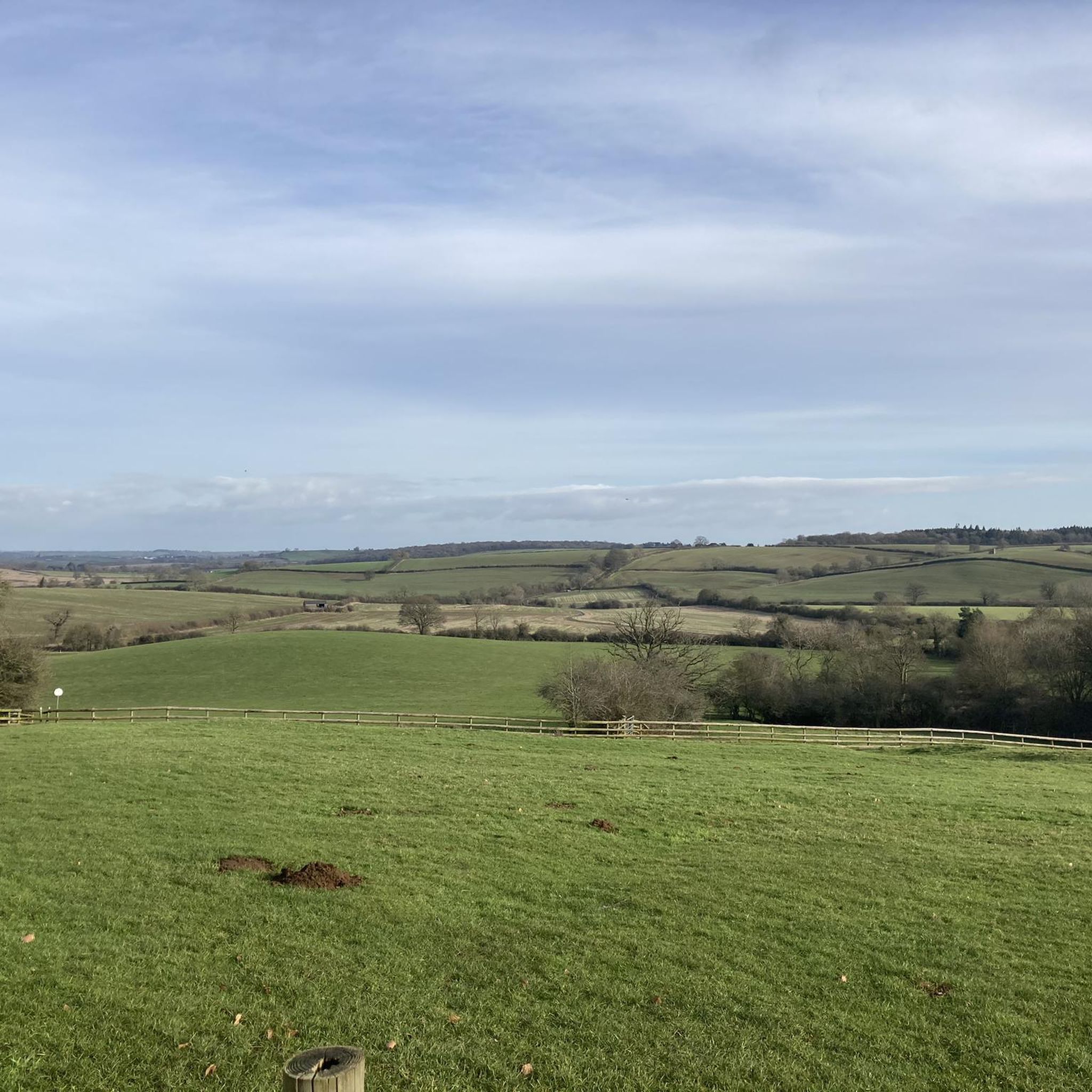
Chipping Warden is a typically pretty village for the area. Smaller than some of its more famous neighbours but no less picturesque. A good spot to rest and seek refreshment.
0
0

Chipping Warden is a Northamptonshire village with a rich history. On the River Cherwell, to the east, are the remains of a Roman villa, while just to the south of the village is an Iron Age hillfort, Arbury Banks. The village sits on the Jurassic Way long-distance trail. Walkers in need of a pitstop will be delighted that there are two pubs: the Griffin and the Rose and Crown.
0
0

"A tranquil Tudor manor house set in rare terraced gardens, with the 'antient' Dryden family at its heart Built by the Drydens using the remains of a medieval priory, the house and gardens have survived largely unaltered since 1710 and are presented as they were during the Victorian era. The warm, welcoming house features grand rooms, stunning tapestries and Jacobean plasterwork, contrasting with the domestic detail of the servants' quarters. Stroll in the historic parkland and catch glimpses of early medieval landscapes, while a wander through the priory church reveals the story of the canons of Canons Ashby." Cit. https://www.nationaltrust.org.uk/canons-ashby#Overview
2
0

I love his hidden treat, great spot for a picnic of the westher turns with four benches inside to take a pew.
1
0
The Name The story of a village starts with its name. Chipping Warden is the village with a market and a hill from which a watch may be kept. In the Domesday book (1086) Warden is found as Waredon. The word is compounded from ‘weard’ meaning to watch and ‘dun’ a hill. The hill referred to is Warden Hill which lies to the East of the village. ‘Chipping’ comes from the Old English verb ‘ceapan’, meaning to buy, and refers to the market which was possibly first held here in Saxon times. The Romans At Chipping Warden Black Grounds, and in a field called the Cauldwells, lived a Roman land proprietor in his villa. The foundations of the villa were discovered about a hundred years ago, also fragments of Samion and Castor pottery used in the house. The house included a bathroom 36ft long and 10ft wide which has been excavated, a feature which would not again figure in the homes of the village for several hundreds of years. Roman coins have been found in the locality dating from A.D. 250-390. The Domesday Survey (1086) William 1, having defeated the English Army under Harold of Hastings, proceeded to deprive the English Lords of their lands bestowing them to Norman Knights. In 1086 at the time of the Domesday Survey the lands in Chipping Warden which had been previously held by a Saxon named Tosti, were in possession of Cuy de Reinbuedcurt, who held them directly from the King. At Edgcote, lands which in former times had been held by a Saxon thane named Burred, were handed over to a lord named Walchelin, who held them from the Bishop of Coutanes in Normandy. The market of the village A great distinction of Chipping Warden during the Middle Ages was the possession of a market. By the reign of Henry III, the market was highly successful, for in 1227 the King, at the request of Hugh, Bishop of Lincoln, in whose diocese Banbury lay, withdrew the privilege of the market as it was proving an important rival to the Banbury one. In 1238 the ‘Manor’ of the village had passed to Girard de Furnivall who obtained from the king once more the right to hold a market in the village on a Tuesday. The market was still active in 1362 as an action was taken against the Vicar of Blakesley for disturbing the market – the exact nature of which is not disclosed. However there is no more mention on the market in history after that time, not even the date on which it ceased to be held, but the base of the Market Cross may still be seen near the Church. The World Wars The village like every English village, made its tragic contribution to the success of the Wars with the lives of some of its men. The stones in the Church bear testimony to this loss. In the Second World War the aerodrome was built, which enlivened the village with the sound of aircraft and crew. RAF Chipping Warden opened in 1941 as a Bomber Command Operational Training Unit. On 1 December 1942 a Vickers Wellington bomber crashed on take off, hitting the control tower and hangars, killing two people and causing many other casualties. The memorial on the Edgcote House drive (pictured above) commemorates the crew of a Wellington Bomber that crashed there on the 18 April 1945.
0
0
Frequently Asked Questions
What historical sites can I explore around Weston And Weedon?
The region is rich in history. In Weston-super-Mare, you can visit the historic Birnbeck Pier, the Weston Museum which chronicles the town's past, and the Iron Age Worlebury hillfort on Worlebury Hill. Near Weedon Bec, explore the historic Royal Ordnance Depot, the 12th-century Church of St. Peter and St. Paul, and the National Trust property Canons Ashby House and Priory Church. You can also visit the site of the Battle of Edgcote, a significant Wars of the Roses battleground.
Are there any family-friendly attractions in Weston And Weedon?
Yes, both areas offer family-friendly options. In Weston-super-Mare, the Grand Pier is packed with entertainment like go-karts, arcade games, and rides. The Helicopter Museum is also a hit with its extensive collection. For outdoor fun, Sand Bay is tranquil and suitable for families. Near Weedon Bec, the artisan workshops at the Royal Ordnance Depot can be interesting, and the Canons Ashby House and Priory Church offers historical exploration in beautiful gardens.
What natural features and outdoor spaces can I visit?
Weston-super-Mare boasts the expansive Weston-super-Mare Beach and the peaceful Sand Bay. You can also explore Worlebury Hill (Weston Woods) for picturesque walks, the scenic Brean Down with its commanding views, and the Uphill Local Nature Reserve. In the Weedon Bec area, enjoy walks along the Grand Union Canal and the River Nene, or explore Harlestone Firs and the trail around Daventry Country Park Reservoir.
Where can I go for a walk or hike near these attractions?
There are many walking opportunities. In Weston-super-Mare, explore Worlebury Hill (Weston Woods) or the trails at Brean Down. For the Weedon Bec area, you can find numerous hiking trails, including those around Canons Ashby Gardens and along the Grand Union Canal. You can find detailed routes and guides for hiking in the region on the Hiking around Weston And Weedon guide page.
Are there cycling routes available near Weston And Weedon?
Yes, the region offers various cycling routes. Near Weedon Bec, you can find routes like the 'Rural Bicycle Stop loop from Helmdon' and the 'Forge Coffee – St Mary's Church, Culworth loop from Canons Ashby'. These routes vary in difficulty from easy to moderate. For more options and detailed information, refer to the Cycling around Weston And Weedon guide page.
What cultural venues or events are there in Weston-super-Mare?
Weston-super-Mare hosts several cultural venues, including The Playhouse, The Winter Gardens, and the Blakehay Theatre. The town is also known for its annual events such as the carnival and the Weston Beach Race, offering vibrant cultural experiences throughout the year.
What is the Royal Ordnance Depot in Weedon Bec and what can I find there today?
The Royal Ordnance Depot in Weedon Bec was a strategically important central small arms depot for the British Army, built in 1802. Today, much of the historic depot remains and has been repurposed. It now houses a variety of artisan workshops, offices, studios, antique stores, and bookshops, making it a unique place to explore and shop.
Where can I find unique man-made monuments or historical structures?
Beyond the well-known landmarks, you can discover unique structures like the Fane of Pastoral Poetry, a small octagonal temple originally built in 1727. Also, within the Grecian Valley, you can find the Samson and the Philistine Statue and the Circle of the Dancing Faun, both offering historical and artistic interest.
Are there any good places for dog walking?
Yes, Uphill Beach in Weston-super-Mare is recognized as a top destination for dog walking. Many of the natural trails and parks in both regions, such as Worlebury Hill and Harlestone Firs, are also suitable for walks with dogs, though it's always advisable to check local regulations regarding leash requirements.
What is special about the beaches in Weston-super-Mare?
Weston-super-Mare Beach is known for its fine sand, perfect for strolling and sunbathing. The adjacent Bristol Channel is notable for having the second-largest tidal range in the world, creating a dynamic coastal landscape. Sand Bay offers a more tranquil setting, ideal for families and water activities like sailing and kayaking.
What kind of running trails are available in the area?
For those interested in running, the region offers several trails. Near Weedon Bec, you can find routes such as the 'Running loop from Woodend' and the 'Sulgrave Castle Hill loop from Culworth', which are generally of moderate difficulty. More running options are detailed on the Running Trails around Weston And Weedon guide page.
What do visitors enjoy most about the attractions around Weston And Weedon?
Visitors particularly appreciate the blend of historical significance and natural beauty. The tranquil gardens of Canons Ashby House, the scenic views from Battle of Edgcote, and the unique historical perspective offered by the Fane of Pastoral Poetry are frequently highlighted. The diverse experiences, from Victorian piers to ancient churches and canal-side walks, also receive positive feedback from the komoot community.
Most popular routes around Weston And Weedon

Get inspired with the komoot mobile app


Explore more
Still not found the Highlight you’re looking for? See guides of the top attractions in other regions:
