Top 20 Castles around Borgloon
Best castles around Borgloon are situated in the Haspengouw region, an area known for its historical significance and gently rolling landscapes. Borgloon, once the capital of the County of Loon, features a rich past reflected in its numerous castles. The region offers a blend of cultural heritage and natural beauty, with many historical sites integrated into the landscape. Visitors can explore more than 10 castles, each contributing to the area's historical narrative.
Best castles around Borgloon
- The most popular castles…
Last updated: October 10, 2026
Alden Biesen Commandery
Highlight • Castle
It served as:
• an administrative center for the surrounding holdings (farms, villages, lands),
Translated by Google •
Tip by

The Outer Courtyard at Alden Biesen
Highlight • Castle
Translated by Google •
Tip by
Sign up now to discover places like this
Get recommendations on the best single tracks, peaks, & plenty of other exciting outdoor places.
Heks Castle
Highlight • Castle
The palatial castle was built from 1770, probably …
Translated by Google •
Tip by

Genoels-Elderen Wine Castle
Highlight • Historical Site
Showing Translation
Tip by

Schoonbeek Moated Castle
Highlight • Castle
Translated by Google •
Tip by

Sign up for free to discover even more castles around Borgloon.
Already have an account?
Start today with a free account
Your next adventure awaits.
Popular around Borgloon



Tips from the Community

Beautiful castle, but not accessible
0
0

Wine terrace and bar at Wijnkasteel Genoels-Elderen. The cozy terrace of the wine castle is a lovely place to relax with a beautiful view of the garden and the pond. You can taste all the products of the wine castle, and coffee, regional beer, lemonade, and snacks are also available.
2
0

Watch here a beautiful film about the history of Alden Biesen and the Teutonic Order: https://youtu.be/YXJjgloHpH8?si=-T5CilBr4_Vu4Ov4
6
1
The water castle of Schoonbeek is a Renaissance castle built in a U-shape with a large garden. Next to the castle is a pond that flows into a moat, over which a drawbridge leads to the entrance gate. The oldest core of the castle dates back to the Middle Ages: in 1333 the castle belonged to the County of Loon. Herman Typots, bailiff of the Land of Grevenbroek and castellan of the Prinsenhof in Kuringen, married Margriet van Chiney, daughter of Dirk van Chiney, lord of Schoonbeek and Anna Vandenbosch of Gors-op-Leeuw. In 1573 their grandson Hendrik Typots was still lord of the castle of Schoonbeek. The Preston family from Ireland bought it in 1780. The next owner was the de Renesse family. Count Theodore de Renesse was mayor of Beverst and governor of the province of Limburg. Another descendant, Frédéric Alexandre Jean Marie Ghislain, Count de Renesse, born in Brussels on January 3, 1904, died unmarried in the castle on November 18, 1990. In 1991 the castle became the property of Count Thierry de Hemricourt de Grunne.
3
0

The outer courtyard is mainly characterized by the presence of the church. It all began for the Commandery with the church. More than 800 years ago, there was a chapel here, and through the centuries, the church grew into today's baroque masterpiece. On the outer courtyard, you can also recognize the tenant farm. Want to know more about the Commandery? Click through to https://www.alden-biesen.be/domein
10
0
The story of Alden Biesen does not begin in Limburg, but at the scorching gates of besieged Acre. In 1190, German merchants built a field hospital there with the sails of their ships, intended for sick pilgrims and wounded crusaders. What began as an act of care and solidarity grew into the establishment of the Teutonic Order; a spiritual order of knights that was soon recognized by the Pope and the Emperor. In our region too, the Teutonic Order left its mark. In the thirteenth century, an impressive commandery was established in Rijkhoven near Bilzen: Alden Biesen, the headquarters of the bailiwick of Biesen, which managed dozens of properties in the region. For centuries, this domain was a center of power, wealth, and religious influence. But at the end of the eighteenth century, disaster struck. During the French Revolution, the property of the Teutonic Order was confiscated. In 1797, Guillaume Claes, the mayor of Hasselt, bought the domain and saved it from demolition. Nevertheless, it fell into disrepair, and in 1971, a severe fire destroyed almost the entire castle. Only the walls remained standing. Fortunately, the Flemish government intervened, and a thorough restoration followed. Today, Alden Biesen is once again a vibrant heritage site where you can relive the past in the castle, the garden, and the museum. Want to know more? Click through to https://www.alden-biesen.be/geschiedenis
11
0

A Landkommande (command post) was a regional administrative and economic unit of a religious military order, primarily the Teutonic Knights. It served as: • an administrative center for the surrounding holdings (farms, villages, lands), • an economic base for financing military and charitable activities, • the residence of the Landkomtur (commander), who held regional leadership. Chronological development: c. 1220 --> Establishment of the settlement by the Teutonic Knights --> Beginning as a regional administrative and economic unit 13th–14th centuries --> Expansion into the central Landkommande of the Bailiwick of Biesen --> Establishment as an important administrative center in the area of what is now the southern Netherlands 15th century --> Consolidation of the Order's rule; Economic stabilization --> Securing income from agriculture and taxes 16th century --> Effects of the Reformation and religious conflicts --> Political and religious tensions, but the commandery continued to exist 17th century --> Baroque expansion into a representative castle complex --> Transformation from a fortified complex to a prestigious residence 18th century --> Golden age as the seat of the Bailiwick of Biesen --> Administrative center with cultural significance 1794–1795 --> French revolutionary troops occupy the region --> Expropriation of the Order's property, end of the Order's rule 19th century --> Private use and structural alterations --> Loss of the original administrative function 1971 --> Major fire destroys large parts of the complex --> Severe structural damage From the 1970s onwards --> Restoration by the Belgian heritage authorities --> Re-establishment as a historical cultural monument Today --> Cultural and event center used for exhibitions, conferences, concerts, and tourism
30
0
The outer courtyard (Vorphof) was primarily built between the 16th and 18th centuries during the expansion of the Teutonic Order's complex. It served as an economic and reception area in front of the inner castle courtyard. Stables, barns, coach houses, and administrative buildings were located here. Visitors and suppliers first reached this courtyard before entering the main area. Architecturally, the outer courtyard is characterized by brick buildings with a regular layout. Gates, moats, and bridges were originally part of the defensive system of the former moated castle. Today, the outer courtyard has been restored and is part of a publicly accessible cultural and event center.
41
0
Frequently Asked Questions
What are some historically significant castles to visit around Borgloon?
The region boasts several castles with deep historical roots. Alden Biesen Commandery, for instance, dates back to 1220 and was once a significant Teutonic Knights Order commandery. Another notable site is Castle of Betho, a 17th-century moated castle with origins first mentioned in 1267. You can also explore the ruins of Kolmont Castle, which played a crucial role as a Loon fortress overseeing Tongeren during medieval times.
Are there any family-friendly castles or activities near Borgloon?
Yes, several castles offer family-friendly experiences. Alden Biesen Commandery is listed as family-friendly and serves as an international cultural center. Heks Castle, with its extensive gardens, is also a great option for families, though its gardens are only open to the public during specific weekends in June and September. Genoels-Elderen Wine Castle offers tours of its arboretum, rose garden, and vineyards, which can be an engaging experience for all ages.
What is the best time of year to visit the castles around Borgloon?
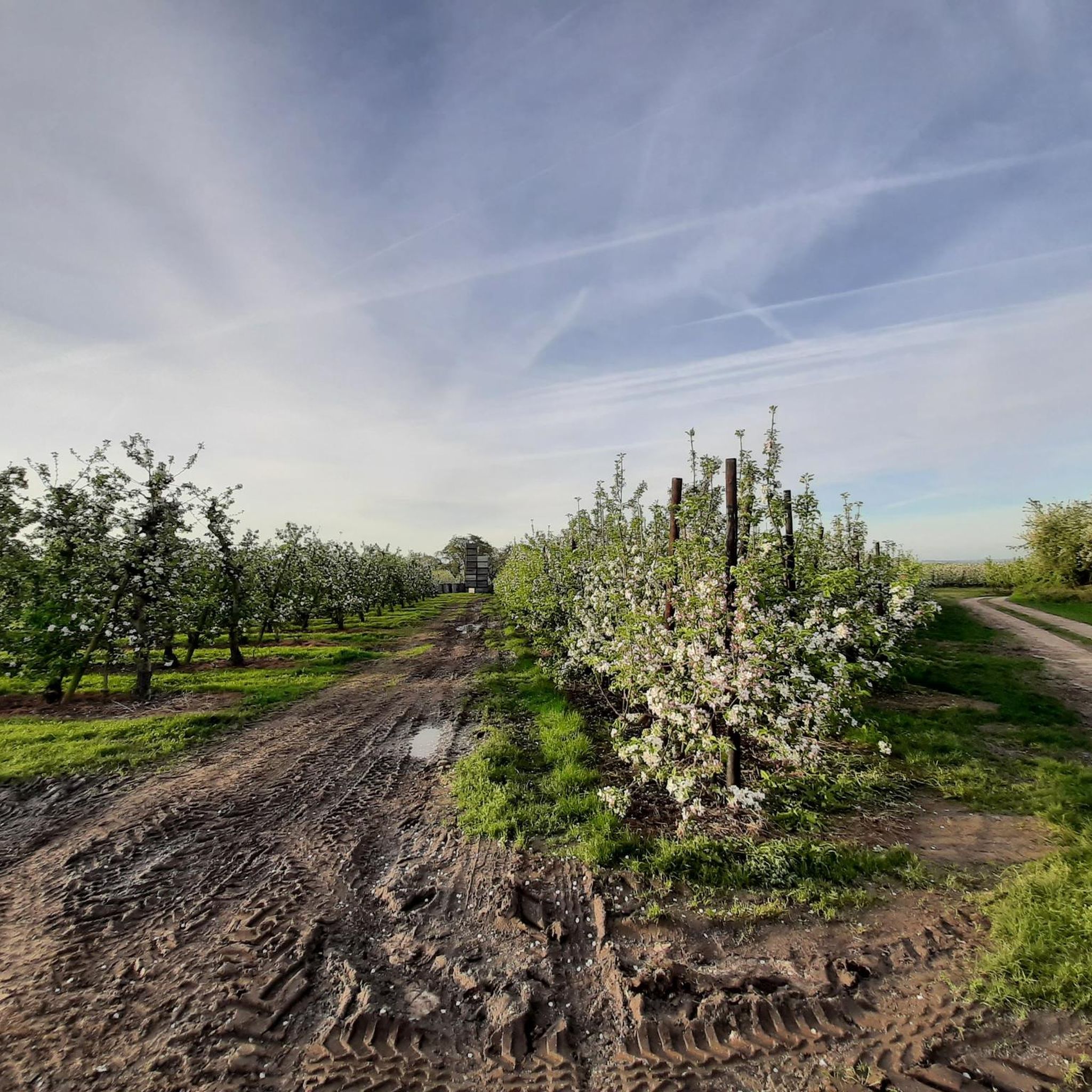
The Haspengouw region, where Borgloon is located, is particularly beautiful during the blossom season, typically in spring (March to May), when the fruit orchards are in full bloom. This adds a scenic backdrop to your castle visits. The gardens of Heks Castle are open to the public during the first weekend in June and the second weekend in September, offering unique viewing opportunities.
Can I find any unique castle experiences or 'hidden gems' in the Borgloon area?
For a unique experience, consider the Castle of Gors, which offers a discovery trail led by the lord of the castle, including access to beautifully restored cellars and an authentic ice house. It's also notable as the first energy-neutral castle in Flanders. While not a 'hidden gem' in terms of being unknown, its personalized guided tour and sustainable innovation make it a distinctive visit. Rullingen Castle, now operating as a hotel, offers a chance to experience a historic ambiance firsthand.
Are there walking or hiking routes near the castles around Borgloon?
Yes, the region offers numerous walking and hiking opportunities. You can find several routes, such as the 'Ravel Borgloon - Kerniel' or the 'Oetersloven Chapel – Honsbergweg Apple Orchards loop from Rijkel', which often pass by or near historical sites and natural features. For more details on these and other trails, you can explore the Running Trails around Borgloon guide.
What kind of natural features can I expect to see around the castles?
The castles are set within the gently rolling landscapes of Haspengouw, often referred to as the 'Tuscany of Flanders.' You'll encounter scenic valleys, fruit orchards, and picturesque countryside. Many castles, like Schoonbeek Moated Castle, feature moats and large gardens. Heks Castle is known for its historic rose garden and one of the first landscape parks on the European mainland, inspired by English garden architecture.
Are there cycling routes that include castles in the Borgloon region?
Absolutely. The Haspengouw region is popular for cycling, especially during blossom season. Routes like the 'Blossom Trail – View of Borgloon Village loop' or the 'Grote Markt Sint-Truiden – Floating Chapel of Helshoven loop' can take you through the scenic landscape and past various historical points of interest, including castles. You can find more cycling options in the Cycling around Borgloon guide.
What are the characteristics of the castles in the Borgloon area?
The castles around Borgloon showcase a diverse architectural history, ranging from medieval origins to 18th-century palatial residences. Many are moated castles, such as Schoonbeek Moated Castle and Castle of Betho, reflecting the region's historical defensive needs. You'll find structures that have been reconstructed over centuries, like Rullingen Castle, which was rebuilt after a significant fire in 1920, and grand commanderies like Alden Biesen Commandery.
Are there any castles that offer accommodation or dining options?
Rullingen Castle, situated in the valley of the Herk, operates as a hotel, allowing visitors to immerse themselves in its historic ambiance. While not all castles offer accommodation, many towns and villages in the Borgloon area provide cafes, restaurants, and pubs where you can enjoy local cuisine and refreshments after your visits.
What do visitors appreciate most about the castles around Borgloon?
Visitors frequently appreciate the blend of cultural heritage and natural beauty. The komoot community has shown strong engagement, with over 350 upvotes and more than 180 photos shared, highlighting the visual appeal and historical significance of these sites. The well-preserved landscapes, unique architectural styles, and the rich history embedded in each castle are often cited as key attractions.
Are there any castles with vineyards or wine-related experiences?
Yes, the Genoels-Elderen Wine Castle is a prime example. It features the largest vineyards in Belgium and offers guided tours through its park, rose garden, and wine cellars, concluding with wine tastings. It's a unique opportunity to combine historical exploration with local viticulture.
What is the accessibility like for castles in the Borgloon area?
Accessibility varies by castle. While some castles like Alden Biesen Commandery are large cultural centers that may have accessible areas, others, particularly older structures like Castle of Betho, might have limited accessibility due to their historical architecture. It's advisable to check specific castle websites or contact them directly for detailed information on wheelchair access or other accessibility needs.
Most popular routes around Borgloon
Most popular attractions around Borgloon

Get inspired with the komoot mobile app


Explore more
Looking for the best castles somewhere else? Discover other guides around Borgloon:
