The best road cycling routes around Tessenderlo
4.4
(28)
1,722
riders
75
rides
Road cycling routes around Tessenderlo traverse the varied landscapes of the Hageland region, characterized by both extensive wooded areas and vast open fields. The terrain includes flat stretches and challenging ascents, offering diverse conditions for cyclists. This area is known for its hilly topography, providing opportunities for demanding rides.
Best road cycling routes around Tessenderlo
- The most popular road cycling route is Paalse Plas – Houterenberg Climb loop from Tessenderlo, a 37.9 miles (60.9 km) trail that takes 2…
Last updated: June 27, 2026
4.3
(3)
334
riders
60.9km
02:42
170m
170m
Moderate road ride. Good fitness required. Some segments of this route may be unpaved and difficult to ride.
4.6
(9)
297
riders
58.3km
02:30
90m
90m
Moderate road ride. Good fitness required. Some segments of this route may be unpaved and difficult to ride.

Sign up for free
3.7
(3)
56
riders
46.8km
02:04
100m
100m
Moderate road ride. Good fitness required. Mostly well-paved surfaces and easy to ride.
5.0
(1)
55
riders
59.2km
02:33
210m
210m
Moderate road ride. Good fitness required. Mostly well-paved surfaces and easy to ride.
5.0
(1)
40
riders
Moderate road ride. Good fitness required. Mostly well-paved surfaces and easy to ride.
Get access to more routes and recommendations from other explorers.
Sign up for free
Already have an account?
Our route recommendations are based on thousands of hikes, rides, and runs completed by other people on komoot.
Start today with a free account
Your next adventure awaits.
Login or Signup
Other adventures around Tessenderlo

Tips from the Community


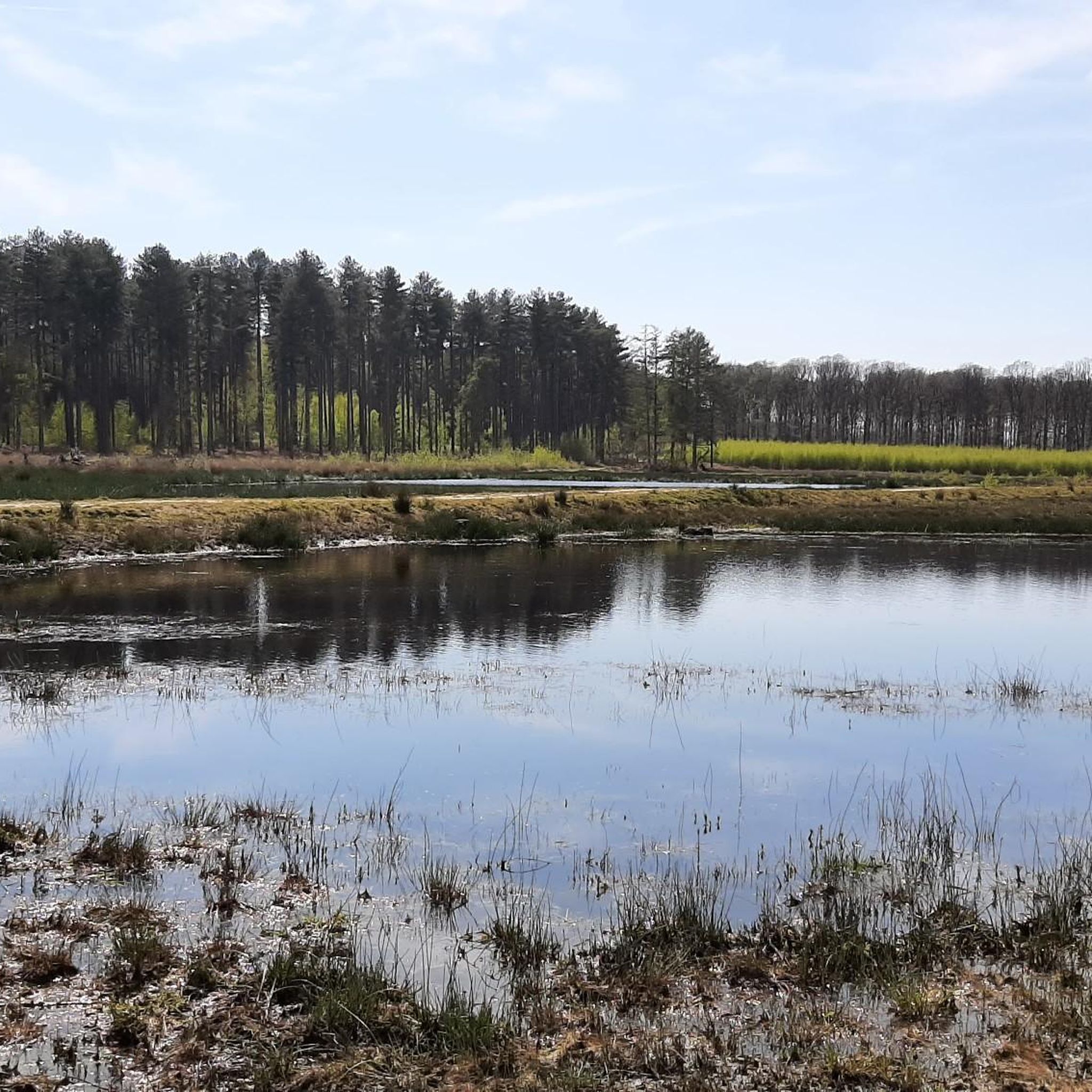
The meadows along the roadside regularly flood here during wetter periods, making it a good place to spot water birds.
0
0

Webbekoms Broek is part of the Webbekomsbroek-Borchbeemden Flemish Nature Reserve, a contiguous area of 397 hectares managed by the Flemish Agency for Nature and Forests. This also includes the Diesters Broek, the Schaffens Broek, and the Borchbeemden: Rotbroek, Gorenbroek, and Sint-Jansberg. Several watercourses flow through the area. The most important of these is the Demer. The others are primarily its tributary, the Zwarte Beek, the Grote Leigracht, and the Leigracht. The Demer Valley has been plagued by floods for centuries. The most severe floods in recent history date back to 1998. There were also serious floods in Diest in 2008. To prevent severe water damage, retention basins and floodplains were installed. The Webbekoms Broek and its surroundings constitute a floodplain. In September 1998, a retention basin with a surface area of 144 hectares was put into operation in the Webbekoms Broek. The area can hold 3.5 million m³ of water. There is an inner basin and an outer basin. The inner basin is surrounded by dikes. The remainder forms the outer basin, which primarily functions as a nature reserve.
1
1

The Schulensmeer is the largest inland lake in Flanders. Numerous benches invite you to take a break.
5
0

The Bailey Bridge in Mol At the beginning of World War II, the bridges on the Kempen canals were blown up. With the liberation, the British built a temporary bridge in Mol, which still stands today. The bridge is a so-called Bailey bridge, named after its designer, R.C. Bailey. He developed this ingenious, modular bridge for military purposes. A Bailey bridge can be assembled without machinery, using only manpower. Such a bridge is actually only meant to be there for a short time, but in some places, such as in Mol, it remained. The pillars of the old bridge are still clearly visible.
0
0

Northeast of the Sint-Jansberg monastery complex on Schomstraat lies the Oude Pastorij farm, a U-shaped farm dating from the first half of the 19th century, with the open side of the yard facing the street. The brick buildings under gable roofs (Flemish pantiles), hipped on the side wings, are situated around a rectangular yard separated from the street by a long wall and several recent service buildings. The house is located in the center of the central wing, a double house of four bays and two stories on a raised ground floor with a pitched plinth. The rectangular windows have wooden lintels and painted sills, and the rectangular door has a wooden lintel. The house is flanked on both sides by slightly projecting stables of three bays each, with a modified layout. Spacious transverse barns are housed in the perpendicular wings, each of three bays and equipped with an anchored brick basket-arch gate. These volumes feature arched windows and rectangular doors beneath a wooden lintel. Inventory of Immovable Heritage: Carthusian Monastery of Sint-Jansberg and its surroundings, https://id.erfgoed.net/erfgoedobjecten/302683
4
0
The municipality of Zelem had three parsonages throughout its history. The first was, and still is, located on the Kolenberg and called "Hoeve Oude Pastorij," better known locally as the "Donkelhoeve." Between 1969 and 1972, this farm served as a filming location for the BRT serial "Wij, Heren van Zichem" (We, Lords of Zichem), stories about "De Witte van Sichem" (The White Man of Sichem) and "Het leven van Herman Coene" (The Life of Herman Coene), written by Ernest Claes. In those stories, the farm belonged to farmer Coene. In those days, the pastor's residence was always connected to a farm that provided the pastor with his daily necessities.
5
0

You feel the peace here, especially when you're on the other side and can admire the horses and sheep nearby in the beautiful open countryside. I'll definitely come back here for a walk. Wonderful 😎
1
0
Frequently Asked Questions
What kind of terrain can I expect when road cycling around Tessenderlo?
The Tessenderlo area, part of the broader Hageland region, offers a diverse cycling experience. You'll encounter both extensive wooded areas and vast open fields, providing varied scenery. The terrain includes relatively flat stretches, but also features challenging ascents, as the Hageland is known for its hilly topography. This mix allows for rides that cater to different fitness levels, from scenic cruises to more demanding climbs.
How many road cycling routes are available in the Tessenderlo area?
There are over 80 road cycling routes around Tessenderlo documented on komoot. These routes offer a wide range of distances and difficulties, ensuring there's something for every road cyclist.
Are there any easy road cycling routes suitable for beginners in Tessenderlo?
Yes, Tessenderlo offers several routes suitable for beginners. There are 8 routes classified as 'easy' on komoot, providing a gentler introduction to road cycling in the region. These routes typically feature less elevation gain and shorter distances.
What do other cyclists enjoy most about road cycling in Tessenderlo?
The komoot community highly rates road cycling in Tessenderlo, with an average score of 4.6 stars from over 20 reviews. Cyclists often praise the varied terrain, which includes both peaceful wooded areas and expansive open fields, as well as the opportunities for challenging climbs. The region's connection to cycling events and its low-traffic roads also contribute to a positive riding experience.
Are there any long-distance road cycling routes around Tessenderlo?
Yes, the region offers several longer routes. For example, the Paalse Plas – Houterenberg Climb loop from Tessenderlo is nearly 61 km (37.9 miles) long, and the Schulensmeer – Asdonkstraat loop from Tessenderlo covers almost 60 km (36.8 miles). These routes provide ample distance for endurance training or longer day trips.
Can I find circular road cycling routes in Tessenderlo?
Many of the road cycling routes around Tessenderlo are designed as loops, allowing you to start and finish at the same point. Examples include the Zen in Mol – SAS4 Observation Tower loop from Tessenderlo and the Speelbos Veerle-Heide loop from Tessenderlo, offering convenient circular options.
What natural features or landmarks can I see along the road cycling routes?
While cycling around Tessenderlo, you'll pass through diverse natural landscapes including extensive wooded areas and vast fields. Some routes offer specific points of interest such as the SAS4 Observation Tower, featured on the Zen in Mol – SAS4 Observation Tower loop. You might also encounter highlights like the Demerbroeken Observation Tower or various bird hides like De Kuilen bird hide, offering opportunities to appreciate the local wildlife and scenery.
Are there any family-friendly road cycling routes in Tessenderlo?
While road cycling routes are generally geared towards experienced cyclists, some of the easier and flatter sections could be suitable for families with older children who are comfortable on roads. For dedicated family-friendly cycling, you might consider exploring the broader cycling network in the region, which often includes dedicated cycle paths away from heavy traffic.
What is the best season for road cycling in Tessenderlo?
The best seasons for road cycling in Tessenderlo are typically spring and autumn, when temperatures are mild and the natural scenery is at its most vibrant. Summer can also be pleasant, though it's advisable to start earlier in the day to avoid the midday heat. Winter cycling is possible but requires appropriate gear for colder and potentially wetter conditions.
Are there places to stop for refreshments or accommodation near the cycling routes?
Tessenderlo and the surrounding towns offer various cafes, pubs, and restaurants where cyclists can stop for refreshments. For accommodation, you'll find options ranging from hotels to guesthouses in the area. Many local establishments are accustomed to catering to cyclists, especially given the region's strong cycling culture.
Where can I find parking for my car when starting a road cycling route in Tessenderlo?
Tessenderlo, being a central point in the region, offers various public parking options within the town center and near popular starting points for routes. It's advisable to check local parking regulations and availability, especially during peak cycling seasons or events. Many routes start from easily accessible locations with nearby parking facilities.
Is public transport available to reach the cycling routes in Tessenderlo?
Tessenderlo is accessible by public transport, primarily buses, which connect it to larger towns and train stations in the Limburg province. While bringing a bicycle on public transport can sometimes be restricted or require specific conditions, using public transport to reach Tessenderlo and then starting your ride from there is a viable option for many cyclists.
Most popular routes around Tessenderlo
Most popular attractions around Tessenderlo

Get inspired with the komoot mobile app


Explore more
Browse the best Road cycling routes in other regions.
