The best walks and hikes around Pittem
4.3
(2347)
12,162
hikers
53
hikes
Hiking around Pittem offers a network of trails primarily through rural landscapes with gentle elevation changes. The terrain is characterized by agricultural fields, small woodlands, and paths connecting local landmarks. Most routes feature minimal climbing, making them accessible for various fitness levels. The region's hiking trails provide opportunities to explore the local countryside and historical points of interest.
Best hiking trails around Pittem
- The most popular hiking route is Mulle de Terschueren House – Statue "Tanneke Sconynckx" loop from Tielt…
Last updated: October 5, 2026
4.0
(7)
29
hikers
20.6km
05:17
80m
80m
Hard hike. Very good fitness required. Easily-accessible paths. Suitable for all skill levels.
4.5
(6)
24
hikers
Easy hike. Great for any fitness level. Easily-accessible paths. Suitable for all skill levels.

4.0
(3)
16
hikers
11.9km
03:03
40m
40m
Moderate hike. Good fitness required. Easily-accessible paths. Suitable for all skill levels.
4.3
(3)
17
hikers
5.92km
01:30
20m
20m
Easy hike. Great for any fitness level. Easily-accessible paths. Suitable for all skill levels.
10
hikers
6.08km
01:34
30m
30m
Easy hike. Great for any fitness level. Easily-accessible paths. Suitable for all skill levels.
Get access to more routes and recommendations from other explorers.
Already have an account?
Our route recommendations are based on thousands of hikes, rides, and runs completed by other people on komoot.
Start today with a free account
Your next adventure awaits.

Tips from the Community

https://www.pittem.be/upload/documents/ferdinand-verbiest.pdf https://diplomatie.belgium.be/nl/beleid/beleidsthemas/uitgelicht/hulde-aan-ferdinand-verbiest-vriend-van-de-chinese-keizer On 9 October 1623 – exactly 4 centuries ago – Ferdinand Verbiest was born in Pittem. As a diligent student of exact sciences such as geometry and astronomy, he cherished a dream: to join the Jesuits to become a missionary in South America. But his destination ultimately became the mysterious China. After a heroic boat trip of one and a half years, he arrived safely in Macao, a Portuguese trading post on the Chinese coast at the time.
2
0

A chicory ash tree from 1931 towers above the other buildings of this large farm, "Goed ter Kleinbrugge". In this region, a lot of chicory was grown, dried and roasted at the time. Chicory was often used as a surrogate for (much more expensive) coffee. This is also the case here on this old farm, most of the buildings of which are 20th century, while the history of the site goes back to the first half of the 15th (!) century. Source: https://inventaris.onroerenderfgoed.be/erfgoedobjecten/211953
4
0
The story of Tanneke Sconynckx was recently beautifully described by Frederic Vermeulen, one of the distant descendants of the woman tortured to death for witchcraft. His book "The Witch of Gottem" provides a special insight into a piece of gruesome history. The Radio 1 program "Voorproevers" devoted a broadcast to the book, which can be listened to here (or via Spotify): https://www.vrt.be/vrtmax/podcasts/radio-1/v/voorproevers/3/wat-als-je-afstamt-van-een--heks---het-verhaal-van-tanneke-scony/
2
1
Neo-Gothic chapel of the "Bataviawijk" dedicated to Our Lady of Sorrows. Although probably older, the construction is registered by the land registry in 1955. Source: https://inventaris.onroerenderfgoed.be/erfgoedobjecten/86792
3
0
Pittem honors his son: Ferdinand Verbiest sj (Chinese name: 南怀仁 Nán Huáirén, Pittem, October 9, 1623 – Beijing, January 28, 1688) was a Jesuit, missionary and astronomer. He built an instrumentarium for the Old Observatory in Beijing, which is still there. The current instruments mainly date from his time. Verbiest was partly responsible for the change of the Chinese calendar, a change that was based on his astronomical observations. He designed light cannons for the army of Emperor K'ang-si, to whom he also gave lessons in mathematics. He designed the first steam car, a small steam car intended as a toy, and a thermometer. And he drew another world map. He also worked as a diplomat and translator thanks to his extensive knowledge of languages. For example, he was at the disposal of the emperor as an interpreter during negotiations with Portuguese and Russian ambassadors. Verbiest wrote more than thirty books and was fluent in Latin, Hebrew, German, Spanish, Dutch and Italian. He also studied the Manchu language, into which he translated the first six books of Euclid of Alexandria. He died on 28 January 1688 as a result of a fall from his horse and was given a state funeral. The emperor paid for the mausoleum in which he was buried in the Jesuit cemetery of Zhalan. Source: Wikipedia
2
0
The parish of Our Lady was probably founded in the 9th century. There was supposed to have been a wooden church, but it was not until around 1100 that a stone, Romanesque church was built. The tower of this church has been preserved and, contrary to earlier estimates, it was built in the first half of the 12th century. Around 1580, the church, which had been further expanded into a three-aisled basilica church, was destroyed during the religious wars. Between 1622 and 1642, the church was completely restored. In 1676, the church received a relic of Saint Godelieve of Gistel, and in 1757 a group of statues of Saint Godelieve with the executioners was made by Pieter Van Walleghem. In 1909-1910, the church was expanded on the west side. The tower was classified in 1906. In 1914 a neo-Gothic main choir was built. Around 1913 a procession was added around the church, concerning Sint-Godelieve. Source: Wikipedia
2
0
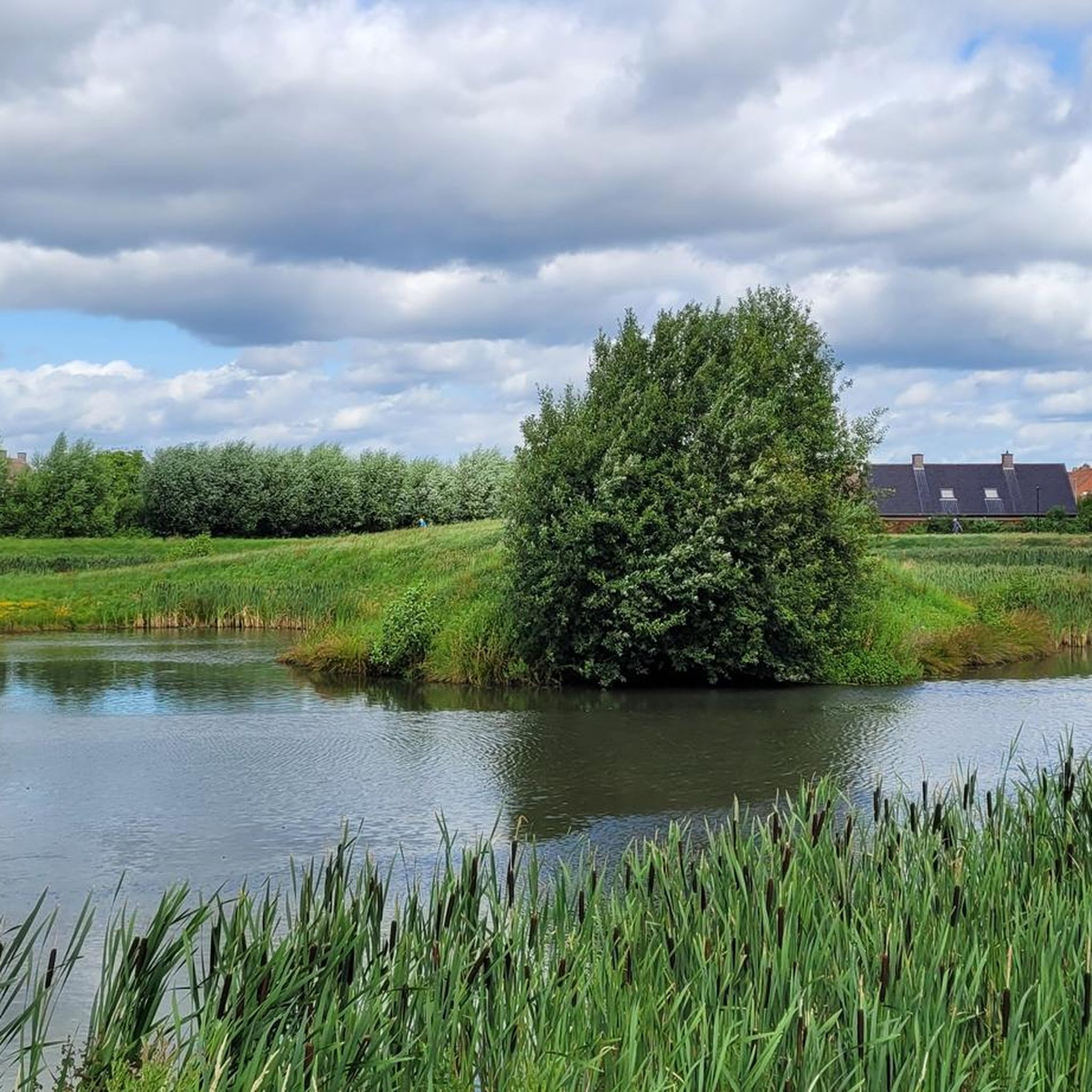
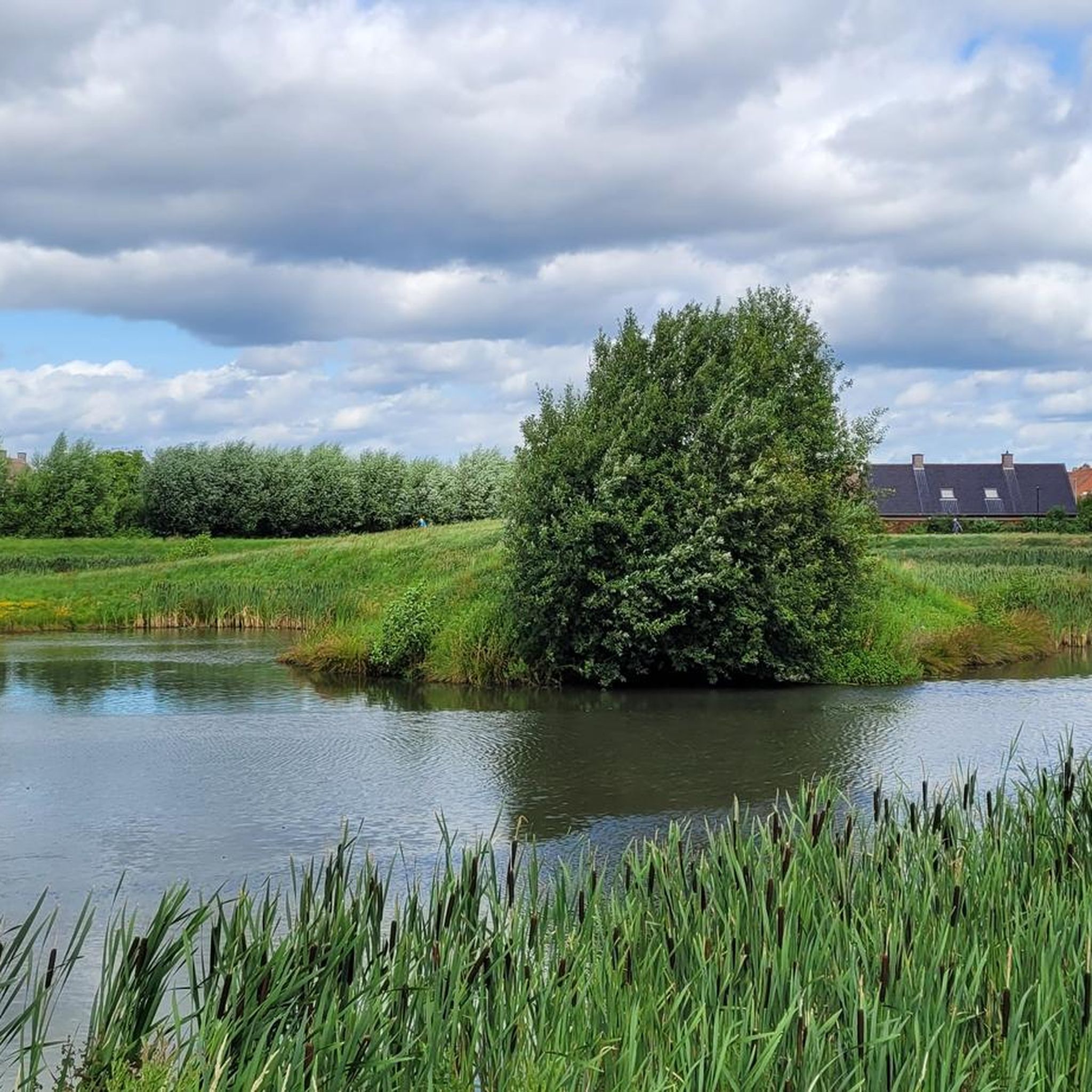
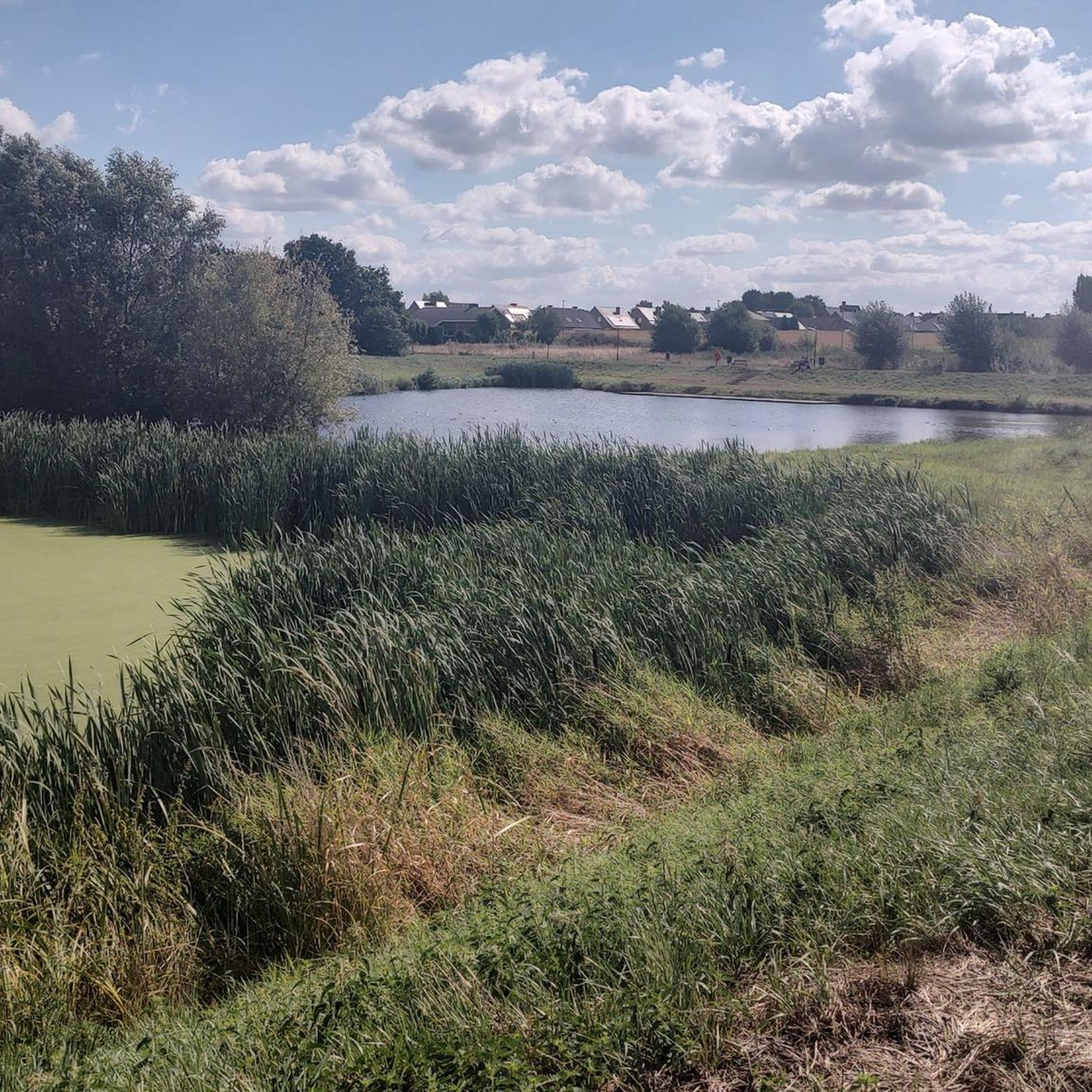
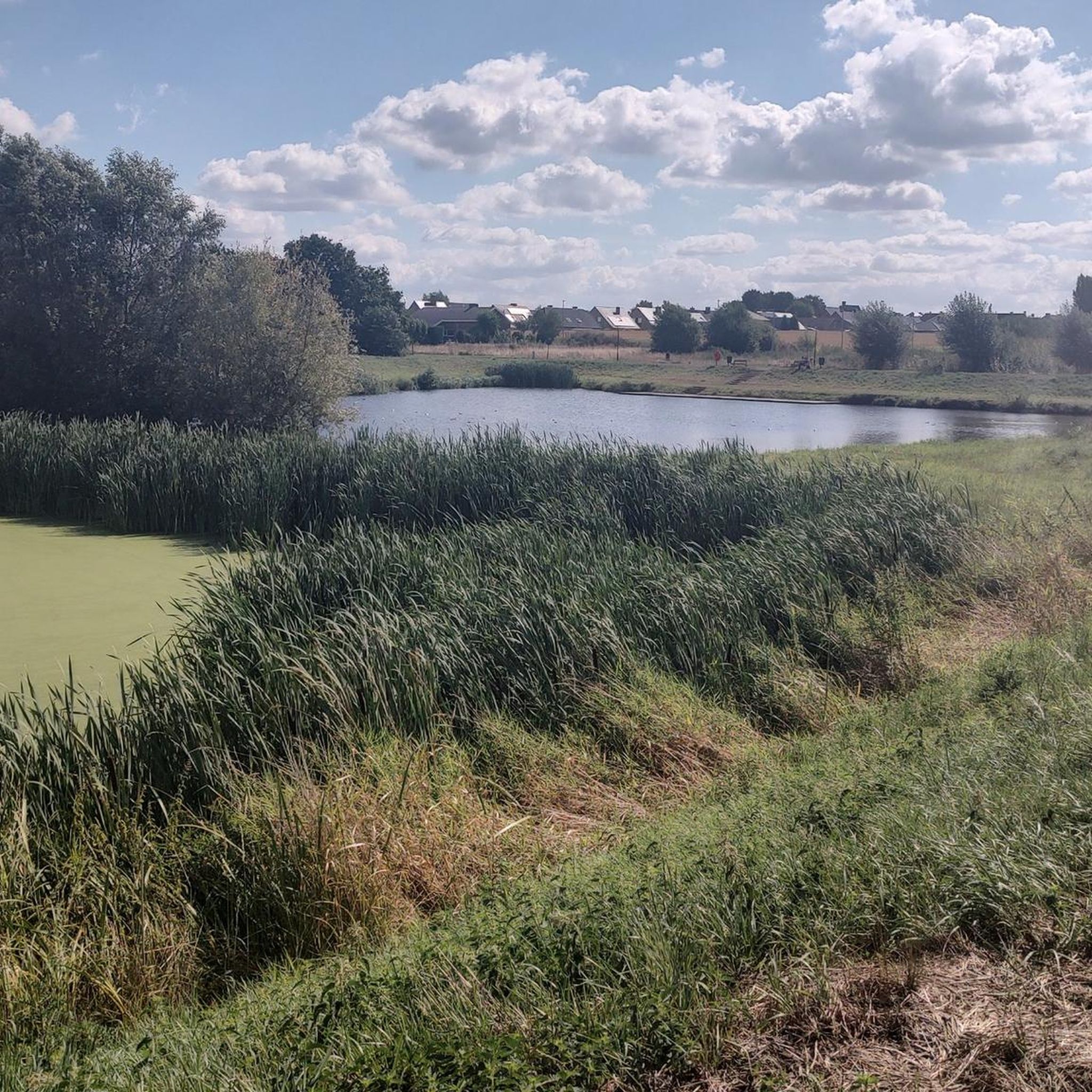
In 2011, a buffer basin was constructed that is divided into four basins. Three basins are located here between Koolskampstraat and Egemstraat and one a little further away, at the corner of Egemstraat-Baertstraat. The buffer basin was constructed to prevent flooding; this by temporarily holding the rainwater and then discharging it in a delayed manner into the Breemeersbeek. In addition to its water management function, the buffer basin also has a recreational and ecological function. A Finnish track of 1030 m was constructed around it, where hikers can also enjoy a beautiful piece of nature. Police regulations were drawn up to prevent nuisance. Source: https://www.pittem.be/nl/wonen/waterbeheer/bufferbekken
2
0
Chapel erected in 1902 by the heirs of the de Mûelenaere family, one of the most important families in 19th-century Pittem, as thanks for the healing of a sick child. This influential family included Joannes de Mûelenaere, mayor from 1820 to 1842, and was also represented in national politics. Although the chapel is dedicated to the Sacred Heart, the series of statues in the chapel could cause some confusion: above the Sacred Heart statue, you will find crucifixes and several statues of Our Lady (with Child). Source: https://inventaris.onroerenderfgoed.be/erfgoedobjecten/211272
2
0
Frequently Asked Questions
How many hiking trails are available in Pittem?
Pittem offers a diverse network of over 45 hiking trails. These routes traverse rural landscapes, agricultural fields, and small woodlands, providing options for various fitness levels.
Are there easy hiking trails suitable for beginners in Pittem?
Yes, Pittem has over 25 easy hiking routes. A great option for beginners is the Mulle de Terschueren House – Statue "Tanneke Sconynckx" loop from Tielt, which is 4.5 miles (7.3 km) long and takes about 1 hour 51 minutes to complete with gentle elevation changes.
Are there any challenging or long-distance hikes in Pittem?
For those seeking a challenge, Pittem features a few difficult routes. One such option is the De Plaatsmolen – Heilig Hart Chapel Pittem loop from Pittem, a 12.8 miles (20.6 km) path that crosses agricultural fields and passes local landmarks.
What kind of landscapes can I expect on the hiking trails around Pittem?
The hiking trails around Pittem are characterized by rural landscapes, including vast agricultural fields, small woodlands, and paths connecting various local landmarks and historical points of interest. The terrain generally features gentle elevation changes.
Are there any circular hiking routes in Pittem?
Many of the trails in Pittem are designed as loops, offering convenient circular routes. For example, the Heilig Hart Chapel Pittem – De Plaatsmolen loop from Pittem is a 7.4 miles (11.9 km) circular trail through rural landscapes and historical sites.
What can I see along the hiking trails in Pittem?
Along the trails, you can explore various points of interest. Notable attractions include the Poelbergmolen, Bulskampveld Castle, and Rumbeke Castle. You might also encounter natural features like the Boardwalk Over the Large Pond, Heideveld-Bornebeek.
What do other hikers enjoy the most about hiking in Pittem?
The area is highly rated by the komoot community, with an average score of 4.4 stars from over 2,100 reviews. Hikers often praise the peaceful rural paths, the accessibility of routes for different abilities, and the blend of natural scenery with historical landmarks.
Are there any hikes that pass by lakes or water features in Pittem?
While Pittem is primarily known for its rural and agricultural landscapes, you can find routes that pass by water features. The region includes highlights such as the Round Basin and Scheepsput, offering serene spots along some trails.
What is the best season for hiking in Pittem?
Given the gentle terrain and rural setting, hiking in Pittem is enjoyable throughout much of the year. Spring and autumn offer pleasant temperatures and vibrant scenery, while summer provides longer daylight hours. Even in winter, the paths are generally accessible for walks, though conditions may vary.
Are there family-friendly hiking options in Pittem?
Yes, many of Pittem's easy and moderate trails are suitable for families. The gentle elevation changes and well-maintained paths make them accessible for children. Look for shorter loop trails that allow for a comfortable outing with the family.
Can I find routes that lead through forests or woodlands?
While agricultural fields are prominent, Pittem's hiking network does include paths through small woodlands. The Bulskampveld area, for instance, offers more forested sections for those seeking a different natural environment.
Is public transport available to reach hiking trailheads in Pittem?
Pittem is a smaller municipality, and while local bus services connect to nearby towns, direct public transport to specific remote trailheads might be limited. It's advisable to check local bus schedules for connections to the main village center, from where many routes originate.
Are there any hidden gem trails or less-known routes in Pittem?
With over 45 routes, there are many opportunities to discover quieter paths. Exploring some of the less-trafficked moderate trails, such as the De Plaatsmolen – Church of Our Lady loop from Pittem, can lead to peaceful experiences away from more popular spots.
Most popular attractions around Pittem

Get inspired with the komoot mobile app


Explore more
Browse the best Hikes in other regions.
