Top 11 Gorges around Martina Franca
Best canyons around Martina Franca are characterized by impressive karst ravines, locally known as "gravine." This area is part of the Parco Naturale Regionale Terra delle Gravine, a region known for its unique geological formations. These gravine offer a blend of natural beauty, rich biodiversity, and historical significance. They feature deep cuts in the earth, often with lush vegetation, and house ancient dwellings and rock-hewn structures.
Best canyons around Martina Franca
- The most popular canyons is Fantiano Quarries, an…
Last updated: October 18, 2026
Gravina di Riggio
Highlight • Gorge
Translated by Google •
Tip by

Bucito Cave
Highlight • Cave
Translated by Google •
Tip by

Sign up now to discover places like this
Get recommendations on the best single tracks, peaks, & plenty of other exciting outdoor places.
Fantiano Quarries
Highlight • Structure
Translated by Google •
Tip by
Mèlogna Cave PU 1119
Highlight • Cave
Translated by Google •
Tip by
Gravina di San Marco
Highlight • Gorge
Translated by Google •
Tip by

Sign up for free to discover even more gorges around Martina Franca.
Already have an account?
Start today with a free account
Your next adventure awaits.
Popular around Martina Franca
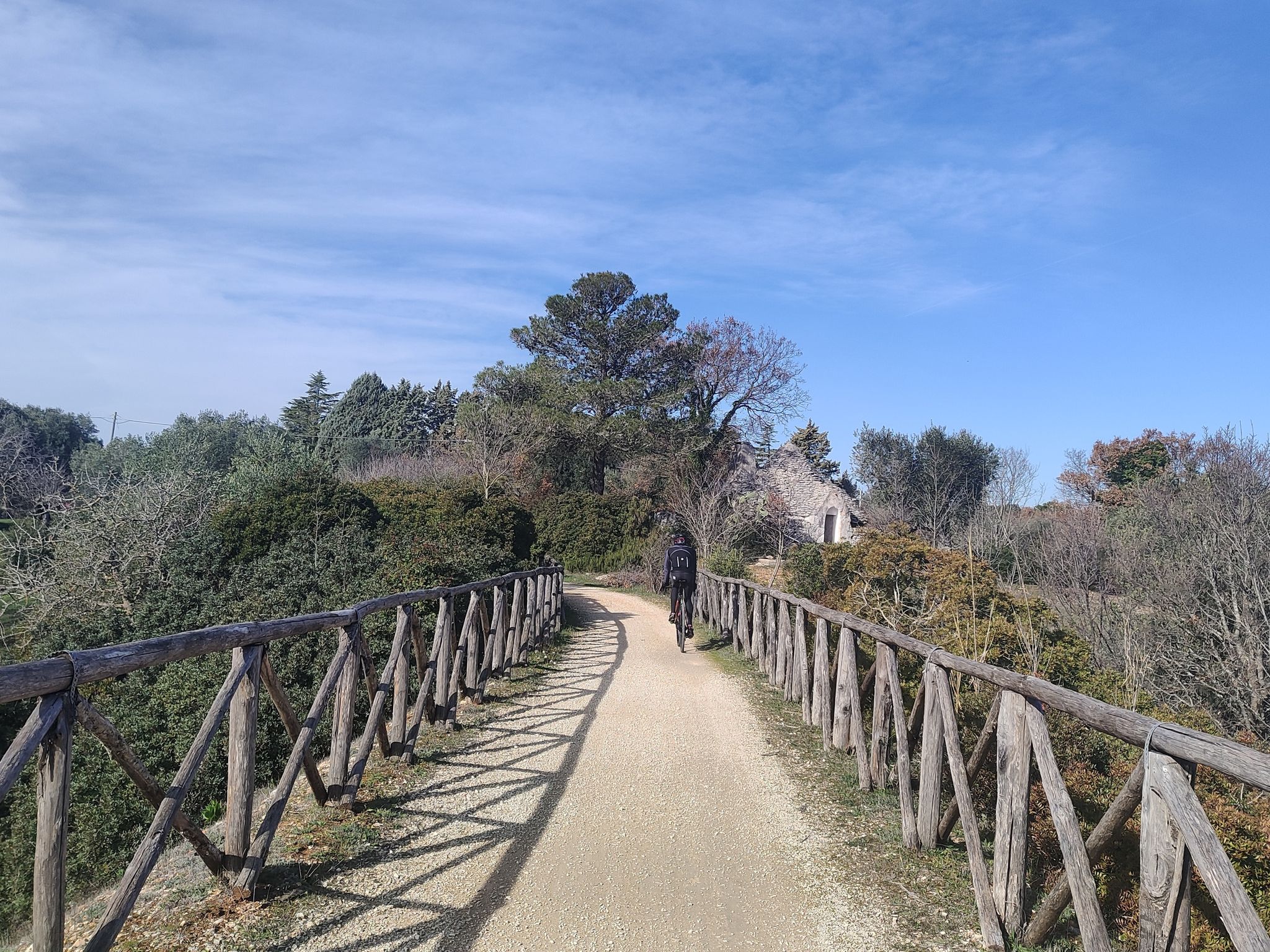
Ciclovia Anello d'oro di Puglia - Viaggio nella Puglia profonda
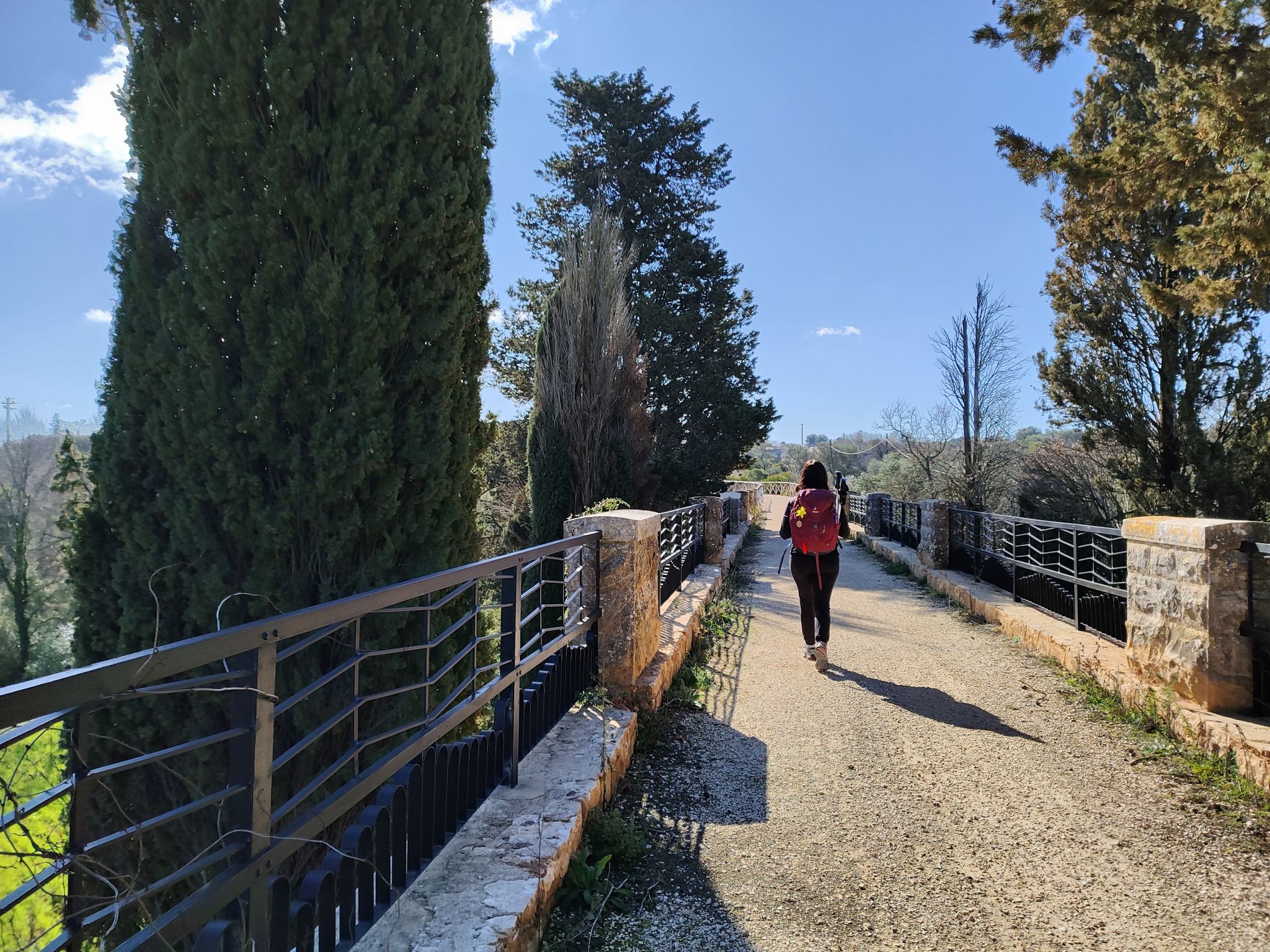
Anello d'oro di Puglia - Trekking nella Puglia profonda
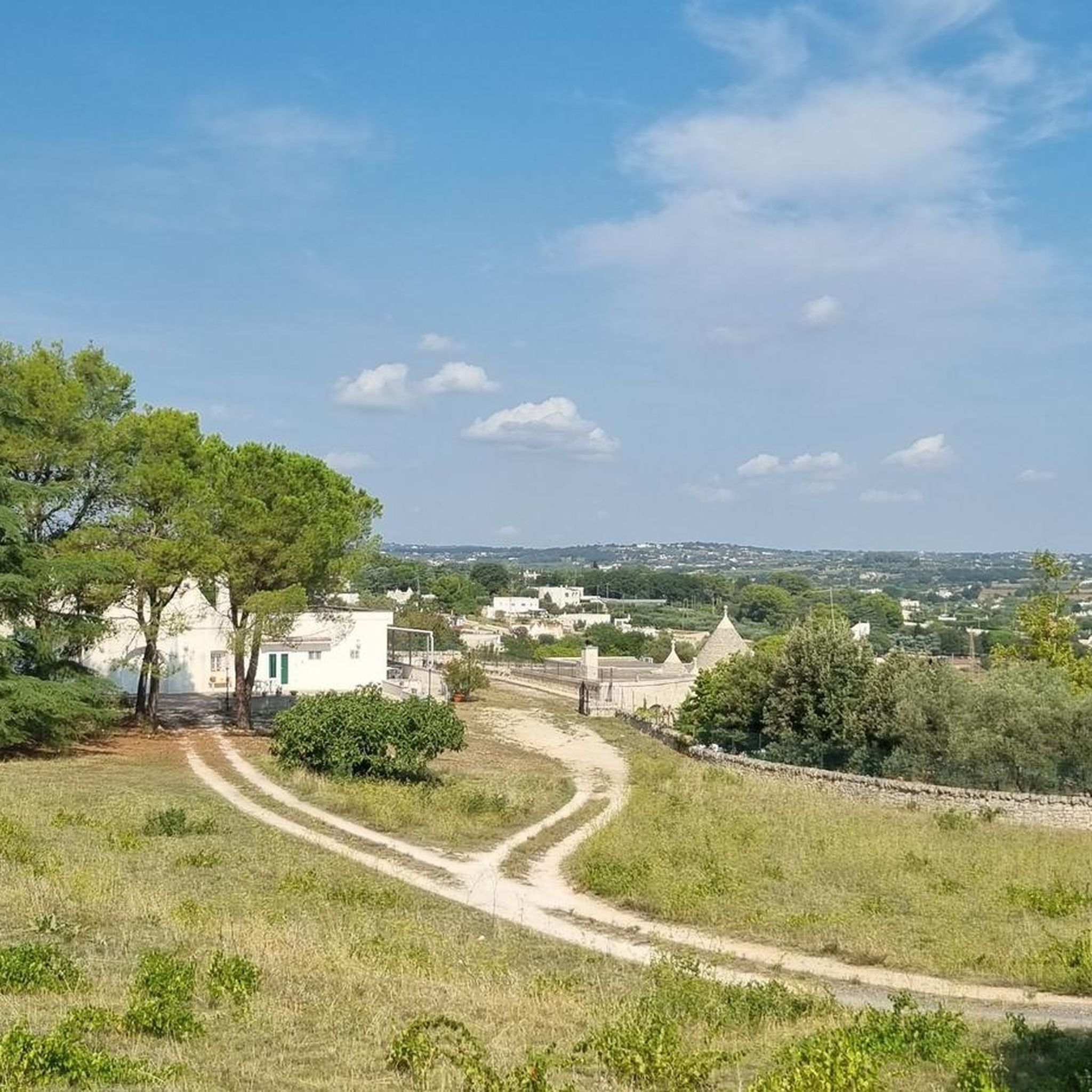
Road Cycling Routes around Martina Franca
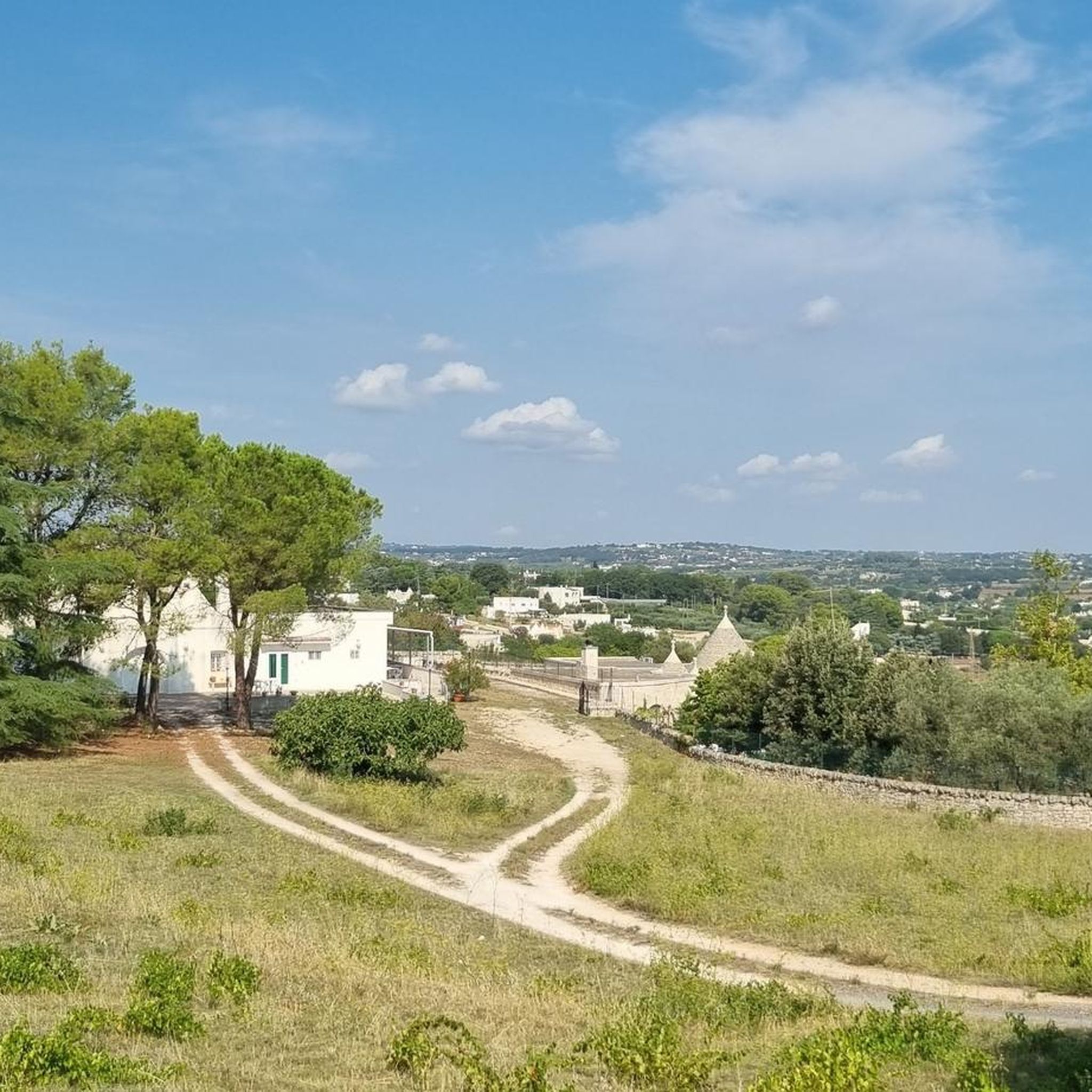
Cycling around Martina Franca
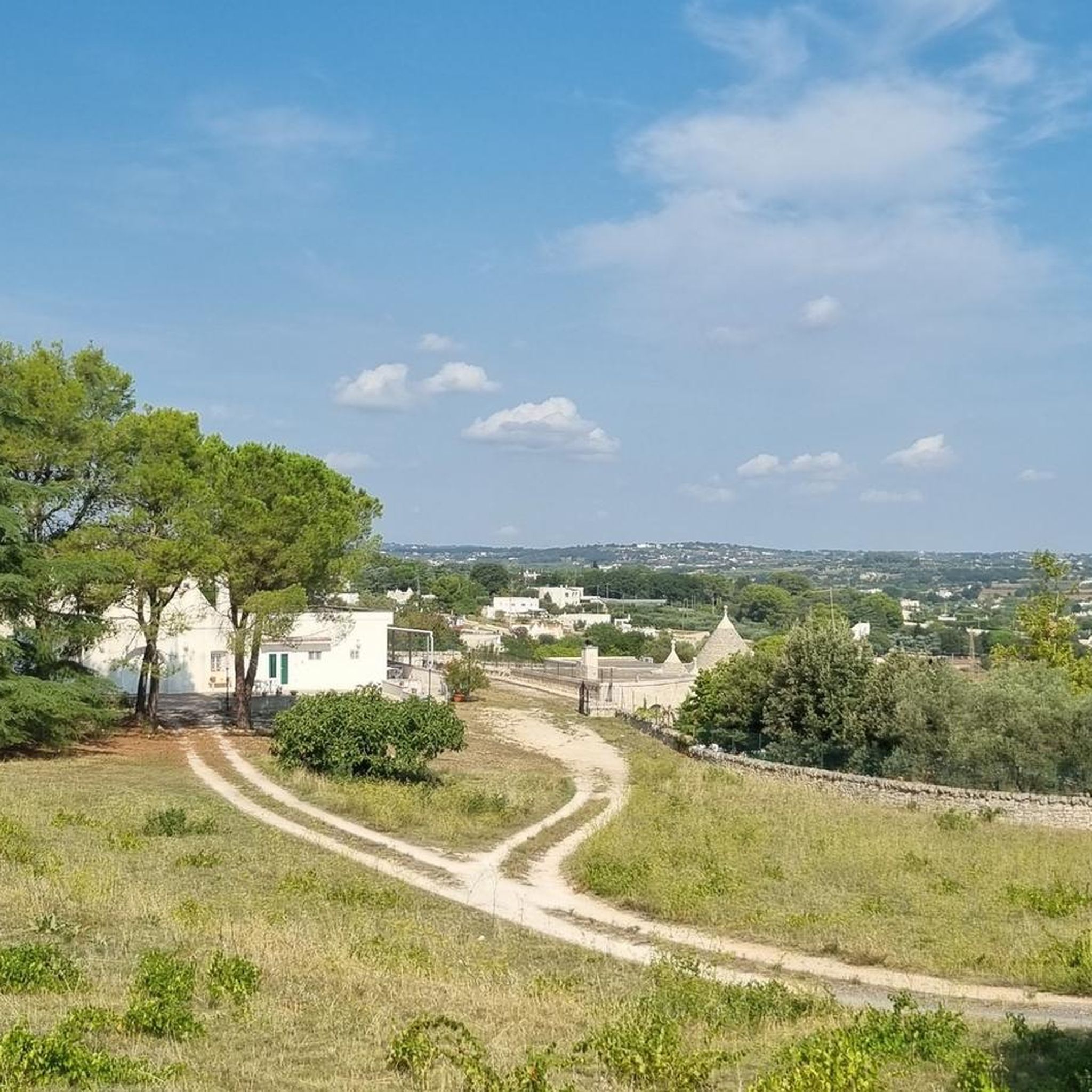
Hiking around Martina Franca
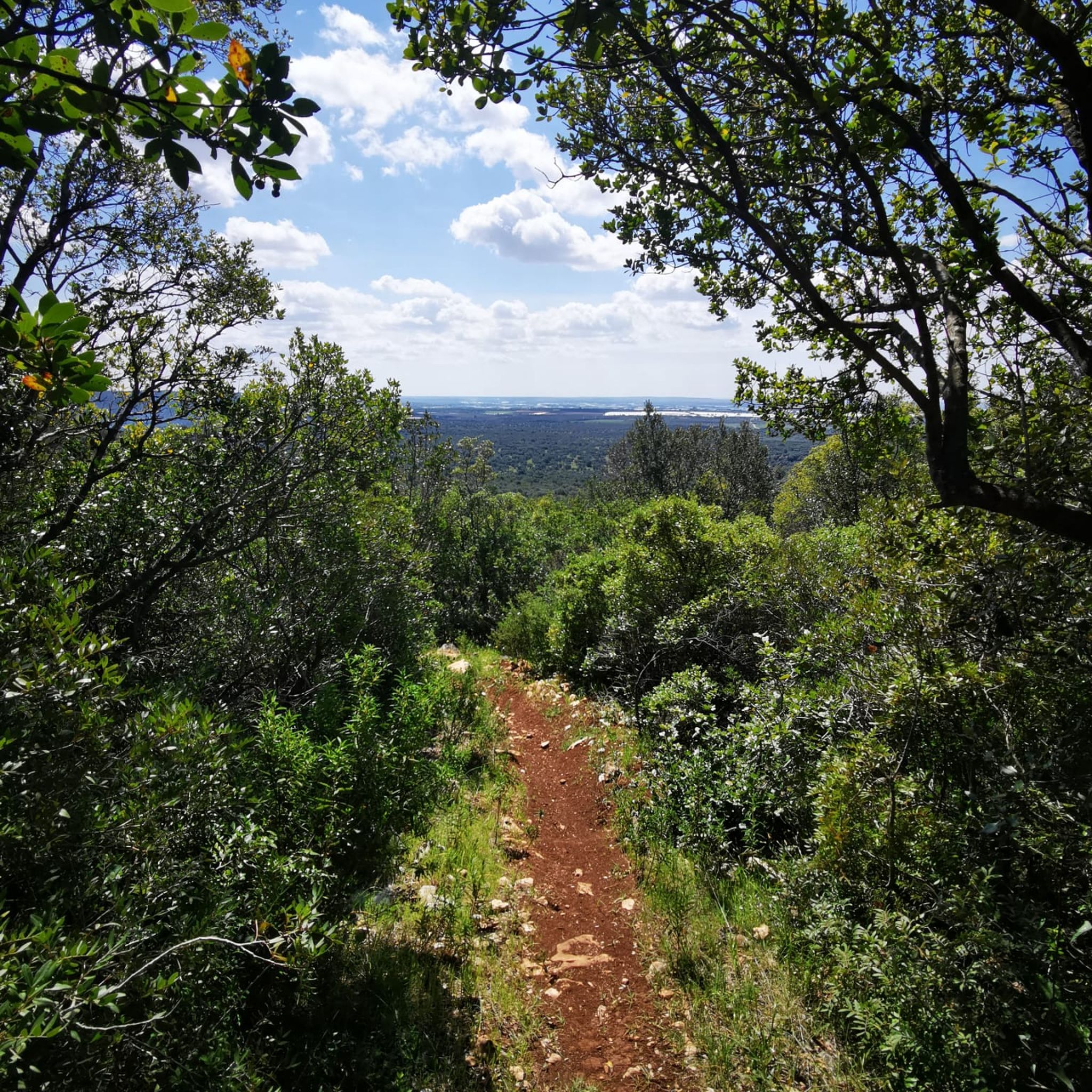
MTB Trails around Martina Franca
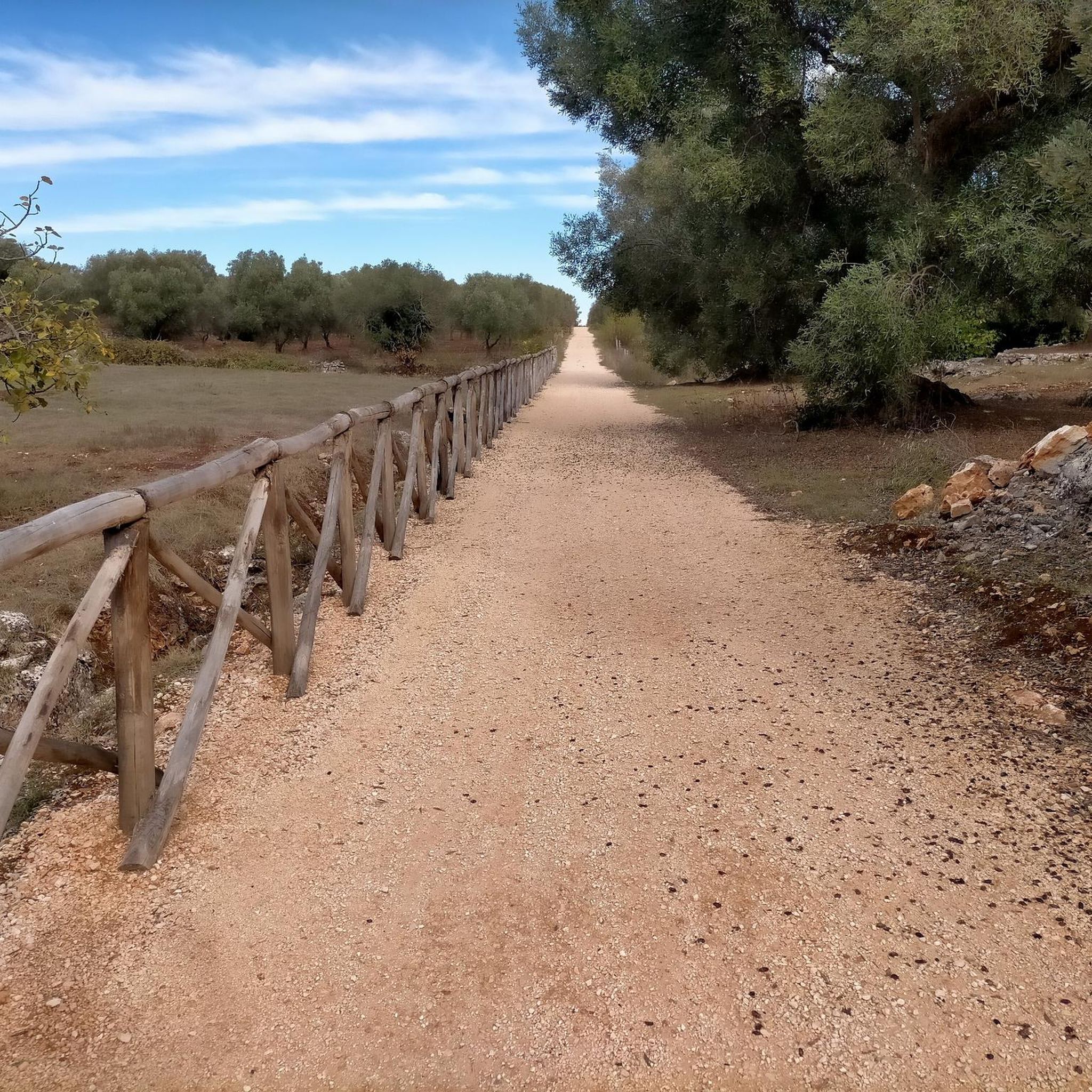
Running Trails around Martina Franca

Gravel biking around Martina Franca

Tips from the Community

A valley with a small lake, a small natural waterfall—unique in Puglia—and numerous historical sites, from prehistory to the 10th century. A small paradise that many may not know, yet it lies within our territory. We're talking about the Gravina di Riggio, a place of great natural and historical value. A few kilometers from the city, the Gravina di Riggio is a deep valley characterized by a waterfall, a small lake, and a small stream, as well as numerous relics related to the phenomenon of "living in caves." Of particular note is "il Caggione," a circular chasm located near the waterfall. On its sheer walls, a cave village spread across three levels of caves is clearly visible. The remains of a fortification wall, some graffiti, and fragments of pottery date back to the Greek and Roman periods. Finally, the area was heavily inhabited during the Middle Ages, as evidenced by the two frescoed rock churches, the cenobitic hermitage, the pit burials, and a village with communal facilities such as water cisterns and a granary. The Gravina di Riggio rises 4 kilometers from Grottaglie, in the province of Taranto, and is a valley 1,300 meters long and 25 meters deep. In addition to being home to many animal and plant species, it is famous for its caves, some of natural origin, others man-made. The Gravina di Riggio is unique for its waterfall, which after a 15-meter drop feeds a small lake and a stream. The Church-Crypt of the Savior, with frescoes from the 10th and 11th centuries, is also beautiful. A special place not to be missed.
0
0
"The Bucito Cave", in Grottaglie I'll make a very brief introduction: generally the manifestations of worship in caves, here, refer to what is the devotion for the Archangel Michael (quis ut Deus). And we owe this to the Lombards who made him their national saint. I would not leave out, however, the Byzantines of Puglia among whom this saint enjoyed enormous popularity. "The Grottaglie area, like other places in the area, has been inhabited by man since the most remote times. In fact, in some districts (Bucito, Coluccio and Lonoce) roughly worked stone tools, splinters and processing residues have been found, belonging to the Paleolithic, that is, to the period of the Ancient Stone. The Buccito Cave (or Coluccio), near Grottaglie, is located at an important road junction, closely connected to the Tratturo Martinese. These are the oldest signs of the presence of man in our territory. In the Neolithic Age (from the mid-5th to the first centuries of the 4th millennium BC) the first agricultural villages began to emerge (Bucito and Caprarica). Caves and natural caverns were then used in all phases of the Bronze and Iron Ages, especially in the villages of Riggio, Lonoce, Fullonese and Pensieri. In the last period of the Bronze Age, the agricultural economy took over from pastoralism, so the ravines were gradually abandoned to form small urban-type settlements. This process was however stifled with the foundation of Taranto by Spartan colonists (towards the end of the 8th century BC)” (From metropolis.it) Why is it called that? The cave takes its name from the Greek term βοῦς, βοός- bus,- or “ox” and οἰκία or “house, shelter, dwelling” and therefore, originally, indicated a place of shelter for these animals. The Greek etymology is evidence of both Magna Graecia, of Byzantine d+-++-homination and of the subsequent presence of the Basilian monks in our territory For some years, in this cave, the mass of December 24th was celebrated. Suggestive! A custom that would be nice to resume, both for our religion and for our traditions.
0
0
The Cave is part of the Gravine di Grottaglie and is located in the Terra delle Gravine Regional Park. The Bucito cave (also known as the Coluccio cave) is located in an important road junction, closely connected to the Tratturo Martinese, an ancient primary communication route until the 19th century in Puglia. On a boulder adjacent to the cave there are two statuettes, one of Padre Pio da Pietrelcina and one of Jesus Christ. Until a few years ago, in the Bucito cave, on the night of December 25, the inhabitants of Grottaglie and the surrounding area flocked there for the Christmas vigil and for the celebration of the Midnight Christmas Mass.
0
0

Massafra, a beautiful village divided by the Gravina di San Marco, from which the village arose. Today the Gravina acts as a watershed between the old and the new town.
0
0
For safety reasons, the Riggio ravine cannot be visited independently, since it is a private property to which access is forbidden, but it is possible to visit it during groups organized by Millenari di Puglia to be able to enjoy the beauty and uniqueness of these places safely and with the help of an expert guide.
0
0
Along the itinerary you will be able to discover secret passages that lead to fascinating panoramic caves and frescoed caves which preserve some of the oldest paintings in southern Italy, dating back to the 10th century AD, and in which it is still possible to read and admire some scenes of saints, Christian crucifixions and symbols. In rainy periods it is possible to observe a suggestive waterfall that descends into the ravine and collects the water in a small natural pool where the amphibians can find a place to reproduce
0
0
Near the city of Grottaglie it is possible to visit one of the most evocative ravines of the Terra delle Gravine Regional Park: the Gravina di Riggio. It is one of those places that must be visited and experienced at least once in a lifetime. Millennials of Puglia, thanks to the collaboration of the owners of the ravine, makes the Gravina di Riggio, one of the naturalistic, landscape and historical-archaeological wonders of Puglia, safe to visit.
0
0

Frequently Asked Questions
What are the unique geological features found around Martina Franca?
Around Martina Franca, you'll discover impressive karst ravines known locally as "gravine." These deep fissures in the earth are characteristic of the Puglia region and are part of the Parco Naturale Regionale Terra delle Gravine. They feature dramatic scenery, lush vegetation, and often house ancient dwellings and rock-hewn structures.
Which gravine offer historical and archaeological insights?
Many gravine in the area hold historical significance. For instance, the Bucito Cave, part of the Gravine di Grottaglie, is an ancient site with a history of human occupation and religious practices, including the celebration of Christmas Mass. The Gravina del Vuolo is also notable for housing the Caverna del Sergente Romano, a former brigand hideout, offering a glimpse into local history.
Are there any gravine with waterfalls or unique natural features?
Yes, Gravina di Riggio is a must-see spot, featuring a gorge with a beautiful waterfall and caves. It's considered one of the most evocative ravines within the Terra delle Gravine Regional Park.
What kind of biodiversity can I expect to see in the gravine?
The unique microclimates within the gravine support a rich biodiversity. You can find diverse flora, including wild orchids and endemic herbs, as well as a variety of wildlife such as golden eagles, kestrels, wild boars, and foxes.
What is the best time to visit the gravine for hiking?
The gravine can be visited year-round, but spring and autumn generally offer the most pleasant hiking conditions with mild temperatures and vibrant natural scenery. Be aware that some paths, like those in Gravina di San Biagio or Fantiano Quarries, can become technical or flooded after heavy rain, so checking local weather conditions is advisable.
Are there family-friendly hiking options in the gravine?
While some gravine trails can be challenging, many offer peaceful walks suitable for families. The Parco Naturale Regionale Terra delle Gravine generally provides opportunities for exploring nature. It's recommended to check specific trail conditions and difficulty levels, especially for younger children, as some paths may have uneven terrain or technical sections.
What are the trail conditions like in the gravine, especially after rain?
Trail conditions can vary. For example, the paths excavated in the Fantiano Quarries are noted for being technical, especially after rain. Similarly, sections of the path inside Gravina di San Biagio may be flooded after rain. Always wear appropriate footwear and exercise caution.
What other outdoor activities can I do near the gravine around Martina Franca?
Beyond exploring the gravine, the region offers a variety of outdoor activities. You can find numerous hiking trails, such as those in the Bosco delle Pianelle, which you can explore through the Hiking around Martina Franca guide. There are also extensive options for MTB Trails and Cycling routes, including the popular Ciclovia dell'Acquedotto Pugliese.
Are there any challenging cave explorations in the area?
For those seeking a more challenging experience, the Mèlogna Cave PU 1119 is a notable option. Located on a rocky ridge, it's categorized as challenging and offers a more adventurous exploration opportunity.
What should I know about accessing Gravina di Riggio?
Gravina di Riggio is a highly evocative site. However, access to this ravine is not always possible as it is located on private land. Collaborations with local organizations sometimes make it safe and accessible for visitors.
Are dogs allowed on trails in the Parco Naturale Regionale Terra delle Gravine?
Many natural areas in Puglia, including parts of the Parco Naturale Regionale Terra delle Gravine, are generally dog-friendly. However, it's always best to keep dogs on a leash to protect local wildlife and ensure the safety of other visitors. Specific rules may vary by gravina or protected area, so look for local signage.
What makes the gravine around Martina Franca a unique destination?
The gravine offer a unique blend of dramatic natural beauty, rich biodiversity, and deep historical significance. They provide a serene and untouched natural experience, ideal for those seeking tranquility and an immersive connection with nature, away from more crowded tourist spots. The presence of ancient dwellings and rock-hewn structures within these geological formations adds a fascinating cultural dimension.
Most popular routes around Martina Franca
Most popular attractions around Martina Franca

Get inspired with the komoot mobile app


Explore more
Already discovered everything in this region? See additional gorges around Martina Franca for your next adventure:
