Attractions and Places To See around Tarzo - Top 20
Best attractions and places to see around Tarzo, a comune in the province of Treviso, Italy, blend natural beauty with historical and cultural heritage. The region features notable landmarks, serene natural features, and significant cultural sites. Its picturesque hills, covered in olive trees and vineyards, are part of the UNESCO heritage Prosecco Hills. Visitors can explore a variety of points of interest that reflect the area's unique geography and history.
Best attractions and places to see around Tarzo
- The most…
Last updated: October 10, 2026
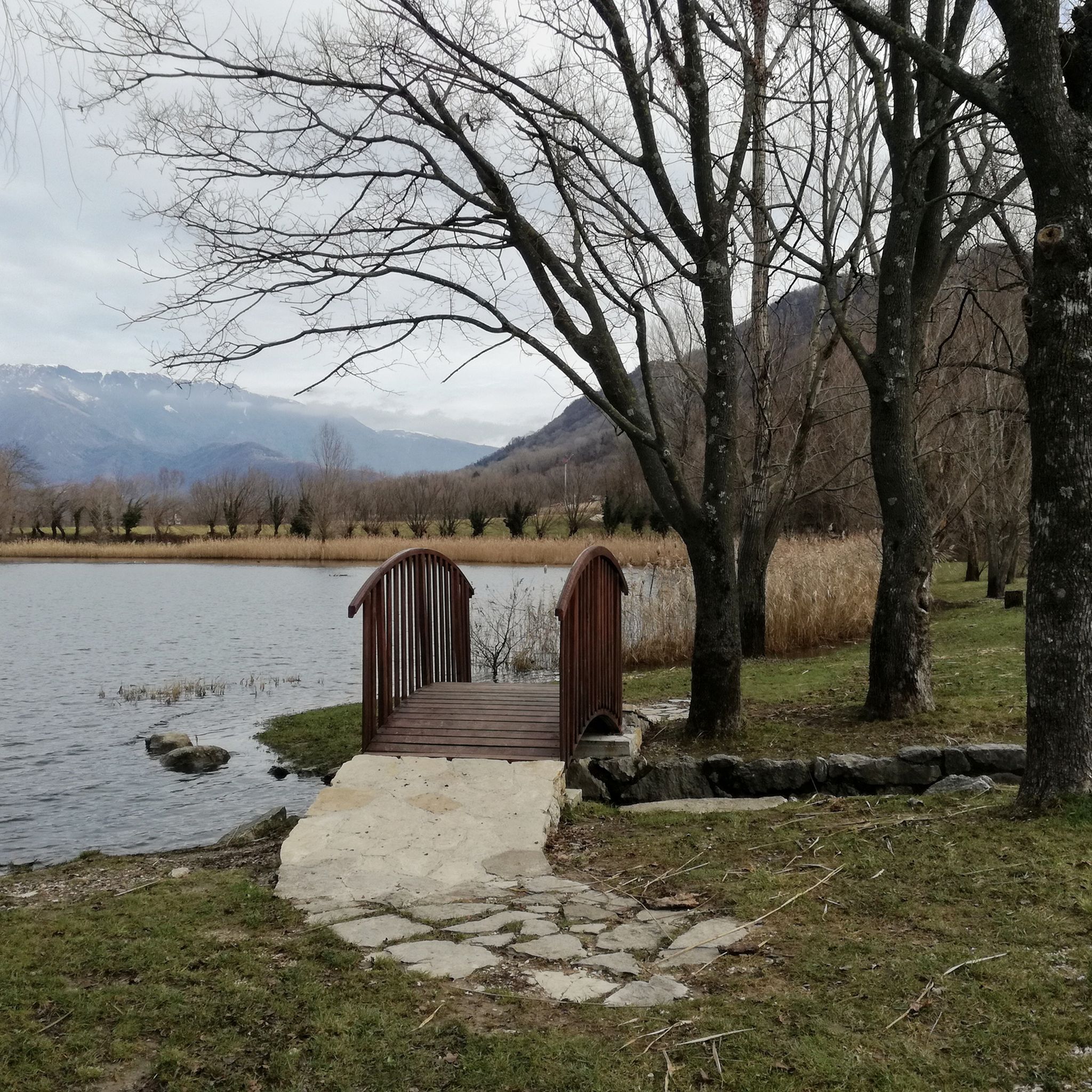
Lake Morto
Highlight • Lake
Here is a picnic area where you can relax and enjoy a well-deserved break.
Translated by Google •
Tip by

Molinetto della Croda
Highlight • Monument
In its almost four centuries of history it has inspired artists …
Translated by Google •
Tip by

Sign up now to discover places like this
Get recommendations on the best single tracks, peaks, & plenty of other exciting outdoor places.
San Boldo Pass
Highlight • Mountain Pass
Translated by Google •
Tip by

Col Visentin Hut
Highlight • Mountain Hut
Translated by Google •
Tip by

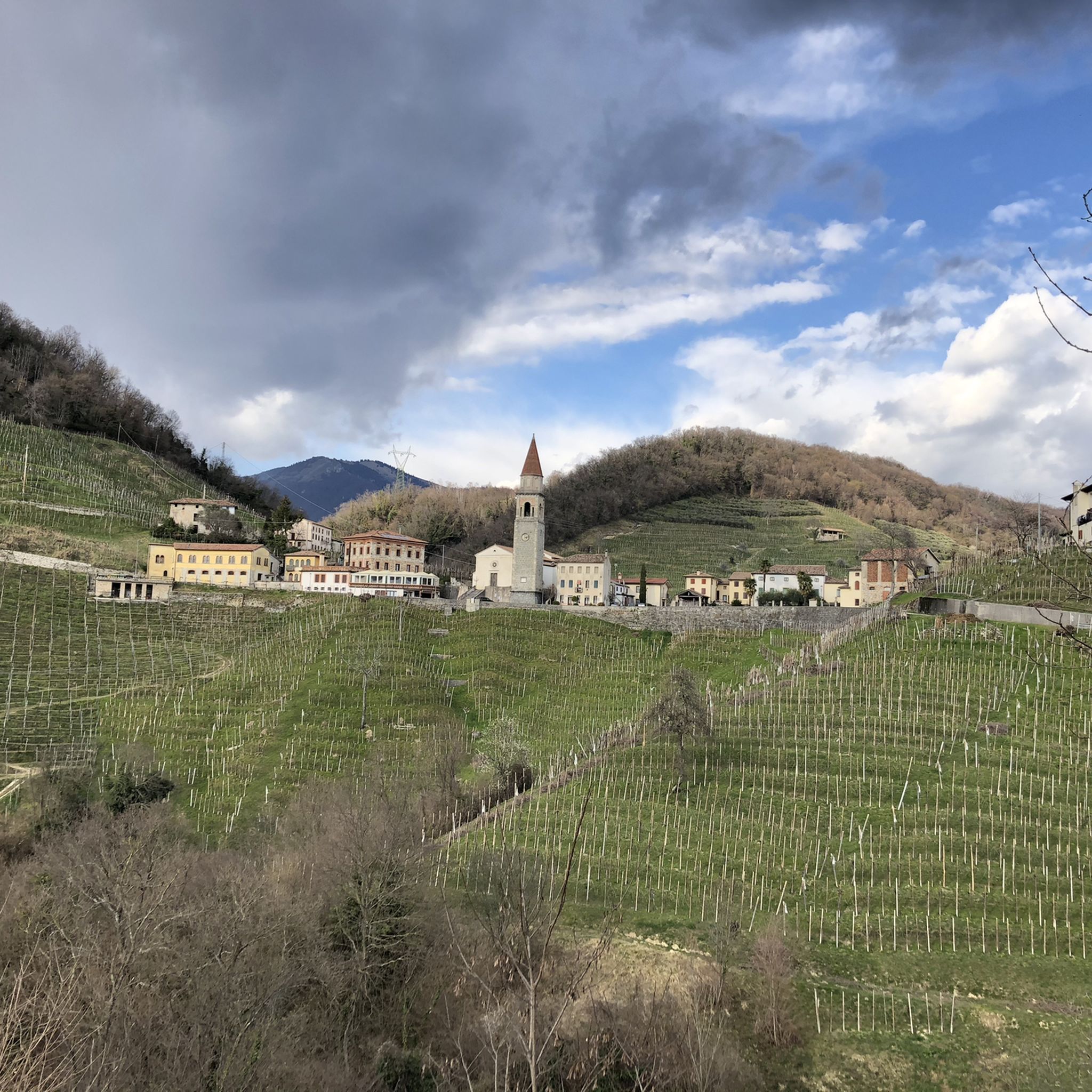
Terraced Vineyards of Rolle
Highlight • Viewpoint
Translated by Google •
Tip by
Sign up for free to discover even more attractions around Tarzo.
Already have an account?
Start today with a free account
Your next adventure awaits.


Tips from the Community

If you are traveling in the area between San Vito di Cadore, Cortina d'Ampezzo and Venice, it is easy to confuse it with other Dolomite lakes, but the well-known Lago Morto of Veneto is located near Vittorio Veneto, at the foot of the Cansiglio plateau.
13
0

The Lago Morto is a fascinating lake basin located in Val Lapisina, in the hamlet of Nove within the municipality of Vittorio Veneto, in the province of Treviso. It is called "dead" because it is devoid of visible artificial inlets and outlets. It is fed by underground karst fissures and infiltrations coming from the nearby Lago di Santa Croce.
1
0

The summit of Passo San Boldo between the provinces of Treviso and Belluno.
12
0
Il Molinetto della Croda, in the Lierza valley, represents one of the most evocative corners of the Marca Trevigiana. In its almost four centuries of history, the ancient mill with a stone grinder has managed to maintain its charm and enchant artists and visitors.
15
0

There is no second time. Built in 100 days.
3
0

Lago Morto is a striking body of water located in Val Lapisina, in the municipality of Vittorio Veneto, right at the foot of the Treviso side of the Sella di Fadalto pass. Its peculiar name derives from a unique geographical characteristic: it is a lake devoid of visible surface outlets and inlets, as it is fed and emptied exclusively through underground karst pathways. The basin, surrounded by steep wooded slopes and imposing rocky walls, is characterized by deep and cool waters. Today, the lake plays a fundamental role in hydroelectric power production, being connected to the valley's power plant system that utilizes the waters coming from the overlying Lago di Santa Croce. Despite the industrial footprint, the area is a popular destination for relaxing walks, picnics, and sport fishing.
2
0

On May 25, 1964, a fire completely destroyed the first and second floors, rendering them unusable. The efforts of firefighters and artillerymen who rushed to the scene in force managed to contain the flames and prevent them from spreading to the nearby building. Despite the negative opinion of the Military Engineering Corps regarding restoration work, public opinion and the Belluno CAI Section pushed for yet another reconstruction, finding valid support in Gen. Pietro Torrazzo. This recommenced under the supervision of the 6th Mountain Artillery Regiment of Belluno. The inauguration ceremony was held on August 31, 1968. The seventies still saw the race to "conquer" a spot for television antennas, both military and civilian. The most imposing one, belonging to RAI, was placed a few meters from the refuge, on the north side, and is still there today. A new period of closure and management uncertainties followed. In 1988, the COMILITER of Padua decided on its renovation, which concluded in 1992. In 1993, the State Technical Office proposed a rental fee, and on May 1, 1994, after five years, the refuge reopened under new management. In 1995, the agreement, still in force, was signed. Today, this place represents an act of gratitude for the survival of a heritage entirely belonging to Belluno.
1
0
The idea to erect the first refuge of the CAI section of Belluno was taken during the board meeting of May 20, 1898, and formalized in July 1899. Its function was to support hikers from Belluno and Treviso. The refuge was inaugurated on September 23, 1900, and dedicated to Richard Henry Budden, one of the pioneering figures of mountaineering, proponent of numerous reforestation projects to safeguard the mountain environment, and a sincere friend of the province of Belluno. The construction was built on land donated by the De’ Bertoldi family. After difficult management, also due to the debt situation, during World War I the refuge was set on fire, making it unusable as a shelter. Reconstruction began in September 1938, when a detachment of the 24th battery of the 5th Alpine Artillery Regiment encamped on Col Visentin for the initial excavation operations. It was reopened on August 15, 1946. Based on the project by architect Alfarè, the current small tower was built, adapted into a chapel-shrine for the Fallen of the 5th Mountain Division, a votive tomb that held the lighthouse donated by the Navy and contains the list of brothers fallen in Libya, on Ortigara, on the Carso, on Sabotino, those on the arid Ethiopian plains, and finally those who remained on the fields of Albania, in the Montenegrin gorges, and in the desolate immensity of the Russian steppe.
1
0
Frequently Asked Questions
What natural features can I explore around Tarzo?
Tarzo is rich in natural beauty. You can visit Lake Morto, an intravalley lake known for having no tributaries or emissaries, offering a nice vantage point and picnic area. The picturesque Hills of Tarzo, covered in olive trees and vineyards, are part of the UNESCO heritage Prosecco Hills. Other notable lakes include Lake Santa Maria and Lake San Giorgio, all formed from the melting of a branch of the Piave glacier.
What historical sites are there to see in Tarzo?
Tarzo boasts several historical attractions. The Molinetto della Croda is a picturesque 17th-century water mill, a characteristic example of rural architecture. You can also explore the Arcipretale Church, built in the late 16th century, which houses salvaged altars and paintings. Additionally, the nearby settlement of Serravalle, Vittorio Veneto, has Roman origins and is known for its cultural offerings and art galleries.
Are there any family-friendly attractions in Tarzo?
Yes, several attractions around Tarzo are suitable for families. Molinetto della Croda is a charming historical site that can be interesting for all ages. Lake Morto offers a pleasant picnic area, perfect for a family outing. The historical settlement of Serravalle, Vittorio Veneto, also provides a family-friendly environment for exploration.
What outdoor activities can I do near Tarzo's attractions?
The area around Tarzo is excellent for outdoor activities. You can find numerous routes for gravel biking, cycling, and running. For example, there are challenging gravel biking loops like the "Molinetto della Croda – Lago di Lago loop" or the "Passo di Praderadego – San Boldo Pass loop." Cycling enthusiasts can enjoy routes such as the "Lago di Lago – Lakes of Revine loop." For runners, options include the "Lake Santa Maria – Va' dee Femene loop." You can find more details on these and other routes in the Gravel biking around Tarzo, Cycling around Tarzo, and Running Trails around Tarzo guides.
Are there hiking or walking trails around Tarzo?
While specific hiking trails are not detailed in the highlights, the region's natural features like the Hills of Tarzo and the areas around Lake Morto, Lake Santa Maria, and Lake San Giorgio offer scenic opportunities for walking and exploring. The Col Visentin Hut is reachable by about a two-hour walk from the "La Casera" parking lot, providing panoramic views.
When is the best time to visit Tarzo for outdoor activities?
The region's natural beauty, including the hills and lakes, is enjoyable throughout much of the year. Spring and autumn generally offer pleasant temperatures for outdoor activities like cycling, running, and walking. The Molinetto della Croda hosts an annual International Nativity Exhibition in winter, suggesting year-round appeal for cultural visits, though outdoor activities might be more challenging in colder months.
What is the <a href="https://www.komoot.com/highlight/1370052" target="_blank" rel="noopener">San Boldo Pass</a> and why is it notable?
The San Boldo Pass is a unique mountain pass known for its distinctive road that winds through a gorge. It was built by Austro-Hungarian troops in just 100 days and is particularly noted by cyclists for its challenging and scenic construction, offering a unique experience.
Can I find panoramic views in the Tarzo area?
Absolutely. The Col Visentin Hut, located on one of the highest peaks of the Venetian Prealps, offers panoramic 360-degree views of the Belluno and Treviso mountains. On clear days, you can even see the sea. The picturesque Hills of Tarzo also provide suggestive views of the plain and the Pre-Alps.
Are there any cultural events or exhibitions in Tarzo?
The Molinetto della Croda, besides being a historical mill, functions as a milling museum and hosts exhibitions, including an annual International Nativity Exhibition in winter. The nearby Serravalle, Vittorio Veneto, is also recognized for its cultural offerings, including numerous private art galleries.
What are some lesser-known historical gems in Tarzo?
Beyond the main attractions, Tarzo is home to several historical private residences, such as the 15th-century Casa Mondini-Mazzucco and the 17th-century Villa Grimani-Mondini. The Church of San Martino di Tours in the Fratta area is also worth visiting for its valuable 13th-century frescoes and preserved paintings. Archaeological finds suggest human presence in the area since the Neolithic and Bronze Ages.
What do visitors enjoy most about the attractions around Tarzo?
Visitors particularly appreciate the scenic beauty and historical significance of the area. The Molinetto della Croda is often described as one of the most evocative corners of the Marca Trevigiana, inspiring artists and enchanting visitors. The unique experience of cycling or driving through the San Boldo Pass is also highly valued, as are the tranquil picnic spots and beautiful views at Lake Morto.
Most popular routes around Tarzo
Most popular attractions around Tarzo

Get inspired with the komoot mobile app


Explore more
Still not found the Highlight you’re looking for? See guides of the top attractions in other regions:
