The best road cycling routes around Legnaro
4.3
(437)
12,912
riders
385
rides
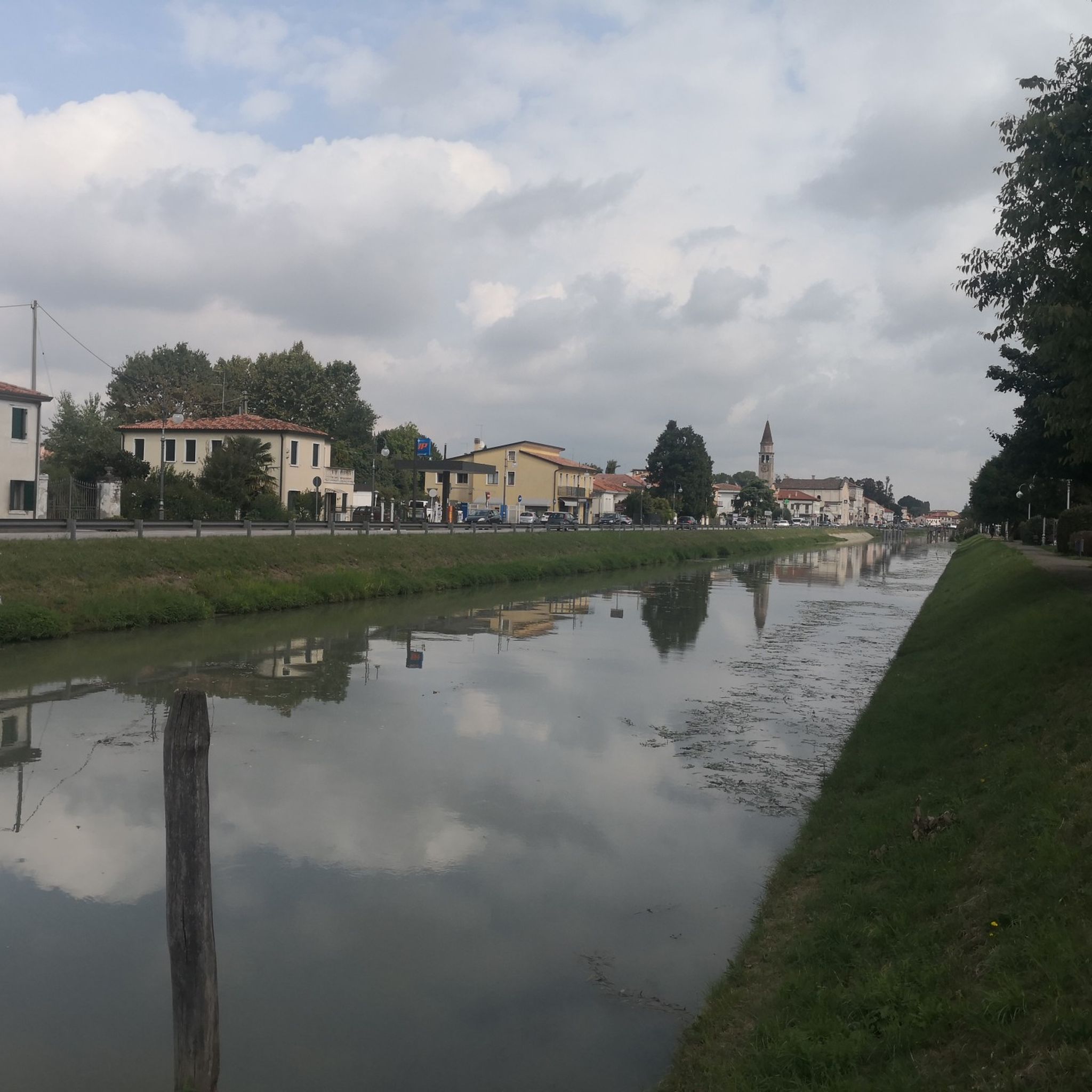
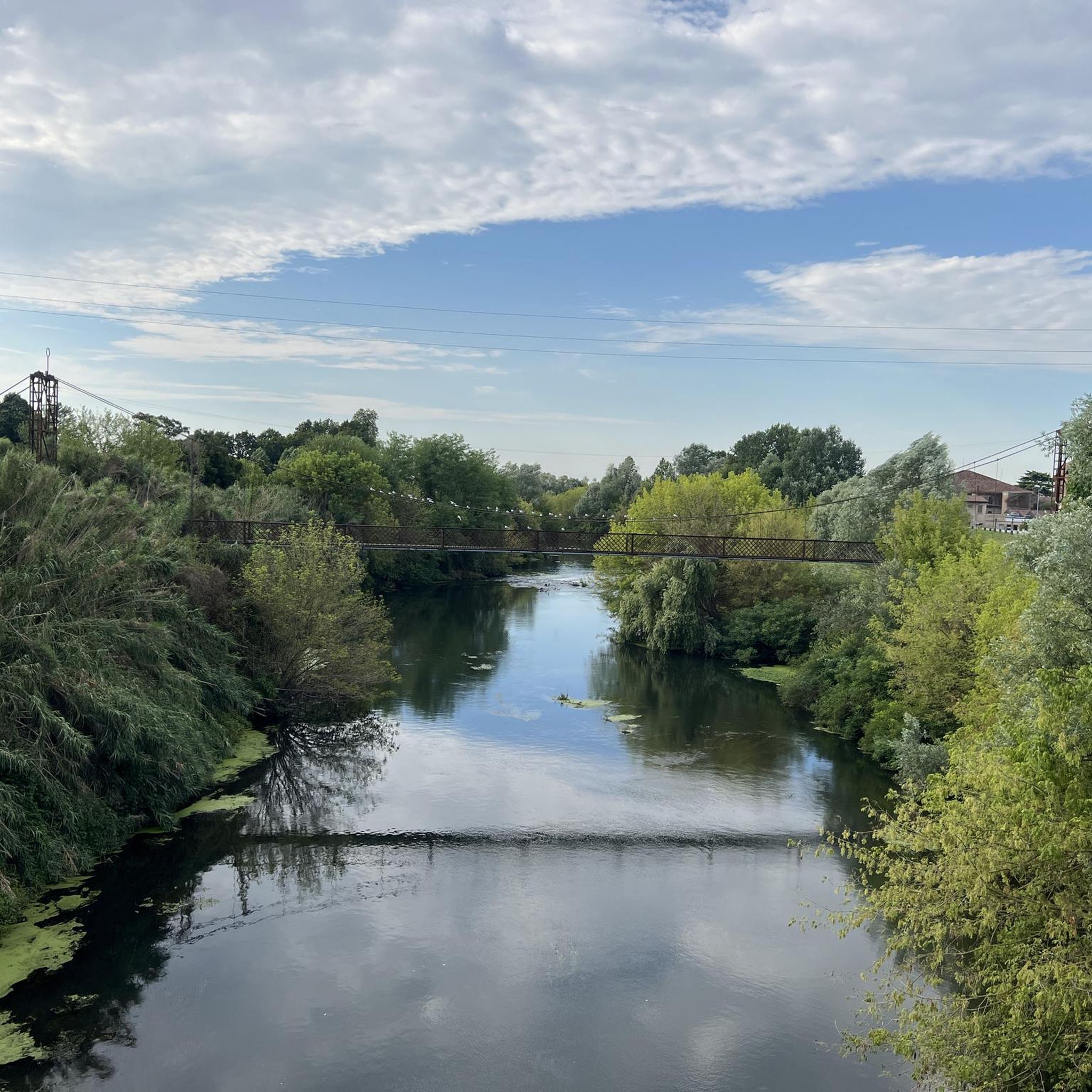
Road cycling around Legnaro, situated in Italy's Veneto region, offers a diverse landscape for cyclists. The area is characterized by flat plains, tranquil riverbanks, and canal paths, providing accessible routes for various skill levels. To the south, the Euganean Hills present a contrasting terrain with volcanic hills, offering more challenging climbs and scenic views. The region's rural scenery, including vineyards and arable land, contributes to a quiet cycling experience.
Best road cycling routes around Legnaro
- The most popular road cycling…
Last updated: July 4, 2026
16
riders
30.7km
01:10
40m
40m
Easy road ride. Great for any fitness level. Mostly well-paved surfaces and easy to ride.
5.0
(1)
26
riders
49.4km
02:03
90m
90m
Moderate road ride. Good fitness required. Some segments of this route may be unpaved and difficult to ride.

Sign up for free
18
riders
21.8km
00:58
40m
40m
Easy road ride. Great for any fitness level. Mostly well-paved surfaces and easy to ride.
27
riders
61.6km
02:35
240m
240m
Moderate road ride. Good fitness required. Some segments of this route may be unpaved and difficult to ride.
15
riders
36.5km
01:30
50m
50m
Moderate road ride. Great for any fitness level. Some segments of this route may be unpaved and difficult to ride.
Get access to more routes and recommendations from other explorers.
Sign up for free
Already have an account?
Our route recommendations are based on thousands of hikes, rides, and runs completed by other people on komoot.
Start today with a free account
Your next adventure awaits.
Login or Signup


Tips from the Community

Basilica of Saint Anthony of Padua / Basilica of Saint Anthony, Padua The Basilica of Saint Anthony, known as "the Saint," is the city's most important religious center and attracts thousands of pilgrims every year, especially on June 13, the saint's feast day. The basilica was built in 1232 to protect the tomb of the Franciscan friar Anthony, who died in Padua in 1231. The large building presents a complex structure with a fusion of styles: Romanesque elements in the façade, Gothic elements in the ambulatory, Byzantine elements in the eight domes covered with lead, and Moorish elements in two tiers. The Church of Saint Anthony holds numerous reminders of the Carrara Signoria. In 1350, Cardinal Guido de Boulogne came to the cathedral to acknowledge the saint's miracle and was greeted by Jacopo II da Carrara and Bishop Hildebrand. Members of the Carraresi family, such as the Lupi di Soragna and the Conti, chose the basilica as the site for their own mausoleums. The Chapel of the Black Madonna now stands on the site of the earlier church, dedicated to Santa Maria, Mother of the Lord. The polychrome Madonna is by Rinaldino di Francia and dates from 1396. Rinaldino is also likely the artist of the shield bearing the portrait of Stefano da Carrara, now in the city museums. A funerary monument to Raffaele Fulgioso, a renowned jurist from the University of Padua, is located to the left of the chapel. The Chapel of Blessed Luca reveals even closer ties to the Carraresi family: it was built between 1380 and 1382 by Naimerio and Manfredino Conti, executing the will of Fina Buzzaccarini. They commissioned Giusto de'Menabuoi, a painter from the Carraresi court, to create the frescoes. The stories of Saints Philip and James, arranged on the chapel walls, reveal a surprising new sense of spaciousness. In the center, within the lunette, are portraits of the patrons: Saint Anthony, Blessed Luke, Saint Francis, and Saint Louis of Toulouse, as they are presented to the Virgin. Text / Source: Turismo Padova https://www.padua.info/de/padua/was-zu-sehen-ist/details/basilica-di-santantonio
15
0
Basilica of Santa Giustina, Padua The Basilica of Santa Giustina, which housed one of the most important and influential religious communities in Padua during the Middle Ages, has its origins long before the arrival of the monks: The first basilica was built in the 6th century on the site of the former cemetery of Prato della Valle, where the young martyr Giustina, a victim of Maximian's persecutions of Christians, was buried in 304 AD. The arrival of the Benedictines in Padua dates back to the 10th century. After their settlement, the remains of saints, hidden during the barbarian invasions, gradually came to light, including those of Saint Giustina and Saint Luke the Evangelist, author of the Third Gospel and chronicler of the Acts of the Apostles. His relics were brought from Thebes (Greece) to Constantinople and then from Constantinople to Padua. The present basilica dates from the 16th century and is 122 meters long, with three naves in the form of a Latin cross. The apse contains the remarkable carvings of the 15th-century wooden choir and the altarpiece by Paolo Veronese from 1575, depicting the Martyrdom of Saint Giustina. The transept houses the tomb of Saint Luke the Evangelist on the left and the tomb of Saint Matthias the Apostle on the right. From there, the impressive Martyrs' Corridor leads to the chapel in the form of a Greek cross, built at the end of the 6th century on the tomb of Saint Prosdocimus, the first Bishop of Padua. The monastery was dissolved by Napoleon in 1810 and served as a barracks until 1919, when the Benedictines returned to Sant'Giustina. Only with an authorized guide is it possible to visit the 14th-century Chapel of St. Luke, where Elena Lucrezia Cornaro Piscopia, the world's first female academic (1678), is buried, as well as the old 15th-century choir and the vestibule leading to the sacristy. Text / Source: Prato della Valle - Sagrato di Santa Giustina, Padova (PD) http://www.abbaziasantagiustina.org https://www.turismopadova.it/de/orte/benediktinerabtei-der-heiligen-giustina/
16
0

somewhat hidden, not directly visible from the Bar Centrale.
0
0


Internal channel
1
0

The Naviglio Interno was an ancient canal that ran through the eastern part of the historic center. In the 1950s it was almost completely filled in.
2
1

Frequently Asked Questions
How many road cycling routes are available around Legnaro?
There are 16 road cycling routes around Legnaro. These include 7 easy routes and 9 moderate routes, offering a variety of options for different skill levels.
What kind of terrain can I expect when road cycling around Legnaro?
Legnaro offers a diverse cycling landscape. You'll find extensive flat plains, tranquil riverbanks, and well-maintained canal paths in the immediate surroundings, ideal for relaxed rides. To the south, the volcanic Euganean Hills provide a contrasting terrain with more challenging climbs and scenic views.
Are there routes suitable for beginners or families in Legnaro?
Yes, Legnaro is very welcoming for beginners and families. Many routes feature flat canal paths and rural roads. An excellent option is the Wandering loop from Legnaro, an easy 21.0 km path through flat plains and agricultural landscapes, perfect for a peaceful ride.
Are there more challenging road cycling routes in the Legnaro area?
For those seeking a more demanding ride, the Euganean Hills to the south of Legnaro offer significant elevation gain. The Praglia Abbey – Villa–Teolo Scenic Climb loop from Legnaro is a moderate 61.5 km route that leads through these hills, providing a scenic climb and a good workout.
What are some scenic viewpoints or natural features to look out for?
The region is rich in rural scenery, including vineyards and arable land, offering picturesque views throughout your ride. The Euganean Hills provide elevated viewpoints with expansive vistas. You can also enjoy the serene natural beauty along the Tergola Riverbank Trail.
Are there any historical sites or landmarks along the cycling routes?
Yes, several routes pass by or are close to notable historical sites. For example, the Praglia Abbey – Villa–Teolo Scenic Climb loop from Legnaro offers the opportunity to explore Praglia Abbey. Other nearby attractions include Villa Pisani, Stra, Villa Giovannelli Colonna, and the historic Piazza dei Signori, Padua.
What do other road cyclists enjoy the most about road cycling in Legnaro?
The road cycling routes in Legnaro are highly rated by the komoot community, with an average score of 4.3 stars from over 400 reviews. Cyclists often praise the diverse terrain, from flat canal paths to challenging climbs in the Euganean Hills, and the peaceful rural scenery.
Are there any circular road cycling routes available?
Yes, many of the routes around Legnaro are circular, allowing you to start and end at the same point. Examples include the Wandering – Pontelongo loop from Legnaro and the Prato della Valle – Palazzo Zabarella loop from Legnaro.
What is the best time of year for road biking in Legnaro?
The Veneto region generally offers pleasant cycling conditions during spring (April-May) and autumn (September-October) when temperatures are mild and the scenery is vibrant. Summer can be hot, especially in the flat plains, while winter can be cooler and potentially foggy.
Is there public transport access to the road cycling routes in Legnaro?
Legnaro is well-connected by local public transport, making it accessible. While specific bike carriage policies vary, you can often reach starting points by bus or train, though it's advisable to check with local transport providers for their bike-on-board regulations.
Are there any specific rules or permits required for cycling in Legnaro?
Generally, no special permits are required for road cycling on public roads and designated cycle paths in Legnaro. Always adhere to standard Italian road traffic laws, including wearing a helmet (recommended, mandatory for minors) and using lights during low visibility.
Most popular attractions around Legnaro

Get inspired with the komoot mobile app


Explore more
Browse the best Road cycling routes in other regions.
