The best cycling routes around Jesi
4.4
(574)
4,638
riders
93
rides
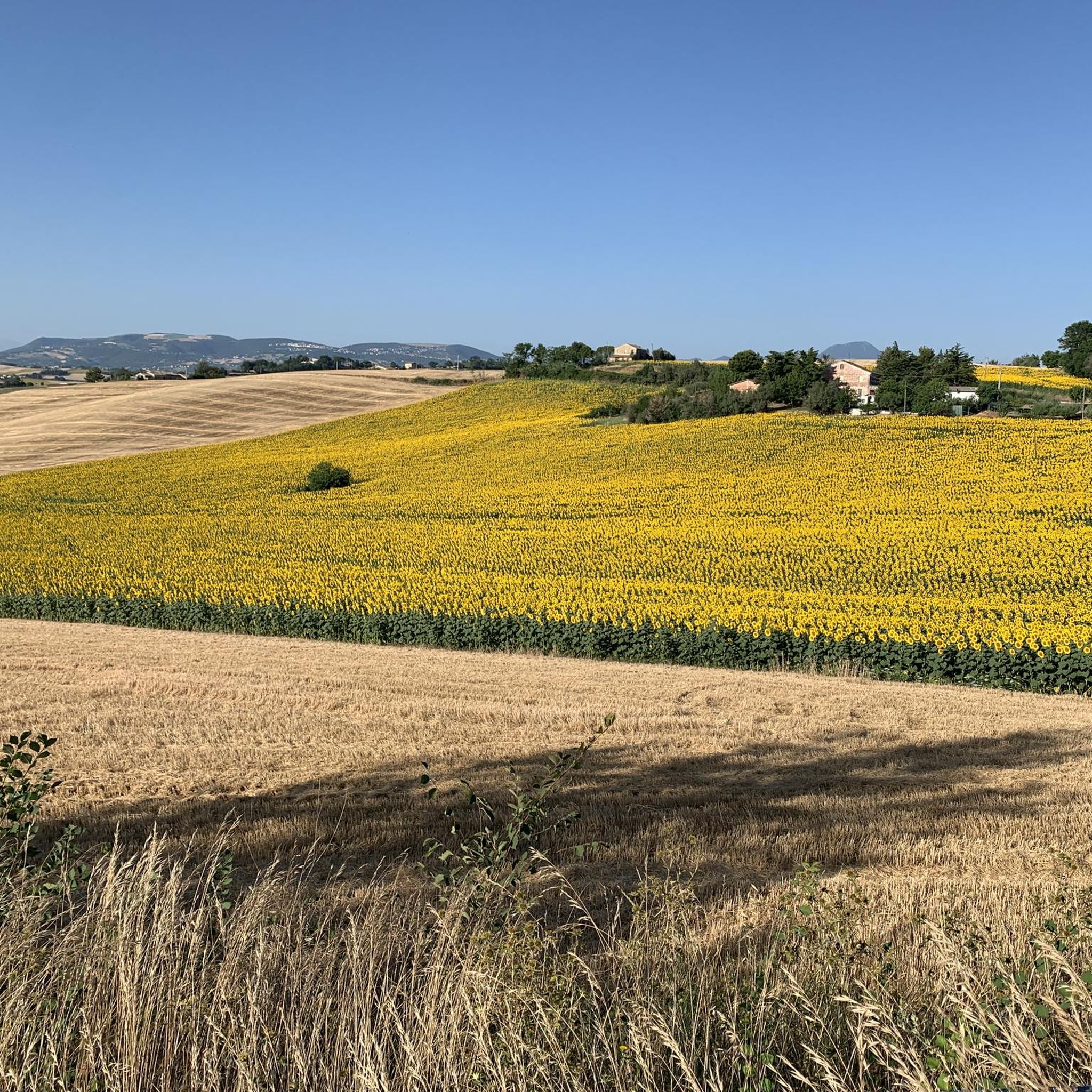
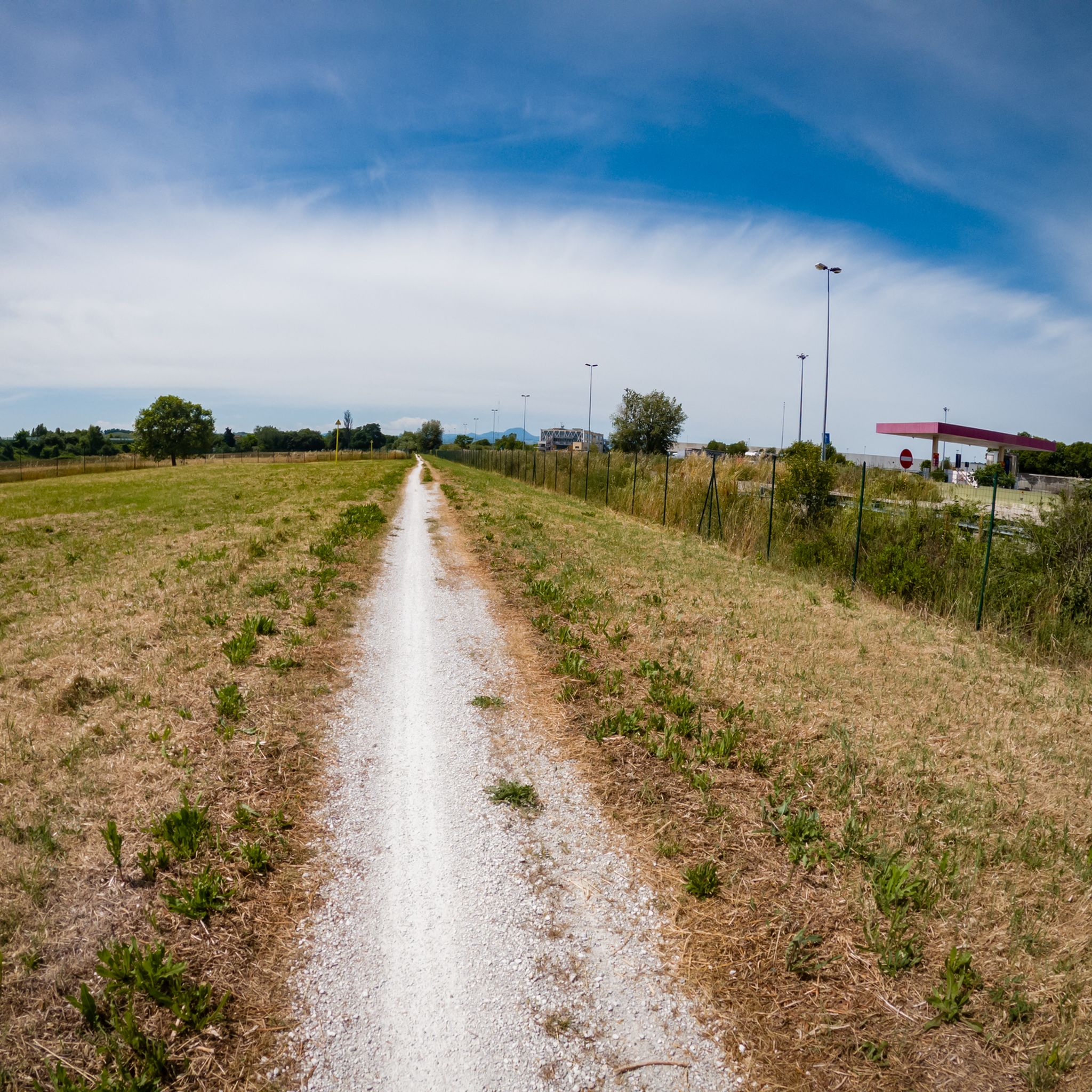
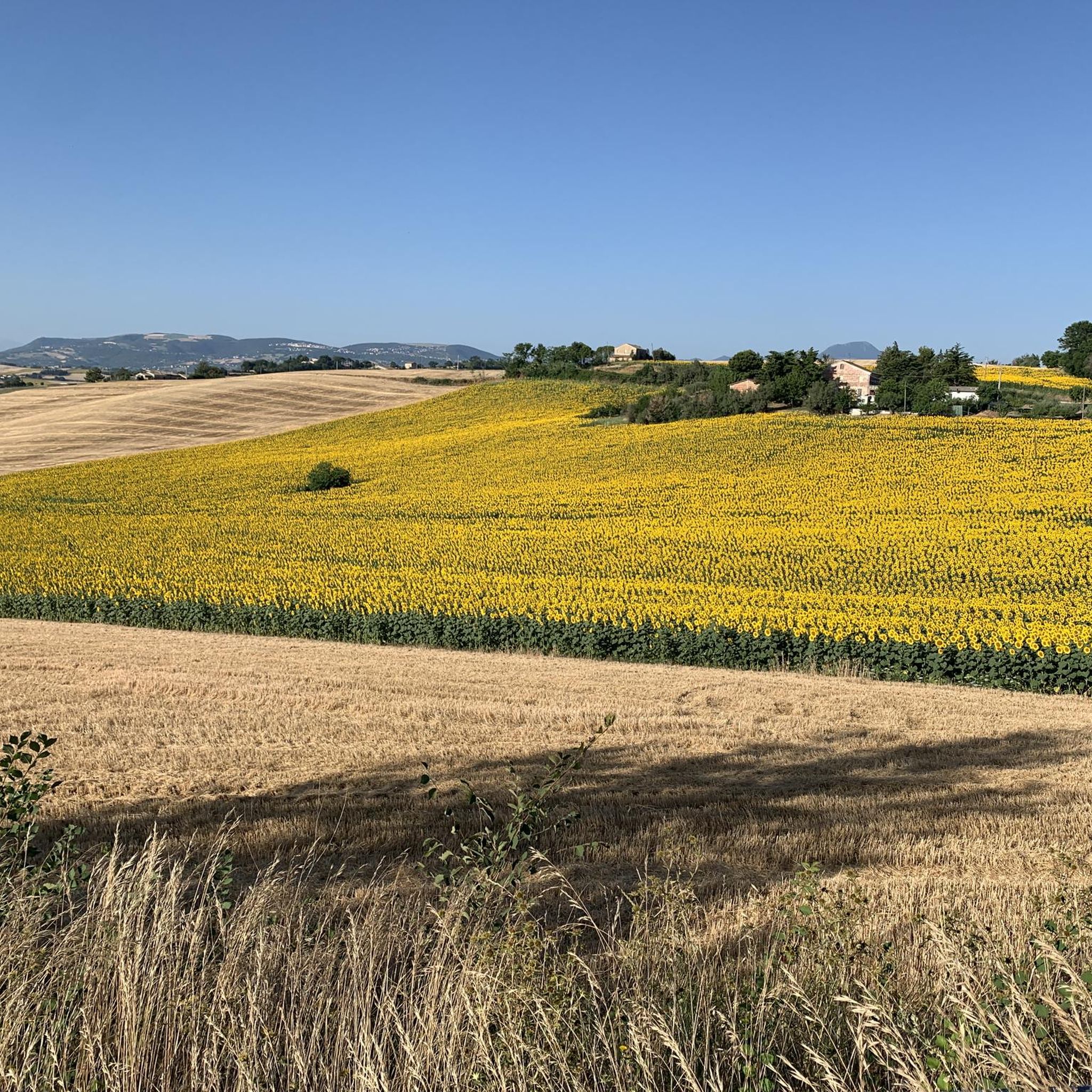
Touring cycling routes around Jesi traverse a varied landscape of rolling hills, river valleys, and picturesque vineyards within Italy's Marche region. The area features gentle terrain along the Esino River and more undulating paths through the "Colli Esini," known for Verdicchio wine production. Proximity to diverse regional parks and the Adriatic Sea offers additional cycling opportunities. This region provides a blend of natural beauty and historical charm for cyclists.
Best touring cycling routes around Jesi
- The most popular touring cycling…
Last updated: June 23, 2026
4.8
(4)
30
riders
32.2km
02:00
320m
320m
Cycle 20.0 miles through the scenic hills and vineyards of Jesi on this moderate ring tour, exploring the Vallesina region.
4.4
(34)
114
riders
47.5km
03:08
190m
190m
Moderate bike ride. Good fitness required. Mostly paved surfaces. Suitable for all skill levels.

Sign up for free
4.2
(17)
109
riders
46.7km
03:01
100m
100m
Moderate bike ride. Good fitness required. Mostly paved surfaces. Suitable for all skill levels.
4.5
(11)
81
riders
Easy bike ride. Great for any fitness level. Mostly paved surfaces. Suitable for all skill levels.
4.8
(4)
26
riders
34.1km
02:14
430m
430m
Moderate bike ride. Good fitness required. Mostly paved surfaces. Suitable for all skill levels.
Get access to more routes and recommendations from other explorers.
Sign up for free
Already have an account?
Our route recommendations are based on thousands of hikes, rides, and runs completed by other people on komoot.
Start today with a free account
Your next adventure awaits.
Login or Signup

Tips from the Community

Pay attention to some slightly raised boards and the screws that held them in place.
0
0

The structure of Castello Mancini stands out on the small eminence that dominates the Montecappone district, recalling an ancient period through a building that is not a true historic villa. Although it represents a characteristic element of the territory, Castello Mancini was built from a project by Eng. Ernesto Galeazzi only in the 1920s. Intended for the Mancini family, already owners of the first silk mill in the Fontedamo district and the homonymous paper mill in Jesi, it is a reproduction that followed the medieval taste in vogue in the early 1900s. Castello Mancini represents the desire to recall an idea of the Middle Ages that was very common at the time, with a fortified medieval construction, equipped with a crenellated crown, turrets, Gothic arch openings with mullioned windows, exposed bricks and a small private chapel annexed to the structure. The building is in terracotta, with stone decorations, with the façade dominated by a coat of arms created for the Mancini family
1
0
Villa Collebellombra extended over an area of over 180 hectares when, in 1908, the Gambelli family purchased the property. An extension that included seven colonies, the equivalent of the lands that go from the current Villa Serena Clinic to the Acquasanta area, from one side to the other. The Gambelli family was already known in Jesi since 1800, and not only for its landed properties. In fact, it owned the grocery store on Corso Vittorio Emanuele, known today as Corso Matteotti, where the iconic Caffè Saccaria is located. A presence in the city that included the historic home in the building adjacent to today's Pinacoteca Civica, a structure that extended all the way to Via Mazzini. In the historical moment of the nascent wealthy bourgeoisie of the early twentieth century, the entire estate represented a form of social redemption for the family: the Gambellis, in fact, continued to carry on the commercial activity and to manage those lands maintaining the management system, now consolidated, of sharecropping. Honorato Honorati decided to build Villa Collebellombra in 1790 in the style of Venetian villas, with the typical Palladian model. The villa was designed as a two-story building with a central body with a rectangular plan surmounted by a large tympanum, and a façade divided into three parts by pilasters. After a modification made in 1920, in which the main body was connected to the grain warehouses creating an Art Nouveau hall, Collebellombra came to present the typical layout of the villas of the Marche: an eighteenth-century chapel still officiated, the stables today become places of life of the current Gambelli family, the lemon house and the caretaker's house inside the property, a large courtyard, the garden with fountain and a vast park embracing the villa. The Marquis Luciano Honorati sold Villa Collebellombra in 1908 for 312,000 lire, giving the Gambellis a property that extended over 180 hectares of land. Today's equivalent of the area that extends from the Villa Serena Clinic to the Acquasanta area, from one side to the other. Villa Collebellombra also survived the Second World War, not without consequences. During the conflict it was occupied by both the German and Allied armies, resulting in the felling of many trees in the garden. At the end of the war, the entrance gate was moved further upstream and two hectares of woodland were lost, from the initial five hectares to the current three. Made up mostly of tall woodland, with three hectares of centuries-old oaks and holm oaks that hosted the construction of Villa Collebellombra and its history, the park was elevated to a monument of historical value and protected by the Superintendence of Fine Arts after numerous historical vicissitudes. A main avenue of olive trees allows you to enter the woods through a second avenue of lime trees, while the garden can be reached directly with a second access without an avenue. The “Italian garden” on the front of the building is typically 19th century and symmetrical, and over time it has been enriched with some trees in vogue between the end of the 19th century and the beginning of the 20th century, including cedars of Lebanon and palm trees. Villa Collebellombra is home to a fauna composed of many species of nocturnal birds of prey such as owls, little owls, barn owls and scops owls, as well as mammals such as badgers, weasels, hedgehogs, porcupines, foxes, wild boars and roe deer, who have found a welcoming and safe place in the woods. The garden on the front of the house has a fountain in the center but it has been disused for many years. In the woods there is a small lake populated by carp.
1
0
The structure of Castello Mancini stands out on the small eminence that dominates the Montecappone district, recalling an ancient period through a building that is not a true historic villa. Although it represents a characteristic element of the territory, Castello Mancini was built from a project by Eng. Ernesto Galeazzi only in the 1920s. Intended for the Mancini family, already owners of the first silk mill in the Fontedamo district and the homonymous paper mill in Jesi, it is a reproduction that followed the medieval taste in vogue in the early 1900s. Castello Mancini represents the desire to recall an idea of the Middle Ages that was very common at the time, with a fortified medieval construction, equipped with crenellated crowning, turrets, Gothic arch openings with mullioned windows, exposed bricks and a small private chapel annexed to the structure. The building is made of terracotta, with stone decorations, with a facade dominated by a coat of arms created for the Mancini family, the first owner of the property. Before reaching it, you are greeted by a 50-meter tree-lined avenue, surrounded by tall, century-old trees that crown the evocative structure of the building.
0
0

Square overlooked by the legendary Pergolesi theatre
0
0
Very short stretch, but it avoids the main road of the village
1
0
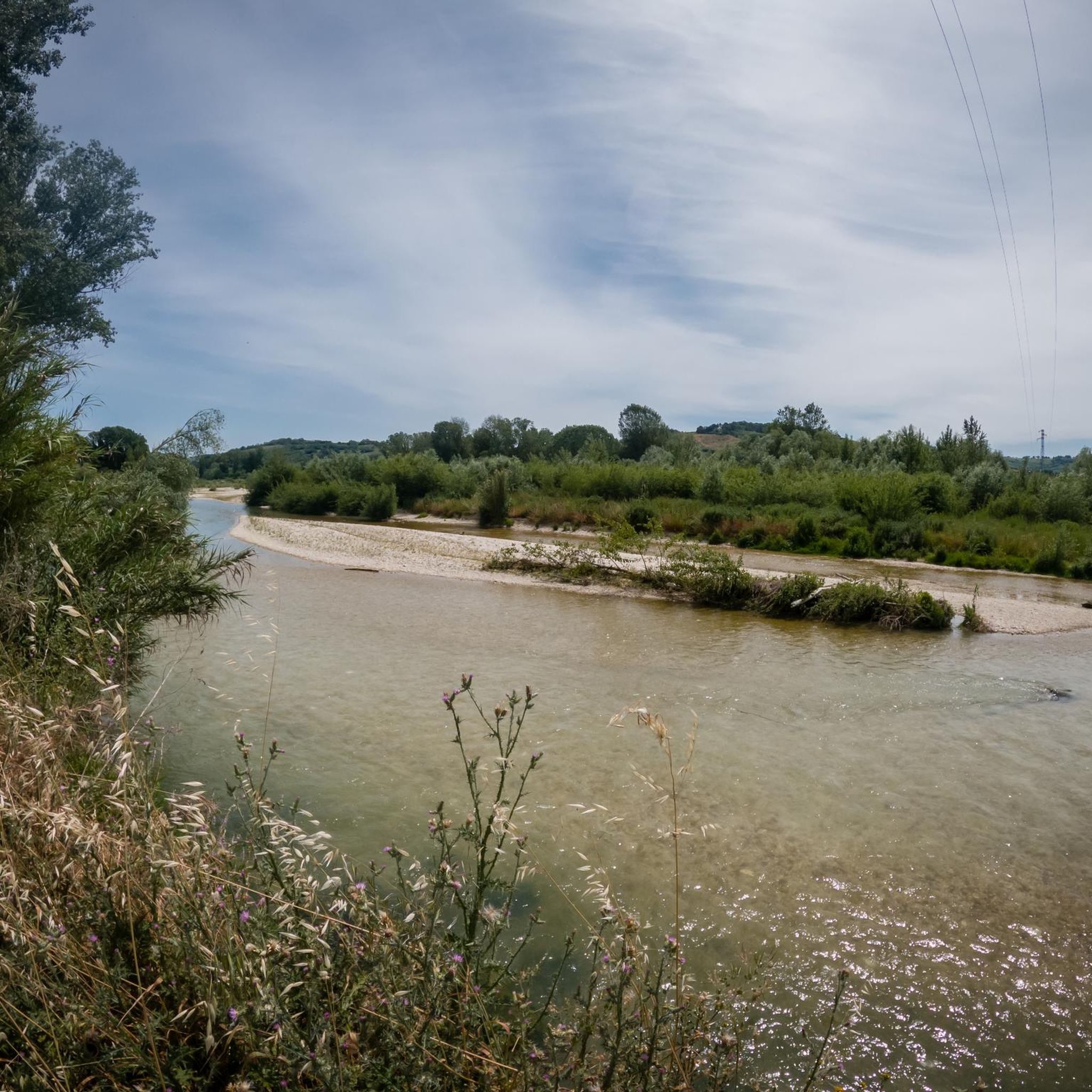
Very nice bridge where the river flows into the sea
0
0

beautiful cycle path along the Esino, if you want you can reach Serra San Quirico
0
0
Frequently Asked Questions
How many touring cycling routes are available around Jesi?
There are over 90 touring cycling routes available around Jesi, offering a wide variety of experiences. These routes are highly rated by the komoot community, with an average score of 4.5 stars from over 140 reviews.
What kind of terrain can I expect on touring cycling routes around Jesi?
Touring cycling routes around Jesi offer a diverse landscape. You can expect gentle terrain along the Esino River, as well as more undulating paths through the 'Colli Esini' (Esini Hills), which are famous for Verdicchio wine production. The region features a blend of rolling hills, picturesque vineyards, and river valleys.
Are there touring cycling routes suitable for beginners in Jesi?
Yes, Jesi offers several easy touring cycling routes perfect for beginners. For example, the Jesi–Pantiere Cycle Path loop from Jesi is an easy 21.6 km (13.4 miles) route with minimal elevation gain, ideal for a relaxed ride.
Are there challenging touring cycling routes for experienced cyclists?
Absolutely. While many routes are moderate, the region also features more challenging options with significant elevation gains, especially as you venture into the surrounding hills and towards regional parks like Monti Sibillini. There are 40 difficult routes available for those seeking a greater challenge.
What is the best time of year for touring cycling in Jesi?
The spring and autumn months generally offer the most pleasant conditions for touring cycling in Jesi, with mild temperatures and beautiful scenery. Summer can be warm, especially in July and August, but early mornings or late afternoons are still enjoyable. Winter cycling is possible, but some higher elevation routes might be less accessible.
Can I find circular touring cycling routes around Jesi?
Yes, many of the touring cycling routes around Jesi are designed as loops, allowing you to start and end in the same location. Popular examples include the Jesi and the Verdicchio Hills Loop and the Ponte Elisa – Gravel Cycle Path loop from Jesi.
What scenic viewpoints or natural features can I see along the routes?
The routes often pass through the picturesque Verdicchio wine region, offering views of vineyards and olive groves. You can also cycle along the Esino River, enjoying the riverine landscapes. The Musone River ford is another natural feature you might encounter. The Ripa Bianca di Jesi Regional Nature Reserve, with its heronry, is also a key natural attraction nearby.
Are there any historical sites or charming towns to explore on a touring cycling trip?
Yes, the Marche region is rich in history. Jesi itself is a historic city, and many routes connect to charming medieval towns. You can visit the Federico II Square and Pergolesi Theatre in Jesi, or explore the Morro d'Alba Historic Center. The Roman Aqueduct of Angeli di Rosora is another notable historical landmark.
What do other touring cyclists enjoy most about cycling in Jesi?
The komoot community highly rates touring cycling in Jesi, with an average score of 4.5 stars. Cyclists often praise the region's blend of natural beauty, from rolling hills and vineyards to tranquil river valleys, and the opportunity to explore charming medieval towns. The variety of routes catering to different skill levels is also frequently appreciated.
Are there any long-distance touring cycling routes or bikepacking options near Jesi?
Yes, the Jesi area is part of the 'Strade di Marca' bikepacking route, which indicates an established network for longer, multi-day cycling adventures. This allows cyclists to immerse themselves in the region's diverse scenery and cultural heritage over an extended period.
Are there family-friendly touring cycling routes in Jesi?
For families, routes along the Esino River offer relatively flat and easy terrain. The Jesi–Pantiere Cycle Path loop from Jesi is an excellent easy option, providing a pleasant ride suitable for most ages and fitness levels.
Where can I park my car when starting a touring cycling route in Jesi?
Jesi, as a regional hub, offers various parking options within and around the city center. Many routes start directly from Jesi, making it convenient to find parking in public lots or designated areas before beginning your ride. Specific parking details might vary by route starting point, so checking local signage is always recommended.
Are there cafes or places to stop for refreshments along the touring cycling routes?
Given the region's focus on wine production and charming towns, you'll find numerous opportunities for refreshments. Routes often pass through villages and vineyards where local cafes, trattorias, and wineries offer places to stop for a break, a coffee, or a taste of local produce like Verdicchio wine.
Most popular attractions around Jesi

Get inspired with the komoot mobile app


Explore more
Browse the best Cycling routes in other regions.
