Attractions and Places To See around Gruaro - Top 20
Attractions and places to see around Gruaro offer a blend of history, culture, and natural features. Situated in the eastern Veneto countryside, the region is characterized by flat terrain and numerous watercourses, including the Lemene and Versiola minor rivers. Its historical name, "guardian of the woods," reflects its connection to nature. This area provides a localized historical and natural experience for visitors.
Best attractions and places to see around Gruaro
- The most popular attractions is Gate of Sesto al Reghena…
Last updated: June 22, 2026
Gate of Sesto al Reghena
Highlight • Monument
it.m.wikipedia.org/wiki/Sesto_al_Reghena
Translated by Google •
Tip by

Historic Center of Portogruaro
Highlight • Historical Site
Translated by Google •
Tip by
Sign up now to discover places like this
Get recommendations on the best single tracks, peaks, & plenty of other exciting outdoor places.
Sign up for free
The Belfiore Mill
Highlight • Monument
Translated by Google •
Tip by
San Vito al Tagliamento
Highlight • Settlement
Translated by Google •
Tip by
Alvisopoli
Highlight • Settlement

Sign up for free to discover even more attractions around Gruaro.
Sign up for free
Already have an account?
Start today with a free account
Your next adventure awaits.
Login or Signup

Tips from the Community

The historic center of Portogruaro, defined as the "little Venice of the mainland", develops elegantly along the banks of the Lemene river. The beating heart is Piazza della Repubblica, where the characteristic pillars of the Gothic brick Town Hall and the unusual leaning bell tower of the Cathedral of Sant'Andrea stand out. Strolling under the long medieval and Renaissance arcades, you can admire frescoed palaces in Venetian style that testify to the city's glorious commercial past. One of the most evocative views is offered by the Mulini di Sant'Andrea, located right in the city center, where the water wheels still turn above waters populated by swans. Here, wrought iron bridges and weeping willows create a romantic atmosphere that harmoniously combines monumental architecture with river vitality.
1
0
The Belfiore Mill is located near Pramaggiore. Situated along the Loncon river, it is a valuable example of milling architecture dating back to the 15th century, perfectly preserved and set within the charming park of Villa Dalla Pasqua. Formerly the heart of the local grain economy under the jurisdiction of the lords of Fratina and later the Grimani family, the mill remained active until the 1940s. Today, it houses an important Ethnographic Museum, where you can admire the original millstones and hydraulic gears, as well as a collection of agricultural tools and furnishings that tell the story of past rural life. It is a symbolic place of Eastern Veneto, often hosting cultural events and concerts.
1
0

A very interesting 17th-century settlement. In the 19th century, Count Alvise Mocenigo decided to build an "ideal city" bearing his name. Unlike similar projects, Mocenigo designed a settlement with infrastructure intended to make the community self-sufficient. Therefore, in addition to traditional agriculture (which was expanded by introducing innovative techniques, for example in rice and sugar beet cultivation), he attempted to integrate an industrial sector (particularly the textile industry) that could draw on locally produced resources. The landscape was thus reshaped and reclaimed, alternating dry areas with humid soils, regulated by an efficient canal system that is still in operation today. In terms of urban planning, buildings were erected for residential purposes (the low farmhouses can still be seen today) and for industrial purposes (bakery, rice mill, blast furnace, mill). Added to this were cultural activities with the founding of a famous printing house, which operated in Alvisopoli until 1814 before being moved to Venice. Source: Wikipedia
1
0

The mill now houses a museum spread over three floors, featuring material evidence and information panels where visitors can learn more about the milling process and the activities related to cereal cultivation.
1
0
The Belfiore mill was active as early as 1479, but it likely existed for a couple of centuries before that. At its peak, it had five vertical paddle wheels that powered the millstones on the ground floor, while the upper floors of the building housed the millers' families.
1
0

Of the many mills that once existed along the Loncon River, the Belfiore mill is the only one to have retained its original features. The surviving documents date back to the second half of the 1400s, but it is very likely that the original structure predates by at least two centuries. Ownership changed hands over the centuries, until it came into the hands of the Della Pasqua family in 1800. It is currently owned by the Municipality of Pramaggiore. While the modern blades are visible on the outside, inside a beautiful ethnographic museum has been set up, housing both the ancient millstones and the gears of a milling system, as well as some testimonies of rural civilization, from agricultural tools to some everyday objects and furnishings. FAI
13
0


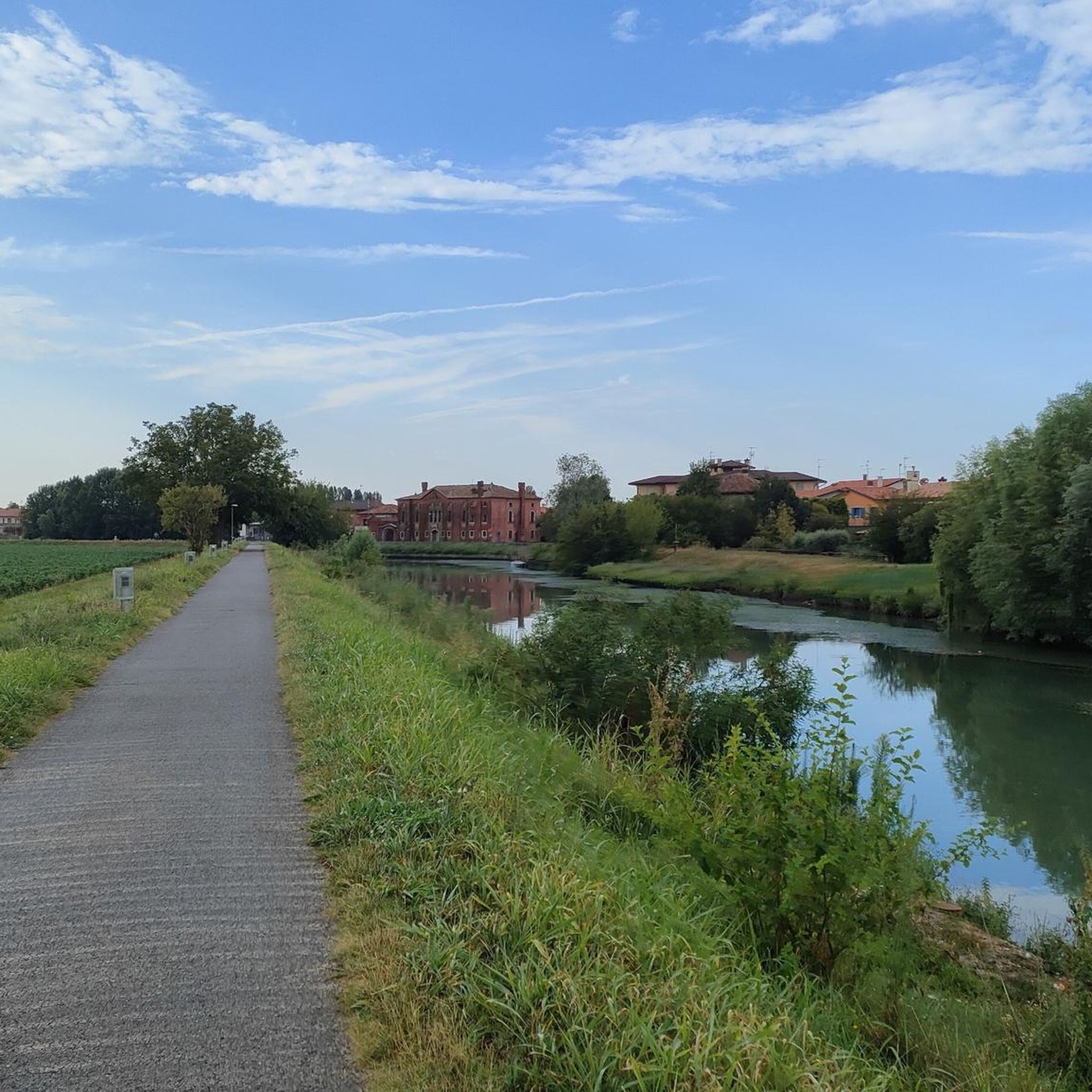
Portogruaro, a characteristic town of medieval origin, crossed by the Lemene river.
0
0
Frequently Asked Questions
What historical sites can I explore in Gruaro?
Gruaro offers a rich history with several notable sites. You can visit the Church of San Giusto, dating back to the 15th century and known for its frescoes and a Eucharistic Miracle. The San Giovanni Archway, built in the late 12th century, served as a main entrance to the city. Additionally, the Belfiore Mill, with origins possibly two centuries older than its mid-1400s documentation, houses an ethnographic museum showcasing ancient milling and peasant artifacts.
Are there any unique cultural sites to explore near Gruaro?
Beyond Gruaro itself, the nearby Gate of Sesto al Reghena marks the entrance to a historically significant village. You can also visit the Church in Bagnara, a 700-year-old church adorned with unique frescoes and a 100-year-old pipe organ. The Church of Santa Maria Assunta of Blessaglia is another beautiful religious building with a rich history and impressive frescoes.
What natural features characterize the Gruaro area?
Gruaro's landscape is defined by its abundant greenery and numerous watercourses. The Lemene and Versiola minor rivers are prominent natural features. The Stalis Area is particularly rich in environmental interest, featuring the Ippolito Nievo literary park, the Sesto Benedictine Abbey, the old Church of San Pietro, watermills, and the Venchieredo spring. The Stalis watermills are an unmissable sight.
What outdoor activities are available around Gruaro?
The region around Gruaro is ideal for various outdoor activities. You can enjoy gravel biking, road cycling, hiking, running, and mountain biking. For cycling enthusiasts, there are several routes, such as the 'Portogruaro – Historic Center of Portogruaro loop' or the 'Alvisopoli loop'. You can find more details on these activities in the Cycling around Gruaro and Road Cycling Routes around Gruaro guides.
Are there hiking opportunities near Gruaro's attractions?
Yes, there are several hiking opportunities. You can explore trails like the 'Portogruaro – Historic Center of Portogruaro loop' or the 'Stalis Mills – Chapel loop'. These routes allow you to experience the natural beauty and historical sites of the area on foot. For more hiking options, refer to the Hiking around Gruaro guide.
Are there family-friendly attractions in Gruaro?
Many attractions in Gruaro are suitable for families. The Belfiore Mill, with its ethnographic museum, offers an educational and engaging experience for all ages. The San Giovanni Archway and the historical sites of Sesto al Reghena provide interesting historical context in pleasant settings. The numerous trails and green areas also offer opportunities for family walks and exploration.
When is the best time to visit Gruaro for outdoor activities?
The region's pleasant environment, characterized by abundant greenery and water, makes it suitable for outdoor activities throughout much of the year. Spring and autumn generally offer mild temperatures ideal for cycling, hiking, and exploring historical sites without the peak summer heat. Summer also provides opportunities for outdoor enjoyment, especially near the watercourses.
What do visitors enjoy most about Gruaro's attractions?
Visitors appreciate the blend of history, culture, and natural beauty. The well-preserved historical sites like the Belfiore Mill and the charm of places like San Vito al Tagliamento are frequently highlighted. The serene natural landscapes, with their rivers and trails, also contribute to a pleasant and engaging experience for those seeking both cultural immersion and outdoor exploration.
Are there any accessible attractions in Gruaro?
The San Giovanni Archway is noted as being wheelchair accessible, making it an option for visitors with mobility considerations. When planning your visit, it's always recommended to check specific accessibility details for other sites directly.
Can I visit other interesting towns or settlements near Gruaro?
Absolutely. San Vito al Tagliamento is a nearby settlement rich in history and natural and artistic beauty, making it a worthwhile destination. The village of Sesto al Reghena, accessible through the beautiful Gate of Sesto al Reghena, also offers historical significance and charm.
What is the historical significance of the Belfiore Mill?
The Belfiore Mill is historically significant as it is the only mill along the Loncon river that has maintained its original characteristics. Documented since the mid-1400s, its original layout may be even older. It now serves as an ethnographic museum, preserving the history of milling and peasant life in the region.
What kind of architecture can I expect to see in Gruaro?
Gruaro showcases a range of historical architecture. You can observe the 15th-century design of the Church of San Giusto, with its frescoes and bell tower. The San Giovanni Archway features beautiful architecture with a prominent round arch from the 12th century. The Church of Santa Maria Assunta of Blessaglia also presents a late Romanesque style, dating back to the 1600s.
Most popular attractions around Gruaro

Get inspired with the komoot mobile app


Explore more
Still not found the Highlight you’re looking for? See guides of the top attractions in other regions:
