Attractions and Places To See around Nùgoro/Nuoro - Top 20
Best attractions and places to see around Nùgoro/Nuoro include a diverse range of historical sites, cultural institutions, and natural landscapes. This region in Sardinia is characterized by its mountainous terrain, including Monte Ortobene and the Supramonte area, offering panoramic views. Nùgoro/Nuoro is also known for its rich cultural heritage, often referred to as the "Sardinian Athens," with traditional villages and significant archaeological finds. Visitors can explore ancient Nuragic sites, vibrant cultural centers, and impressive natural formations.
Best attractions and places…
Last updated: October 10, 2026
Monte Corrasi Summit
Highlight • Summit
From here, at 1,463 meters above …
Translated by Google •
Tip by

Orgosolo Murals
Highlight • Monument
Translated by Google •
Tip by

Sign up now to discover places like this
Get recommendations on the best single tracks, peaks, & plenty of other exciting outdoor places.
Christ the Redeemer statue on Monte Ortobene
Highlight • Monument
Source: it.wikipedia.org/wiki/Monte_Ortobene
Translated by Google •
Tip by

Sacred Well of Su Tempiesu
Highlight • Historical Site
Translated by Google •
Tip by

Punta Sos Nidos
Highlight • Summit
Translated by Google •
Tip by

Sign up for free to discover even more attractions around Nùgoro/Nuoro.
Already have an account?
Start today with a free account
Your next adventure awaits.
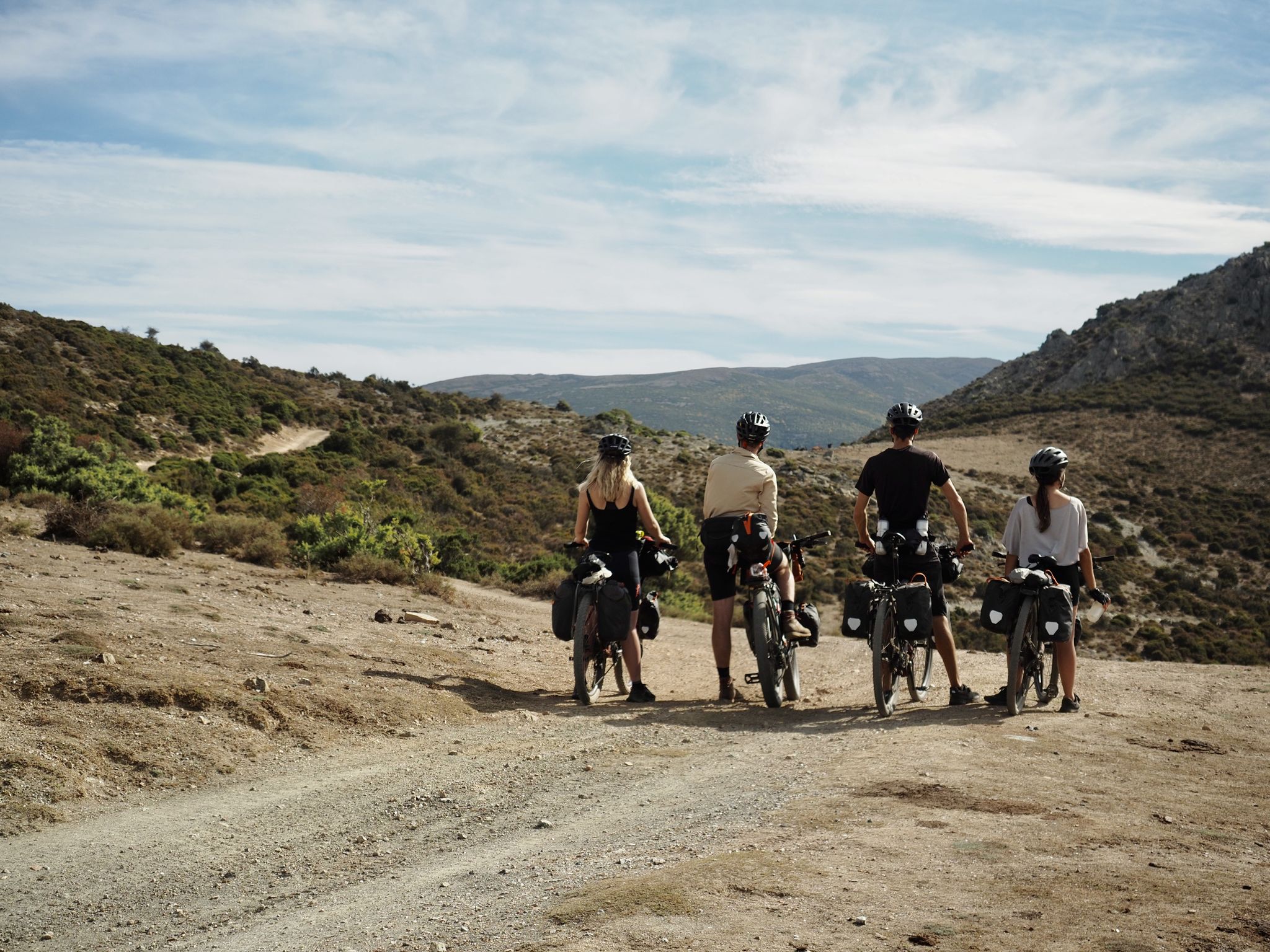
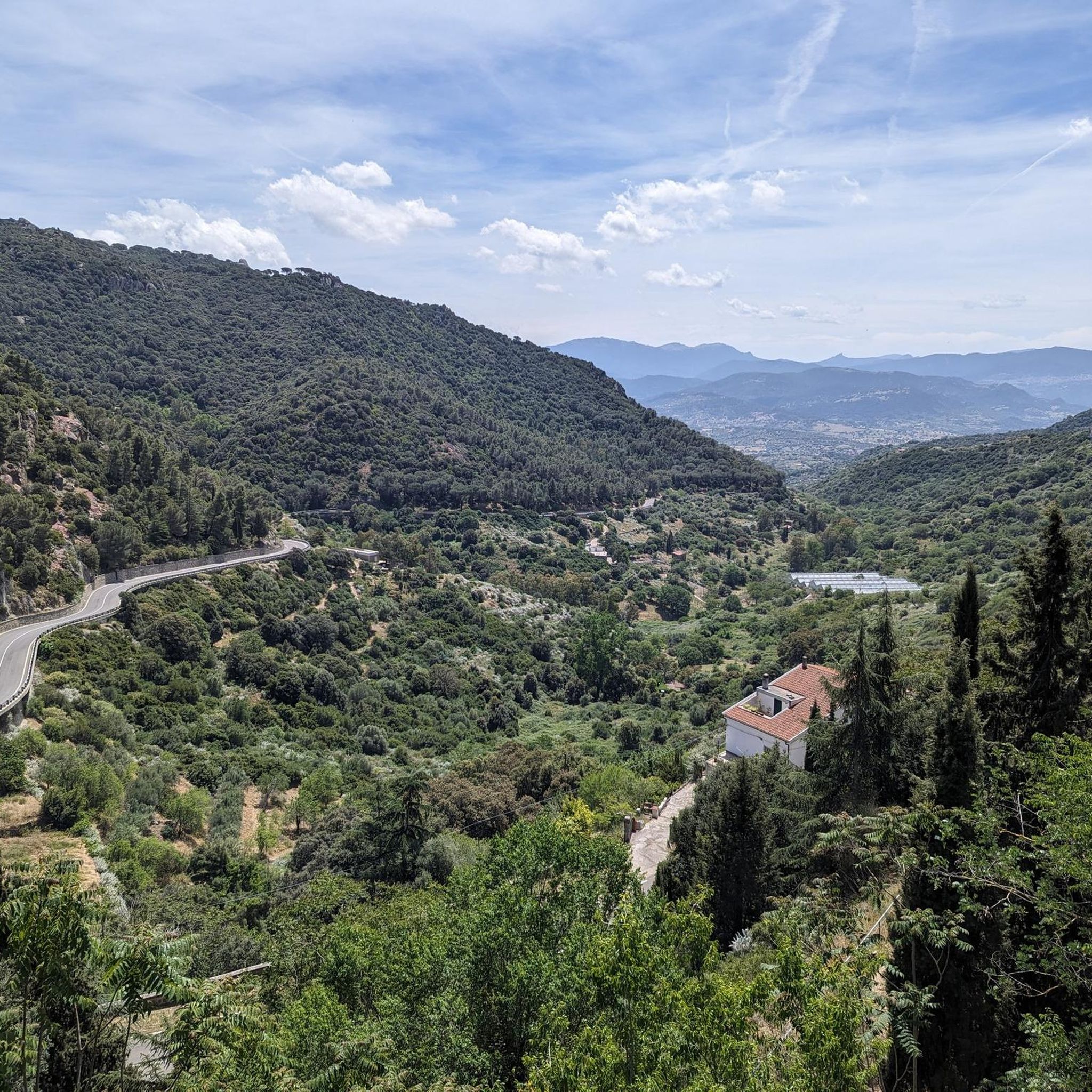
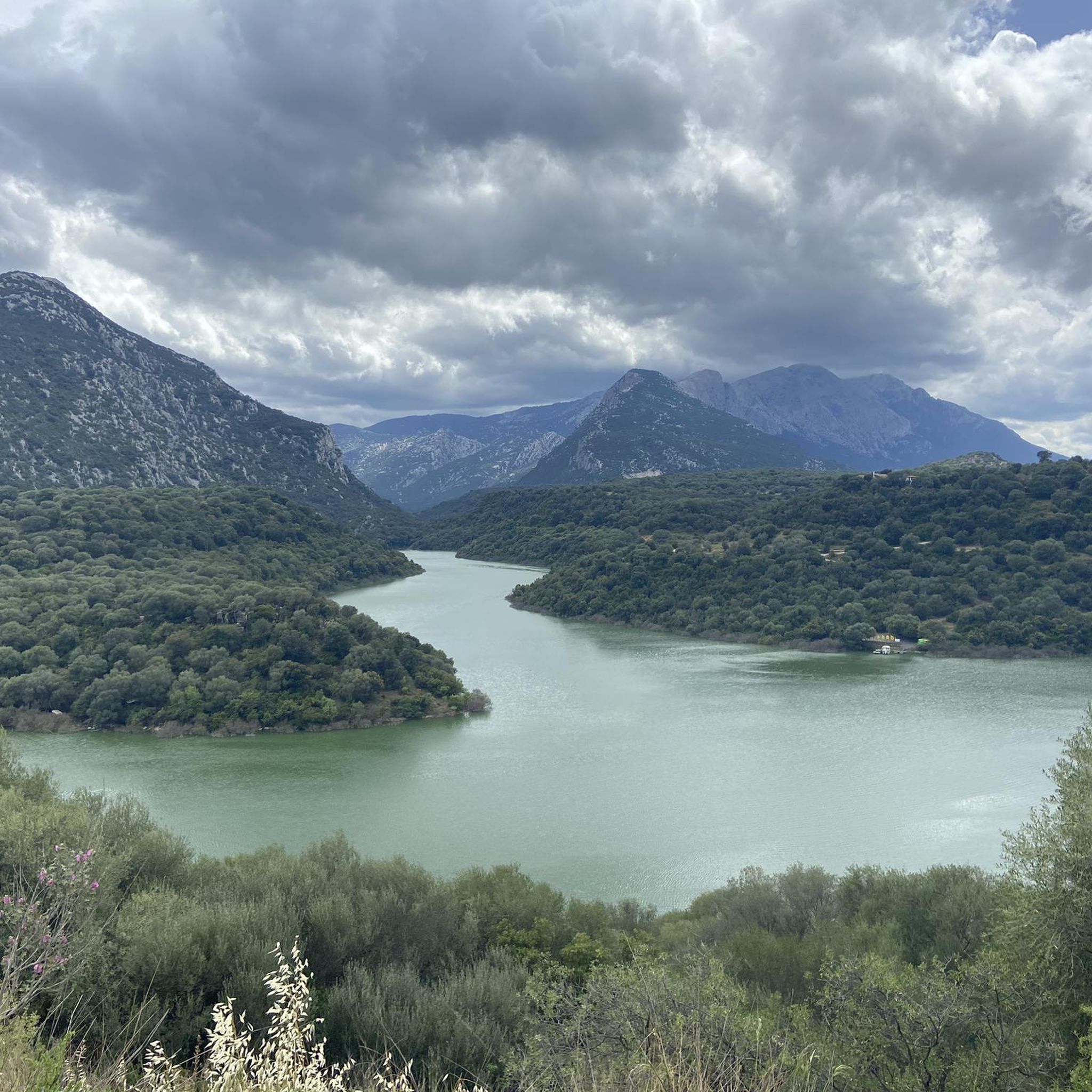
Other adventures around Nùgoro/Nuoro

Tips from the Community

One of the most rewarding and least-crowded summits in the entire Supramonte massif, Punta Sos Nidos rises above the Oliena plateau in a landscape of bare karst limestone, ancient junipers, and silence. The approach is unmarked for long stretches — this is genuine off-trail terrain that rewards experience, good navigation skills, and a solid sense of adventure. The summit plateau opens onto a 360° panorama that ranks among the finest in Sardinia: to the east, the Golfo di Orosei and the Tyrrhenian Sea; to the west, the silhouette of Monte Corrasi and the Gennargentu range; below, the deep green canopy of the Valle di Lanaitto and the canyon of Gorropu. On clear days, the view stretches from Tavolara to the Sinis Peninsula. The terrain is rocky, rugged, and requires careful route-finding. There is no marked path to the summit — GPS tracking is strongly recommended. The area falls within the Parco Nazionale del Golfo di Orosei e del Gennargentu: check current access regulations before heading out.
0
0

After a great tour you will be rewarded with a fantastic view.
0
0

Feels like 100 curves to the top
0
0

The statue of the Redeemer is a bronze work placed on a peak of Mount Ortobene near Nuoro, at a height of 925 metres above sea level.
0
0

At the top of Monte ORTOBENE, hikers will not find a classic summit cross, as is the case with many mountain ridges. Instead, there is a statue of the "Christo Redentore". Jesus Christ, the Savior and Redeemer, appears to be floating above the mountain as the resurrected one, as his feet no longer touch the ground. The cross held in one hand is therefore no longer a sign of death, but has become a symbol of the overcoming of sin and death. The artist of the statue has succeeded in portraying this Christian belief in a relaxed elegance.
3
0

Mount Corrasi, the highest peak of the vast and wild Supramonte, is characterized by sheer limestone walls, towers, white spiers, caves and large plateaus. From here, at 1,463 meters above sea level, the spectacular views offer a 360 degree panorama that embraces Nuoro, Orgosolo, Dorgali, the coast of Cala Gonone and the Gennargentu.
5
0

The somewhat exposed summit offers not only enough space to take a break but also a comprehensive panoramic view over the sea in the Gulf of Orosei to the other mountains of the Supramonte.
2
1

One of the most important and complete testimonies that the Nuragic culture has left us. Su Tempiesu is a fountain temple dedicated to the worship of water deities and was built using the Opus Isodomum technique with perfectly crafted trachyte and basalt blocks. The origin dates back to the Late Bronze Age (13th century BC) and was frequented until the beginning of the Iron Age (4th century BC). Discovered in 1953, the site is located on a rock face where spring water flows and supplies the holy well with water. Su Tempiesu is the only remaining original evidence of a covered, hilltop sacred well structure. The temple is about seven meters high and consists of a vestibule, a staircase and a chamber that protects the source of the spring water. The vestibule is square with a slightly sloping floor and projecting walls and is made of panels that form a narrow pointed arch. There are two counter seats at the base of the side walls, while the small offering cabinets are positioned in the brickwork. The back wall leads to an outward-facing, curved staircase. Four steps lead to a small room with a tholos (false dome) and paved floor and a decantation pit in the middle. The roof is exceptional: it is a double-pitched roof with double-shaped eaves. It culminates in a triangular tympanum. On top of it rested an acroterion (ashlar stone in the shape of a truncated pyramid), which carried twenty bronze swords decorated with votive motifs and with holes carved into them. In addition, numerous ex-voto bronzes were found: daggers, hatpins, pendants, bracelets, rings, necklace beads, pins and, above all, small statues of offerings, warriors, characters with capes and commander's staff. Other offerings were stored in chambers created from depressions in the rock. During flood periods, the overflowing water flows through a small canal dug into the floor of the vestibule and is channeled into a second small fountain, a smaller replica of the first. The small fountain is built at the foot of an outer curved enclosure and has a small channel with a finely crafted stalactite. There is a small arch above it, while at the bottom there is a small pit for decanting. Source: https://www.sardegnaturismo.it/en/explore/su-tempiesu
0
0
Frequently Asked Questions
What are the best natural attractions and viewpoints around Nùgoro/Nuoro?
The region boasts stunning natural beauty. For breathtaking panoramic views, head to Monte Corrasi Summit, the highest peak of the Supramonte, offering a 360-degree vista. Another significant natural landmark is Monte Ortobene, where you'll find the Christ the Redeemer statue, also providing expansive views. You can also explore the impressive Gorropu Gorge, a deep canyon popular for hiking, or visit the beautiful natural spring at Sorgenti Su Gologone.
Which historical and archaeological sites should I visit in the Nùgoro/Nuoro area?
Nùgoro/Nuoro is rich in history. Don't miss the Sacred Well of Su Tempiesu, a remarkably preserved Nuragic fountain sanctuary. Another significant ancient site is the Giants' Tomb S'Ena e Thomes, an impressive Nuragic burial structure. For a deeper dive into the region's past, explore the Speleo-Archaeological Civic Museum and the National Archaeological Museum of Nuoro, which house numerous finds from different periods, including unique menhir statues.
Are there any cultural attractions or museums in Nùgoro/Nuoro?
Absolutely. Nùgoro, often called the 'Sardinian Athens,' offers a vibrant cultural scene. Visit the Grazia Deledda Museum, housed in the birthplace of the Nobel Prize-winning author, to learn about her life and traditional Sardinian culture. The Museo del Costume (Sardinian Ethnographic Museum) is excellent for understanding local traditions, showcasing clothing, tools, and daily life. For art enthusiasts, the MAN Art Museum features contemporary and historical works by Sardinian artists.
What kind of outdoor activities can I do near these attractions?
The mountainous terrain around Nùgoro/Nuoro is ideal for outdoor enthusiasts. You can find numerous hiking trails, including routes on Monte Ortobene like the 'Monte Ortobene Loop' or 'Monte Ortobene — Ring tour'. For more options, explore the hiking guide for Nùgoro/Nuoro. Mountain biking is also popular, with challenging routes such as the 'Ortobene Downhill Trail'. Check the MTB trails guide for more details.
Are there family-friendly activities or attractions in the Nùgoro/Nuoro area?
Yes, several attractions are suitable for families. The Murals of Orgosolo offer a fascinating and visually engaging experience for all ages, depicting historical events and traditional life. Sant'Onofrio Park provides a peaceful natural escape within the city, perfect for a leisurely stroll. Many of the easier walking paths on Monte Ortobene are also suitable for families.
Where can I experience traditional Sardinian culture and local life?
To immerse yourself in traditional Sardinian culture, visit the village of Orgosolo to see its famous Murals, which tell stories of local history and traditions. The Rione Santu Predu in Nuoro is one of the city's oldest neighborhoods, known for its traditional roots and local handicraft artists. The Museo del Costume (Sardinian Ethnographic Museum) also offers a comprehensive look into the island's heritage.
What are some unique or hidden gems to discover near Nùgoro/Nuoro?
Beyond the main highlights, consider visiting the Tiscali Nuragic Village in the Supramonte area, a well-preserved ancient settlement nestled within a mountain. The Ispinigoli Cave near Dorgali is another unique natural wonder, famous for its impressive 38-meter-tall column and historical significance. For a taste of local artistry, explore the artisan workshops along Corso Garibaldi in Nuoro, specializing in wood carving, weaving, and goldsmithing.
What is the best time of year to visit Nùgoro/Nuoro for sightseeing and outdoor activities?
The spring (April-June) and autumn (September-October) months are generally ideal for visiting Nùgoro/Nuoro. During these periods, the weather is pleasant for exploring historical sites, cultural attractions, and engaging in outdoor activities like hiking. Summers can be quite hot, especially for strenuous outdoor pursuits, while winters are milder but some higher elevation trails might be less accessible.
Are there any religious sites of interest in Nùgoro/Nuoro?
Yes, Nùgoro has several significant religious sites. The 19th-century Cathedral of Santa Maria della Neve is a prominent landmark in the city center. The ancient Church of Madonna delle Grazie, located in the old Seuna area, showcases a simple yet stunning Gothic-influenced style. Additionally, the Christ the Redeemer statue on Monte Ortobene is a notable religious monument and a site for an annual procession.
Can I find good walking or running routes within or close to Nùgoro/Nuoro?
Certainly. Monte Ortobene offers several walking and running paths, including the 'Monte Ortobene — Ring tour'. Within the city, you can enjoy the 'Cammino di Santu Jacu: Anello del Centro di Nuoro' for an easy urban walk. For more running options, check out the running trails guide for Nùgoro/Nuoro, which includes routes like the 'Pineta di Ugolio loop'.
What are the main city attractions or places to gather in Nùgoro/Nuoro?
In the heart of Nùgoro, Piazza Sebastiano Satta is a symbolic public square featuring works by sculptor Nivola and is a popular gathering spot for locals. Corso Garibaldi, formerly Via Majore, is the lively pedestrian street lined with shops, cafes, and artisan workshops, making it the social hub of the city.
Are there any nearby villages worth visiting for their cultural significance?
Absolutely. Orgosolo, famous for its political and cultural murals, offers a unique insight into local history and traditions. Mamoiada is known for its Museo delle Maschere Mediterranee, showcasing traditional Carnival masks. Oliena is recognized for its woodcarvers and Cannonau wine, while Galtellì boasts remarkably preserved medieval architecture and an ethnographic museum.
Most popular attractions around Nùgoro/Nuoro

Get inspired with the komoot mobile app


Explore more
Still not found the Highlight you’re looking for? See guides of the top attractions in other regions:
