The best cycling routes around Trequanda
4.4
(1957)
13,644
riders
38
rides
Touring cycling around Trequanda offers routes through diverse landscapes, including the distinctive "lunar" terrain of the Crete Senesi and the fertile Val di Chiana. The region is characterized by gently undulating hills, unpaved dirt roads, vineyards, and olive groves. Cyclists can navigate a mix of paved and unpaved secondary roads, connecting medieval villages and historical sites. Panoramic views of the Val d'Orcia are also accessible from routes in the area.
Best touring cycling routes around Trequanda
- The most popular touring…
Last updated: October 11, 2026
4.6
(34)
147
riders
32.2km
02:40
860m
860m
Hard bike ride. Very good fitness required. Mostly paved surfaces. Suitable for all skill levels.
4.8
(92)
363
riders
47.6km
03:51
1,030m
1,030m
Hard bike ride. Very good fitness required. Mostly paved surfaces. Suitable for all skill levels.

4.7
(6)
84
riders
66.7km
04:30
1,110m
1,110m
Hard bike ride. Very good fitness required. Mostly paved surfaces. Suitable for all skill levels.
4.7
(3)
65
riders
62.3km
04:07
930m
930m
Hard bike ride. Very good fitness required. Mostly paved surfaces. Suitable for all skill levels.
4.8
(11)
89
riders
46.9km
03:22
850m
850m
Hard bike ride. Very good fitness required. Mostly paved surfaces. Suitable for all skill levels.
Get access to more routes and recommendations from other explorers.
Already have an account?
Our route recommendations are based on thousands of hikes, rides, and runs completed by other people on komoot.
Start today with a free account
Your next adventure awaits.
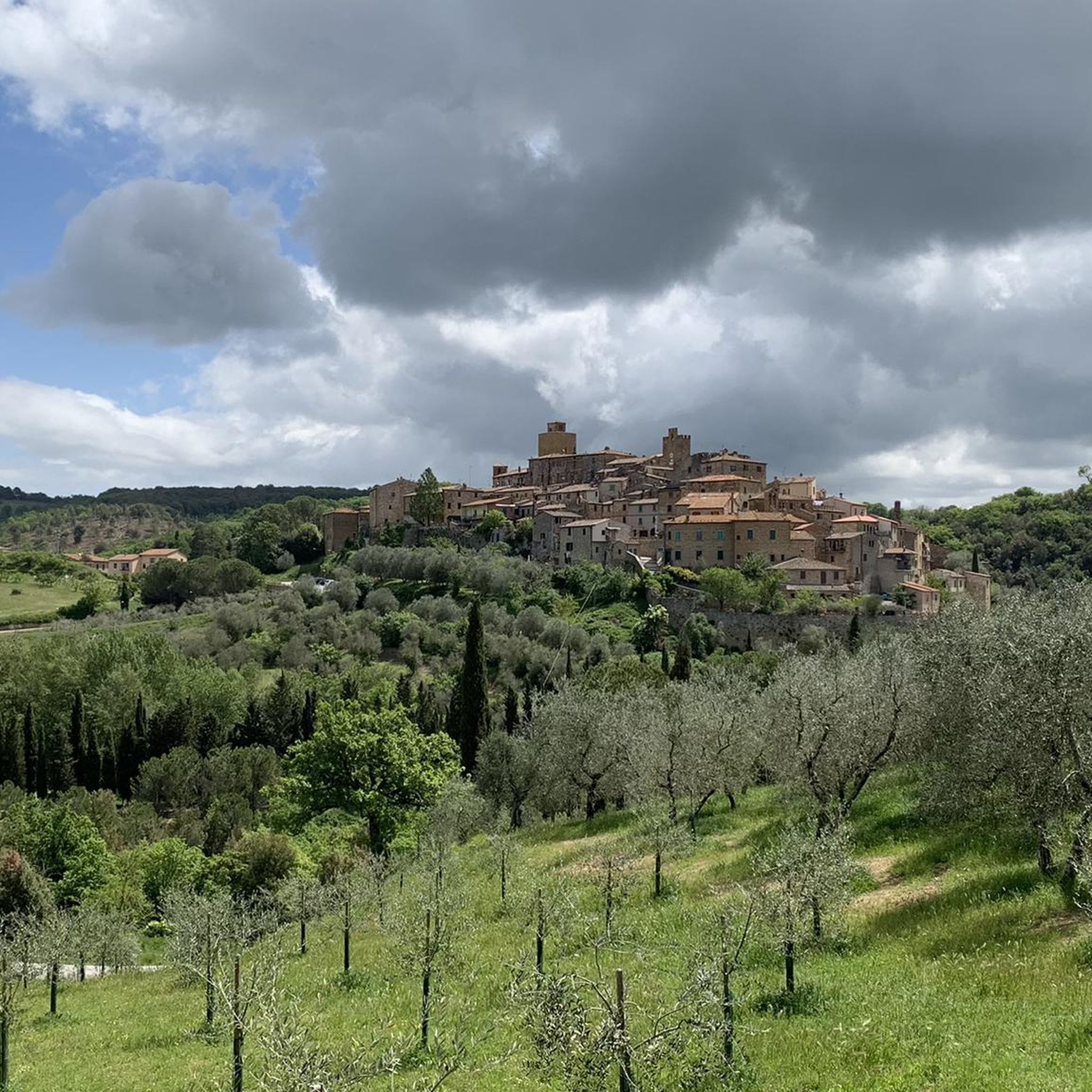

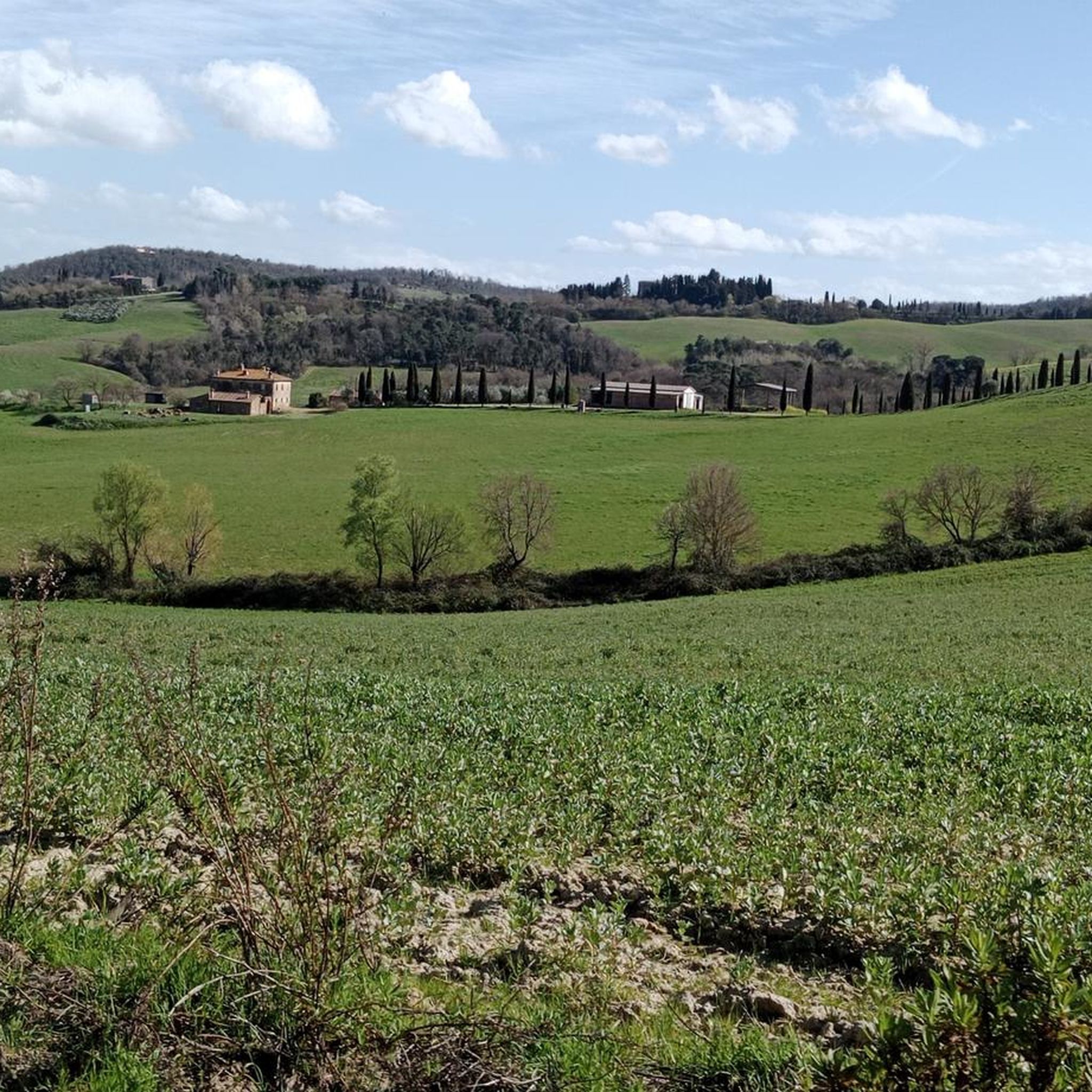
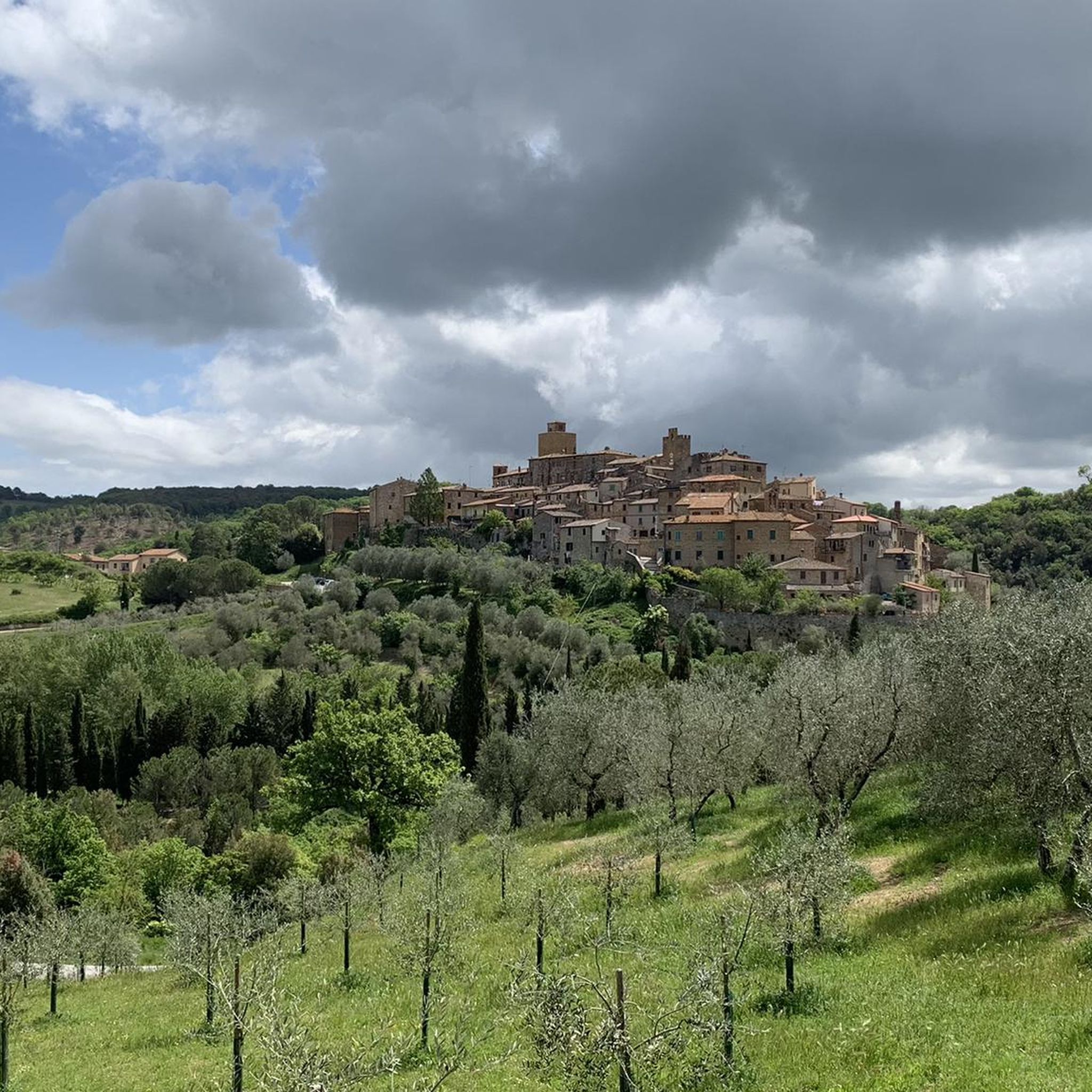
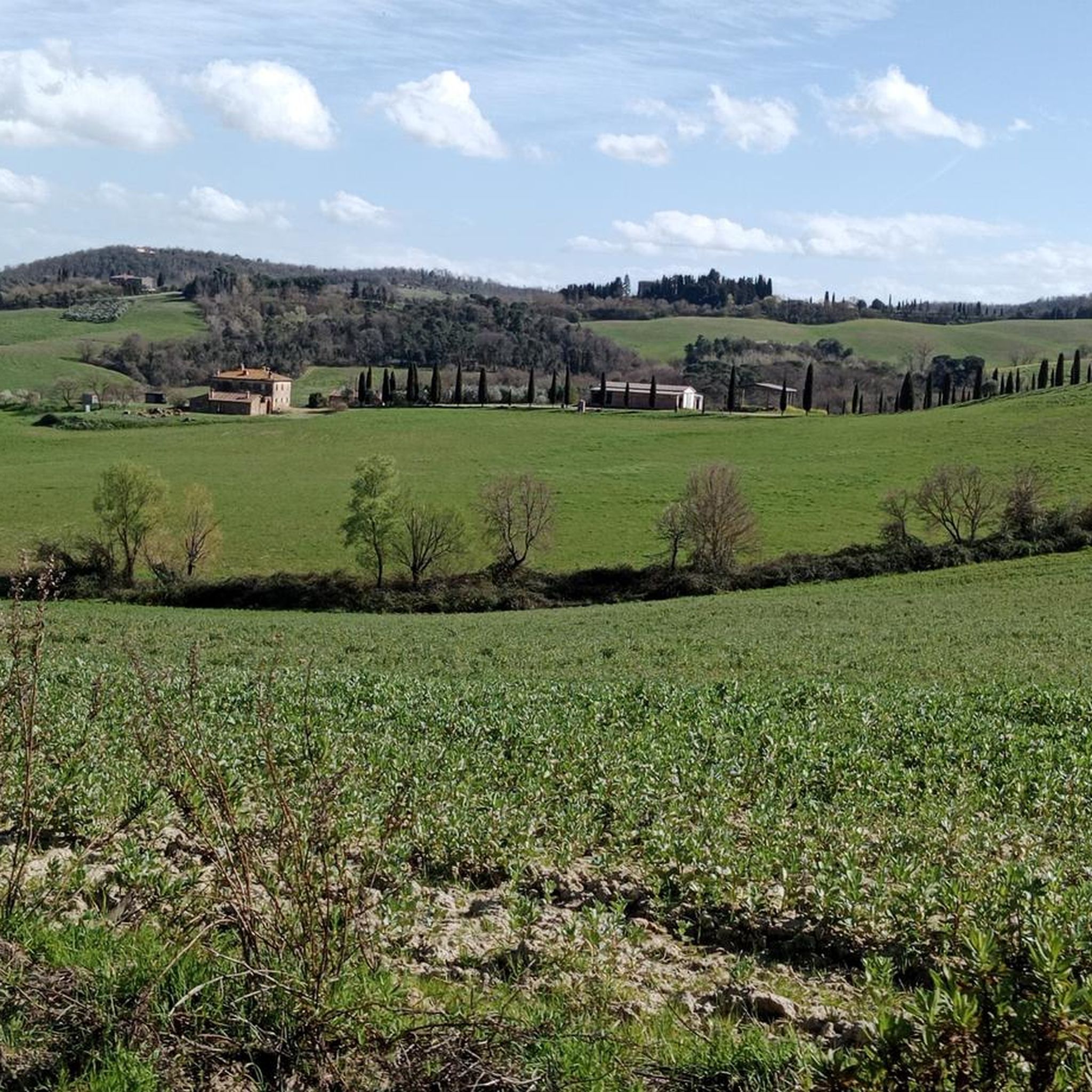
Tips from the Community

Monticchiello is an ancient medieval village located in the heart of the Val d'Orcia, in Tuscany. A hamlet of the municipality of Pienza (in the province of Siena), it has about 200 inhabitants and stands at 500 meters above sea level. Unlike nearby Pienza, renowned for its Renaissance architecture, Monticchiello retains an austere and fortified appearance typical of medieval strongholds.
2
0

Monticchiello is a charming medieval fortified village located in the heart of the Val d'Orcia, in the province of Siena, and a hamlet of the municipality of Pienza. Unlike the Renaissance architecture of nearby Pienza, this tiny village of about 200 inhabitants retains the austere features and solid defensive walls dating back to the time when it was a bulwark of the Republic of Siena.
2
0
To grasp the soul of this place, one must imagine a time when, instead of the current valleys, a 200-meter-deep arm of the sea stretched out. Siena would have been a coastal city, and the rivers flowing down from the Chianti mountains would have poured debris into the water. While the rock blocks remained ashore, the finest and lightest particles, the clays, concentrated in the center of the basin, settling on the bottom. About a million years ago, as the waters retreated, that seabed emerged, giving us the Crete Senesi. Even today, walking among the folds of the terrain, it is not uncommon to come across fossilized oyster shells or remains of ancient marine inhabitants, such as dolphins and sharks, witnesses to a submerged past.
0
0

San Quirico d'Orcia, a historic crossroads on the Via Francigena in the heart of the Val d'Orcia, is home to several notable religious buildings that bear witness to the region's rich medieval history.
0
0

The Pieve dei Santi Vito e Modesto in Corsignano is a Romanesque church located in the ancient village of Corsignano, today known as Pienza. Its origins date back to the Early Middle Ages and it represents one of the oldest religious buildings in the area.
1
0

Chiesa di Santa Maria Assunta The church, dating to the twelfth century, has a plain rectangular plan with a wall covering in square stones. Outside the massive portal is embellished with decorations, maybe originating from the Abbazia di Sant'Antimo. The gabled bell tower and the vestry are original, too. The apse is crowned with corbels and decorated with suspended arches. On the left side there is another monumental portal whose arch is supported by two columns and contains a decorated shape. The extremely plain interior is lit up by narrow slits, one in the apse.
0
0
Porta Romana is one of the ancient gates in the walls of Siena, located on the route of the ancient Via Cassia. It was built in 1327 - 1328 by Agnolo di Ventura and Agostino di Giovanni, equipped with battlements and a defensive wall. In 1417, Taddeo di Bartolo was commissioned to paint the fresco that was to adorn it with a depiction of the Virgin, like the other city gates, to implore divine protection for the city. In 1978, the frescoes, due to advanced deterioration, were detached and transferred to the Basilica of San Francesco. However, there is a Roman inscription at the Porta Romana!The inscription was written on a travertine tablet and, based on its graphic characters and content, can be dated to the Augustan period (27 BC – 0) saying "Silvanus sacr(um) / C. Victricius / Memor VIvir / [a] ugustalis posuit" = Caio Victricio Memore Seviro augustale dedicated a small temple to Silvanus.
1
0
In Siena, as we know, your eye always falls there, on the shell-shaped Campo or the striped marble of the Duomo. And rightly so. But then there are those places that speak to you in a different voice, more raspy and sincere. Porta Romana is one of them. Let's be clear: this isn't a small archway placed there for show. This is a beast of brick and stone, a fortress planted to the south to tell those arriving from Rome: "Be careful, you're entering Siena." It's massive, imposing, it makes you feel small and immediately reminds you that this city was once a serious thing, a power that had to be defended. It has none of the frills of other monuments; it gets straight to the point, and for me, its charm begins right there.
1
0
Frequently Asked Questions
How many touring cycling routes are available around Trequanda?
There are 37 touring cycling routes available around Trequanda. These routes offer a diverse range of experiences, from the distinctive 'lunar' landscapes of the Crete Senesi to the fertile Val di Chiana.
What are the general difficulty levels of touring cycling routes in Trequanda?
The routes around Trequanda cater to various skill levels. You'll find 3 easy routes, 9 moderate routes, and 25 difficult routes, ensuring options for both casual riders and experienced cyclists seeking a challenge.
What kind of terrain can I expect on touring cycling routes in Trequanda?
Touring cycling in Trequanda offers a varied terrain. You'll encounter the gently undulating hills and unpaved dirt roads characteristic of the Crete Senesi, as well as the green, fertile landscapes of the Val di Chiana with its vineyards and olive groves. Many routes combine paved and unpaved secondary roads, providing an authentic Tuscan cycling experience.
Are there any circular touring cycling routes in Trequanda?
Yes, many of the touring cycling routes around Trequanda are designed as loops, allowing you to start and finish in the same location. Examples include the challenging Torre del Mangia – Porta Romana (Siena) loop from Trequanda and the scenic Buonconvento – Beautiful scenic viewpoint loop from Trequanda.
Are there any easier touring cycling routes for beginners or families?
While many routes are challenging, there are 3 easy touring cycling routes available in the Trequanda area. These routes are suitable for beginners or families looking for a more relaxed ride through the Tuscan countryside.
What are some challenging touring cycling routes for experienced riders?
Experienced riders will find plenty of challenging options, with 25 difficult routes available. A notable example is the Porta Romana (Siena) – Sentiero della Bonifica loop from Trequanda, which covers a significant distance and elevation gain, offering a demanding ride through diverse landscapes.
Can I find routes that offer panoramic views?
Absolutely. The region around Trequanda is known for its stunning vistas. Routes often provide panoramic views of the Val d'Orcia, a UNESCO World Heritage Site, and the unique 'lunar' landscape of the Crete Senesi. The Historic town of Montalcino – View of Val d'Orcia loop from Trequanda is a great option for breathtaking scenery.
What historical villages or landmarks can I explore along the routes?
The touring cycling routes frequently connect charming medieval villages and historical sites. You can visit places like Pienza, a UNESCO World Heritage site, or the historic center of Montepulciano. Other notable attractions include the San Quirico d'Orcia Historic Centre and the beautiful Madonna di Vitaleta Chapel. The Castelmuzio Historic Village – Chiusure loop from Castelmuzio specifically highlights historic villages.
Are there any natural features or viewpoints to look out for?
Yes, the region boasts several natural features and viewpoints. You can discover the unique 'biancane' formations in the Crete Senesi, or visit the Horti Leonini Gardens. The From Chiusure to Buonconvento highlight offers a fantastic viewpoint, and the iconic Gladiator's Cypresses are also nearby.
What do other cyclists say about touring cycling in Trequanda?
The touring cycling routes around Trequanda are highly rated by the komoot community, with an average score of 4.5 stars from over 50 reviews. Cyclists often praise the diverse landscapes, the mix of paved and unpaved roads, and the opportunities to explore historic Tuscan villages.
What is the best time of year for touring cycling in Trequanda?
The spring and autumn months are generally considered the best for touring cycling in Trequanda. During these seasons, the weather is typically mild, and the landscapes are particularly beautiful, with wildflowers in spring and vibrant colors in autumn. Summer can be very hot, while winter might bring colder temperatures and occasional rain.
Are there opportunities to stop for food or drinks along the routes?
Yes, many routes pass through or near charming Tuscan villages and towns, offering opportunities to stop at local cafes, restaurants, or trattorias. Trequanda itself is part of the 'Cities of Oil' network, so you can often find local produce and olive oil. Planning your route with komoot can help you identify potential stops.
Is it possible to rent a bike in or near Trequanda?
While Trequanda is a small village, the surrounding region of Tuscany is very popular for cycling. You can typically find bike rental services in larger nearby towns such as Siena, Montepulciano, or Pienza, which offer a range of touring bikes, e-bikes, and gravel bikes suitable for the local terrain.
Most popular attractions around Trequanda

Get inspired with the komoot mobile app


Explore more
Browse the best Cycling routes in other regions.
