The best walks and hikes around Garbagna Novarese
4.1
(35)
457
hikers
96
hikes
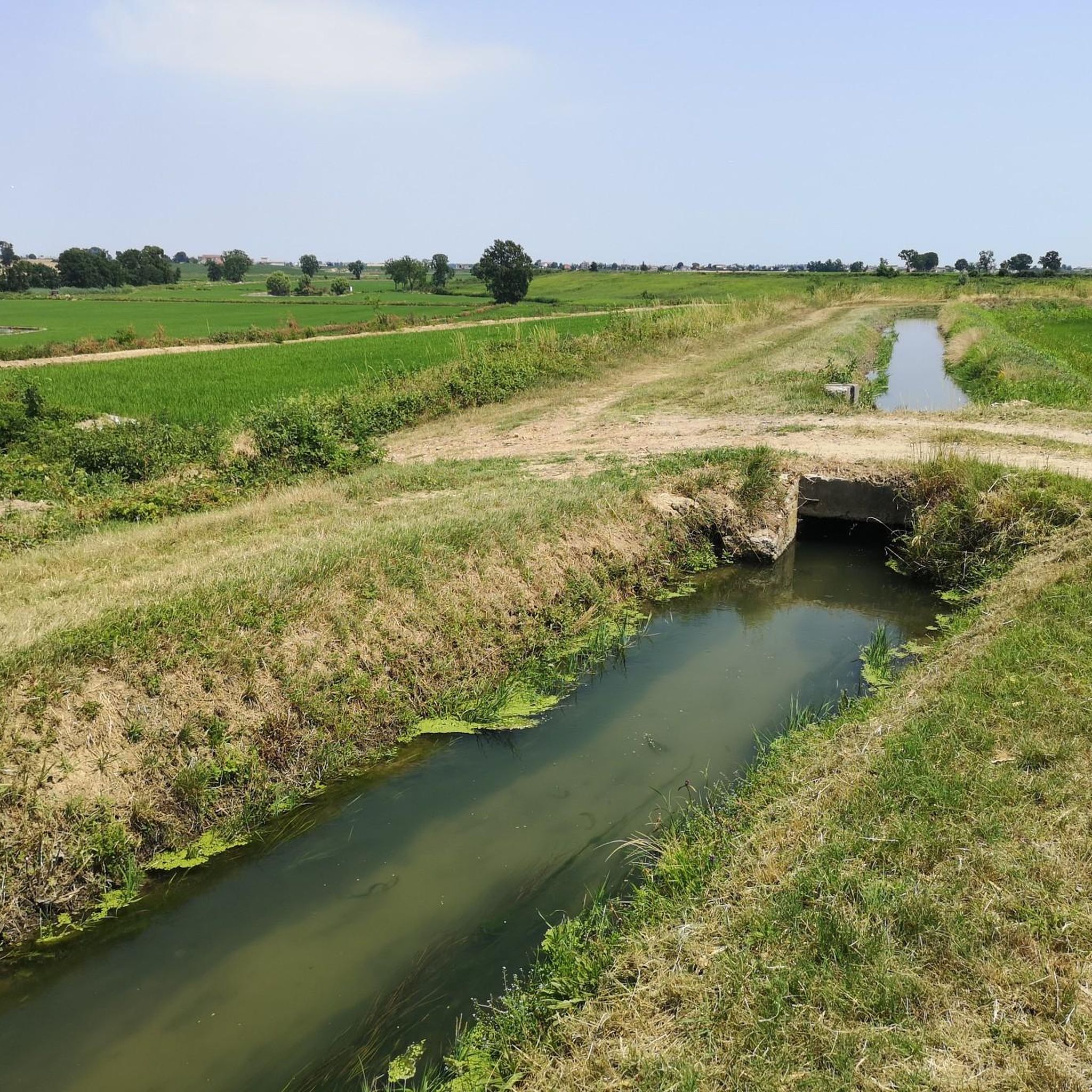
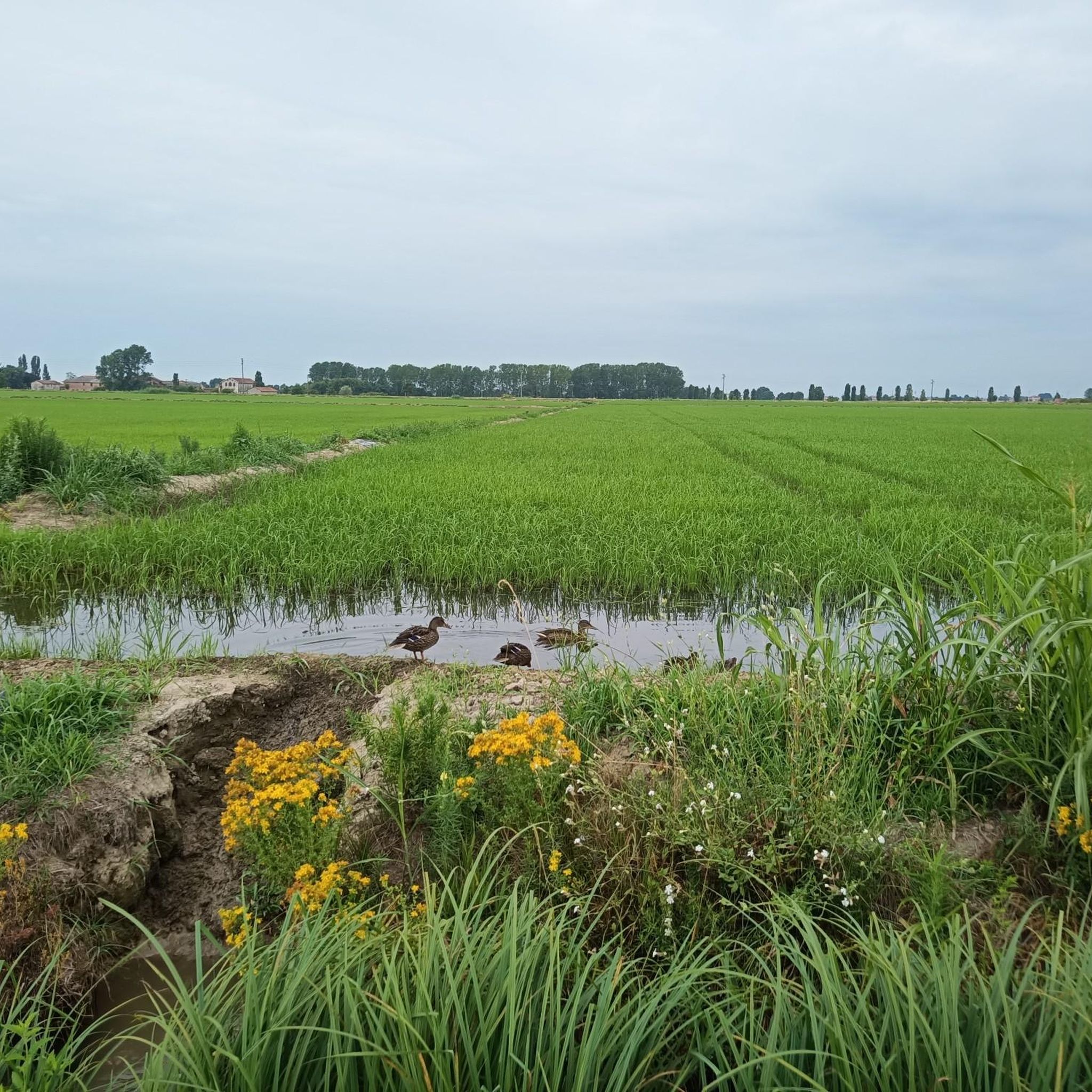
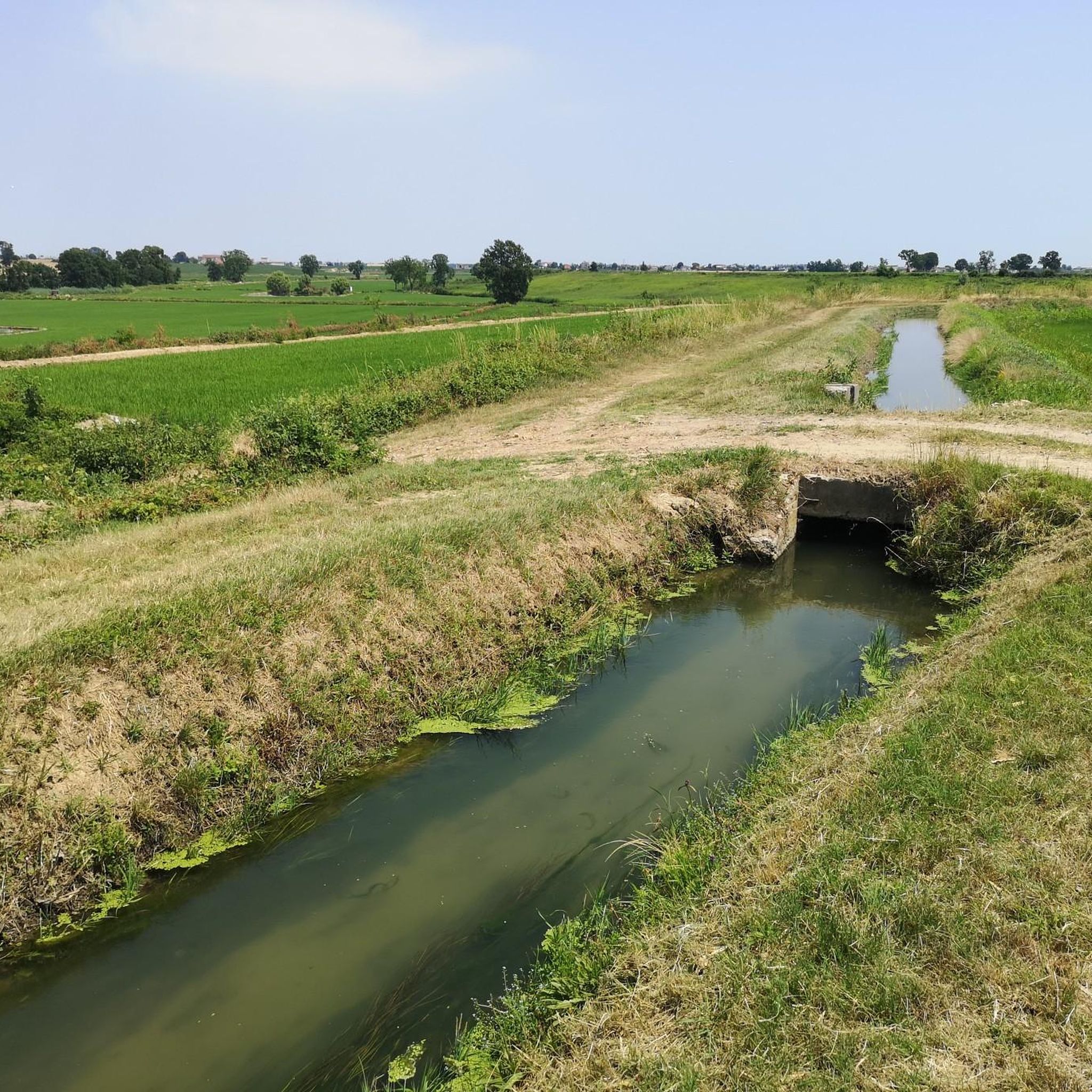
Hiking around Garbagna Novarese offers routes through the flat, agricultural plains of the Piedmont region in Italy. The landscape is characterized by open fields, quiet country roads, and occasional waterways, providing a gentle terrain for outdoor activities. Elevation changes are minimal across most routes, making the area accessible for various fitness levels. The region's trails often connect small villages and offer views of the surrounding rural environment.
Best hiking trails around Garbagna Novarese
- The most popular hiking route is Novara…
Last updated: July 1, 2026
3.0
(1)
1
hikers
26.3km
06:37
30m
30m
Hike Novara Trail: Stage 7, a difficult 16.3-mile (26.3 km) route with 98 feet (30 metres) of elevation gain, taking about 6 hours and 37 mi
4.3
(3)
38
hikers
13.4km
03:25
40m
40m
Moderate hike. Good fitness required. Easily-accessible paths. Suitable for all skill levels.

Sign up for free
5.0
(2)
11
hikers
8.57km
02:11
30m
30m
Moderate hike. Good fitness required. Easily-accessible paths. Suitable for all skill levels.
10
hikers
5.07km
01:18
20m
20m
Easy hike. Great for any fitness level. Easily-accessible paths. Suitable for all skill levels.
3.0
(1)
16
hikers
7.31km
01:52
20m
20m
Easy hike. Great for any fitness level. Easily-accessible paths. Suitable for all skill levels.
Get access to more routes and recommendations from other explorers.
Sign up for free
Already have an account?
Our route recommendations are based on thousands of hikes, rides, and runs completed by other people on komoot.
Start today with a free account
Your next adventure awaits.
Login or Signup

Tips from the Community

Pedestrian area, also suitable for bicycles (but be careful of pedestrian traffic, especially on weekends!)
0
0

Palazzo Natta is an ancient historical-noble palace in the city of Novara, in Piedmont. Today it houses the Province of Novara and the prefecture. In the place, already in Roman times near the Cardo (corresponding to the Cavour and Mazzini courses) and the Decumanus (corresponding to the Cavallotti and Italia courses), there was the aristocratic district of the city in the Middle Ages, called Contrada delle torri lunghe. Around the 13th century the Counts Caccia di Mandello and Castellazzo, a noble and ancient family from Novara, built their residence there, of which the civic tower with the clock is preserved today; documented as early as 1268 and called Torre grande. Later the building was acquired by the Natta d'Alfiano and Natta Isola di Casale families, who rebuilt and enlarged it between the 16th and 18th centuries. The main project of 1580 is attributed to the famous architect Pellegrino Tibaldi, who composed a square-plan palace centered on the internal porticoed courtyard and with a rear garden aligned perspectively on the main axis of the building. The courtyard, surrounded by a portico on Doric columns, has a compass rose made with river pebbles on the pavement, also repeated in the garden. A monumental staircase leads to the first floor, where the rooms are decorated with frescoes by the painter De Giorgi. After the unification of Italy, the palace was raised by one floor and the two final ramps were added to the staircase. The garden, restored in 1998, is centered on a fountain in pink Baveno marble and is closed by an eighteenth-century exedra in rocaille style that frames a trompe-l'œil. https://it.wikipedia.org/wiki/Palazzo_Natta
0
0
The Church of Monserrato is located on the central Corso Cavour. Its façade is simple and unobtrusive, with neoclassical elements. The current building is the result of various interventions over the centuries and therefore incorporates elements from different styles and eras. The oldest furnishings and paintings date back to the end of the 16th century, while the main altar dates back to the Baroque period.
0
0
The Broletto of Novara is a medieval architectural complex consisting of four historic buildings, built in different periods and with distinct and disparate artistic styles, arranged in a quadrangle around a central courtyard (or "arengo"). Located in the city center, a short distance from the Cathedral, it is accessible through an archway from Piazza della Repubblica (to the south) and a second archway from Corso Italia (to the north). The Broletto was originally an enclosed courtyard in the heart of the city, where commerce and various public activities took place. The construction of the assembly and judicial buildings dates back to the period immediately after the Peace of Constance (1183), as was the case in several Lombard cities. The exact date of construction is unknown, but the first references to the complex in historical documents date back to 1208, in the expressions "in broreto comunis novarie" and "sub palacio comunis." Excavations during restoration work in the 20th century also confirmed that the complex was built on pre-existing buildings. This was confirmed by the discovery of sections of wall and mosaic floors from the Roman period. From the mid-16th century onwards, neglect led to a progressive deterioration of the complex. It was not until the 19th century that the first tentative restoration measures were undertaken. At the end of the 1920s, a restoration project was carried out in various areas in Novara to restore its original appearance. In this context, the architect Giovanni Lazanio oversaw the restoration of the Broletto, which had been subject to various degrading interventions in previous centuries, particularly in the 19th century by the engineers Luigi Orelli and Stefano Ignazio Melchioni [ 6 ] : the single-lancet windows of the Palazzo del Podestà, the triple-lancet windows of the Salone dell'Arengo, and the walled-up porticoes of the courtyard were reopened. The fountain and the external staircase leading to the Arengo, demolished in the 18th century, were rebuilt, and the courtyard was cleared of superfluous elements, including a large urinal and the newsstand. The Broletto complex reopened to the public in March 2011, on the occasion of the celebrations for the 150th anniversary of the unification of Italy, after a restoration project lasting over two years. The complex now houses a Modern Art Gallery and hosts temporary exhibitions and presentations. In summer, there is also an open-air cinema. https://it.wikipedia.org/wiki/Broletto_(Novara)
0
0
maybe not the first devision, but take an eye an the lower ones, maybe also interesting. https://www.novarafootballclub.it/
0
0
The Barriera Albertina was a customs barrier of the city of Novara. Today (2021) it hosts cultural, social and artistic exhibitions and conferences. The two buildings have a square plan, with a single floor, with a flat roof. The facades have a hexastyle pronaos of the Doric order, surmounted by a tympanum. The external walls are characterized by a smooth ashlar, interrupted by simple Doric pilasters, which intersperse the architraved windows. The appearance is sober and essential, measured in proportions, aligned with neoclassical canons. The sculptural decoration was entrusted to Giuseppe Argenti, a member of the school of Pompeo Marchesi, author in turn of the statue of Carlo Emanuele III in via Puccini. Argenti chose the subjects according to the indications of the historian Francesco Antonio Bianchini, to cover the building with significant figures and reliefs. On the tympanum of the two pronaos was placed a relief with two female figures, symmetrical, holding the royal and city insignia: this represents the close relationship between the Savoy interventions and urban development. On the sides of the vestibule, on the main facades, are the personifications of Royal Charity, Gratitude, Agriculture and Commerce. Initially there were also two statues placed on the supporting pillars of the wrought iron gate: the representations of Concord and Vigilance. In the upper part of the western façade of each building are the following inscriptions, both designed by the historian Francesco Antonio Bianchini: KAROLO ALBERTO REGI NOSTRO PATRI P. on the north building, O.P.Q. NOVARIENSIS MDCCCXXXVII D.D. on the south building. The gate was designed by the artist Pelagio Palagi, already author of the gate of the Royal Palace in Turin. Later it was, together with the two statues, moved to the monument to Carlo Alberto, in Piazza del Rosario (Piazza Gramsci). After the destruction of this monument, in September 1944, the statues were finally destined for the entrance to the cemetery, where they still are today. https://it.wikipedia.org/wiki/Barriera_Albertina
0
0
This building in Novara stands out, but not because of its use for Polizia Postale E Delle Comunicazioni. The architecture is quite different from the other buildings around it. A modern architecture somewhere between the 40s and 60s of the 20th century.
0
0
The chirch is impressive, doesn't matter to have double highlight
1
1
Frequently Asked Questions
How many hiking trails are available around Garbagna Novarese?
There are over 75 hiking routes around Garbagna Novarese, offering a variety of options for different skill levels. The komoot community has rated these trails with an average of 4.2 stars.
Are there easy hiking trails suitable for beginners in Garbagna Novarese?
Yes, Garbagna Novarese offers many easy trails, with 42 routes classified as easy. These routes typically feature minimal elevation changes and traverse flat agricultural plains. An example is the Hiking loop from Novara, which is 4.5 miles (7.3 km) long.
What kind of terrain can I expect on hikes near Garbagna Novarese?
The terrain around Garbagna Novarese is primarily flat, characterized by agricultural plains, quiet country roads, and occasional waterways. Elevation changes are generally minimal, making the area accessible for various fitness levels and offering a gentle outdoor experience.
Are there any circular hiking routes in the area?
Yes, many routes around Garbagna Novarese are designed as loops. For example, the Giardino del Mondo, Novara loop from Torrion Quartara is a moderate 8.3-mile (13.4 km) path that offers a varied landscape through urban outskirts and green spaces.
Can I bring my dog on the hiking trails around Garbagna Novarese?
Most trails in the Garbagna Novarese area, especially those on country roads and through open fields, are generally dog-friendly. However, it's always recommended to keep dogs on a leash, particularly near agricultural areas or when passing through villages, and to check local regulations for specific parks or protected areas.
Are there family-friendly hiking options in Garbagna Novarese?
Given the predominantly flat terrain and numerous easy routes, Garbagna Novarese is well-suited for family hikes. Trails like the Duomo of Novara – Palazzo Natta loop from Novara, an easy 5.0 km route, are ideal for families looking for a gentle walk.
What are some interesting places to see or landmarks near the hiking trails?
The region offers several historical and cultural points of interest. You can explore castles such as the Sforzesco Castle of Galliate or the Visconti-Sforza Castle (Novara). The Basilica of San Gaudenzio in Novara is also a notable landmark. Many routes pass through or near charming settlements like Villanova.
What is the best time of year to go hiking in Garbagna Novarese?
The best time to hike in Garbagna Novarese is typically during spring (April-May) and autumn (September-October) when temperatures are mild and the agricultural landscape is vibrant. Summer can be warm, but the flat terrain makes it manageable, while winter offers a different, often quieter, experience.
Where can I find parking for hiking trails in Garbagna Novarese?
Many routes around Garbagna Novarese start from or pass through small towns and villages, where public parking is generally available. For routes originating in Novara, various parking facilities can be found within the city. It's advisable to check specific starting points for designated parking areas.
Are there any less crowded hiking trails if I prefer solitude?
Given the extensive network of trails through agricultural plains and quiet country roads, it's often possible to find less crowded paths, especially outside of popular urban starting points. Exploring some of the longer, more rural routes can offer a more solitary hiking experience.
What do other hikers say about the trails in Garbagna Novarese?
The trails in Garbagna Novarese are highly rated by the komoot community, with an average score of 4.2 stars from 34 reviews. Hikers often praise the peaceful, flat routes, the ease of access, and the opportunity to explore the rural Piedmontese landscape.
Are there any cafes or refreshment stops along the hiking routes?
Many hiking routes in Garbagna Novarese connect small villages and pass through the outskirts of larger towns like Novara. This means you'll often find opportunities for refreshment, including cafes, bars, and small shops, particularly in the more populated areas or at the start/end points of trails.
What should I bring for a hike in Garbagna Novarese?
For hikes in Garbagna Novarese, comfortable walking shoes are essential, as are water and sun protection, especially during warmer months due to the open, exposed terrain. A map or GPS device is also recommended, though many trails are well-defined. Layers of clothing are useful for adapting to changing weather conditions.
Most popular routes around Garbagna Novarese
Most popular attractions around Garbagna Novarese

Get inspired with the komoot mobile app


Explore more
Browse the best Hikes in other regions.
