Attractions and Places To See around Balocco - Top 20
Best attractions and places to see around Balocco, a region in the Vercelli province of Italien, are characterized by its unique blend of agricultural landscapes and natural river environments. The area, often associated with rice cultivation, offers a variety of historical sites and natural parks. Visitors can explore the slow-flowing irrigation canals and the significant Sesia river, which shapes much of the local geography. Balocco provides opportunities for easy walks near its historical settlements and natural areas.
Best attractions and…
Last updated: June 24, 2026
Lame del Sesia Natural Park
Highlight • Natural
Translated by Google •
Tip by

Church of San Germano Vercellese
Highlight • Religious Site
Translated by Google •
Tip by

Sign up now to discover places like this
Get recommendations on the best single tracks, peaks, & plenty of other exciting outdoor places.
Sign up for free
Olcenengo
Highlight • Settlement
Translated by Google •
Tip by

Abbey of San Nazzaro
Highlight • Religious Site
Translated by Google •
Tip by

Confluence of the Cavour Canal and the Sesia River
Highlight • River
Translated by Google •
Tip by

Sign up for free to discover even more attractions around Balocco.
Sign up for free
Already have an account?
Start today with a free account
Your next adventure awaits.
Login or Signup


Tips from the Community

The Abbey of San Nazzaro Sesia is a complex made up of structures from different historical periods. The oldest parts are the bell tower, built as a watchtower, and the two wings of the narthex preceding the façade, which are what remains of the quadriportico built around 1150, shortly after the abbey itself was founded (1040). The cuts resulting from the demolition of the other two sides are still clearly visible today. The narthex is almost entirely made up of stones from the Sesia river arranged in a herringbone pattern to increase its solidity. The mortar itself was obtained from materials found on site, near the Sesia river. It was probably originally used as a “hospitalis”, that is, it served as a place of rest and refreshment for travellers and pilgrims, who we know were very numerous in medieval times, and it also had the function of hosting catechumens.
0
0

the dome of the parish church of San Germano is the work of Bernardo Vittone, one of the protagonists of the Piedmontese late Baroque.
0
0

The ancient village of Olcenengo is surrounded by the slow flow of its irrigation canals and shrouded in winter fog, dense and impenetrable guardian of landscapes with an ancient flavor. Agriculture is the main economic sector of Olcenengo, but in the shadow of the large farms, craft businesses related to the rice sector have developed: mechanical workshops, wooden products, pig farms with their own production of typical sausages, small family-run rice mills . The town hall, the small square with the fountain of the "sgorgia" and the "frog", the church are the most characteristic points of the city. Only a few parts of the castle, dating from 1100, are still used as a farm. The town hall is a compact building rising over two floors. The public fountain in Piazza Paietta has become the symbol of the city: a frog at the edge of the pool sprays a stream of water at a "sgorgia" (blue heron), the typical bird of the rice fields. https://www.viefrancigene.org/it/resource/poi/olcenengo/
7
0

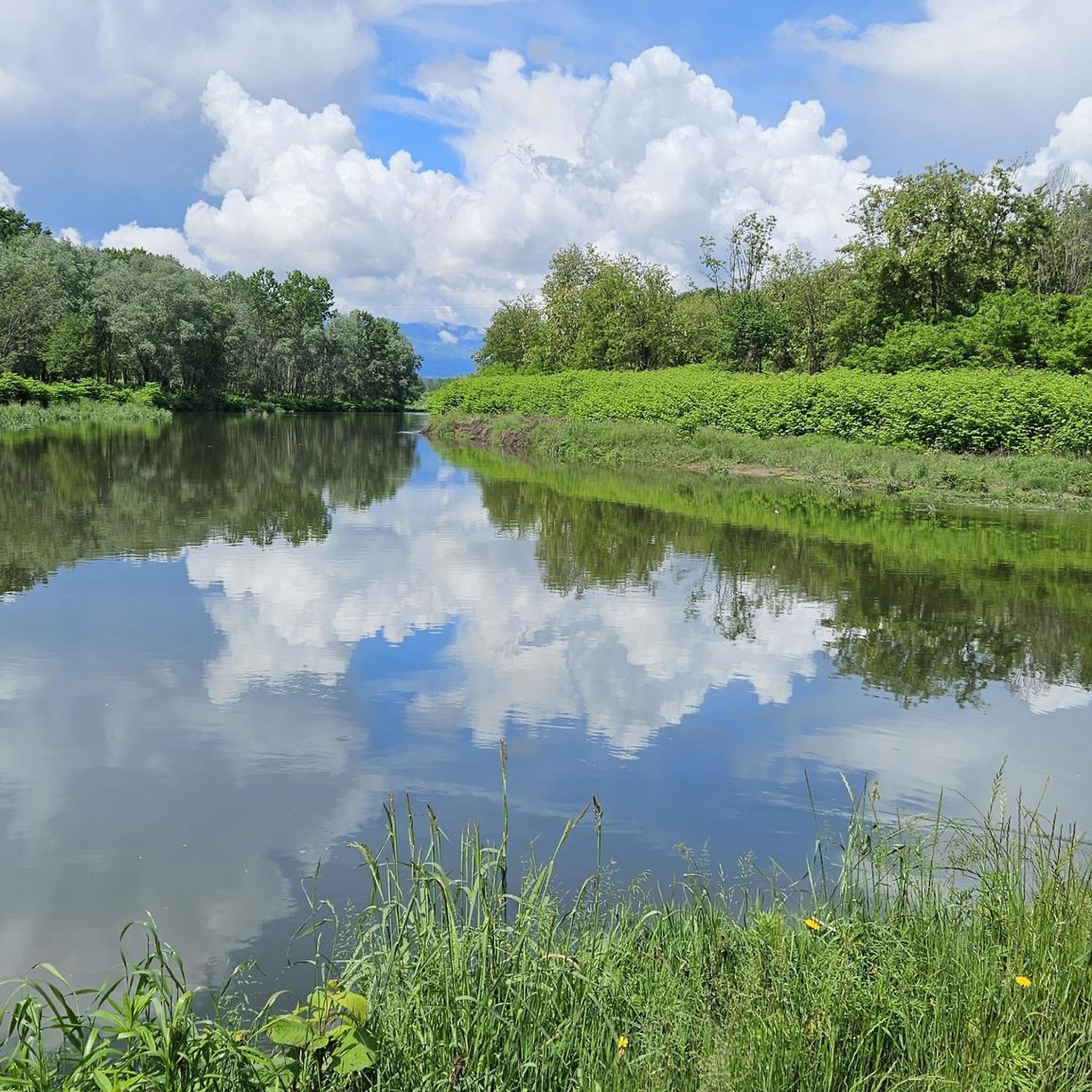
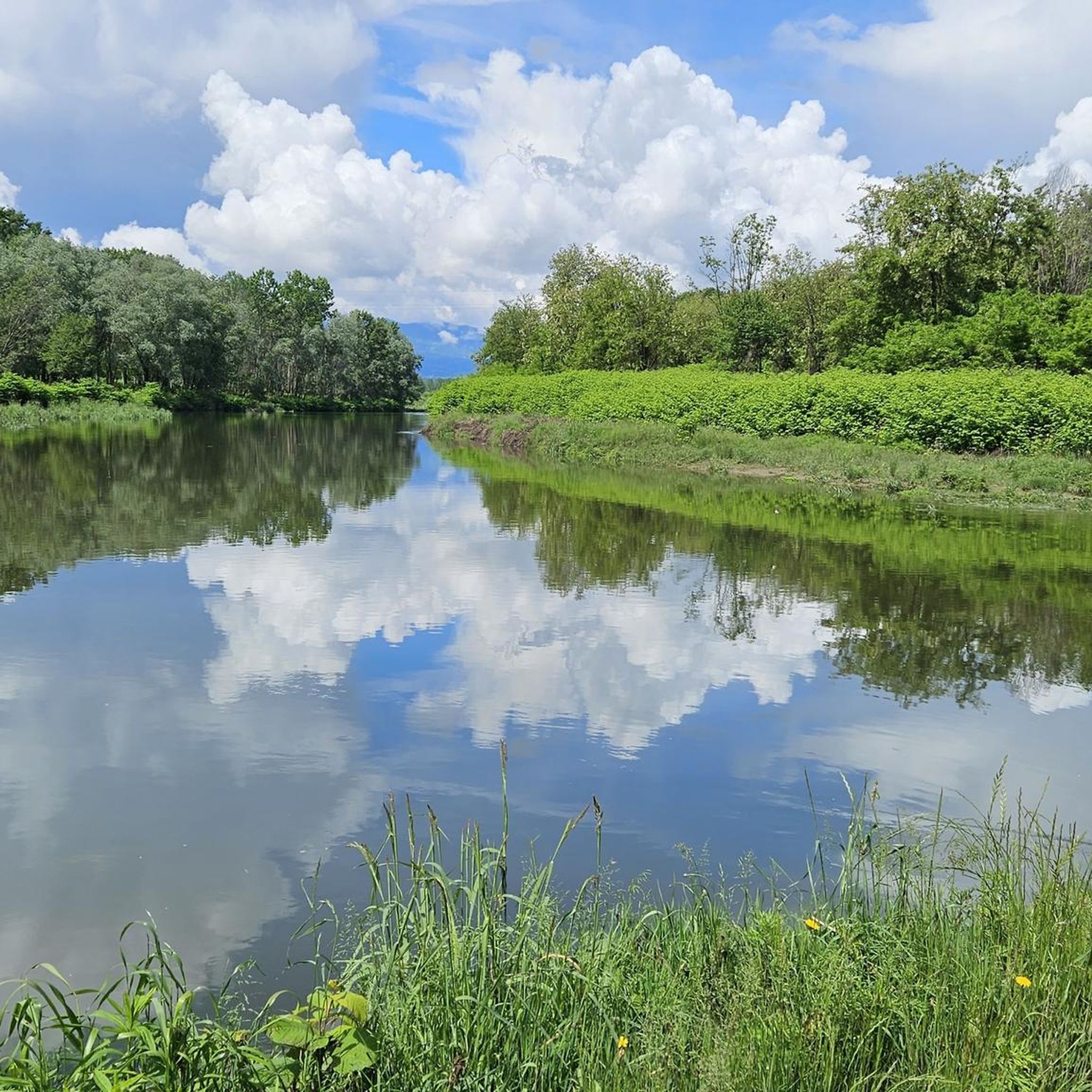
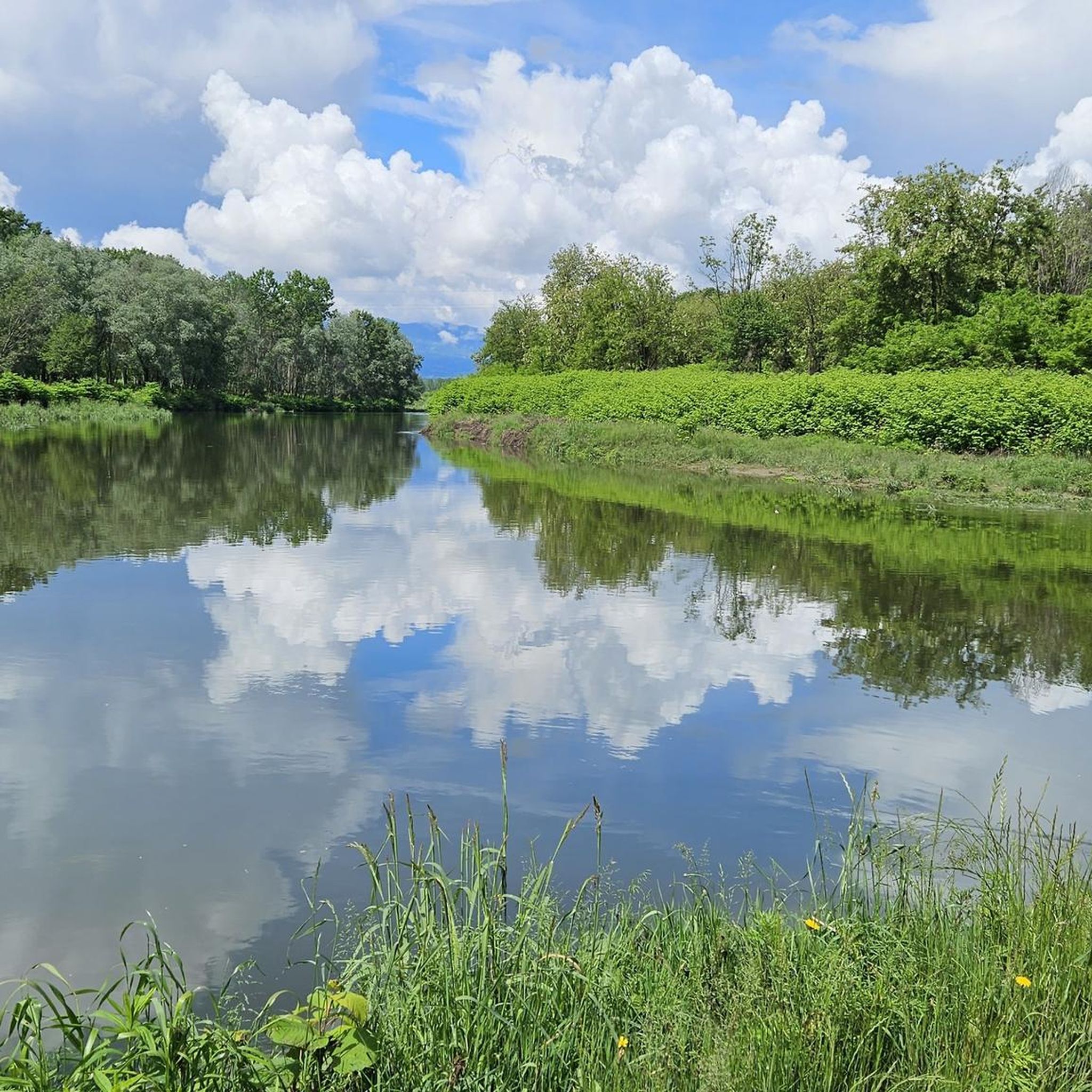
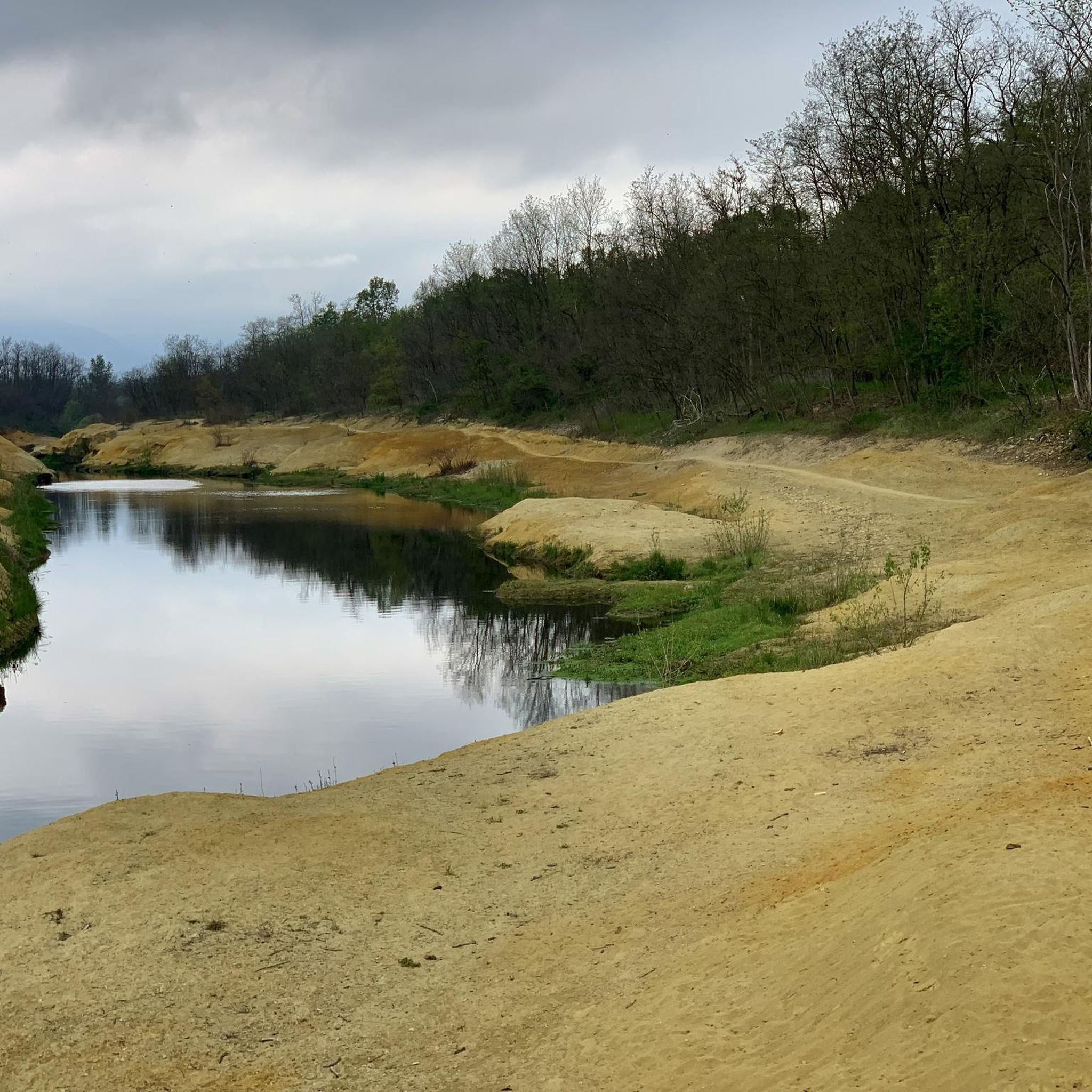
The Lame del Sesia park extends over an area of approximately 900 hectares along a stretch of almost 8 kilometers of the Sesia river, located between the provinces of Novara and Vercelli. The river environment, enriched by blades, meanders, bodies of water, woods, gravels and sands, constitutes an important natural oasis in stark contrast to the surrounding landscape characterized by rice monoculture.
2
0

Canale Cavour is a nineteenth-century structure which served for Piedmontese agricultural development, in particular for the cultivation of rice
0
0
The park extends for approximately 900 hectares on a stretch of almost 8 kilometers of the Sesia river, straddling the border between the provinces of Novara and Vercelli. The environment of the Lame del Sesia park is typically fluvial with blades, meanders, bodies of water, woods, gravels and sands. A natural oasis in stark contrast to the surrounding landscape characterized by the predominance of rice monoculture. For info and visits: https://www.parcoticinolagomaggiore.com/it-it/aree-protette/servizi/parco-naturale-delle-lame-del-sesia
2
0

In San Germano Vercellese, about 10 km east of Santhià, is the church of the same name, dedicated to Germanus of Auxerre (Saint Germain in French). Germanus is said to have been born in Auxerre around 378 and died in Ravenna on July 31, 448 (or as early as 437). He was a late antique bishop. Germanus came from a noble Gallo-Roman family from Burgundy. After studying law in Rome, he became a lawyer (advocatus) for the prefect of his hometown of Auxerre and possibly later also commander-in-chief (dux) of the Roman troops in his province. He later withdrew from political life, began a monastic and ascetic life, became a priest and in 418 Bishop of Auxerre. He was the teacher of St. Patrick, who later became the patron saint of Ireland, and worked against Pelagianism on a visit to the British Isles (429). Due to his military experience, he may have also been involved in military operations on the island. Together with his wife Eustochia he promoted monasticism in Gaul. In Christianity, Pelagianism is the teaching that human nature was not corrupted by original sin, but ultimately, as created by God, must be good if one does not want to assume that part of God's creation is evil. Source: Wikipedia
1
0
Frequently Asked Questions
What kind of natural attractions can I explore around Balocco?
The region offers diverse natural environments, particularly centered around the Sesia River. You can visit the Lame del Sesia Natural Park, a significant natural oasis with river environments, meanders, and woods, providing a stark contrast to the surrounding rice fields. Another notable spot is the Confluence of the Cavour Canal and the Sesia River, where you can observe an impressive hydraulic engineering work.
Are there any historical or cultural sites to visit in the Balocco area?
Yes, Balocco is rich in historical and cultural sites. The Church of San Germano Vercellese is a religious building with historical significance, featuring a dome designed by the notable Baroque architect Bernardo Vittone. You can also explore the ancient village of Olcenengo, known for its historical buildings, a unique fountain, and remnants of an 1100 castle. The Abbey of San Nazzaro, with its ancient bell tower and narthex, also offers a glimpse into the region's past.
What outdoor activities are available near Balocco's attractions?
The area around Balocco is excellent for various outdoor activities. You can find numerous routes for cycling, mountain biking, and hiking. For example, there are easy hiking loops from Albano Vercellese, or more challenging routes like the 'Sentiero Novara Stage 2: From Casaleggio to San Nazzaro'. For more options, check out the dedicated guides for Hiking around Balocco, Cycling around Balocco, and MTB Trails around Balocco.
Are there family-friendly attractions around Balocco?
Absolutely. The Lame del Sesia Natural Park is considered family-friendly, offering equipped and self-guided routes suitable for all ages to explore the river environment. The ancient village of Olcenengo also provides a pleasant setting for families to wander through its historic streets and discover its unique fountain.
When is the best time to visit the attractions around Balocco?
Many of the natural attractions, such as the Lame del Sesia Natural Park, are suitable for exploration throughout the year. The region's agricultural landscapes and river environments offer different charms with each season, from the lushness of spring and summer to the atmospheric winter fog that can shroud historical villages like Olcenengo.
What makes the Confluence of the Cavour Canal and the Sesia River a significant attraction?
This confluence is a remarkable example of 19th-century hydraulic engineering. It's where the Cavour Canal, built to support Piedmontese rice agriculture, flows for about 256 meters underneath the Sesia River via a siphon. It's a fascinating spot to observe the ingenuity behind the region's agricultural development.
Can I find easy walks or trails near Balocco?
Yes, the area around Balocco is known for offering opportunities for easy walks, particularly near its historical settlements and natural areas. The Hiking around Balocco guide lists several routes, including an easy hiking loop from Albano Vercellese, perfect for a relaxed stroll.
What is unique about the village of Olcenengo?
Olcenengo is an ancient village characterized by its slow-flowing irrigation canals and a unique blend of agriculture and craft businesses related to the rice sector. Its main square features a distinctive public fountain with a frog and a 'sgorgia' (blue heron), which has become a symbol of the town. You can also see parts of its 12th-century castle.
Are there any religious buildings of architectural interest?
The Church of San Germano Vercellese is a prime example, notable for its dome designed by Bernardo Vittone, a prominent Piedmontese late Baroque architect. Additionally, the Abbey of San Nazzaro is a complex with structures from various historical periods, including a bell tower that once served as a watchtower, showcasing centuries of architectural evolution.
What do visitors appreciate most about the Lame del Sesia Natural Park?
Visitors appreciate the Lame del Sesia Natural Park as a vital natural oasis. Its diverse river environment, with meanders, bodies of water, woods, gravels, and sands, offers a striking contrast to the surrounding rice monoculture. It's valued for its ecological significance and the opportunity to explore nature throughout the year.
Can I find any hidden gems or less-known spots around Balocco?
While not widely publicized, the Abbey of San Nazzaro offers a fascinating glimpse into medieval history. Its complex structure, including a bell tower built as a watchtower and a narthex made from Sesia river stones, reveals a rich past as a resting place for travelers and pilgrims. It's a less crowded site that provides a deeper historical context to the region.
Most popular routes around Balocco
Most popular attractions around Balocco

Get inspired with the komoot mobile app


Explore more
Still not found the Highlight you’re looking for? See guides of the top attractions in other regions:
