Attractions and Places To See around Carezzano - Top 20
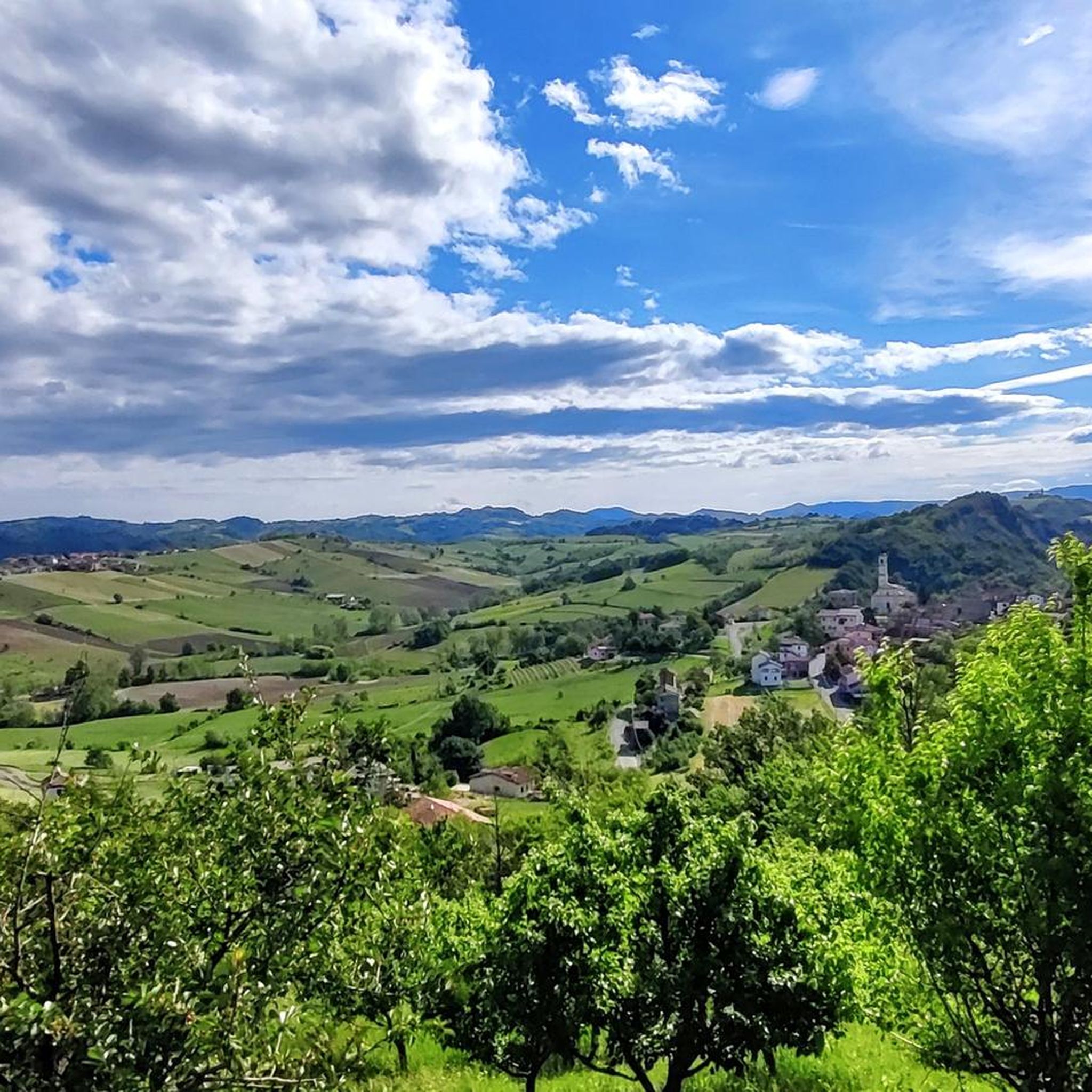
Best attractions and places to see around Carezzano include a blend of historical architecture and scenic natural features. This agricultural comune is situated on a hill southeast of Tortona, extending across the valleys of the Cornigliasca and Castellania rivers. Carezzano Maggiore and Carezzano Superiore feature well-preserved buildings from the 15th and 16th centuries, including an ancient episcopal palace. The region offers a tranquil setting and serves as a base for exploring wider historical and natural points of interest.
Best attractions…
Last updated: October 9, 2026
Mural of Il Quarto Stato by Giuseppe Pellizza da Volpedo
Highlight • Monument
Translated by Google •
Tip by

Monte San Vito Summit
Highlight • Summit
Translated by Google •
Tip by

Sign up now to discover places like this
Get recommendations on the best single tracks, peaks, & plenty of other exciting outdoor places.
Romanesque Parish Church of Santa Maria Assunta
Highlight • Religious Site
Translated by Google •
Tip by

Medieval Towers of Sant'Alosio
Highlight • Historical Site
Translated by Google •
Tip by
Dongione of Carbonara Scrivia
Highlight • Castle
Translated by Google •
Tip by

Sign up for free to discover even more attractions around Carezzano.
Already have an account?
Start today with a free account
Your next adventure awaits.

Tips from the Community

Traversing the Via Postumia, I crossed this square, only a copy of the original but still exciting.
1
0

"The Fourth Estate" (1901) by Giuseppe Pellizza da Volpedo is a famous oil on canvas depicting a march of laborers, set in Piazza Malaspina in Volpedo (Alessandria). A symbol of workers' struggle, the work combines Pointillist technique and social themes. It is now housed at the Museo del Novecento in Milan.
4
0

Small but evocative, this Romanesque parish church still retains part of its original medieval architectural structure.
0
0

The castle of Carbonara Scrivia dates back to the 14th century or early 15th century, according to some documents found. The typical construction called "dongione" was built by Pierino Cameri on a previous property owned by the Curolo family, lords of Carbonara, who declined starting from 1246.
0
0
Quarto Stato Volpedo Square
2
0

Volpedo has been included in the club of the most beautiful villages in Italy. It is famous for being the birthplace of the painter Giuseppe Pellizza, author of the famous The Fourth Estate, which became a symbol of the workers' question, starting from the 19th century onwards with the second industrial revolution.
3
0
Natural-size reproduction of the famous painting by Giuseppe Pellizza da Volpedo. Built between 1898 and 1901 and became a symbol of the workers' question, starting from the 19th century onwards with the second industrial revolution. Since July 2022 it has been preserved in the Gallery of Modern Art in Milan.
3
0

The 14th century fortress of Carbonara Scrivia boasts the so-called "Dongione", built by Pierino Cameri. In addition to the dungeon, the defensive system of Carbonara Scrivia consisted of a fortified enclosure or castle, a moat and two access gates.
3
0
Frequently Asked Questions
What historical sites can I explore in and around Carezzano?
Carezzano and its surroundings are rich in history. Within the village, you can find the ancient
Episcopal Palace and other well-preserved 15th and 16th-century buildings in Carezzano Maggiore and Carezzano Superiore. Nearby, don't miss the Romanesque Parish Church of Santa Maria Assunta, an 11th-century example of Romanesque art. Other notable historical sites include
Castello Pozzolo Formigaro with its 15th-century frescoes, the ruins of the 10th-century
Castello di Cassano, the 13th-century Medieval Towers of Sant'Alosio offering panoramic views, and the 14th-century
Dongione of Carbonara Scrivia.
Are there any family-friendly attractions in the Carezzano area?
Yes, several attractions around Carezzano are suitable for families. The Mural of Il Quarto Stato by Giuseppe Pellizza da Volpedo is a significant cultural site that can be enjoyed by all ages, offering a glimpse into art and history. The Piazzetta Quarto Stato (Volpedo) is also a beautiful and quiet village to visit, with an open-air museum showcasing reproductions of Pellizza's works. The Romanesque Parish Church of Santa Maria Assunta is another historical site that families can explore.
What natural viewpoints or scenic spots can I find near Carezzano?
For magnificent views, head to the Monte San Vito Summit, the highest peak of the Tortona Hills. From its rocky crags, where an iconic cross stands at 684 meters above sea level, you can enjoy panoramic vistas. The Medieval Towers of Sant'Alosio also offer a 360° view of the surrounding valleys and hills from their summit esplanade.
What kind of outdoor activities can I do around Carezzano?
Carezzano is an excellent base for outdoor enthusiasts. You can explore various cycling routes, including cycling tours that take you through scenic landscapes. For mountain biking, there are challenging MTB trails, some of which were once used for the Garbagna enduro MTB race, particularly around Monte San Vito. Gravel biking is also popular, with several gravel routes available.
Are there hiking trails near Carezzano, and what are their characteristics?
Yes, hiking is a popular activity, especially around the Monte San Vito Summit. This area features a maze of tracks, some dedicated to hikers and others shared with bikers. While some paths can be steep and have crumbly surfaces, they offer rewarding views. The summit is accessible via CAI paths 124 and 139. For specific routes, you can explore the MTB Trails around Carezzano guide, as many are multi-use.
What is the best time to visit the attractions around Carezzano?
The region is generally pleasant for exploration during spring, summer, and early autumn. Specifically, the Romanesque Parish Church of Santa Maria Assunta is open for guided tours from May to September, every Sunday from 4 to 7 pm. For outdoor activities like hiking and cycling, the warmer months offer ideal conditions, though Monte San Vito can be enjoyed for its views during sunrise or sunset in good weather.
What are some lesser-known or 'hidden gems' to discover near Carezzano?
Beyond the main highlights, consider exploring the tranquil village of Volpedo, where the Piazzetta Quarto Stato offers a quiet, artistic experience. The
Museo Civico di Storia Naturale in Villa Gardella, though not always fully on public display, preserves the region's natural heritage and can be an interesting stop for those curious about local ecology. The ancient
Episcopal Palace in Carezzano Maggiore also offers a glimpse into the village's past as a significant feudal territory.
Are there any cultural or artistic monuments to see?
Absolutely. The most prominent artistic monument is the Mural of Il Quarto Stato by Giuseppe Pellizza da Volpedo, a full-size reproduction of the famous painting that symbolizes the workers' question. This reproduction is located in a village rich in art and history, offering a unique cultural experience. You can also visit the Piazzetta Quarto Stato (Volpedo) to see more large-format reproductions of Pellizza's works scattered throughout the village.
What do visitors enjoy most about the attractions around Carezzano?
Visitors particularly appreciate the blend of historical depth and natural beauty. The Monte San Vito Summit is highly rated for its magnificent panoramic views, especially at sunrise or sunset. The Romanesque Parish Church of Santa Maria Assunta is praised for its evocative simplicity and well-preserved medieval architecture. The Mural of Il Quarto Stato is considered very suggestive and a significant cultural highlight.
Are there any attractions that are wheelchair accessible?
Yes, the Mural of Il Quarto Stato by Giuseppe Pellizza da Volpedo is listed as wheelchair accessible, making it an inclusive cultural stop for visitors.
What kind of architecture can I expect to see in Carezzano?
Carezzano is known for its historic architecture, with well-preserved buildings dating back to the 15th and 16th centuries in both Carezzano Maggiore and Carezzano Superiore. The ancient
Episcopal Palace showcases medieval architecture. Further afield, the Romanesque Parish Church of Santa Maria Assunta is a fine example of 11th-century Romanesque art, characterized by its mixed use of brick and stone. The Medieval Towers of Sant'Alosio, with their square plan and local stone construction, also represent 13th-century defensive architecture.
Can I find any museums or cultural institutions in the vicinity?
Yes, the
Museo Civico di Storia Naturale (Civic Museum of Natural History) is located in the nearby Villa Gardella. Founded in 1974, it aims to preserve the region's natural heritage and houses a significant collection of materials, though not all may be on public display at all times.
Most popular routes around Carezzano
Most popular attractions around Carezzano

Get inspired with the komoot mobile app


Explore more
Still not found the Highlight you’re looking for? See guides of the top attractions in other regions:
