The best cycling routes around Simaba/Simala
4.6
(20)
145
riders
35
rides
Touring cycling around Simaba/Simala offers routes through a landscape characterized by ancient archaeological sites and expansive plateaus. The region features varied terrain, including areas with historical Nuraghe structures and geological formations like those associated with obsidian. Cyclists can expect a mix of rolling hills and flatter sections, providing diverse experiences. This area is suitable for exploring both cultural heritage and natural scenery by bike.
Best touring cycling routes around Simaba/Simala
- The most popular touring cycling route is The Nuraghe of…
Last updated: June 24, 2026
2
riders
57.2km
03:48
880m
880m
Hard bike ride. Very good fitness required. Mostly paved surfaces. Suitable for all skill levels.
4.8
(4)
31
riders
Hard bike ride. Very good fitness required. Mostly paved surfaces. Suitable for all skill levels.

Sign up for free
5.0
(2)
23
riders
Hard bike ride. Very good fitness required. You may need to push your bike for some segments of this route.
5.0
(1)
8
riders
25.1km
01:34
250m
250m
Moderate bike ride. Good fitness required. Mostly paved surfaces. Suitable for all skill levels.
11
riders
25.6km
02:29
560m
560m
Hard bike ride. Very good fitness required. You may need to push your bike for some segments of this route.
Get access to more routes and recommendations from other explorers.
Sign up for free
Already have an account?
Our route recommendations are based on thousands of hikes, rides, and runs completed by other people on komoot.
Start today with a free account
Your next adventure awaits.
Login or Signup
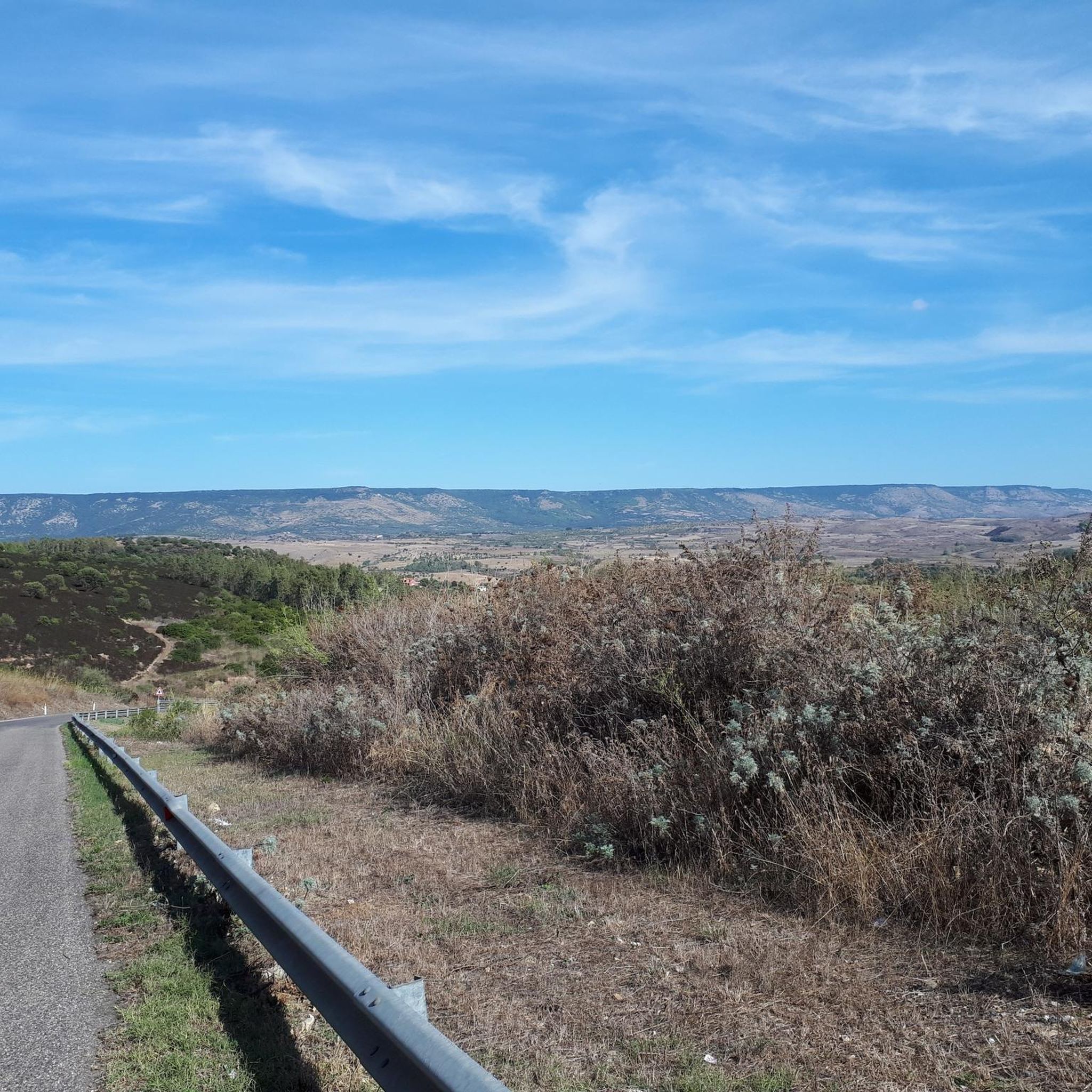
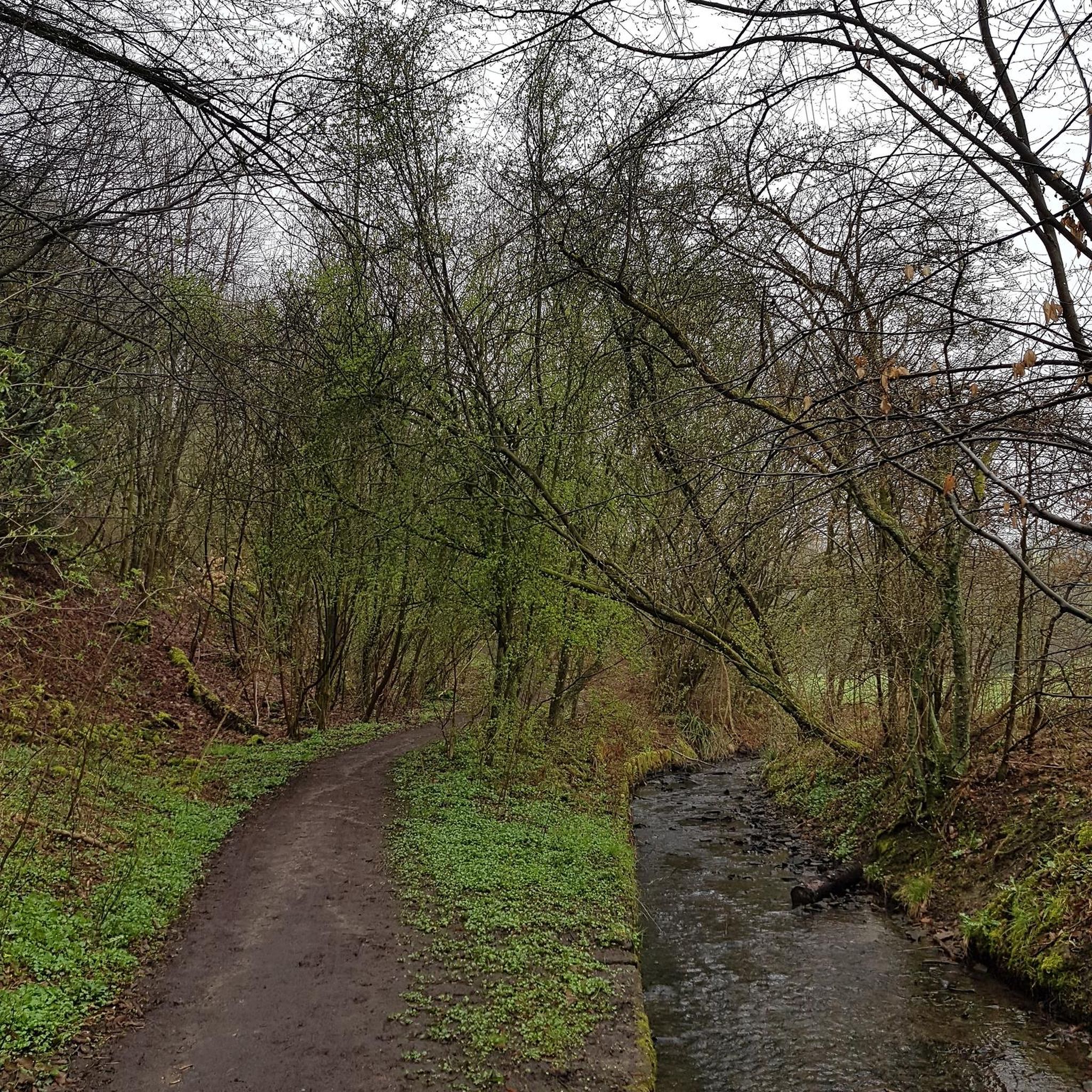
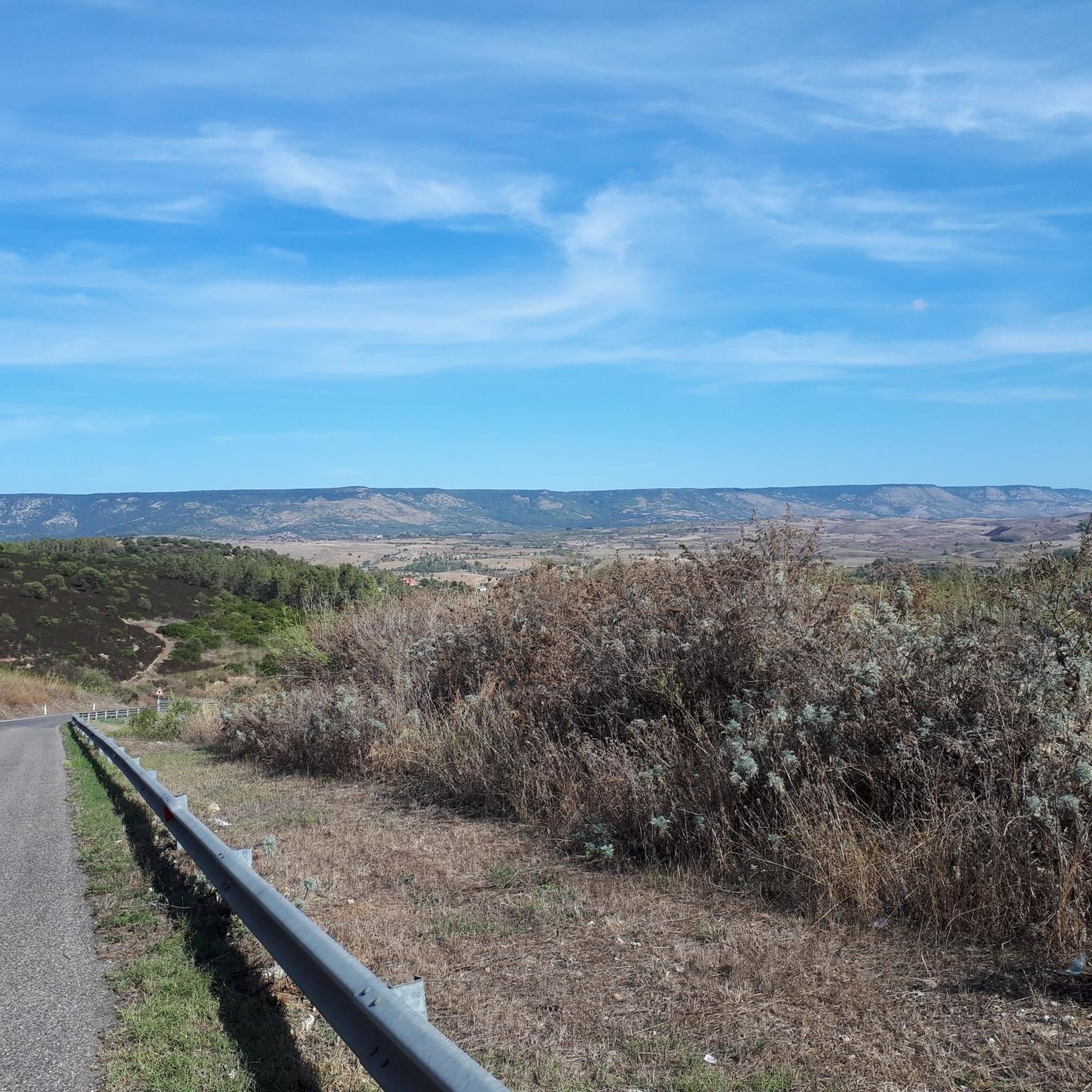

Tips from the Community

The Nuraghe San Marco stands on the eastern outskirts of Genuri, on the slopes of the southwestern side of the Jara Manna, the largest and most famous Giara. The basalt used to build the monument came from the plateau, which was also a source of food and resources for the peoples who inhabited the Marmilla region, while marl was used for the restoration work that took place in later phases. The building has a complex structure, consisting of a keep and three towers, and it is surrounded by a rampart with five other towers, except for the north side, perhaps because the builders considered the natural protection of the Giara plateau sufficient. Curiously, the southeast tower has a smaller diameter than the other two, while the northeast wall, which follows the profile of the central tower, has sometimes been interpreted as the wall of a fourth corner tower. In the space between the keep and the connecting curtain walls between the towers is a crescent-shaped courtyard, accessed through the entrance to the building on the south side. From the courtyard, which also contains a well, one enters the keep and the corridors leading to the side towers. Inside the keep, the space is cruciform, with two niches at the front and a third opposite the staircase. The northwest tower features six loopholes, two niches, and the absence of an entrance corridor. It opens directly onto the courtyard. Archaeological research has revealed that between the Late Bronze Age and the Late Bronze Age, a destructive event occurred, with relative collapse and subsequent rebuilding: San Marco probably witnessed a – still mysterious – period of crisis and conflict between the Nuragic tribes between the 2nd and 1st millennium BC. The site shows traces of human presence in the Punic period, and there was undoubtedly a settlement there between the late Roman period and the Early Middle Ages. At least eleven "new" rooms were built or added over the nuraghe, some of which probably served as food storage rooms, while the courtyard and towers were used for various purposes, sometimes even for burials. https://www.sardegnaturismo.it/en/explore/nuraghe-san-marco
0
0

Disused quarry, known by the name of "ziu Luisu". In the open air, there is also a tunnel closed by an iron gate. A little further on, on the right, a long descent begins that leads back to the country church of Santa Suia
0
0

Inside are exhibited reproductions of ancient obsidian tools, and the works of the sculptor Karmine Piras.
1
0

The Is Benas lake is located next to the pine forest of the same name. It is located in an arid area, between granite rocks.
0
0

Here is the Luisu Sanna Mine, an old perlite quarry that was once the beating heart of local mining activity.
1
0
The Therapeutic Community at Sorgenti, founded on April 28, 1988, is a residential facility that welcomes up to 24 adult male users. Located in one of the most suggestive places of Monte Arci, the facility is immersed in a vast pine forest, surrounded by woods, streams, a small lake and natural springs.
0
0


beautiful church in a truly evocative environment due to the wild nature that characterizes it
0
0
Frequently Asked Questions
How many touring cycling routes are available in Simaba/Simala?
There are over 25 touring cycling routes in the Simaba/Simala region, offering a variety of experiences from easy to difficult. The komoot community has explored these routes over 140 times.
Are there any easy touring cycling routes suitable for beginners in Simaba/Simala?
Yes, there is at least one easy touring cycling route available. The region offers a mix of terrain, including flatter sections, which can be suitable for those new to touring cycling. You can filter routes by difficulty on komoot to find the best fit for your skill level.
What kind of scenery can I expect on touring cycling routes in Simaba/Simala?
Touring cycling in Simaba/Simala offers a diverse landscape featuring ancient archaeological sites, expansive plateaus like the Giara di Gesturi, and rolling hills. You'll encounter historical Nuraghe structures and areas significant for obsidian, providing a blend of cultural heritage and natural beauty.
Are there any long-distance touring cycling routes in the Simala area?
Yes, several routes offer longer distances. For example, the Sa Tanca Manna loop from Abas/Ales is a difficult 57.7 km (35.9 miles) route, and The Nuraghe of Marmilla and the history of Obsidian - ring tour covers 57.2 km (35.5 miles).
Are there any circular touring cycling routes in Simaba/Simala?
Many of the touring cycling routes in Simaba/Simala are designed as loops. Examples include the popular Su Nuraxi Archaeological Site – Giara di Gesturi Plateau loop from Aressa/Baressa and the Bike loop from Abas/Ales.
What are some interesting landmarks or attractions to see along the touring cycling routes?
Along the routes, you can explore significant historical and natural sites. Highlights include the Giara Plateau Park, the Pinnettas Shepherd Huts, and the Pauli Maiori Wetland. You might also encounter the Monte Arci - Beda Manca Viewpoint for scenic vistas.
Are there any touring cycling routes that offer particularly scenic views?
Routes that traverse the Giara di Gesturi Plateau, such as the Su Nuraxi Archaeological Site – Giara di Gesturi Plateau loop from Aressa/Baressa, are known for expansive views. Additionally, routes around Monte Arci may offer elevated perspectives, like the Monte Arci - Beda Manca Viewpoint.
What do other touring cyclists say about the routes in Simaba/Simala?
The touring cycling routes in Simaba/Simala are highly rated by the komoot community, with an average score of 4.7 stars from over 20 reviews. Cyclists often praise the unique combination of ancient archaeological sites and the natural beauty of the plateaus and rolling hills.
Are there any moderate touring cycling routes in the Simaba/Simala area?
Yes, there are 12 moderate touring cycling routes available. An example is the Mogoro loop from Mòguru/Mogoro, which is 31.4 km (19.5 miles) long and typically takes about 2 hours to complete.
What is the best time of year for touring cycling in Simaba/Simala?
Given the Mediterranean climate of Sardinia, spring (April-May) and autumn (September-October) generally offer the most pleasant temperatures for touring cycling in Simaba/Simala, avoiding the intense heat of summer and the cooler, wetter winter months.
What should I wear for touring cycling in Simaba/Simala?
Layered clothing is advisable for touring cycling in Simaba/Simala, allowing you to adapt to changing temperatures throughout the day. Comfortable cycling shorts, a moisture-wicking top, and a light jacket are good starting points. Don't forget sun protection, including sunglasses and sunscreen, especially during sunnier months.
Are there any routes that pass by cafes or places to stop for refreshments?
While specific cafes are not detailed in route descriptions, many routes connect or pass through small towns and villages like Abas/Ales or Mòguru/Mogoro. These settlements typically offer opportunities to find local cafes or shops for refreshments and breaks.
Most popular routes around Simaba/Simala
Most popular attractions around Simaba/Simala

Get inspired with the komoot mobile app


Explore more
Browse the best Cycling routes in other regions.
