Attractions and Places To See around Ula/Ulà Tirso - Top 20
Best attractions and places to see around Ula/Ulà Tirso are found in the historical Barigadu region of Sardinia, Italy. The town is situated within a natural trachyte amphitheater on the left bank of the Tirso River, offering views and a history dating back to medieval times. The area features a blend of historical, cultural, and natural attractions, including archaeological sites and the vast Lake Omodeo.
Best attractions and places to see around Ula/Ulà Tirso
- The most popular attractions is Fordongianus…
Last updated: October 11, 2026
Fordongianus Roman Baths
Highlight • Historical Site
Translated by Google •
Tip by

Casa Aragonese
Highlight • Historical Site
Translated by Google •
Tip by

Sign up now to discover places like this
Get recommendations on the best single tracks, peaks, & plenty of other exciting outdoor places.
Tirso River and Stone Bridge in Fordongianus
Highlight • River
It rises as Riu de su Campo north of Bitti, in the province of Nuoro on the east side of the island, …
Translated by Google •
Tip by

Church of San Lussorio
Highlight • Religious Site
Translated by Google •
Tip by

Nuraghe Losa
Highlight • Historical Site
Translated by Google •
Tip by
Sign up for free to discover even more attractions around Ula/Ulà Tirso.
Already have an account?
Start today with a free account
Your next adventure awaits.

Tips from the Community

one of the most beautiful Nuraghe in Sardinia
0
0

It's worth a visit, the architecture is interesting and the audio guide gives you detailed information about what you see. Entrance to the baths is included in the price (or vice versa). So if you see one you can also see the other as they are just a few minutes drive or probably 5-10 minutes walk away
1
0
The Tirso is the longest river in Sardinia. It rises as Riu de su Campo north of Bitti, in the province of Nuoro on the east side of the island, flows through the Lago Omodeo reservoir and flows into Oristano on the west side of the island. In the middle reaches it is spanned by the Ponte Ezzu, an old Roman bridge, near Illorai. It is 150 km long and is only navigable in the last few kilometers. The fertile plain north of Oristano through which it flows is called the Tirso plain.
1
0
The Nuraghe Losa cult site is located on the Italian island of Sardinia near the municipality of Abbasanta on the SS 131 (“Carlo Felice”). It can be reached via a separate exit at kilometer 123.
2
0

The pretty church was built from red trachyte. It is named after San Lussorio, a Roman soldier who was converted to Christianity. He suffered his martyrdom here during the persecution of Christians under Diocletian. In the 4th century, an underground tomb was built in his honor, which today forms the church's crypt. The Romanesque-style church was built in the 12th century by Vittorini monks who made it their mission to enhance the sites of martyrs. The church was actually closed, but after a call a nice lady came by and opened the small area for us.
0
0

The Aragonese House is a splendid example of stately architecture dating back to around the 16th-17th century. The house is divided into two parts and one of these houses a museum. Not far from here stands the church of San Pietro Apostolo.
1
0
After crossing the high threshold, three corridors lead to as many chambers covered with tholos (mock domes). The mastio, still 13 meters high today but originally higher, has a "classic" structure: large main chamber with three niches arranged in the shape of a cross. A spiral staircase that once went to the top leads clockwise to the upper small chamber. All around are the three small towers with high, narrow chambers connected to each other by the masonry that surrounds the whole structure. It also includes three wells that were used to store food reserves or other materials. The main tower and the triangular bastion are surrounded by a long, massive oval wall with doors and two cantilevered small towers, the walls of which are interrupted by notches. The outer masonry extends north and west at the back and is also provided with a narrow passage. At the base of the small western tower is a cistern. In front of the entrance to the facade, on the other hand, an imposing round building can be viewed, which probably fulfilled important functions - perhaps it was the assembly hut - as two opposite entrances, two large niches, four lockers and five notches suggest. Only a small part of the extensive surrounding settlement, which covers 3.5 hectares, has been excavated. In various places there are still remains of Nuragic dwellings and especially houses from the late Punic period, the period of the Roman Republic and the Empire as well as the late Roman and Byzantine periods. Source: https://www.sardegnaturismo.it/en/discover/nuraghe-losa
0
0
The original name Nurache ‘e losas means “nuraghe of tombs” and refers to the Roman burial urns carved into the rock on the edge of this site. The unmistakable outlines of the Nuraghe Losa stand out on the basaltic plateau of Abbasanta, five kilometers from the small town in the Oristano area. Strolling around the massive, solid, flat structure, whose plan is in the form of an equilateral triangle, perspectives that seem like the front part of a ship's prow catch the eye. It is one of the most impressive and striking symbols of Nuragic architecture... It is distinguished by its articulated design, compact volume and fine masonry technique. The remains of an extensive settlement embedded in the green Mediterranean maquis have been preserved around the nuraghe. It bears testimony to the millenary history of this site, from the Nuragic period to the Roman era and, when it was used as a burial place, to the High Middle Ages (7th-8th centuries). The complex, built entirely of large blocks of basalt, consists of a trefoil nuraghe dating from the Middle Bronze Age (15th-14th centuries BC), a protective masonry and the remains of a village with round huts dating from the Late Bronze Age to the Iron Age were erected (13th-9th centuries BC). At the entrance one notices that this huge compact mass - the secret of good construction - also has large spaces. But not the uncovered courtyard, so characteristic of most complex nuraghi, but which has probably been replaced in function by outdoor spaces. The nuraghe is accessed via two elevated entrances compared to the surrounding land, and via a straight corridor to the original central tower (mastio) in the shape of a truncated cone, as well as to the two side towers. The rear tower, on the other hand, is accessible via a secondary entrance. You will walk through the chiaroscuro of the corridors, breathe in the smell of the moss-covered stones and immerse yourself in the mythical Nuragic age.
0
0
Frequently Asked Questions
What historical sites can I explore in and around Ulà Tirso?
The region is rich in history. You can visit the ancient Fordongianus Roman Baths, which are still fed by naturally flowing warm waters. Also, explore the 16th-17th century Casa Aragonese, which houses a museum. Other notable sites include the Gothic-Aragonese Church of Sant'Andrea, the Santa Chiara Dam and Old Hydroelectric Plant, and various archaeological sites ranging from prehistory to the Roman Era, including a significant Roman necropolis.
Are there any natural attractions or scenic landscapes to discover?
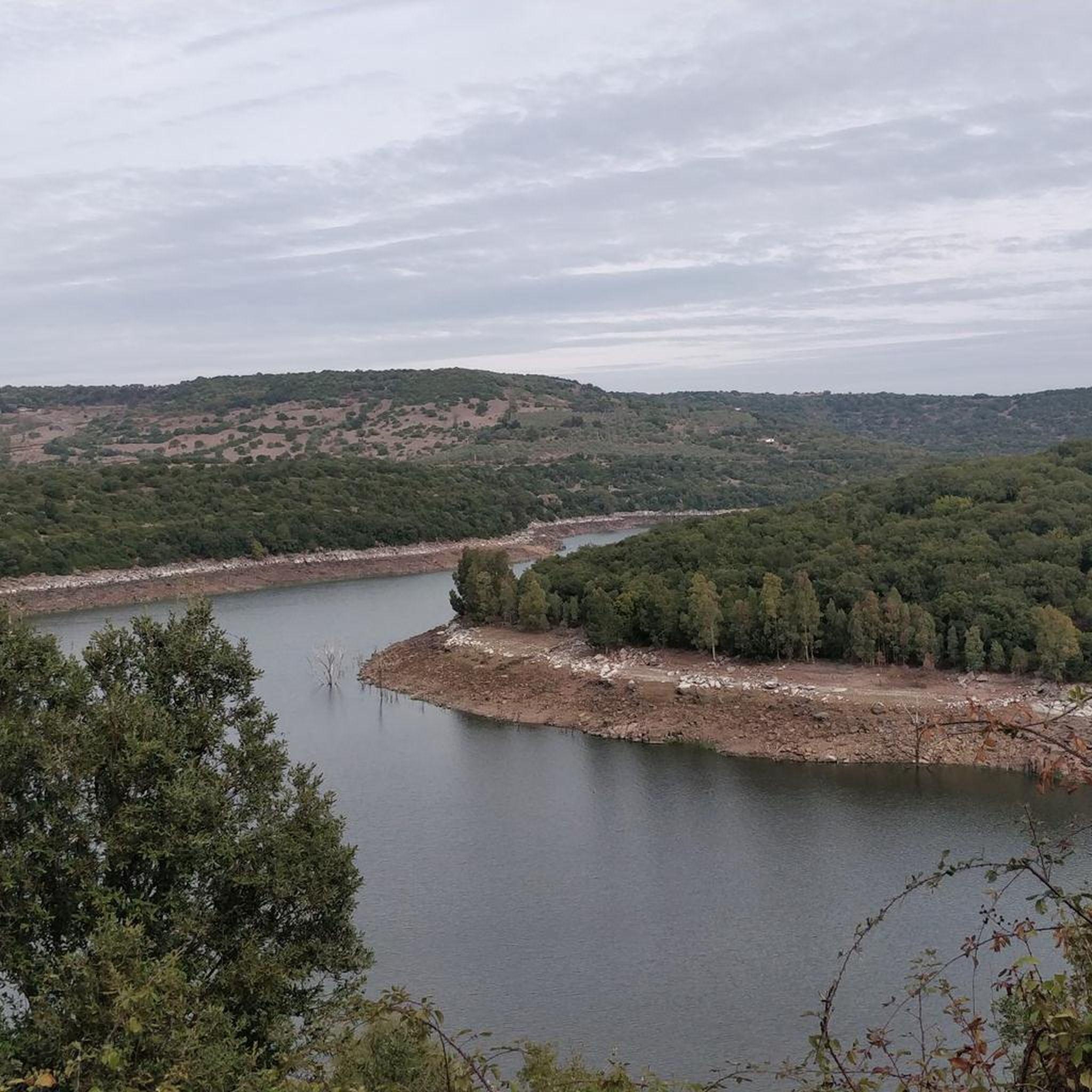
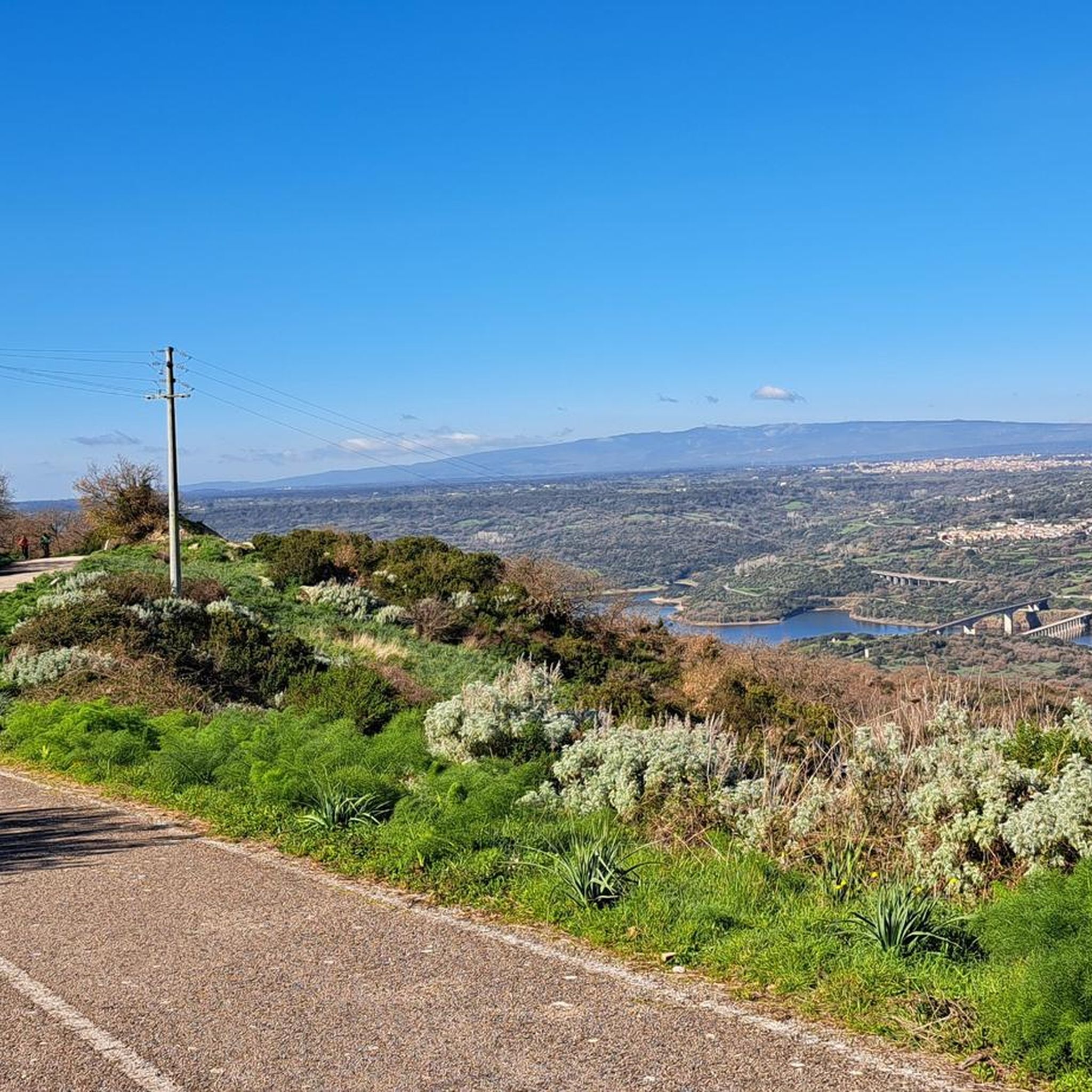
Absolutely. Ulà Tirso is nestled within a natural trachyte amphitheater, offering picturesque views of the Tirso valley. The vast Lake Omodeo, formed by the Santa Chiara Dam, is a significant natural feature. You can also experience the Tirso River, Sardinia's longest river, which flows through the Lake Omodeo reservoir and is crossed by an ancient Roman bridge further upstream.
What kind of outdoor activities can I do near Ulà Tirso?
The area around Ulà Tirso offers various outdoor activities. You can find numerous routes for hiking, running, and mountain biking. For hiking, consider routes like the easy 'Casa Aragonese – Roman Baths of Fordongianus loop' or the moderate 'Sa Crabarissa Rock Formation loop'. Mountain biking enthusiasts can explore challenging trails such as 'Da Nughedu Santa Vittoria tra corbezzoli, nuraghe e la roccia “Sa Crabarissa”'. For more details on these and other trails, visit the Hiking around Ula/Ulà Tirso, Running Trails around Ula/Ulà Tirso, and MTB Trails around Ula/Ulà Tirso guides.
Are there family-friendly attractions in the area?
Yes, several attractions are suitable for families. The Casa Aragonese offers an interesting architectural visit with a museum. The Tirso River and Stone Bridge in Fordongianus provides a scenic spot for a leisurely walk. Additionally, the San Pietro Apostolo Church in Fordongianus is a beautiful historical site that families can appreciate.
Where can I learn about local traditions and craftsmanship?
You can gain insights into local traditions and craftsmanship at the Museum of Traditional Costume and Linen Processing (Museo del costume tradizionale e della lavorazione del lino) in Ulà Tirso. This museum showcases the rich cultural heritage of the region.
What archaeological discoveries can be found near Ulà Tirso?
The area is a treasure trove of archaeological finds. Beyond the Roman necropolis, ancient settlements were uncovered in Orruinas and Sos Contones along the Tirso river. Lake Omodeo itself conceals a fossil forest dating back 20 million years and significant archaeological emergencies, including a pre-Nuragic settlement, 'domus de janas,' and giants' tombs.
Are there any notable churches to visit in Ulà Tirso?
Ulà Tirso is home to several significant churches. The Gothic-Aragonese Church of Sant'Andrea, built with trachyte in the 17th century, features a beautiful rose window and a bell tower offering panoramic views. Other historical churches within the town include Santa Croce and Santa Chiara. Nearby, you can also visit the Church of San Lussorio, built from red trachyte, which has an underground tomb forming its crypt.
What is the significance of the Santa Chiara Dam?
The Santa Chiara Dam is a monument of industrial archaeology. Built in 1923, it created Lake Omodeo, which was once Europe's largest artificial body of water. Ulà Tirso was the first town in Sardinia to utilize electricity from its hydroelectric plant, which visitors can tour. The dam itself is an impressive structure, 270 meters long and 70 meters high.
What are some popular hiking trails near Ulà Tirso?
For hikers, popular routes include the 'Casa Aragonese – Roman Baths of Fordongianus loop' which is an easy 6.4 km trail, and the 'Casa Aragonese – Camper Area Near Roman Baths loop' which is a moderate 14.1 km route. You can find more hiking options and details in the Hiking around Ula/Ulà Tirso guide.
Can I find any hidden gems or unique natural features in the area?
Beyond the main attractions, the region offers unique natural features. The town's setting within a natural trachyte amphitheater is quite distinctive. The Tirso River, flowing through wild natural landscapes, and the ancient Roman bridge Ponte Ezzu further upstream, offer serene and less-traveled spots. The archaeological treasures hidden beneath Lake Omodeo, like the fossil forest, also represent a unique natural and historical wonder.
What are some day trip options from Ulà Tirso?
From Ulà Tirso, you can easily take day trips to explore more of central Sardinia. Consider visiting the Nuraghe Losa in Abbasanta, a significant Nuragic archaeological complex, or the Sacred Well of Santa Cristina in Paulilatino. For cultural insights, the Casa Museo di Antonio Gramsci in Ghilarza and the MURATS - Museo Unico Regionale Arte Tessile Sarda in Samugheo are also excellent choices.
What do visitors enjoy most about the attractions around Ulà Tirso?
Visitors particularly appreciate the blend of history and nature. The ancient remains of the Fordongianus Roman Baths, with their naturally flowing warm waters, are a highlight. The architecture of the Casa Aragonese and its museum also receive positive feedback. Many enjoy the scenic beauty of the Tirso River and Stone Bridge, noting its idyllic flow and the reddish trachyte blocks.
Most popular attractions around Ula/Ulà Tirso

Get inspired with the komoot mobile app


Explore more
Still not found the Highlight you’re looking for? See guides of the top attractions in other regions:
