Attractions and Places To See around Siamajori/Siamaggiore - Top 20
Attractions and places to see around Siamajori/Siamaggiore offer a blend of historical sites, cultural experiences, and access to natural beauty. Situated in the low valley of the Tirso River, the region features fertile plains and an agricultural landscape. The town itself provides a glimpse into its long history with traditional rural architecture. Many significant attractions are located nearby, particularly in the city of Oristano, approximately 8 to 9 kilometers away.
Best attractions and places to see around Siamajori/Siamaggiore
- The most…
Last updated: August 31, 2026
Cathedral of St. Mary of the Assumption
Highlight • Religious Site
Translated by Google •
Tip by

Portixedda Tower
Highlight • Historical Site
Translated by Google •
Tip by

Sign up now to discover places like this
Get recommendations on the best single tracks, peaks, & plenty of other exciting outdoor places.
Sign up for free
Church of San Francesco (Oristano)
Highlight • Religious Site
Translated by Google •
Tip by

Arcais Palace
Highlight • Historical Site
Translated by Google •
Tip by
Torre Grande
Highlight • Monument
Translated by Google •
Tip by

Sign up for free to discover even more attractions around Siamajori/Siamaggiore.
Sign up for free
Already have an account?
Start today with a free account
Your next adventure awaits.
Login or Signup



Tips from the Community

Beautiful baroque cathedral with a separate bell tower.
1
0

Ideal starting point for Gravel and mountain bike rides (many paths that bypass the paved roads) to do the coastal path from Putzu Idu to Capo San Marco
0
0

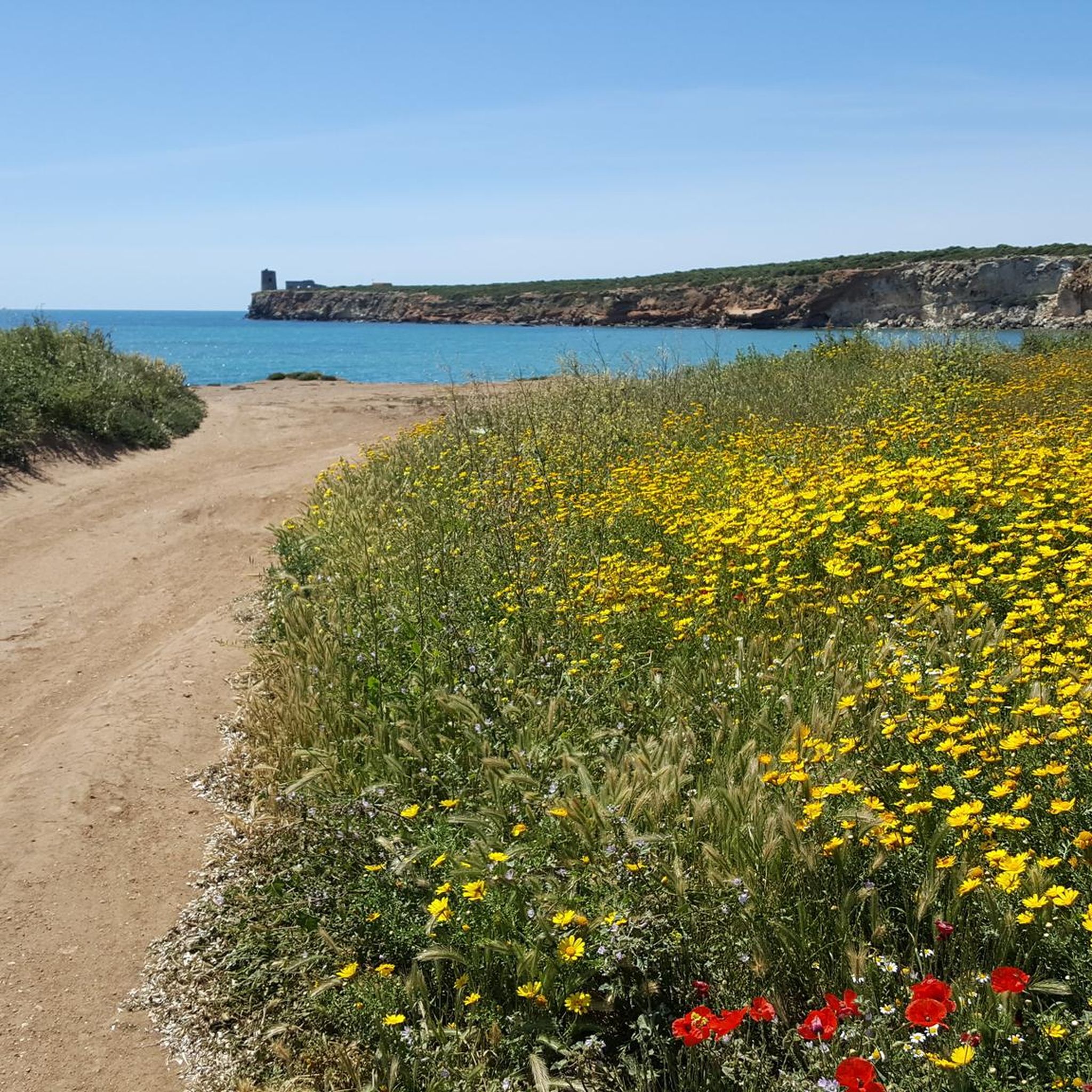
The Torre Grande is the largest Spanish tower in Sardinia, built between 1542 and 1572. This town is lively thanks to the presence of clubs, bars, concerts, shows, restaurants, festivals, exhibitions and markets. The tower represents the main legacy of Spanish domination in Sardinia, and the nearby town of Oristano also shows extensive traces of fortifications, both medieval and Aragonese. This area is one of the places where the Spanish most influenced construction on the island.
2
0

A cathedral, so for Hamburgers: no carousels and beer, just church and stuff. Beautifully colorful inside.
3
1

nice square outside a pleasant baroque cathedral with a couple of gothic vestiges
4
0

The Franciscan Order has been present in Sardinia since 1230, and the monastery of San Francesco was founded in Oristano as early as 1253. There is no documentary evidence of the Gothic construction of the church. By the early 19th century, it was in serious disrepair, so Archbishop Giovanni Maria Bua decided to rebuild it from scratch rather than restore it. Thus, it was destroyed in 1835, and on February 17 of the following year, the foundation stone of the new church was blessed. It was designed by the Sassari friar Antonio Cano, a royal protégé who had studied at the Accademia di San Luca in Rome. The building collapsed on September 18, 1838, before the dome was completed. From the surviving survey of the church-monastery complex and its surroundings, it can be deduced that the dome had an elliptical shape, as is typical for Cano's works. Shortly thereafter, the task was assigned to the most important Sardinian architect of the 19th century, Gaetano Cima of Cagliari. The project, submitted on September 18, 1841, was approved on April 22, 1842, and work then began. The building, rebuilt according to the forms of purist classicism, reopened for worship in October 1847. The current building has a central plan with two chapels on each side and a deep semicircular apse. From the left chapel, a small room leads to the sacristy. The façade, accessible via a wide staircase with eight steps, is preceded by a tympanum-pronaos supported by four columns and two pilasters. All supports are surmounted by Ionic capitals. The façade features a large central portal and two smaller symmetrical side portals. The central body of the building is covered by a large hemispherical dome, standing on a cylindrical drum and surmounted by a polygonal lantern. Source and further information: http://www.sardegnacultura.it/j/v/253?v=2&c=2488&t=1&s=18322
1
0
The first document that testifies to the existence of the church dedicated to Santa Maria dates from February 20, 1192. In 1195 the cathedral and the entire city were set on fire and sacked by the troops of the magistrate of Cagliari Guglielmo de Lacon-Massa. The cathedral was badly damaged during the military occupation of the city and in 1228 reconstruction began. The pointed arch building, written documents and two bronze knockers on the portal bear witness to this. In the first half of the 14th century, the Romanesque structure of the Duomo was modified... The transept and the first bell tower were part of the 1300 extension, whose colored majolica dome was only added in the 18th century. In the will of King Hugh II of Arborea of April 4, 1335, the ruler mentions the place where he wanted to be buried: in the Church of the Virgin Mary of Oristano and precisely in the Chapel of San Bartolomeo, which still needs to be completed . Further extensions may have taken place between 1336 and 1349, as the grave of the legal adviser Filippo Mameli, who died in 1349, suggests. During an invasion of French militias that took place on February 25, 1637, the city of Oristano, the churches and especially the cathedral were looted and badly damaged. With the arrival of Sardinian troops from Cagliari and Sassari, the French soldiers decided to leave the city on February 28th to embark again. Pursued by the Sardinian military, the French left behind two pieces of artillery, eleven boats, thirty-six prisoners and eight banners, four of which are preserved on the wall of the main entrance of Oristano Cathedral. The current cathedral, built in the years 1729-1745 to an elegant Piedmontese Baroque design, houses the chapel with the relics of Sant'Archelao, patron saint of the city and the diocese. Source and more information: https://www.comune.oristano.it/it/amministrazione/luoghi/luogo/Cattedrale-di-Santa-Maria-Assunta/
2
1
The palace owes its name to the noble title of Don Damiano Nurra Conca, to whom the Savoy king Carlo Emanuele III granted the title of Marquis of Arcais with a diploma dated August 23, 1767. The title Arcais derives from the name of two fishponds, Arcai Mannu and Arcai Pittiu near Zerfaliu, part of the Marquis's real estate assets. The wealthy landowner from Oristano, who learned of the plan to populate the Sinis peninsula by the Kingdom of Savoy to better defend the Gulf of Oristano, always threatened by barbarian invasions, asked the same Viceroy of Sardinia, Alfieri di Cortemiglia, the enfeoffment of the territory by proposing to pay 216,000 Piedmontese lire, equivalent to 254,000 Sardinian scudi. Don Damiano Nurra Conca's residence was built in Corso Umberto, in the heart of the city. His generosity also contributed to the construction of a church and convent, donated to the Carmelite Order on April 27, 1782. The Latin inscription found in the Church of the Carmel indicates the place where Don Damiano Nurra d'Arcais was buried on June 15, 1790. The building has an austere façade, slightly enlivened by the sculpted expositions in red trachyte stone; a decidedly more frivolous touch is given instead by the semicircular balconies that decorate the openings on the ground floor. A bell-shaped dome illuminates the internal staircase, which forks after the first ramp and leads to the upper floors of the building. Currently, the building belongs to the Provincial Administration of Oristano. Source: https://www.comune.oristano.it/it/amministrazione/luoghi/luogo/Palazzo-Arcais/
0
0
Frequently Asked Questions
What historical and cultural sites can I explore in and around Siamajori/Siamaggiore?
Siamajori/Siamaggiore itself offers a charming historic center with traditional rural architecture, the 18th-century Parish Church of San Costantino, and the Romanesque-origin Rural Church of San Ciriaco. Nearby, in Oristano, you can visit the impressive Cathedral of St. Mary of the Assumption, the medieval Portixedda Tower, the Church of San Francesco (Oristano), and the historic Arcais Palace. Further afield, the ancient Phoenician and Roman archaeological site of Tharros on the Sinis Peninsula is also a significant historical attraction.
Are there any natural attractions or features to see near Siamajori/Siamaggiore?
Yes, Siamajori/Siamaggiore is situated in the low valley of the Tirso River, the largest river on Sardinia, which contributes to the area's fertile plains and agricultural landscape. The region offers scenic, unspoiled natural surroundings. A unique natural feature nearby is Spiaggia di Is Arutas, known for its distinctive 'rice grain' quartz sand.
What outdoor activities, like hiking or cycling, can I do near Siamajori/Siamaggiore?
The region around Siamajori/Siamaggiore provides various opportunities for outdoor enthusiasts. You can find numerous trails for hiking, mountain biking, and running. For hiking, consider routes like 'The center of Oristano' or a moderate loop from Oristano to Torre Grande. Mountain biking options include routes around the Grighine forest or coastal paths from Oristano. For more details on routes, you can explore the Hiking around Siamajori/Siamaggiore, MTB Trails around Siamajori/Siamaggiore, and Running Trails around Siamajori/Siamaggiore guides.
Are there family-friendly attractions or activities in the area?
Many of the historical sites are suitable for families, such as the Cathedral of St. Mary of the Assumption and the Portixedda Tower in Oristano, which are categorized as family-friendly. The Torre Grande, a large Spanish tower, is also a family-friendly spot, offering a lively atmosphere with clubs, bars, and events, especially in the evenings. Exploring the historic center of Siamajori/Siamaggiore itself can be a pleasant family activity.
What is the best time of year to visit Siamajori/Siamaggiore?
The region offers attractions year-round. For cultural events, consider visiting in mid-March for the Artichoke Festival (Sagra del Carciofo), or on April 23rd for the feast day of San Costantino, and August 8th for San Ciriaco. The pleasant weather during spring and early autumn is ideal for exploring historical sites and engaging in outdoor activities like hiking and cycling.
What is the significance of the agricultural landscape around Siamajori/Siamaggiore?
The area around Siamajori/Siamaggiore is known for its highly productive agricultural land, primarily cultivating wheat, barley, legumes, and vegetables. Viticulture is also important, contributing to the production of Vernaccia wine. This agricultural heritage is deeply intertwined with the local culture and economy, offering a glimpse into traditional Sardinian life.
Can I find any unique local festivals or events in Siamajori/Siamaggiore?
Yes, Siamajori/Siamaggiore hosts a notable Artichoke Festival (Sagra del Carciofo) in mid-March, celebrating the local artichoke production with typical dishes, conferences, and cultural activities. Additionally, the town celebrates the feast day of its patron saint, San Costantino, on April 23rd, and San Ciriaco on August 8th, often with local festivities.
What do visitors enjoy most about the attractions around Siamajori/Siamaggiore?
Visitors appreciate the blend of historical depth and natural beauty. The Cathedral of St. Mary of the Assumption is noted for its beautiful and colorful interior. The Torre Grande is highlighted as an ideal starting point for gravel and mountain bike rides along the coast. The historical sites, religious buildings, and natural features collectively offer a diverse and enriching experience, as evidenced by the community's positive feedback and shared photos.
Are there any ancient defensive structures to visit?
Yes, the area is rich in ancient defensive structures. In Oristano, you can explore the Portixedda Tower, a 13th-century structure that was part of the city walls. The Torre Grande is another significant example, being the largest Spanish tower in Sardinia, built between 1542 and 1572 to protect the Gulf of Oristano.
How far is Oristano from Siamajori/Siamaggiore, and what does it offer?
Oristano is approximately 8-9 kilometers from Siamajori/Siamaggiore, making it easily accessible. It offers a wealth of historical and cultural sites, including the Cathedral of St. Mary of the Assumption, the Portixedda Tower, the Church of San Francesco (Oristano), and the Arcais Palace. Oristano serves as a central hub for exploring the wider region's attractions.
Are there any archaeological sites in the vicinity?
Yes, a significant archaeological site in the wider area is the Sacred Well of Santa Cristina and the Parco Archeologico Naturalistico di Santa Cristina, offering insights into ancient Sardinian history. Additionally, the ancient Phoenician and Roman archaeological site of Tharros, located on the Sinis Peninsula, is a short distance away and features extensive ruins with sea views.
What kind of architecture can I expect to see in Siamajori/Siamaggiore?
Siamajori/Siamaggiore's historic center is characterized by traditional rural architecture. You'll find low houses with spacious courtyards and narrow streets, many constructed from 'ladiri' (mud bricks), offering a glimpse into the village's long history and agricultural heritage. The Parish Church of San Costantino is a notable example of late-Baroque architecture.
Most popular routes around Siamajori/Siamaggiore

Get inspired with the komoot mobile app


Explore more
Still not found the Highlight you’re looking for? See guides of the top attractions in other regions:
