The best road cycling routes around Schönbach
4.5
(45)
475
riders
74
rides
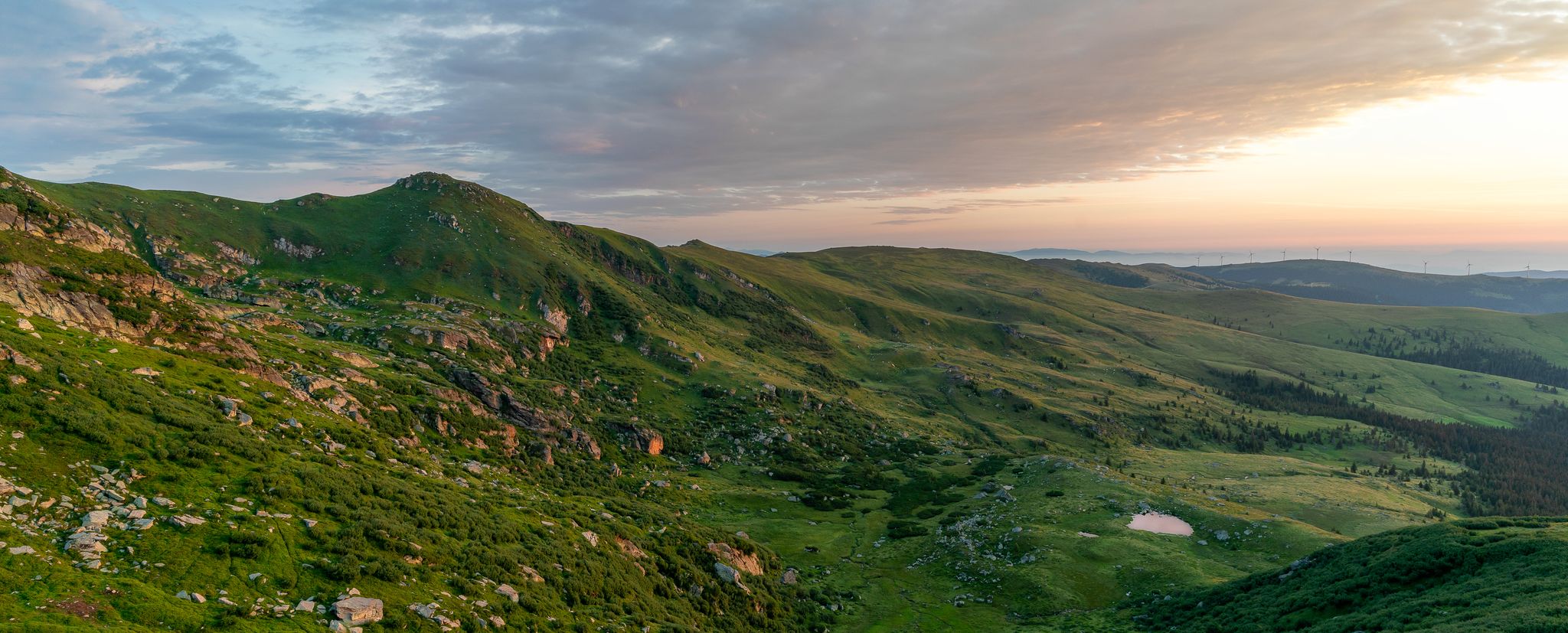
Road cycling around Schönbach features a landscape characterized by rolling hills and forested areas, with routes often including significant elevation changes. The region's terrain offers a mix of moderate climbs and descents, providing varied challenges for road cyclists. Many routes traverse rural roads, connecting small towns and historical sites. The area is defined by its natural undulations and green expanses, suitable for extended rides.
Best road cycling routes around Schönbach
- The most popular road cycling route is Franzosenstein – Drei-König-Wegscheid…
Last updated: July 2, 2026
5.0
(1)
12
riders
34.7km
01:51
630m
630m
Moderate road ride. Good fitness required. Mostly well-paved surfaces and easy to ride.
5.0
(2)
10
riders
Moderate road ride. Good fitness required. Mostly well-paved surfaces and easy to ride.

Sign up for free
3.3
(6)
9
riders
28.5km
01:31
520m
520m
Moderate road ride. Good fitness required. Mostly well-paved surfaces and easy to ride.
5.0
(1)
5
riders
74.3km
03:47
1,160m
1,160m
Hard road ride. Very good fitness required. Mostly well-paved surfaces and easy to ride.
9
riders
Moderate road ride. Good fitness required. Mostly well-paved surfaces and easy to ride.
Get access to more routes and recommendations from other explorers.
Sign up for free
Already have an account?
Our route recommendations are based on thousands of hikes, rides, and runs completed by other people on komoot.
Start today with a free account
Your next adventure awaits.
Login or Signup
Other adventures around Schönbach

Tips from the Community

Highest mountain pass road in Upper Austria is in Liebenau
0
0

Arbesbach Castle is a top highlight that you should definitely plan a visit to. Even from a distance, you can recognize the so-called "Waldviertel's fang" (Stockzahn des Waldviertels). Once you arrive at the site, 126 steps lead up to the entrance where admission (currently €2.50) is payable in coins or by card. Then it continues inside upwards to the platform, which offers a fantastic view. There is also a circular path around the tower, which however requires some surefootedness and suitable shoes.
0
0

The local authorities succeeded in persuading the master artist Hundertwasser to design and construct a fountain in the main square. The presentation of the fountain model met with both widespread approval and vehement opposition from the residents of Zwettl. In 1994, the fountain, consisting of three main elements—the two fountain columns with basins and the pavilion—was unveiled to the public. Since then, it has been a popular meeting place in the heart of the town. Friedensreich Hundertwasser died in February 2000 at the age of 71.
0
0
Until the end of the 19th century, a monumental fountain stood in the middle of the main square, the terminus of Zwettl's oldest water supply system, dating back to the early 17th century; a place where the population gathered, not just to fetch water. A war memorial was erected here in 1925, and from the mid-20th century onward, the square in the heart of the town was primarily used as a park. In the early 1990s, the municipality of Zwettl decided to redesign the main square. The aim was to give the town an attractive central point once again and thus preserve the tradition of the old Zwettl main square for the present and future. Friedensreich Hundertwasser, born Friedrich Stowasser in 1928, had owned an old mill on the banks of the Kamp River above Zwettl since the 1970s.
0
0
Originally, after the town's founding, Trinity Square was part of Zwettl's main square, which at that time stretched as an extensive triangular plaza from the townhouses behind the Hundertwasser Fountain to the level of the Hausleitner house above the "Zur Goldenen Rose" inn. The construction of houses along the lower Landstraße, the so-called "Grätzl," significantly narrowed the main square, and the addition of the cross street eventually divided it into two squares.
0
0
During the Baroque period, people everywhere were eager to express their gratitude for overcoming the plague years and the Turkish Wars by erecting plague or Trinity columns. In 1727, the pillory in the upper square was replaced by the richly sculpted sandstone column created by Kaspar Högl of Eggenburg. During the last renovation in 1998, extensive environmental damage to the figures was repaired, and the entire column was painted a light yellow. The four life-size statues are, in the center at the front, the Immaculate Conception; to her left, St. Sebastian (pierced by five arrows); to her right, St. Roch (pointing to the plague boil on his thigh); and St. Florian (holding a flag in one hand and a bucket of water in the other). The iron fountain in the immediate vicinity of the Trinity Column is a gift from the then-mayor, Eugen Beck, of the twin town of Plochingen near Stuttgart.
0
0

A remarkable stone located right next to the road. Access is easy and possible at any time.
0
0

The village was first mentioned in 1246 and was originally owned by the Kuenring line of Weitra-Rappottenstein. In 1282, the estate passed to the Lords of Falkenberg, and in 1291 to Ulrich von Kapelln. In the 14th century, Arbesbach is mentioned as a freehold property. From 1326 to 1348, it was owned by the Lords of Klingenberg, who in 1347 mortgaged "the castle and the house at Arbesbach" to Weikart and Katharina von Winkl. From 1348, Arbesbach was owned by the Lords of Dachsberg, and from 1423 by the Lords of Starhemberg. In 1480, the castle was destroyed by a Bohemian raiding party and was not rebuilt. In 1600, the estate passed to the Lords of Tschernembl, and in 1604 to Georg Fenzl von... Grueb and as early as 1605 to Georg Kaspar von Neuhaus. From 1614 owned by the Lords von Hackelberg, from 1675 to 1862 by the Countess Dietrichstein. Afterwards, it passed to the Herberstein, Geusau, and Baron Holtz families, and from 1877 onwards to the Altzinger family, who still own the estate today and reside in part of the castle complex. Text by G.R., K.Ki.
2
0
Frequently Asked Questions
How many road cycling routes can I find around Schönbach?
There are over 75 road cycling routes available around Schönbach, offering a wide range of options for different skill levels.
What kind of terrain can I expect on road cycling routes in Schönbach?
The region is characterized by rolling hills and forested areas, with routes often including significant elevation changes. You'll find a mix of moderate climbs and descents, traversing rural roads and connecting small towns.
Are there easy or beginner-friendly road cycling routes in Schönbach?
Yes, Schönbach offers 3 easy road cycling routes suitable for beginners. These routes provide a gentle introduction to the region's landscape without overly strenuous climbs.
What are some challenging road cycling routes for experienced riders?
For experienced riders seeking a challenge, there are 21 difficult routes. A notable option is the Arbesbach Castle Ruins – Koblberg Pass (1,044 m) loop from Altmelon, which covers 46.1 miles and features substantial elevation gain, including a significant pass.
Are there circular road cycling routes available in Schönbach?
Many routes in Schönbach are designed as loops. For example, you can explore the Franzosenstein – Drei-König-Wegscheid loop from Bad Traunstein or the Zwettl loop from Bad Traunstein, both offering varied terrain and scenic views.
What is the best season for road cycling in Schönbach?
Given the rolling hills and forested landscapes, spring, summer, and early autumn are generally the most pleasant seasons for road cycling in Schönbach. The weather is typically mild, and the scenery is vibrant.
What do other road cyclists say about the routes in Schönbach?
The road cycling routes in Schönbach are highly rated by the komoot community, with an average score of 4.5 stars from over 40 reviews. Cyclists often praise the varied terrain, scenic views, and the opportunity to explore rural surroundings.
Are there any interesting landmarks or viewpoints along the road cycling routes?
Yes, several routes pass by interesting landmarks. You can encounter the Franzosenstein natural monument or the historic Arbesbach Castle Ruins. Many routes also offer scenic viewpoints over the region's natural undulations and green expanses.
Can I find less crowded road cycling options in Schönbach?
Road cycling in Schönbach primarily utilizes rural roads, connecting small towns. This often means you can enjoy a more peaceful ride away from heavy traffic, especially on routes that venture deeper into the forested sections.
Are there any routes that pass by natural attractions like waterfalls or gorges?
While the road cycling routes themselves focus on the road network, the region is home to natural attractions. The Ysper Gorge and the Lohnbach Waterfall are notable natural monuments in the wider Schönbach area that you might consider visiting separately or as part of a multi-sport day.
What is the average duration for road cycling routes in Schönbach?
The duration of routes varies significantly based on distance and elevation. Moderate routes like the Franzosenstein – Drei-König-Wegscheid loop typically take around 1 hour 51 minutes, while longer, more challenging routes can extend to nearly 4 hours.
Most popular attractions around Schönbach

Get inspired with the komoot mobile app


Explore more
Browse the best Road cycling routes in other regions.
