Attractions and Places To See around Ricigliano - Top 10
Best attractions and places to see around Ricigliano include a mix of historical sites and natural features within the Cilento hinterland. This region in the province of Salerno, Campania, is characterized by its hilly landscapes and rich historical-rural heritage. Visitors can explore ancient Roman remains, medieval structures, and significant religious edifices. The area offers a glimpse into local culture and natural beauty.
Best attractions and places to see around Ricigliano
- The most popular attraction is Cascata Grande di Savoia,…
Last updated: July 7, 2026
Cascata Grande di Savoia
Highlight • Waterfall
Translated by Google •
Tip by

The Castle of Buccino
Highlight • Castle
Translated by Google •
Tip by

Sign up now to discover places like this
Get recommendations on the best single tracks, peaks, & plenty of other exciting outdoor places.
Sign up for free
Pecora Plains
Highlight • Natural
Showing Translation
Tip by
Short but demanding route. The T2 rating is incorrect.
Highlight (Segment) • Trail
Showing Translation
Tip by
National Archaeological Museum of Volcei 'Marcello Gigante'
Highlight • Historical Site
Translated by Google •
Tip by
Sign up for free to discover even more attractions around Ricigliano.
Sign up for free
Already have an account?
Start today with a free account
Your next adventure awaits.
Login or Signup
Popular around Ricigliano
Tips from the Community

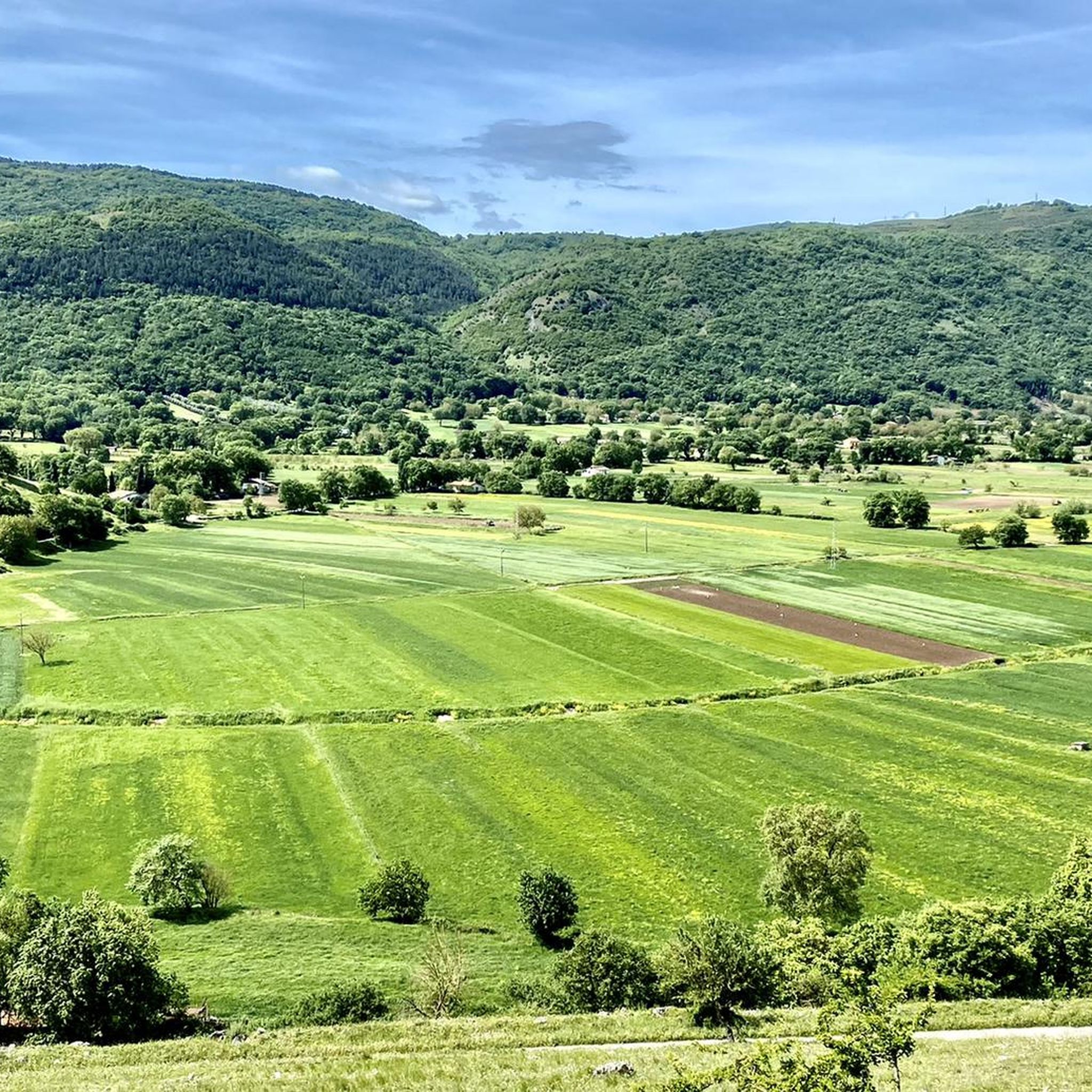
I Piani di Pecora (or Piano di Pecora) are an unspoiled natural oasis and picnic area located within the Monti Eremita-Marzano Nature Reserve, in the municipality of Colliano (SA). A short distance from Eboli, it offers spectacular panoramas stretching to the Tyrrhenian Sea and is the ideal starting point for excursions immersed in beech woods. Useful Information for Your VisitLocation: Collianello (hamlet of Colliano) Distance from Eboli: About 45 km (approx. 1 hour and 15 minutes by car, going up the Sele Valley) Altitude: Within the mountain area that exceeds 1,500 meters at its peaks Facilities : The area is equipped with tables, benches, and spaces for outdoor dining. About 800 meters away, the Piano Luongo equipped area is also located.
1
0
The path from Piani di Pecore to the summit of Monte Marzano is just over 1.5 km long, with an elevation gain of about 300m. On the map it is classified as T2 but, in my opinion, this classification is WRONG. The slopes are on average 20-25% but with sections of 40-45%. The terrain in many places is scree and also exposed. In spring and summer, the vegetation, particularly nettles and thistles, can cause problems if you are not well protected. There is no water along the path and much of it is in the sun. There are several rocky sections that need to be navigated, both on the way up and on the way down. It is necessary to be well-equipped: sturdy shoes, long trousers, long-sleeved shirts, gloves, sunglasses, water. A tip: do not underestimate it considering only the length of just over 3 km round trip.
1
0

Buccino is the ancient Volcei. Worth seeing are the urban archaeological park in the pretty town center and the Norman castle.
0
0

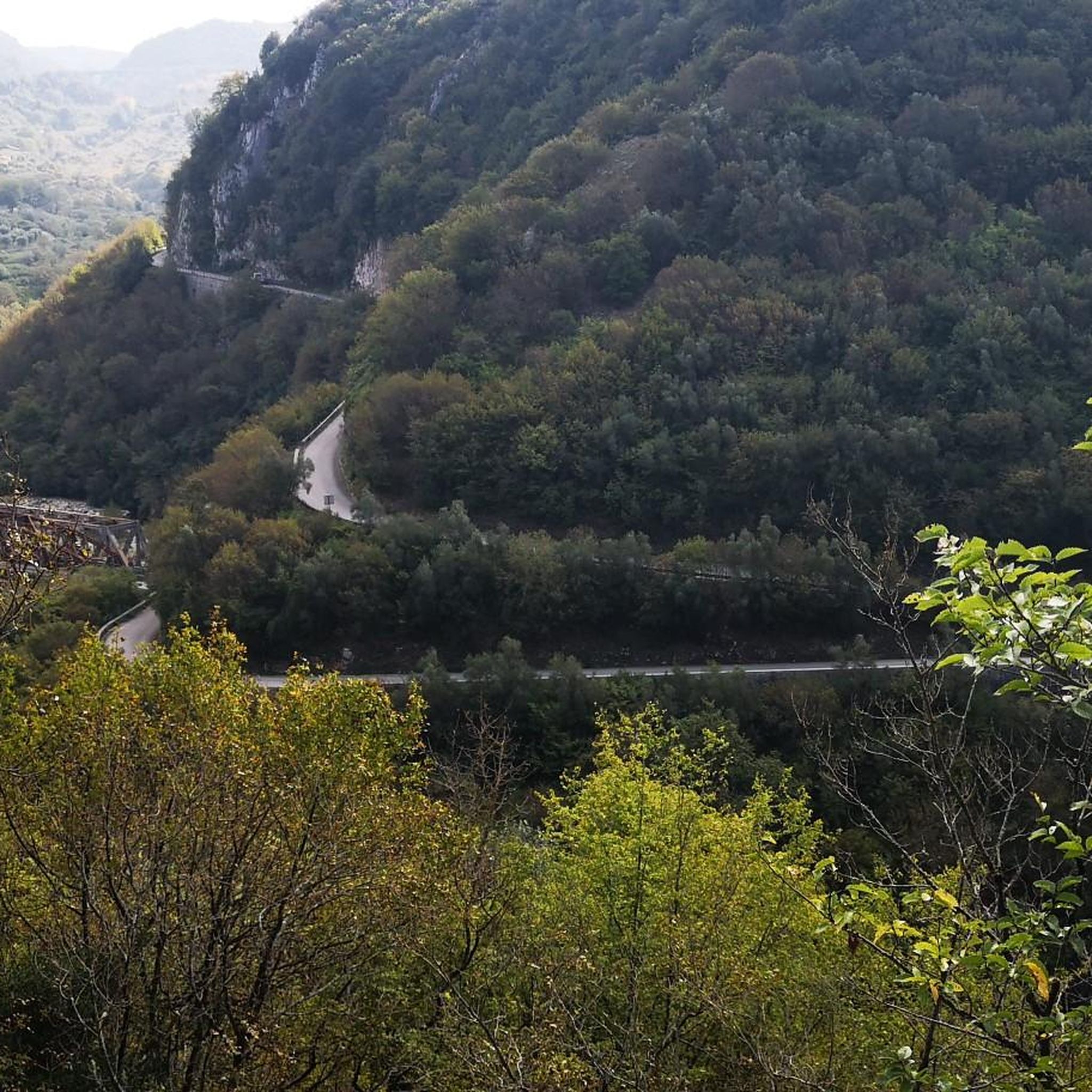
The large waterfall is one of the Savoia waterfalls, it is located in the Tuorno valley, a place of extreme beauty.
1
0
The National Archaeological Museum of Volcei traces, through the exhibits, the long and fascinating history of the populations that over the centuries have inhabited the hills overlooked by the Alburni mountains. The Museum is dedicated to the memory of Marcello Gigante, an illustrious citizen of Buccino, a refined and sensitive philologist, Hellenist and papyrologist, founder, among other things, of the Center for the study of Herculaneum papyri, who always strongly hoped for the establishment of the Archaeological Museum . The Museum is housed in a fifteenth-century building formerly the Convent of the Eremitani di Sant'Agostino for a total area of about 1600 square meters distributed on the four levels through which the exhibition itinerary winds. http://ambientesa.beniculturali.it/BAP/?q=luoghi&luogo=Musei&provincia=Salerno&comune=Buccino&src=&ID=61
1
0
That of Buccino represents a typical example of the baronial castle of the Salerno hinterland. The manor, although in a state of ruin, has recently been restored as part of the programs of the Ancient Volcei urban park. The various architectural elements have been preserved through which it is possible to read the chronological and functional evolution of the site. It is not excluded that the promontory guarding the underlying inhabited area was already used in Roman times, as evidenced by the various elements of reuse found in recent works. However, we must wait until the 12th century to have the first documentary information of the fief of Buccino, through which we know the names of the first dominus: Nicola di Principato, count (1128); Judge Aminabad (1141); Riccardo Philippi (1141). With the advent of the Swabians the castle had to lose importance, since it is not mentioned in the Statutum de reparatione castrorum imperialium. Even afterwards there is no news about the presence of castellans and servants inside the castle. From these data it can be deduced that the Buccinese castle did not play a particularly important role, from a military point of view, in the chessboard of the Kingdom's fortifications. In 1247 the castrum Buccino or Pulcini belonged to the feudal lord Tommaso di Fasanella. With the Angevins the castle was again assigned to important feudal lords, who changed the face of the manor according to the customs of the time. In 1269 the castle, together with those of Campagna, Eboli, Auletta and Quaglietta, was assigned to Roberto, eldest son of the Count of Flanders. Already in 1271 it was revoked from the Royal Curia, to be then assigned, until 1274, to Gualtiero de Sommerouse, soldier and executioner of the Kingdom. During the fifth summons of Charles I of Anjou (1276-1277) the castle was stolen from Tommaso Count of Marsico to be assigned to Guidone d'Alemagna, soldier, executioner, councilor, royal family, treasurer and fiscal receiver. In the following two centuries, the castle was in the possession of the d'Alemagna family, then passed to the Caracciolo and Di Sangro families. At present the castle structure is characterized by a mighty Norman square-plan keep which must have been the only existing structure, at least until the advent of the Angevins. The construction of a first courtyard dates back to the late 13th century, with related residential buildings, two circular towers at the corners and a large cistern, with an adjoining service area in the southern part. This first transformation is probably the work of the d'Alemagna family, in a crucial moment for the history of the Kingdom, characterized by the so-called war of the Vespers, which broke out in 1282 and which reached its peak in Campania at the end of the 13th century. In that period they began to build circular towers with escarpments at the base with an upper crown consisting of corbels and arches for the plumbing defense. Although the circular towers of the castle of Buccino are cut off, they fall within this type of construction, typical of Angevin castle architecture. In the first half of the 14th century, the castle underwent a new structural reorganization. The hill is equipped with a defensive system consisting of a moat with two other circular towers and a second wall. Some rooms and a stable included in the perimeter area of the external walls can still be ascribed to the Angevin age. Between the sixteenth and seventeenth centuries the castle underwent a gradual abandonment, as evidenced by the progressive filling layers of the moat and the levels of obliteration found in the environment identified as the stable. The resumption of intensive occupation of the hill takes place between the eighteenth and nineteenth centuries when the reorganization of the internal courtyard, occupied along the northern edge by a stable, and the creation of a water drainage system, defined a substantial change in the intended use of the spaces. During the nineteenth century. the castle assumes the appearance of a building witnessed by four large limestone, located along the northern slope of the hill, and by numerous lime extinguishing pits in the southern part. arch. Lucio Ganelli
1
0
Frequently Asked Questions
What natural attractions can I explore in Ricigliano?
Ricigliano offers beautiful natural features. You can visit the Cascata Grande di Savoia, a stunning waterfall in the Tuorno valley. Another iconic spot is the Ponte del Diavolo (Hannibal's Bridge), spanning the Melandro or Platano river amidst dense vegetation. The region is also known for its tranquil hilly landscapes, perfect for those seeking authenticity and relaxation.
What historical sites are there to visit in Ricigliano?
Ricigliano is rich in history. You can explore the remains of an ancient Roman villa from the 2nd century BC in Santa Maria, featuring visible mosaic pavements and bath sections. Other significant historical sites include the remains of the Convent of Santa Caterina, founded in 1390, and the Parish Church of San Pietro Apostolo, which dates back to the 1200s. Don't miss the Castle of Buccino, a baronial castle that showcases the architectural evolution of the Salerno hinterland.
Are there any museums in the Ricigliano area?
Yes, the National Archaeological Museum of Volcei 'Marcello Gigante' is a notable museum nearby. Housed in a fifteenth-century building, it traces the history of populations inhabiting the hills overlooked by the Alburni mountains through its exhibits.
What kind of outdoor activities can I do near Ricigliano?
The hilly landscapes around Ricigliano are ideal for outdoor activities. While this guide focuses on attractions, you can find various cycling routes in the area. For example, there are challenging cycling tours like the 'Historic Center of Colliano – Castello d'Ayala-Valva loop' or the 'Savoia di Lucania loop'. You can explore more options on the Cycling around Ricigliano guide or the Road Cycling Routes around Ricigliano guide.
Are there family-friendly attractions in Ricigliano?
Yes, several attractions are suitable for families. The National Archaeological Museum of Volcei 'Marcello Gigante' offers an educational experience for all ages. Additionally, the nearby village of Auletta, with its medieval alleys and tranquil atmosphere, is considered family-friendly for a stroll.
What is the best time to visit Ricigliano for outdoor activities?
Ricigliano, located in the Cilento hinterland, experiences a Mediterranean climate. Spring (April-June) and early autumn (September-October) generally offer pleasant temperatures and less rainfall, making them ideal for exploring natural attractions and engaging in outdoor activities like cycling or walking.
Can I visit ancient Roman ruins in Ricigliano?
Yes, in the locality of Santa Maria, you can visit the remains of an ancient Roman villa dating back to the 2nd century BC. Visitors can still see parts of the mosaic pavement and sections of the baths, offering a direct glimpse into Roman history in the area.
What is the significance of the Stone Cross in Ricigliano?
The Stone Cross (Croce Lapidea), erected in 1588 in the heart of Ricigliano, is a significant landmark. It features the emblem of Ricigliano's patron saint, San Cristoforo, carved into its base. Its original location was near an arch that served as a historic gateway to the village.
What is the Urban Archaeological Park of Volcei?
The Volcei: Urban Archaeological Park is a unique site that develops entirely within the historic center of Buccino. It showcases a fascinating stratification of urban fabric from different eras, where ancient structures blend with medieval and more recent buildings, providing an excellent example of urban archaeology.
What do visitors enjoy most about the attractions around Ricigliano?
Visitors particularly appreciate the blend of historical depth and natural beauty. The Cascata Grande di Savoia is highly popular for its extreme beauty. The historical sites, from Roman ruins to medieval castles and museums, offer a rich cultural experience. The komoot community has shared 18 photos and given 20 upvotes, indicating a strong appreciation for the area's diverse offerings.
Are there any religious historical sites in Ricigliano?
Yes, Ricigliano has several religious historical sites. The Parish Church of San Pietro Apostolo, the main church, dates back to the 1200s. You can also find the Chapel of Maria Santissima Incoronata, adjacent to the Roman villa remains, and the Chapel of San Vito, from the 1700s, which is associated with the ancient 'Turniata' ritual.
Most popular routes around Ricigliano

Get inspired with the komoot mobile app


Explore more
Still not found the Highlight you’re looking for? See guides of the top attractions in other regions:
