Attractions and Places To See around Piobbico - Top 20
Best attractions and places to see around Piobbico include historical landmarks and natural features. This medieval village is situated in a valley between Monte Nerone and Montiego, at the confluence of the Biscubio and Candigliano rivers. The area offers a range of historical sites, including a prominent castle, alongside natural monuments like rock formations and waterfalls. Visitors can explore a diverse landscape that combines cultural heritage with mountain scenery.
Best attractions and places to see around Piobbico
- The most popular…
Last updated: June 22, 2026
Fondarca Arch
Highlight • Natural Monument
The entrance to path no. 20 is found at the entrance to …
Translated by Google •
Tip by

Rocca Torrione of Cagli
Highlight • Castle
Translated by Google •
Tip by

Sign up now to discover places like this
Get recommendations on the best single tracks, peaks, & plenty of other exciting outdoor places.
Sign up for free
Mondelacasa Castle (the Muracci)
Highlight • Castle
Translated by Google •
Tip by

Piobbico
Highlight • Settlement
Showing Translation
Tip by

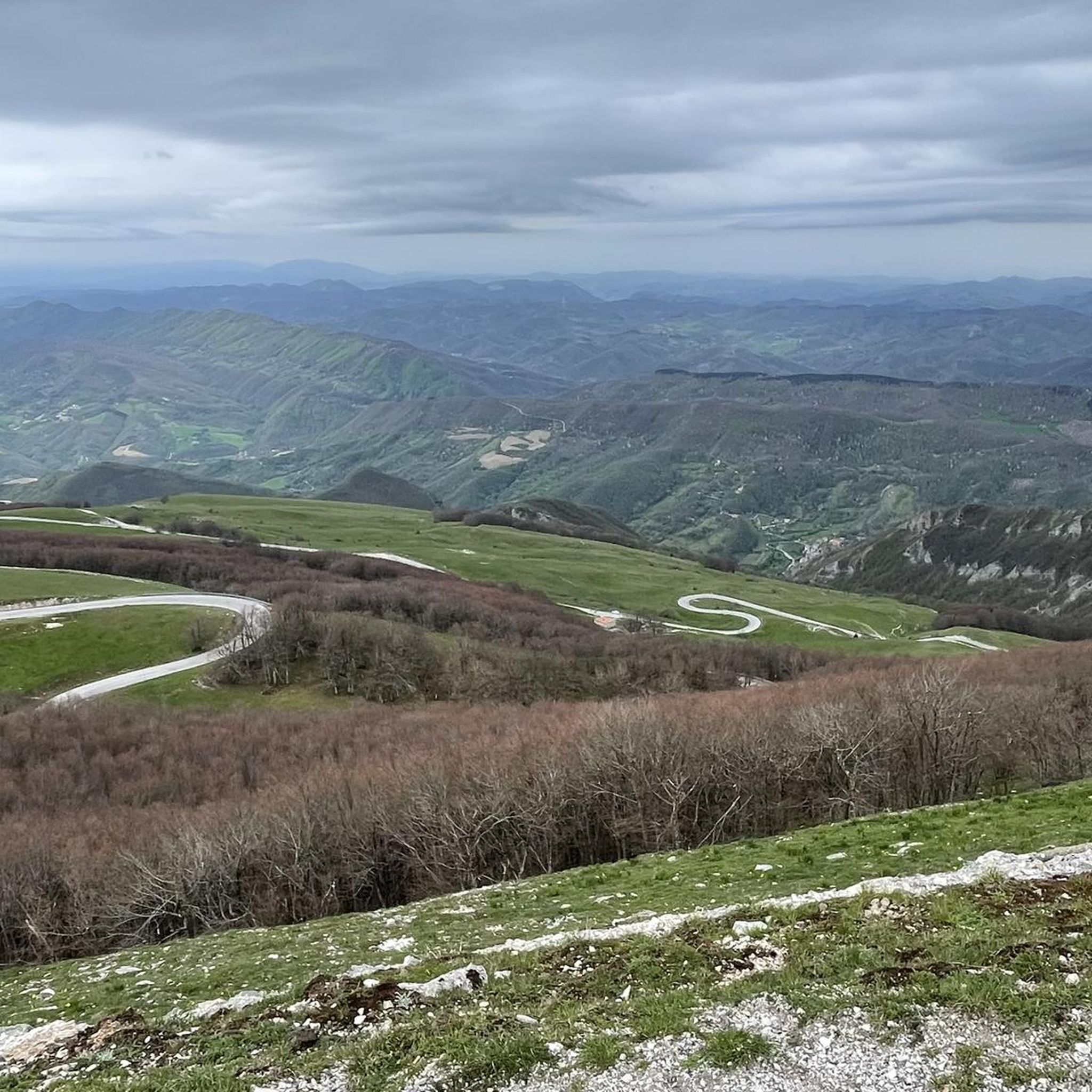
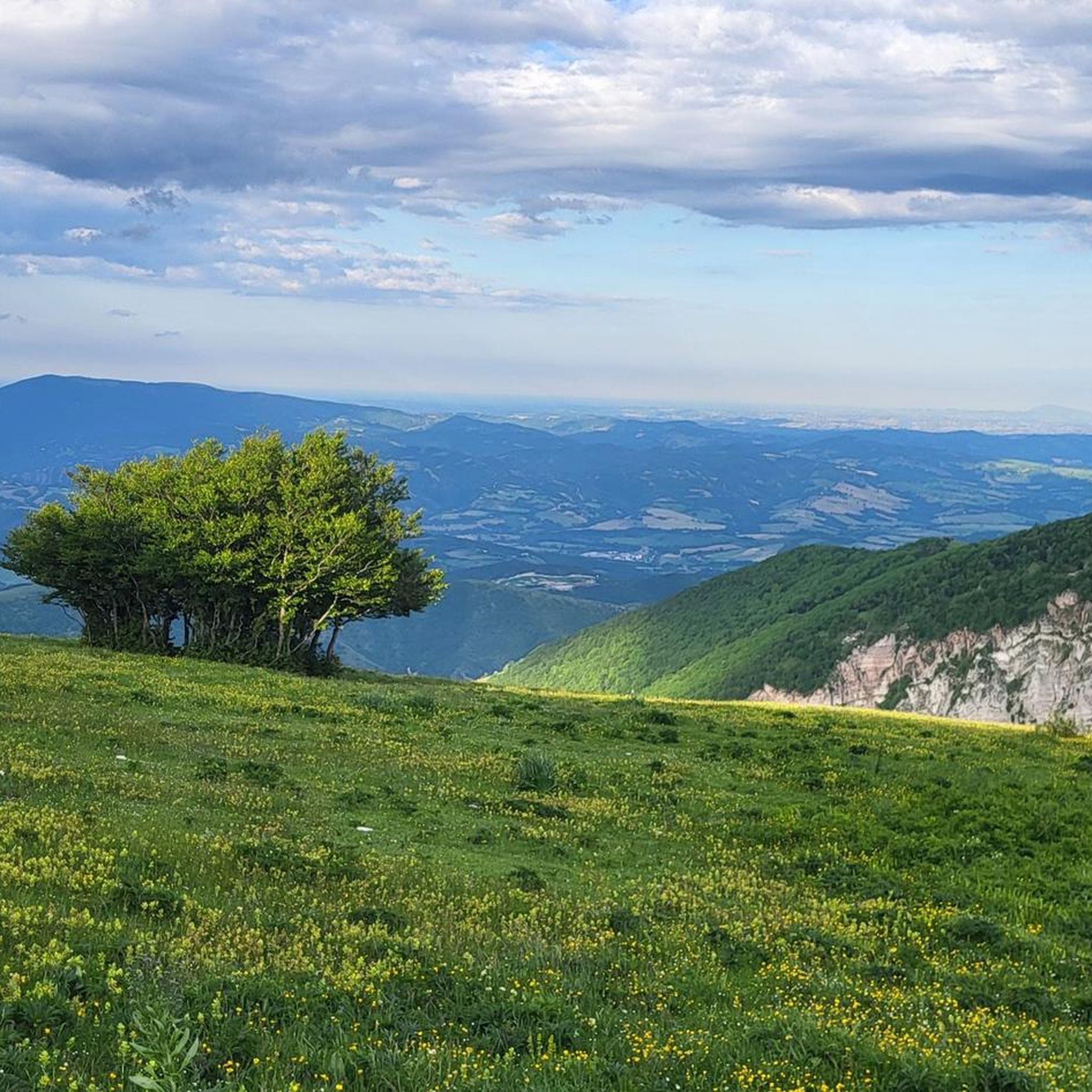
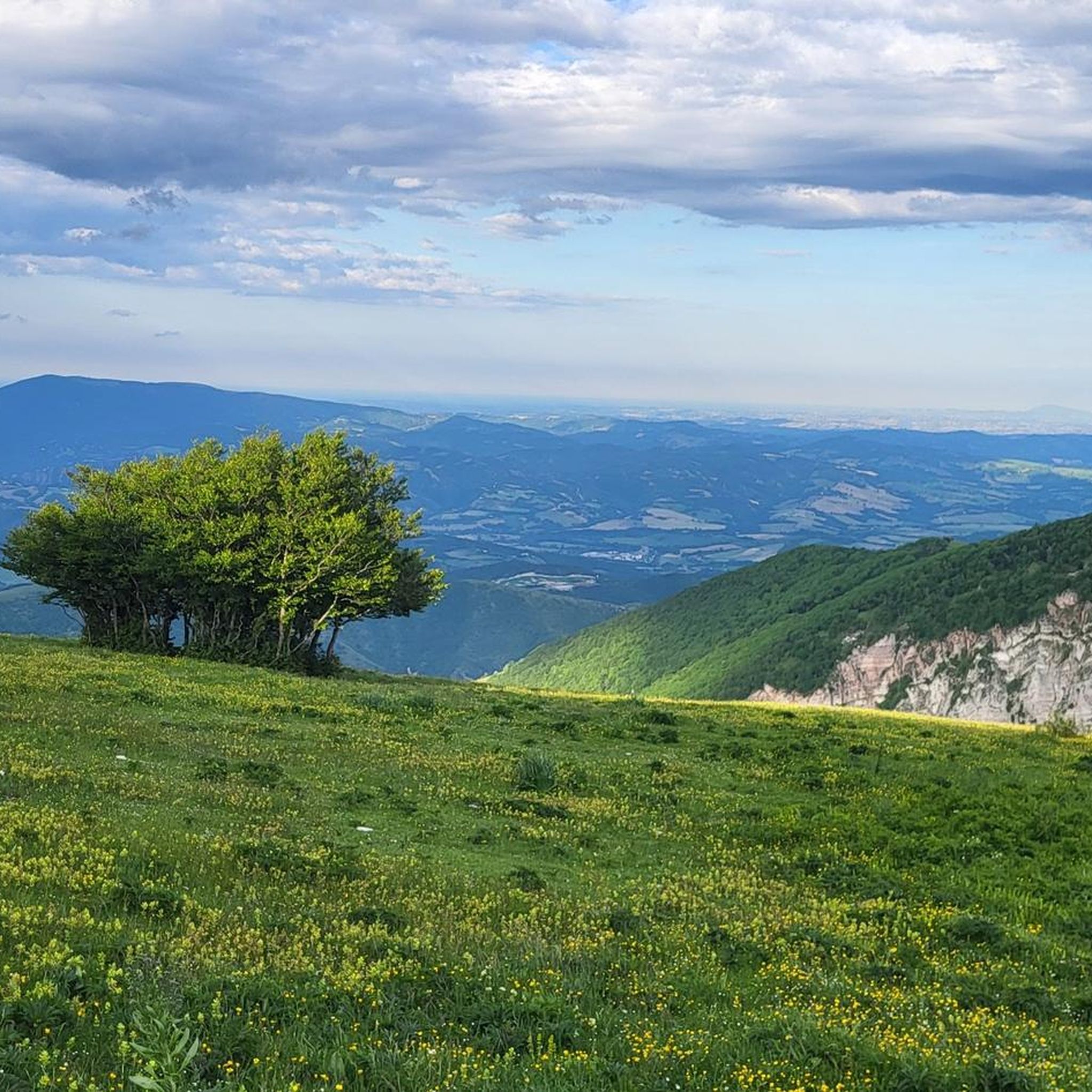
Windy Pastures on Monte Nerone
Highlight • Viewpoint
Translated by Google •
Tip by

Sign up for free to discover even more attractions around Piobbico.
Sign up for free
Already have an account?
Start today with a free account
Your next adventure awaits.
Login or Signup

Tips from the Community

Piobbico is a beautiful town in the province of Pesaro Urbino with about 1800 inhabitants. It is located in a valley between Monte Nerone and Monte Montiego and stands right at the confluence of two rivers: the Biscubio and the Candigliano. Piobbico is also known as the Land of the Ugly, due to the National Association of the Ugly, founded at the end of the 19th century to allow young women from Piobbico to find a husband; it currently has about 30,000 members and every year, on the first Sunday of September, the World Festival of the Ugly takes place. The festival is famous throughout central Italy and attracts a very large number of people each year.
1
0

The ruins of the Mondelacasa Castle (or Monte della Casa), called the Muracci, are located on the northern slopes of Mount Nerone, on the left bank of Val d'Abisso, at 707 m above sea level, about 1 km south of the historic center of Piobbico. (from COMUNE PIOBBICO 1999): Close to Mount Nerone stands a massive buttress whose base widens between the Biscubio torrent and the Petrello stream (Fosso di S. Maria) and carries the ruins of an ancient artifact on the summit. It was a castle, a primitive dwelling that the Brancaleoni, who arrived around the year 1000 in the Biscubio District, built and lived in until the mid-1300s. This is how our Costanzo Felici (1) describes it in a document from 1582:... climbing up to Monte Nerone a mile away on a rough and terrible hill and rock, there are vestiges of a superb, large and beautiful palace or fortress now in ruins, of which those (Brancaleoni) of Piobico were the owners. Built by Gentile Brancaleoni in the first half of the 13th century, it took the name of Mons Casa or Mondelacasa, today Muracci because of the ruins visible on the summit. Towards the middle of the 14th century, both because of the harshness of the place, difficult to reach when ... winter almost buried the tower under the snow, locked it under the grip of the ice, tormented it with the blizzard, confining it for months in isolation, and because of the need for other and more comfortable comforts, the two brothers Pazzo and Federico Brancaleoni decided to settle in the house that they had begun to build "in castro Plobici", on the hill to the right of the confluence of the Biscubio with the Candigliano, where there were already small houses piled up, that is, equipped with a watchtower with a Gothic arch portal to the north and a castle to the south-east. It is the place where the Brancaleoni Castle-Palazzo will develop and take shape over time. NOTE: (1) Costanzo Felici was born in the second decade of the 16th century in Casteldurante (now Urbania). However, he preferred to define himself as a native of Piobbico, where his ancestors had moved around 1330. He practiced medicine in Piobbico, Sant'Angelo in Vado, Pesaro, Rimini and Urbania. At the same time, he cultivated naturalistic and historical studies with notable results. He died in Pesaro on February 5, 1585. taken from: https://www.lavalledelmetauro.it/contenuti/beni-storici-artistici/scheda/11123.html
0
0

Beautiful town, worth taking a break
0
0


June 24, 2023: from the end of the pastures, the road leading down to the valley is closed. The views up there are breathtaking, but the trek is not trivial. There are various exposed points where I got scared. I saw that the path that would have led down to the valley was also a narrow road with a precipice on the left. It's not for everyone, go on if you're self-confident of your abilities. I underestimated him and in the end I found myself crawling back in places. But I'm quite scared of heights so if you're more adventurous than me go!
0
0

Another fantastic panorama, in spring autumn with green grass and perennial wind even better, be careful from the end of the pastures you descend into the valley, very difficult, heavy and very long slope.
0
0

Ruin in a panoramic position on the northern side of Monte Nerone
0
0

After various hairpin bends, you arrive by car as far as the small village of Pieia and park. The entrance to path no. 20 is found at the entrance to the town on the right next to the picnic area along the fence of the bowling green. The first section is all in the shade and flat, with glimpses of the surrounding peaks and then uphill in the last one. Along the way you come across the ruins of an old house and the Grotta delle Nottole, and then the arch of Fondarca, a natural rock arch with high and steep walls which was the entrance to a cave which collapsed in ancient times. Return to the same path
1
0
Frequently Asked Questions
What natural landmarks can I explore around Piobbico?
Piobbico is surrounded by impressive natural features. You can visit the Fondarca Arch, a natural rock arch that is the remains of a collapsed ancient cave. The area is also nestled between Monte Nerone and Montiego, offering breathtaking panoramas and opportunities to explore gorges and cliffs. Another notable spot is the Molinaccio Waterfall and Old Mill Ruins, located in Val d'Abisso.
Are there any waterfalls or scenic river spots near Piobbico?
Yes, the Molinaccio Waterfall and Old Mill Ruins is a beautiful spot where a waterfall cascades next to an ancient stone mill. The town itself is situated at the confluence of the Biscubio and Candigliano rivers, which contribute to the scenic beauty of the area.
Where can I find the best panoramic views of the Piobbico area?
For stunning panoramic views, head to the Windy Pastures on Monte Nerone. This viewpoint offers expansive vistas of the surrounding landscape. The Sentiero dei Folletti (Path of the Goblins) also leads to a high vantage point with great views of the village of Piobbico.
What historical sites should I visit in Piobbico?
Piobbico is rich in history. The most prominent historical site is the Brancaleoni Castle, an ancient medieval fortress transformed into a Renaissance residence, featuring 130 rooms, frescoes, and museums. You can also explore the ruins of the Mondelacasa Castle (the Muracci) on Monte Nerone, which was the Brancaleoni family's original residence. Don't miss the charming Borghetto, the old quarter directly below the fortress, with its ancient frescoes and unique clock.
Can I visit the Brancaleoni Castle in Piobbico?
Yes, the Brancaleoni Castle is a key attraction in Piobbico. This impressive fortress, dating back to the 13th century, houses the Civic Museum and the Museum of Ancient Crafts, showcasing local history and traditional tools. It's a must-see for those interested in the region's heritage.
Are there any unique cultural aspects or hidden gems in Piobbico?
Piobbico is globally known as the headquarters of the 'Club dei Brutti' (World Club of the Ugly), founded in 1879, which holds an annual festival on September 7th. Another unique spot is the Morimondo Hermitage, ruins of an ancient building immersed in greenery near Fosso dell'Eremo, once a burial place for the Brancaleoni family.
What kind of hiking trails are available around Piobbico?
The area around Piobbico offers diverse hiking opportunities. You can find trails leading to natural landmarks like the Fondarca Arch (Path no. 20), which is mostly flat and shaded initially. Trails also lead to viewpoints such as the Windy Pastures on Monte Nerone, which can be challenging. For more options, explore the running trails around Piobbico, which include routes of varying difficulty.
Are there opportunities for cycling or gravel biking near Piobbico's attractions?
Absolutely. The mountainous terrain and scenic valleys around Piobbico are ideal for cycling and gravel biking. You can find numerous routes, including challenging climbs up Monte Nerone. For detailed routes, check out the cycling guide for Piobbico or the gravel biking guide for Piobbico, which feature routes like the 'Rio Vitoschio Junction – Monte Nerone Summit Road Sign loop' and the 'Monte Montiego Loop'.
What is the best time of year for outdoor activities in Piobbico?
The spring and autumn months are ideal for outdoor activities in Piobbico, with pleasant temperatures and lush landscapes. During these seasons, you can enjoy hiking, cycling, and exploring natural features like the Windy Pastures on Monte Nerone with green grass and comfortable weather. Summer can also be good, especially in the higher elevations, but be prepared for warmer temperatures in the valleys.
Are there family-friendly attractions or activities in Piobbico?
Piobbico offers several family-friendly options. Exploring the Brancaleoni Castle with its museums can be engaging for all ages. Gentle walks along the rivers or parts of the Sentiero dei Folletti can also be enjoyable. The Fondarca Arch trail, with its shaded and mostly flat initial section, is also suitable for families.
Is Piobbico accessible for visitors with limited mobility?
While the historic center of Piobbico and some parts of the Brancaleoni Castle may have varying levels of accessibility due to their medieval origins, many of the natural attractions involve uneven terrain or trails. It is advisable to check specific accessibility details for individual sites if you have limited mobility.
Where can I find parking when visiting attractions in Piobbico?
Parking is generally available in and around the village center of Piobbico. For specific natural attractions like the Fondarca Arch, visitors often park in the small village of Pieia, which is the starting point for the trail. When visiting the Brancaleoni Castle, look for parking in the immediate vicinity of the historic center.
Most popular routes around Piobbico
Most popular attractions around Piobbico

Get inspired with the komoot mobile app


Explore more
Still not found the Highlight you’re looking for? See guides of the top attractions in other regions:
