The best MTB trails around Gaeta
4.2
(127)
461
riders
16
rides
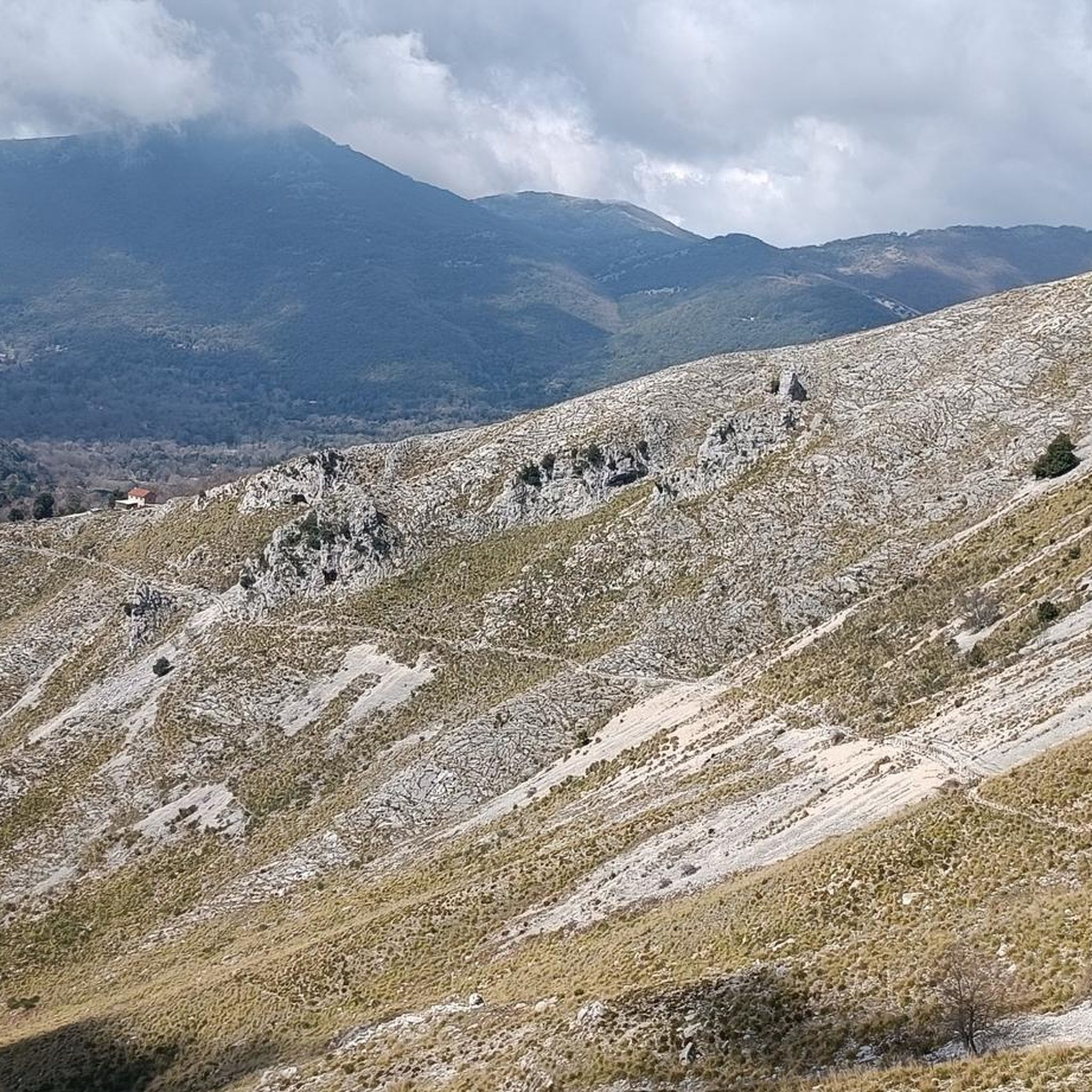
Mountain biking around Gaeta offers a diverse landscape characterized by rugged coastal mountains, extensive regional parks, and Mediterranean vegetation. The region features prominent hills like Monte Orlando and the larger Aurunci mountains, providing varied terrain for mountain bike trails. Riders can explore routes that combine panoramic ocean views with challenging climbs through forested areas. The area's geological features, including fissures and caves, contribute to a unique backdrop for outdoor activities.
Best mountain bike trails around Gaeta
- The most popular mountain…
Last updated: October 10, 2026
5.0
(4)
1
riders
8.11km
00:38
170m
170m
Easy mountain bike ride. Great for any fitness level. Suitable for all skill levels.
4.6
(7)
40
riders
59.4km
05:08
1,580m
1,580m
Hard mountain bike ride. Very good fitness required. Advanced riding skills necessary. Some portions of the route may require you to push your bike.

4.4
(8)
34
riders
45.8km
02:37
300m
300m
Moderate mountain bike ride. Good fitness required. Suitable for all skill levels.
4.0
(3)
26
riders
36.3km
02:30
580m
580m
Moderate mountain bike ride. Good fitness required. Suitable for all skill levels.
4.9
(27)
19
riders
Easy mountain bike ride. Great for any fitness level. Suitable for all skill levels.
Get access to more routes and recommendations from other explorers.
Already have an account?
Our route recommendations are based on thousands of hikes, rides, and runs completed by other people on komoot.
Start today with a free account
Your next adventure awaits.
Tips from the Community

This famous archaeological site is the tomb of Lucius Munatius Planco, a Roman consul and founder of Lyon and Basel. The mausoleum is located on the summit of Monte Orlando, from where you can also admire the entire Gulf of Gaeta, the Aurunci mountain range, Monte Circeo, the Pontine Islands, and Vesuvius. Lucius Munatius Planco, a lover and admirer of these places, fascinated by their beauty but also attracted by the strategic position and natural fortifications of Gaeta, chose Monte Orlando, wanting once again to excel and ensure his protection. Unlike the mausoleum, which is in good condition today, so much so that it is considered one of the most important existing Roman funerary art artifacts, his sumptuous villa has almost completely disappeared. Few remains of it are left in the area of the Sanctuary of the SS Trinità. The construction dates back to 22 BC and is perfectly circular in shape with a tumulus covering. Inside, this monumental tomb consists of four cells accessible from a circular corridor (ambulatory) and arranged according to the 4 cardinal points. The cells house an antiquarium of artifacts from different historical eras found in the area of Gaeta, and in the main one at the entrance, a copy of the original statue of the consul can be admired, which is currently in Rome. The diameter of the structure is 29.54 meters, while the external circumference measures 93.10.
0
0
Descending from Monte Orlando on a beautiful winding road, we suddenly find ourselves in front of a beautiful view of medieval Gaeta and the Angevin-Aragonese Castle in the foreground.
0
0
If you don't want to push the bike, you can go back and, as we did, take another trail, although we find other stairs there too, but there are fewer.
0
0
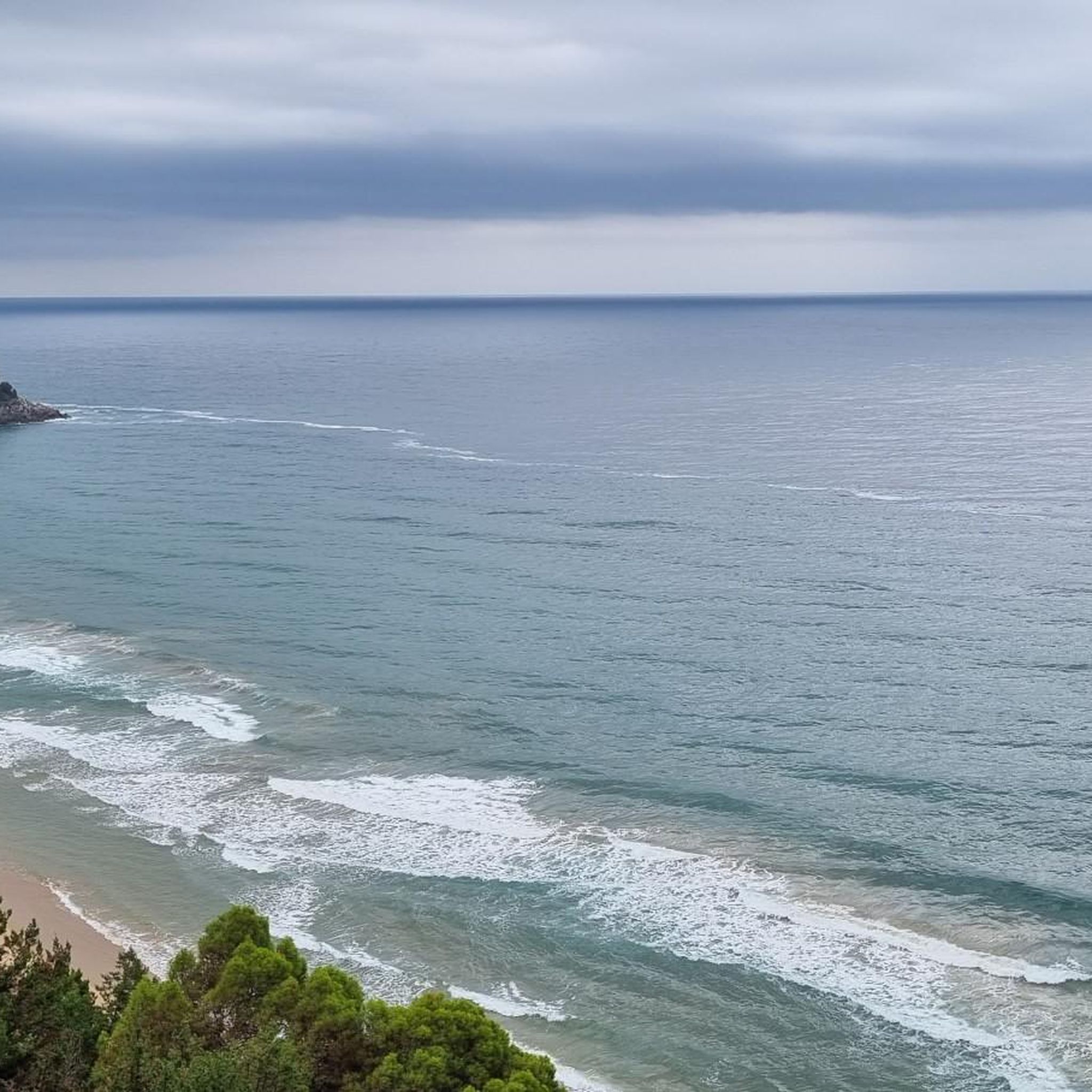
Splendid panorama of Serapo beach.
0
0
The Park of Monte Orlando covers an area of 89 hectares, of which 59 are land area and 30 are marine area. Located within the territory of Gaeta, the Park represents the terminal part of the Aurunci mountain system. This protected area is managed by the Riviera di Ulisse Regional Park Authority together with the areas of the Gianola and Monte di Scauri Suburban Regional Park and the Natural Monument of Sperlonga. With a typically rounded shape, Monte Orlando is connected to the mainland to the north by a thin strip of land and ends in the south with a high rocky coast characterized by spectacular cliffs. The territory is affected by the corrosive action of water; in fact, rain penetrating the rocks dissolves the calcium carbonate contained within them, giving rise to numerous and typical erosive forms. The sea has also contributed to shaping the promontory and, over the centuries, through wave motion, has modeled and etched the rocks, leaving fossil traces, recognizable signs of the ancient sea level. Human intervention, in different historical eras, has left its mark on Monte Orlando. Particular attention should be paid to the military fortifications, built both outside and inside the current Park, which made Gaeta a fortress of strategic importance for the Kingdom of Naples. At the summit, we find the Mausoleum of Lucius Munatius Plancus.
0
0
The city of Gaeta owes its name to Caieta, Aeneas's nurse, who, according to tradition, is buried right here. According to another interpretation, it derives from the Greek term indicating the “cavity” of the famous gulf. Whatever the truth, what is certain is that the city has a very ancient history, a past that can still be felt in some areas such as the medieval quarter of Sant’Erasmo, attested as early as the era of the Duchy of Gaeta and the maritime republics. A decadent nostalgia can be felt in the streets of the quarter, visibly marked by the bombings of World War II. However, houses dating back to the 12th century are still visible along narrow alleys made of stairs, underpasses, and arches. The medieval quarter has two hearts. The first is the Church of San Giovanni a Mare, a 10th-century Romanesque building with evident Byzantine influence. The second is the Cathedral, consecrated in the 12th century. Inside, a splendid marble Easter candelabrum is kept, while outside stands the imposing Arab-Sicilian bell tower, with interwoven arches, inlays, and majolica tiles. Above all dominates the Aragonese-Angevin castle, which dates back to the 8th century and was later enlarged in the 13th and then in the 16th centuries. Finally, visit the Church of the Annunciation with the Golden Grotto, the Sanctuary of the Split Mountain with the mausoleum of Lucius Munatius Plancus, and the characteristic Via dell'Indipendenza.
0
0
After the dirt road immersed in a beautiful beech forest, you reach a picnic area where you turn right towards Christ the Redeemer.
0
0
Once at the top of the climb, a wonderful panorama opens up over the valley with a view of Christ the Redeemer.
0
0
Frequently Asked Questions
How many mountain bike trails are available around Gaeta?
There are over 10 mountain bike trails around Gaeta, offering a diverse range of experiences. You'll find 3 easy routes, 6 moderate routes, and 2 challenging trails for experienced riders.
Are there any easy mountain bike trails suitable for beginners or families in Gaeta?
Yes, Gaeta offers several easy mountain bike trails. A great option is the St. Philip Neri Way - MTB Stage 2, an 8.1 km route within the Riviera di Ulisse Regional Park. It's suitable for all skill levels and provides panoramic views of Gaeta and the Tyrrhenian coast.
What kind of views can I expect on mountain bike trails in Gaeta?
Mountain bike trails in Gaeta are renowned for their spectacular views. Many routes offer panoramic vistas of the clear, blue ocean, the Tyrrhenian coast, and lush Mediterranean vegetation. Trails on Monte Orlando, for instance, provide incredible ocean views, while routes in the Aurunci mountains, like the View of Maranola – Ascent to Monte Redentore loop, offer majestic panoramic views extending over the entire coast.
Are there any challenging mountain bike routes for experienced riders?
Absolutely. For experienced mountain bikers seeking a challenge, the View of Maranola – Ascent to Monte Redentore loop from Falesia dell'Arenauta is a demanding 60.8 km trail through the Aurunci mountains, requiring very good fitness and advanced riding skills. Another difficult option is the Sant'Agostino Beach – Itri Castle loop, which covers 54.4 km.
What natural attractions can I see along the mountain bike trails in Gaeta?
Gaeta's trails often pass by stunning natural features. You can explore areas near the iconic Montagna Spaccata and the captivating Turk's Cave. Further afield, the Aurunci mountains offer the majestic Cima del Redentore (Monte Altino). The Riviera di Ulisse Regional Park, where many trails are located, is rich in Mediterranean vegetation and coastal scenery.
Are there any historical landmarks or points of interest accessible by mountain bike?
Yes, Gaeta's rich history is intertwined with its landscapes. Some routes may take you near historical sites like the fortifications on Monte Orlando. The Sant'Agostino Beach – Itri Castle loop, for example, brings you close to the impressive Itri Castle. You can also find highlights like the Gaeta Waterfront and Historic Center nearby.
What do other mountain bikers say about the trails in Gaeta?
The mountain bike trails in Gaeta are highly regarded by the komoot community, with an average rating of 4.3 stars from over 50 reviews. Riders frequently praise the diverse terrain, the stunning coastal and mountain views, and the variety of routes suitable for different skill levels.
Are there any circular mountain bike routes in Gaeta?
Yes, many of the mountain bike routes around Gaeta are designed as loops. Examples include the moderate Torre Truglia – Sperlonga loop from Falesia dell'Arenauta and the Sant'Agostino Beach – Brezza Marina loop, offering convenient circular options for your ride.
What is the typical duration for mountain bike rides in Gaeta?
The duration of mountain bike rides in Gaeta varies significantly depending on the trail's length and difficulty. Easy routes like the St. Philip Neri Way - MTB Stage 2 can be completed in about 38 minutes, while more challenging and longer trails, such as the View of Maranola – Ascent to Monte Redentore loop, can take over 5 hours.
What kind of terrain can I expect on Gaeta's mountain bike trails?
Gaeta's mountain bike trails feature a diverse landscape, from rugged coastal paths and Mediterranean vegetation to challenging mountainous ascents. You'll encounter varied terrain, including trails within regional parks and routes that climb through forested areas, offering a mix of surfaces and gradients.
Are there mountain bike trails that connect to nearby towns like Sperlonga?
Yes, some mountain bike routes in Gaeta extend towards or connect with nearby towns. The Torre Truglia – Sperlonga loop from Falesia dell'Arenauta is a moderate 39.4 km path that connects historical sites with natural beauty, offering a ride that includes coastal scenery and reaches towards Sperlonga.
Most popular attractions around Gaeta

Get inspired with the komoot mobile app


Explore more
Browse the best MTB trails in other regions.
