Attractions and Places To See around Riesi - Top 18
Best attractions and places to see around Riesi, Sicily, offer a range of historical and cultural sites. This region in Italy features over 18 notable places to explore, including ancient castles and significant religious buildings. Visitors can discover historical sites that reflect centuries of local heritage. The area provides opportunities to engage with the rich past of the Sicilian landscape.
Best attractions and places to see around Riesi
- The most popular attractions is Mazzarino Castle, a castle that is…
Last updated: May 11, 2026
Mazzarino Castle
Highlight • Castle
Translated by Google •
Tip by

Church of Santa Maria delle Grazie
Highlight • Religious Site
Isolated and outside the town of Mazzarino, the small church dedicated to Santa Maria delle Grazie rises to the south, the foundation of which …
Translated by Google •
Tip by

Sign up now to discover places like this
Get recommendations on the best single tracks, peaks, & plenty of other exciting outdoor places.
Sign up for free
Church of the Most Holy Crucifix of the Elm, Mazzarino
Highlight • Religious Site
Translated by Google •
Tip by
Duomo of Santa Maria della Neve (Mazzarino)
Highlight • Religious Site
Translated by Google •
Tip by
Norman Castle of Pietraperzia
Highlight • Castle
Translated by Google •
Tip by

Sign up for free to discover even more attractions around Riesi.
Sign up for free
Already have an account?
Start today with a free account
Your next adventure awaits.
Login or Signup
Popular around Riesi
Tips from the Community

Romanesque-Norman castle from the 12th century AD It is normally closed, but to the left of the entrance gate, a fence allows access.
1
0

Pietraperzia, in Sicily, is a municipality known for its rich history and significant monuments. Once inhabited by the Sicani and then by the Siculi, it offers evidence of the Norman era such as the Norman Castle, built by the Barresi family. Other places of interest include the church of Santa Maria Maggiore, which houses sarcophagi made by Antonello Gagini, and the former Dominican convent, now used as municipal offices.
2
0

This church, which is dedicated to the Holy Cross (Latin “Santa Croce”), draws its patronage from the cross on which Jesus Christ died. The veneration of the Holy Cross goes back to a large extent to Saint Helena, who was the mother of Emperor Constantine the Great (who recognized Christianity as a religion after his victory at the “Milvian Bridge” in front of Rome and in the year 312 for a long time the persecution ended with the “tolerance edict” of Milan). In the early fourth century she undertook a pilgrimage to the Holy Land (Israel / Palestine) and from there brought numerous relics with her to Europe, including the "True Cross" on which Jesus Christ was crucified. Helena is therefore often depicted with a cross as an attribute. The church celebrates the festival of the discovery, public presentation and veneration of the Holy Cross – called “Exaltation of the Cross” – on September 14th.
2
0

Church of Maria Santissima delle Grazie Isolated and outside the town of Mazzarino, the small church dedicated to Santa Maria delle Grazie rises to the south, the foundation of which dates back to the Norman age and, according to local literature, must have been in the shape of a Greek cross. The current longitudinal layout of the church dates back to the restoration works of the 17th century. It has a rectangular hall, divided by an arch about two thirds of the length, starting from the entrance and ending with a semicircular apse; from here you enter the only annexed room, used as a sacristy. floor plan Longitudinal planimetric layout with a single rectangular nave, concluded by a semicircular apse. Starting from the entrance, at about two thirds, the length of the hall is divided by an arch. In the first part, on the walls, there are two side entrances, one on each side. A single window, placed on the façade above the entrance, illuminates the interior of the nave. From the presbytery, raised with a step, you enter a room, used as a sacristy, with an essential toilet and with independent access to the outside of the church. covers The roof of the church has two pitches, made with wooden structures, hidden by the barrel vault and surmounted by Sicilian coppi tiles. The sacristy compartment has a single pitch. main prospectus The simple facade is barely characterized by the essential frame of the triangular tympanum, surmounted in the center by a modest bell loggia. The masonry is made with exposed stone. Only the entrance is framed by jambs and a round arch made with squared stone ashlars. In the centre, above the door, a frameless window opens, the only source of natural light for the interior of the classroom. secondary prospectuses The wall facings are made with exposed stone. During the last restoration works, the two original side entrances were restored. On the right side is the only and small annexed room. interior The flooring is made with terracotta tiles. The walls are plastered and painted. The vault has no decoration and is set up without any characterization that distinguishes it from the wall facing. Source: beweb.chiesacattolica.it
1
0
The church of the SS.mo Crocifisso dell'Olmo is open to the public in the month of May for the celebrations in honor of the co-patron of the city, for the funerals of the confreres and during the Christmas period, on the occasion of setting up the crib.
2
0
The current church of the Santissimo Crocifisso dell'Olmo dates back to 1756. The same site knew a primitive structure dedicated to the Madonna dell'Itria and dating back to the X-XI century. Over the centuries the church acquired other names: - Our Lady of Grace - Crucifix of the Graces; - Olmo Crucifix. From the news received by the historian Di Giorgio Ingala, the very first building (in Norman style, with pointed arches and historiated vaults) was commissioned by Count Ruggero, to ensure that the Christian faith would be reborn, a faith that had been hindered by the domination of the Arabs . Instead, the current temple was commissioned in the second half of the 1700s by the Messina noble Filippo Bivona, who had escaped the plague and had developed deep devotion to the Crucifix in Mazarin. It was the marquis who wanted the construction of the bell tower and the furnishings (as can be seen from the epigraph placed on the entrance door of the church). The church consists of three naves, the main altar houses the wooden crucifix, while in the two lateral naves there are altars dominated by paintings of skilled manufactures. In the right aisle are depicted: - The Magdalene; -Our Lady of Itria; -The Holy Family. While the left aisle is occupied by canvases representing: -Saint Michael the Archangel; -Our Lady of Monserrato; -Our Lady of Grace. In the basement there are still the remains of the first edition of the church, and like most of the churches of the time, the strainers are arranged in the single nave, and a room adjacent to the nave used as an ossuary. Source: Signoredellolmo.it
3
0
The cathedral or madrice of Santa Maria della Neve is the mother church of Mazzarino, in the province of Caltanissetta, belonging to the diocese of Piazza Armerina, and is located in the historic center, along Corso Vittorio Emanuele, at the widening overlooking the square Angelo Monterosso. The building, designed by the architect Angelo Italia, is a typical example of Sicilian late Baroque from the period following the reconstruction following the 1693 Val di Noto earthquake. Wanted by Prince Carlo Maria Carafa, for whom, in his will, he left the conspicuous sum of 1000 scudi for the construction. The cathedral was built in the same place where the ancient church dedicated to the Madonna della Neve stood, which collapsed due to the earthquake of 11 January 1693. The construction works began in 1694 and were interrupted in 1736, to be resumed for about a century. later, as reported by the historian Pietro di Giorgio Ingala in his research and historical considerations on the ancient city of Mazarin. The original design of the cathedral was commissioned to the Jesuit architect Angelo Italia da Licata, who at that time moved to Mazzarino to direct the construction of the palace of Count Adonnino. The original designs, however, have been lost. The original project, according to Ingala, included a structure with a single nave with a "barrel" vault and large side altars. A dome should have been erected in the center of the cross and two bell towers on both sides. The constructive and financial difficulties, due to the premature death of the financier of the works, Prince Carlo Maria Carafa, led to a remodeling of the initial project and, after a stoppage of about a century, thanks to the commitment of the sac. Andrea Bartolotta, and the contribution of the people, the construction was completed, with the modification of the plant from one to three naves and lowering of the vault. The architects and master builders who followed the completion of the works were the Mazzarinesi Giuseppe Ferrara and Matteo Buccola. The last masonry works were carried out in 1844 by the will of the sac. Salvatore Faraci, and looked at the marble floor and the stuccoes of the vaults. Source Wikipedia
1
0
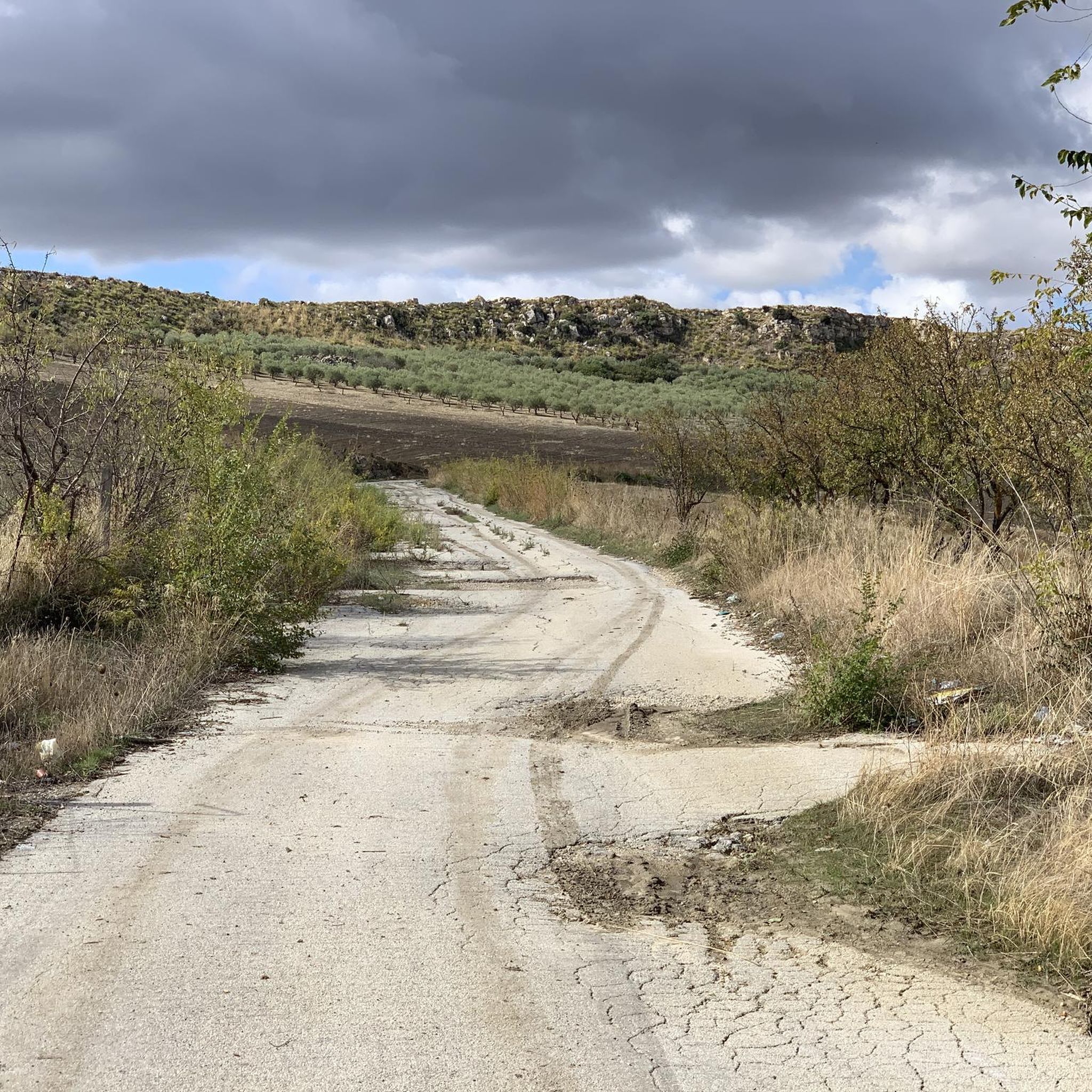
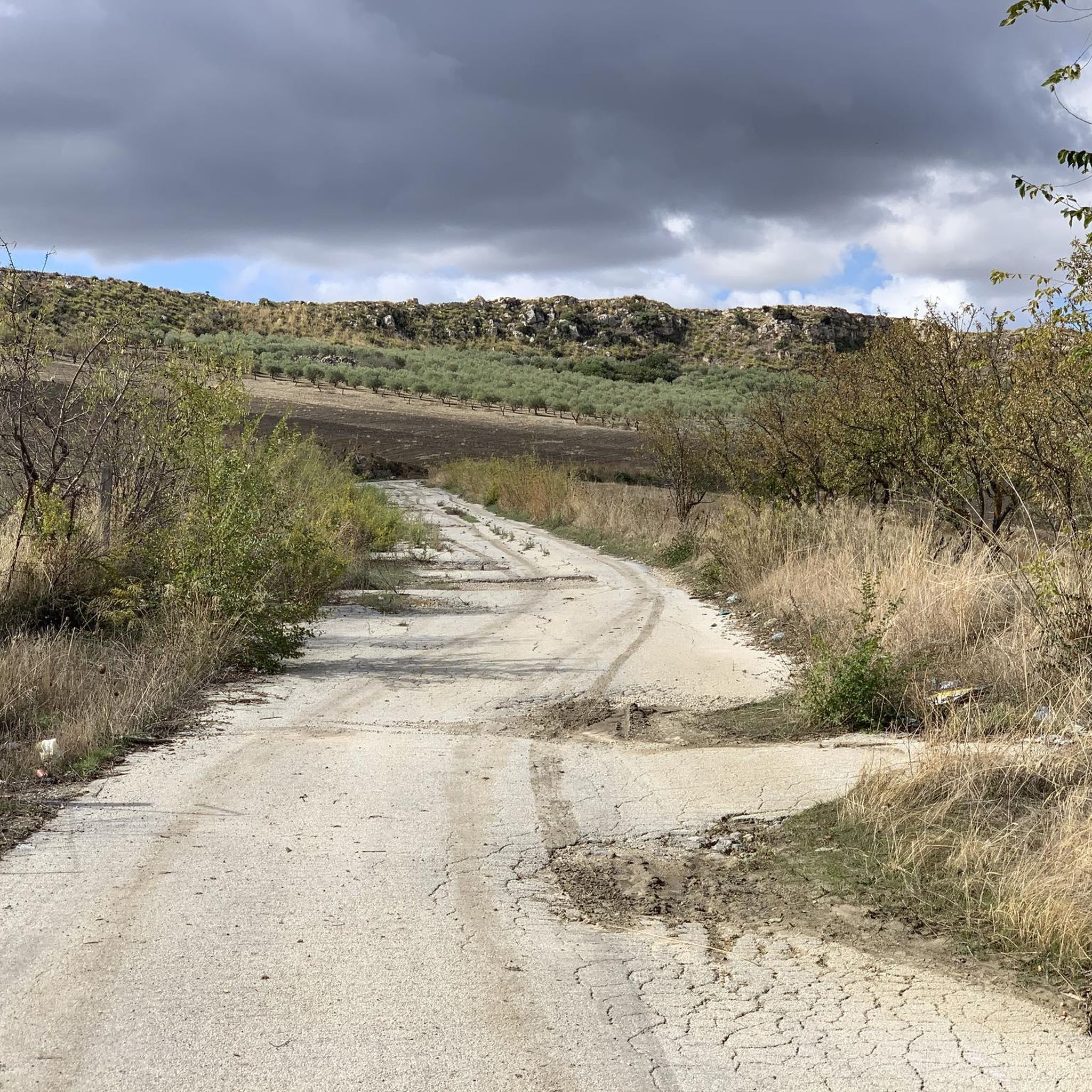
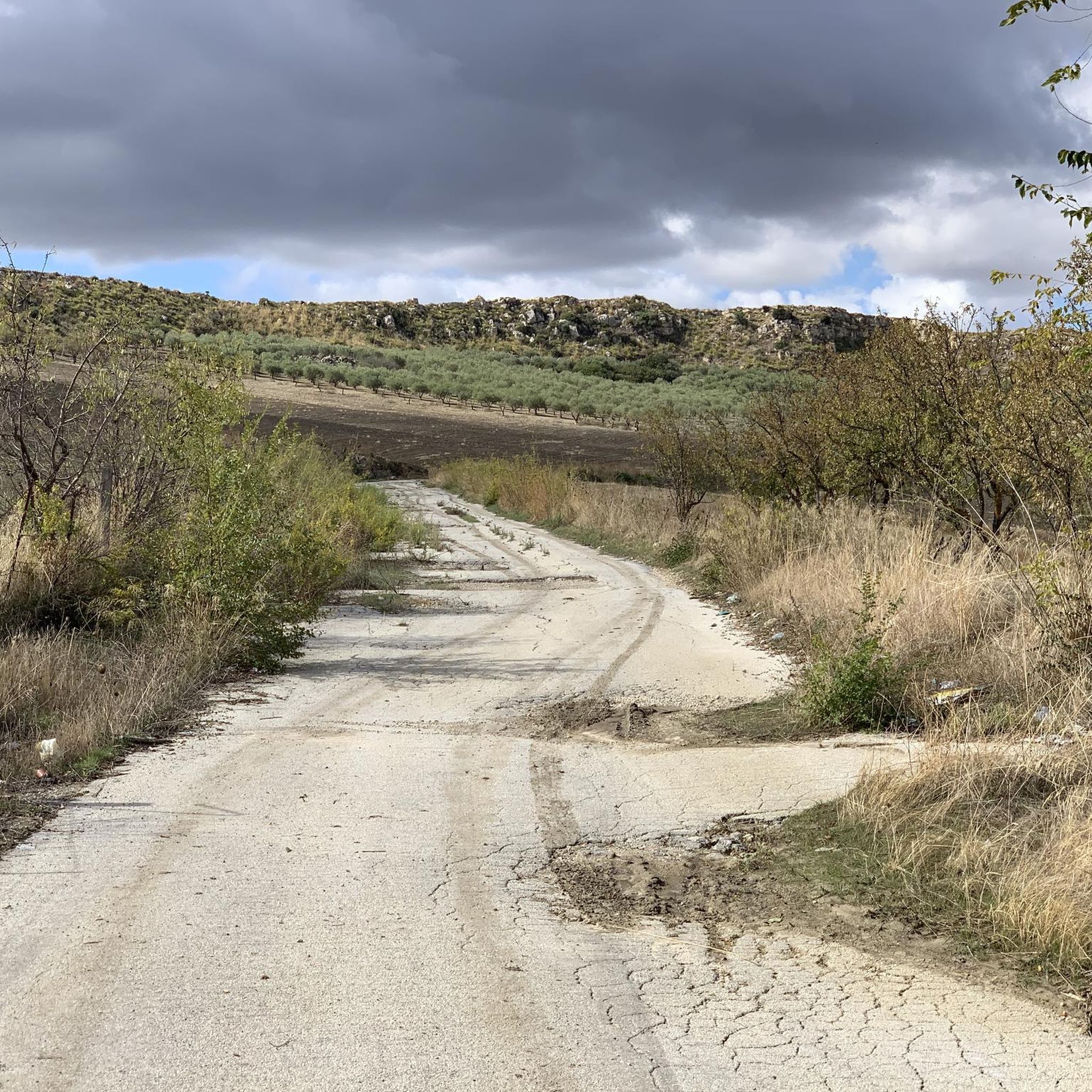
For those wishing to visit it; unfortunately I often see the gate closed, better call some information office. Or secondary entrance (piece of network missing) next to the gate open 24h / 24 😉
1
0
Frequently Asked Questions
What kind of historical sites can I explore around Riesi?
The region around Riesi is rich in history, featuring several significant historical sites. You can visit ancient military fortresses like Mazzarino Castle, which dates back to the 9th-10th century. Other notable historical attractions include the Church of Santa Maria delle Grazie, a Norman-era religious building, and the Church of the Most Holy Crucifix of the Elm, Mazzarino, with origins from the 10th-11th century.
Are there any castles to visit near Riesi?
Yes, the area boasts impressive castles. The most prominent is Mazzarino Castle, a Norman military fortress. Although only a single cylindrical tower and some walls remain, it offers a glimpse into its ancient past. Another significant historical castle is the Norman Castle of Pietraperzia, known for its rich history.
What religious buildings are worth seeing around Riesi?
Several historical religious buildings are found in the vicinity. The Church of Santa Maria delle Grazie is a small, isolated church dating back to the Norman age. You can also explore the Church of the Most Holy Crucifix of the Elm, Mazzarino, which was rebuilt in 1756 and houses a wooden crucifix. Additionally, the Duomo of Santa Maria della Neve (Mazzarino) is a beautiful example of Sicilian late Baroque architecture.
What outdoor activities can I do near these attractions?
The region around Riesi offers various cycling opportunities. You can find numerous routes for different cycling styles. For example, there are challenging cycling tours like the 'From Riesi to Ravanusa between archaeological sites and ancient mines' or the 'Riesi, Pietraperzia, Barrafranca and Mazzarino' loop tour. You can explore more options in the Cycling around Riesi guide.
Are there road cycling routes available near Riesi?
Yes, road cycling enthusiasts will find several routes. Options range from moderate loops like 'Sommatino Town Center loop from Sommatino' to more difficult ones such as the 'Bulala Loop – Scenic Coastal Cycling Route loop from Riesi'. Discover detailed routes in the Road Cycling Routes around Riesi guide.
Where can I find mountain biking trails around Riesi?
For mountain biking, there are trails suitable for various skill levels. You can try the 'Giro ad anello da Mazzarino' or the 'Castello di Pietraperzia – Canal Water Trough loop from Pietraperzia' for moderate rides. More challenging trails include 'Anello Riesi Ferrovia Miniera da Riesi'. Find more information in the MTB Trails around Riesi guide.
What is the best time of year to visit Riesi attractions?
The best time to visit Riesi and its attractions is typically during the spring (April to June) and autumn (September to October). During these months, the weather in Sicily is pleasantly mild, making it ideal for exploring historical sites and enjoying outdoor activities without the intense heat of summer.
Are there family-friendly things to do around Riesi?
Exploring the historical castles and churches can be an engaging activity for families. Children might enjoy the stories behind ancient fortresses like Mazzarino Castle, imagining knights and historical events. The architectural details of the churches also offer interesting sights for all ages.
What do visitors enjoy most about the attractions around Riesi?
Visitors appreciate the rich historical and cultural significance of the sites. The ancient origins of places like Mazzarino Castle and the Norman-era churches provide a deep dive into Sicilian heritage. The community has shared 27 photos and given 3 upvotes, highlighting the visual appeal and historical depth of these attractions.
How much time should I allocate to visit the attractions in the Riesi area?
To fully appreciate the historical and architectural details of the main attractions like Mazzarino Castle, the various churches, and the Norman Castle of Pietraperzia, it is recommended to dedicate at least a full day, or even two, to the region. This allows for leisurely exploration and travel between sites.
Are there any lesser-known historical sites or 'hidden gems' near Riesi?
While not widely publicized, the Church of Santa Maria delle Grazie, isolated outside Mazzarino and dating back to the Norman age, can be considered a hidden gem. Its historical significance and tranquil setting offer a unique experience away from more crowded spots.
Most popular routes around Riesi

Get inspired with the komoot mobile app


Explore more
Still not found the Highlight you’re looking for? See guides of the top attractions in other regions:
