The best cycling routes around Ocre
4.6
(231)
3,979
riders
235
rides
Touring cycling routes around Ocre are set within the mountainous Abruzzo region of Italy, characterized by the Apennine peaks and the Sirente Velino Regional Park. The landscape features high-altitude prairies, verdant valleys, and forested hillsides. Ocre itself is situated on the northeastern slopes of Mount Ocre-Mount Cagno, providing varied terrain for cyclists.
Best touring cycling routes around Ocre
- The most popular touring cycling route is Gravel bike ride from Rocca di Cambio towards Val d'Arno - loop tour, a…
Last updated: October 9, 2026
5.0
(2)
48
riders
68.7km
04:40
1,170m
1,170m
Hard bike ride. Very good fitness required. Mostly paved surfaces. Suitable for all skill levels.
5.0
(1)
31
riders
19.7km
01:15
210m
210m
Moderate bike ride. Good fitness required. Mostly paved surfaces. Suitable for all skill levels.

5.0
(1)
24
riders
34.5km
03:09
680m
680m
Hard bike ride. Very good fitness required. Mostly paved surfaces. Suitable for all skill levels.
3.8
(6)
40
riders
41.2km
02:47
510m
510m
Hard bike ride. Very good fitness required. Mostly paved surfaces. Suitable for all skill levels.
5.0
(3)
22
riders
15.0km
00:59
160m
160m
Moderate bike ride. Good fitness required. Mostly paved surfaces. Suitable for all skill levels.
Get access to more routes and recommendations from other explorers.
Already have an account?
Our route recommendations are based on thousands of hikes, rides, and runs completed by other people on komoot.
Start today with a free account
Your next adventure awaits.
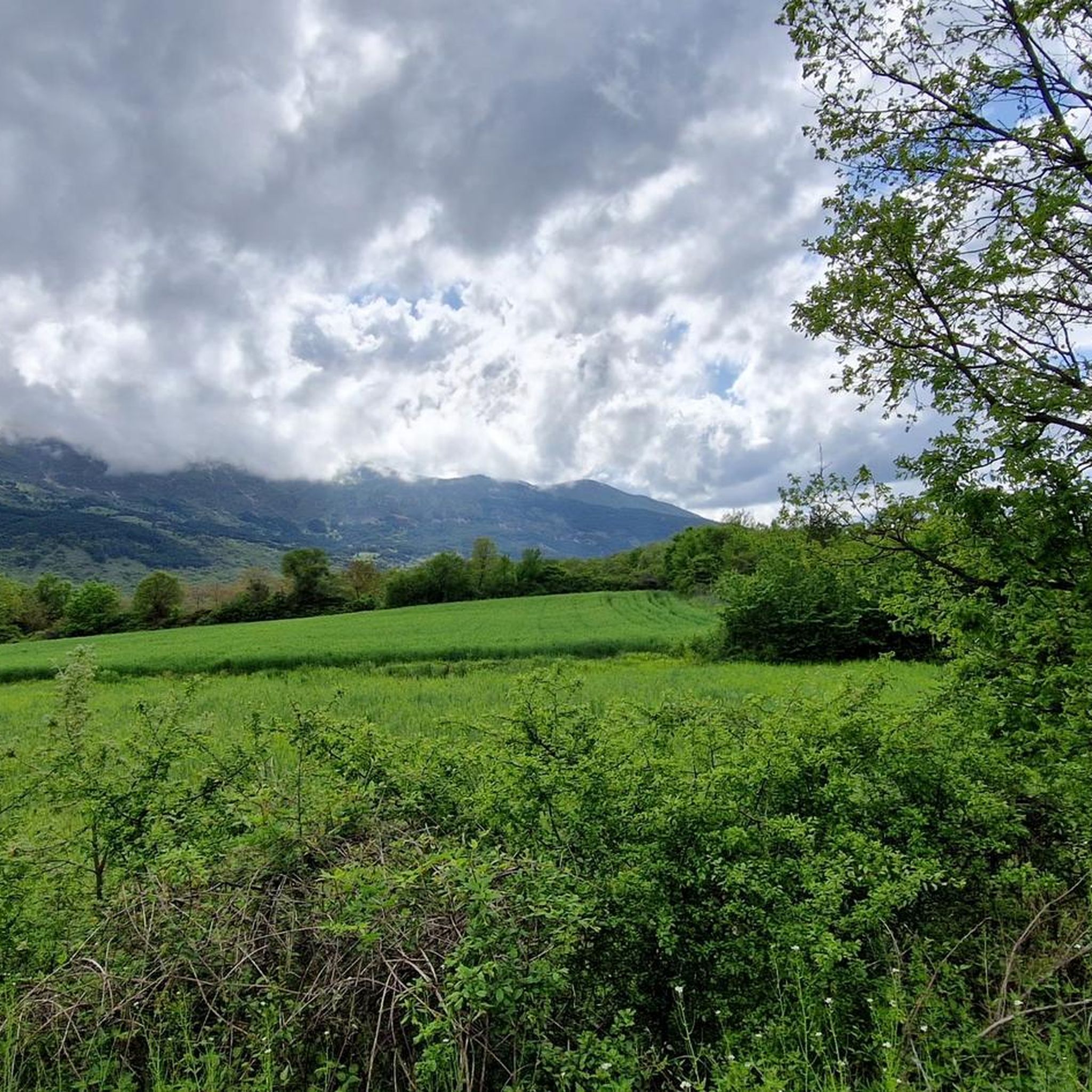
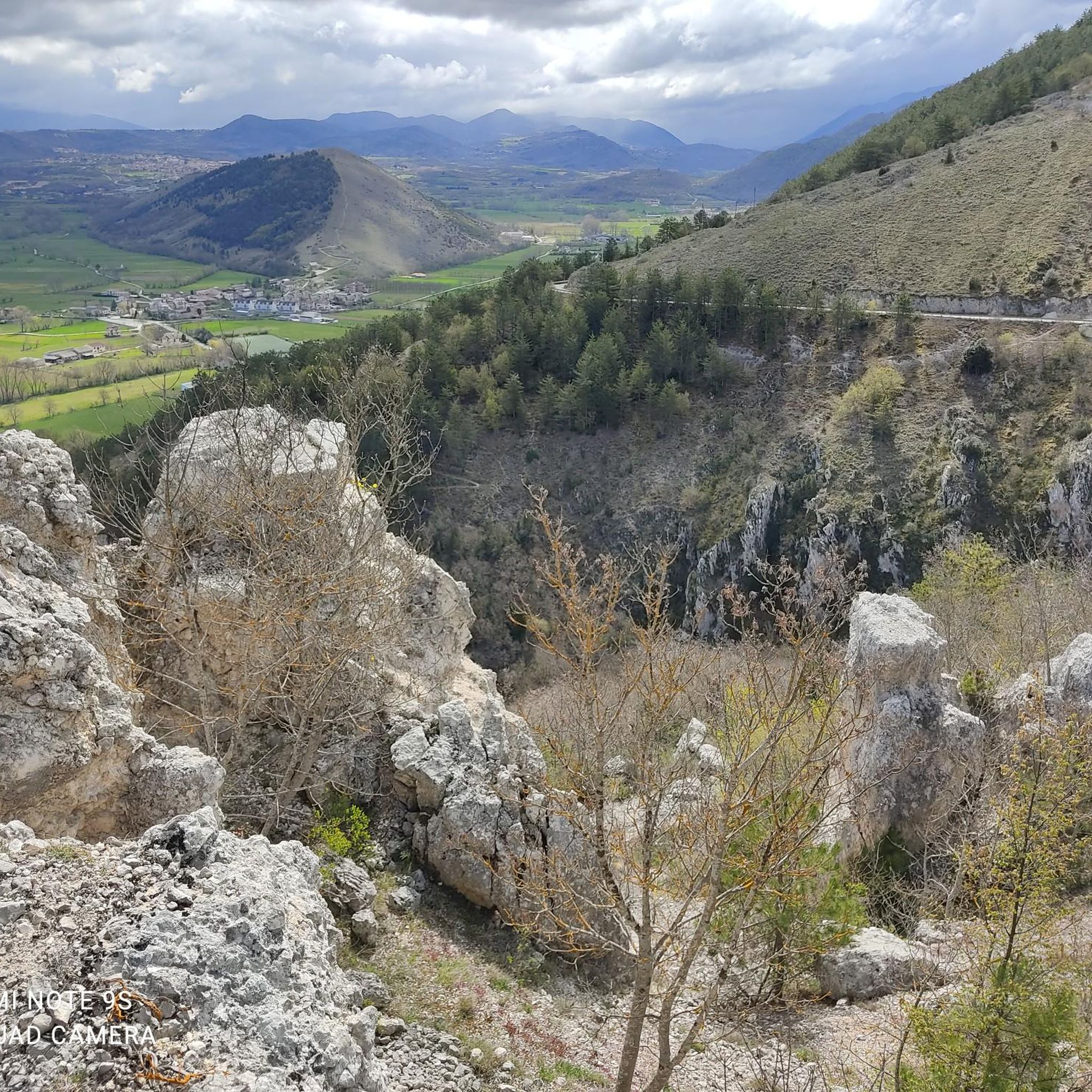
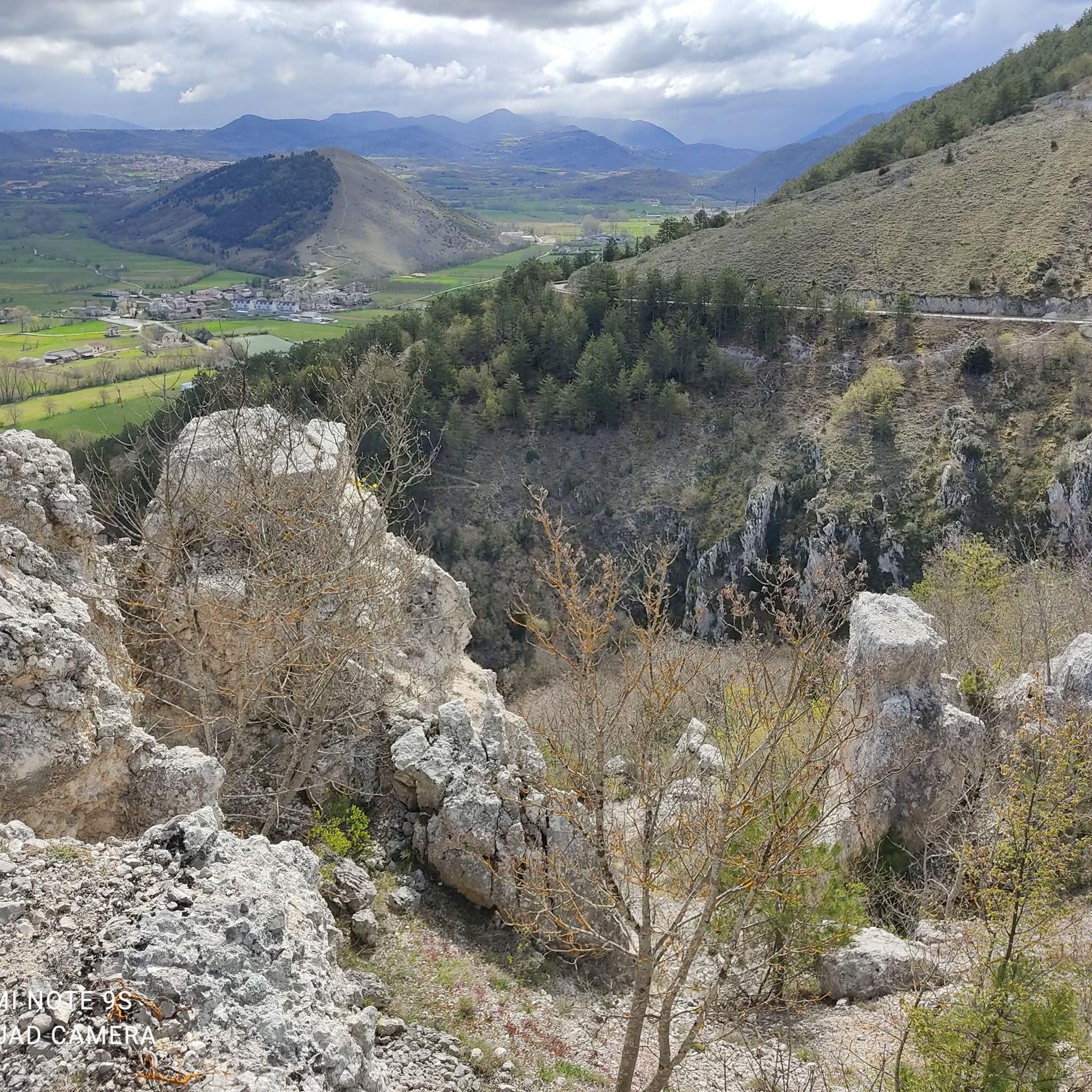
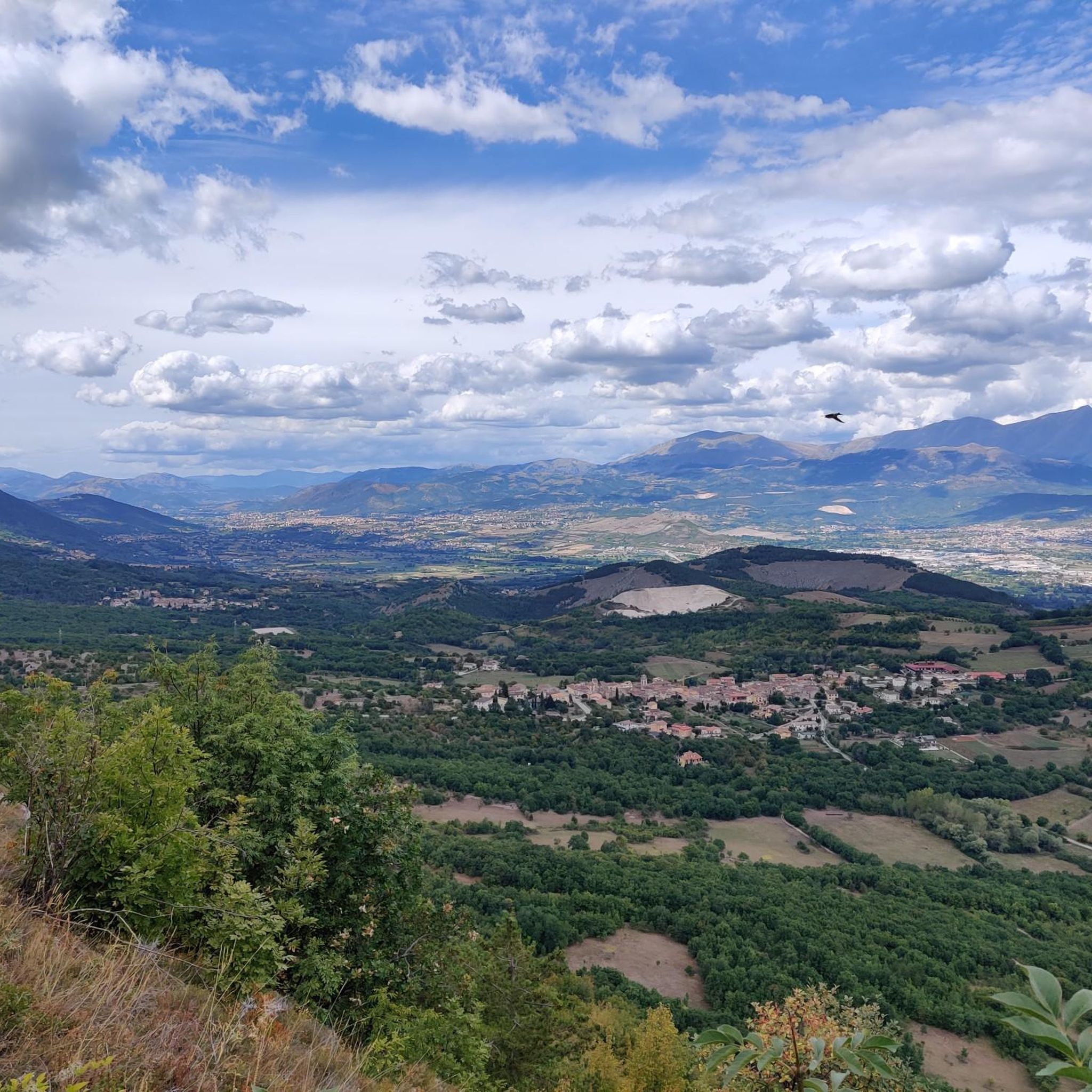
Tips from the Community

Historical tidbit: the pope who said 'no' The pontificate of Pope Celestine V lasted only five months. The simple hermit did not feel at all at home amidst the political intrigues and corruption of Rome. That is why he made a decision that was unprecedented at the time: he voluntarily resigned from his office to return to his humble life in the mountains. He thus became the first pope in history to abdicate of his own accord. After his death, his body was interred in the Basilica of Collemaggio. His impressive crystal mausoleum can still be admired there today. A special link with Pope Benedict XVI After the severe earthquake that struck L'Aquila in 2009, Pope Benedict XVI visited the heavily damaged basilica. At the tomb of Celestine V, he silently laid down his own pallium, the woolen shoulder band he had received at his papal inauguration. At that moment, it seemed like a subdued tribute to his predecessor. Only four years later did this gesture take on a deeper meaning. In 2013, Benedict XVI himself voluntarily resigned as pope, the first since the late Middle Ages. His symbolic tribute to Celestine V proved, in retrospect, to be a remarkable harbinger of his own historic decision. Thus, centuries after Celestine V's abdication, the Basilica of Collemaggio once again closed a special chapter in papal history.
5
0
The Basilica of Santa Maria di Collemaggio is undoubtedly the architectural and spiritual jewel of L'Aquila. Located at the end of an impressive green lawn just outside the city walls, this 13th-century church combines a unique Abruzzian Romanesque-Gothic style with a history that forever changed the Catholic Church. The history of the basilica is closely linked to Pietro da Morrone, a devout hermit who had retreated to the remote mountains of Abruzzo. According to tradition, the Virgin Mary appeared to him with the instruction to build a church on the hill of Collemaggio. Construction began in 1287. A few years later, in 1294, the Church found itself in a deep crisis. After the death of the pope, the cardinals had failed to elect a successor for more than two years. Finally, they appointed the simple hermit Pietro as a compromise. To everyone's surprise, he accepted the choice and was crowned Pope Celestine V in this basilica – and not in Rome. Shortly after his coronation, Celestine V issued the "Bulla del Perdono", a papal bull that granted believers full forgiveness of their sins if, with sincere repentance, they passed through the Holy Door (Porta Santa) of the basilica on August 28 or 29. This created the very first Holy Year or Jubilee in the history of the Catholic Church, six years before Rome introduced its own official jubilee. This special tradition, known as "La Perdonanza Celestiniana", is still celebrated every year and has been recognized as intangible cultural heritage by UNESCO.
5
0
Explanation for the difference in the number of gargoyles! One of the most striking facts about the Fontana delle 99 Cannelle is that the fountain has 99 water jets, but only 93 sculpted mask heads. According to legend, L'Aquila was founded by 99 villages, but historical research indicates that there were actually 93. Therefore, in 1272, architect Tancredi da Pentima equipped the fountain with 93 stone masks. To later complete the famous legend of the 99, six additional gargoyles without mask faces were added. According to tradition, these six simple spouts refer to the six wounds of Christ. Thus, the fountain is not only a magnificent monument, but also a unique blend of history, symbolism, and legend. Moreover, for many visitors, it remains a fun challenge to count all 99 water jets themselves.
5
0
In L'Aquila, a rich medieval past effortlessly merges with admirable modern resilience. The proud capital of Abruzzo rises in full glory and is best discovered on foot. Wandering through the atmospheric streets, you'll encounter one architectural treasure after another. For example, start at the iconic Fontana delle 99 Cannelle, where 99 mystical stone masks continuously spout water. Climbing further up, you'll reach the massive 16th-century Forte Spagnolo. From this impressive fortress, you can enjoy a sweeping view of the rugged, often snow-capped peaks of the Gran Sasso massif. The city's rich history is also palpable in the many beautifully restored palazzi and churches. For instance, the Basilica di San Bernardino overwhelms every visitor with a breathtaking baroque ceiling adorned with gold leaf. After all the cultural immersion, lively squares like Piazza del Duomo invite you for a well-deserved break. It's the perfect place to enjoy the local cuisine and a good glass of Abruzzese wine at an outdoor cafe. As a grand finale, the Basilica di Santa Maria di Collemaggio should not be missed. This striking, pink-and-white checkered church houses a true world first: the very first Holy Door in the world. Thanks to the central, free parking facilities just outside the city walls, this compact art city is the ideal destination for a carefree and inspiring cultural walking holiday.
4
0
The monumental Scalinata di San Bernardino in L'Aquila is one of the most characteristic and photogenic urban elements of the city. This wide, stately staircase connects the lower Via Fortebraccio with the higher Piazza di San Bernardino. Origin and architecture (16th century) Simultaneous construction: the staircase was built in the 16th century, at the same time as the Renaissance facade of the Basilica di San Bernardino (designed by architect Cola dell'Amatrice between 1525 and 1542). It served as the perfect extension of the religious complex. Urban planning purpose: the staircase had two functions. Practically, it was intended to connect the lower districts around the city walls with the centre. Aesthetically, it created a theatrical and baroque visual axis; pilgrims coming from below saw the monumental church facade slowly tower above them. Imposing dimensions: The staircase is no less than 30 metres wide and 68 metres long. The steps were deliberately designed to be very low and deep, so that large groups of worshippers and processions could comfortably ascend the slope. Striking features and details. The watchtowers: at the beginning (bottom) and end (top) of the staircase are a total of four small, robust turrets (torrette) that flank the staircase and give it a slightly military or monumental character. The edicolae: along the sides of the staircase are three stone niches or chapels (edicole) per side. These historically served during religious festivals and processions.
5
0
The two fountains in the square have a long history dating back to the early 14th century. The travertine water basins, originally built around 1303, were located on either side of the market square. They provided fresh drinking water for merchants, travelers, and residents, and were an essential part of daily life in the city. In 1934, the fountains were given a new look. Following the construction of a modern aqueduct, the Italian sculptor Nicola D'Antino was commissioned to embellish the historic fountains. He added a striking bronze statue to each fountain: two different male nude figures casually leaning on the upper water basin. These statues give the centuries-old fountains their characteristic appearance and form a captivating combination of medieval architecture and twentieth-century sculpture.
4
0
Did you know that the Fontana delle 99 Cannelle legend says it has 99 gargoyles, in tribute to the 99 villages that founded L'Aquila? Those who look closely will see stone masks above the gargoyles, which according to tradition represent castle lords or protective spirits. It is striking that there are only 93 mask heads. Historians believe that the remaining six gargoyles were added later to complete the symbolic number 99. The fountain dates back to 1272, and its five water basins were formerly used as a wash place. Numerous legends also circulate around the fountain: for example, the architect is said to have taken the secret of the water source to his grave, and knights would have ritually cleansed themselves here before entering the Basilica di Collemaggio.
5
0
The Basilica of Santa Maria di Collemaggio is the absolute symbol of L'Aquila. This magnificent basilica has a fascinating history full of mysteries, unique traditions, and remarkable resilience. Some interesting facts: Founded by a hermit who became Pope (and resigned) 👑 The church was founded in 1288 by the monk and hermit Pietro del Morrone. According to legend, the Virgin Mary appeared to him in a dream and instructed him to build a church here. Just a few years later, in 1294, this same hermit was crowned Pope Celestine V here. However, he found the papacy in Rome so corrupt and overwhelming that he voluntarily resigned after barely five months, one of the few popes in history to do so. His mummified body is still displayed in a glass shrine in the basilica. The world's very first "Holy Door" (The Celestinian Forgiveness) Upon his coronation, Pope Celestine V issued a papal bull: the Perdonanza Celestiniana (the Celestinian Forgiveness). Anyone who entered through the Holy Door (on the left side of the church) between August 28th and 29th and showed sincere repentance was granted full remission of sins. This was a revolutionary historical moment: it was the very first time in history that poor people could receive forgiveness for free, without having to pay for indulgences or go on a crusade. This ritual still takes place every year and is on the UNESCO list of intangible cultural heritage. The secret of the unique pink-and-white facade 🌸 The iconic facade of the basilica is world-famous for its geometric pattern of pink and white stones. The stones come from the nearby Abruzzo region (specifically from the quarries of San Demetrio). According to historians and esotericists, the pattern is not merely decorative: the play of lines contains symbolism that was linked at the time to the Knights Templar, who had close ties to the church's founder. The miraculous recovery after the 2009 earthquake 🏗️ During the devastating earthquake in 2009, the roof above the altar and the transept completely collapsed, severely damaging the unique baroque structures. The restoration of the basilica became a national prestige project.
5
0
Frequently Asked Questions
How many touring cycling routes are available around Ocre?
There are over 220 touring cycling routes around Ocre, offering a wide range of options for different skill levels and preferences. The komoot community has explored nearly 4,000 of these routes.
What types of landscapes can I expect to see while cycling near Ocre?
Cycling around Ocre, you'll experience the diverse landscapes of the Abruzzo region. This includes imposing Apennine peaks, high-altitude prairies like Campo Imperatore, verdant inland hills, and forested valleys. The area is part of the Sirente Velino Regional Park, providing a mountainous backdrop and varied terrain.
Are there easy touring cycling routes suitable for beginners or families?
Yes, while many routes are challenging, there are options for easier rides. The region offers 13 easy touring cycling routes. For example, routes through the valleys or along quieter roads can be more suitable for families or those seeking a less strenuous experience. Always check the route details for elevation and distance.
What are some challenging touring cycling routes for experienced riders?
Experienced cyclists will find plenty of challenging routes, with 154 difficult options available. Routes like the Campo Imperatore Plateau – Campo Imperatore loop from Paganica (81.7 km with over 1800m elevation gain) or the even longer Campo Imperatore Plateau – Campo Imperatore Plateau loop from Paganica (108 km with over 2200m elevation gain) offer significant climbs and expansive views across the high-altitude plateau, often compared to a 'mini Tibet'.
What is the best time of year for touring cycling in Ocre?
The best time for touring cycling in Ocre and the surrounding Abruzzo region is generally from spring to autumn (April to October). During these months, the weather is more favorable, and the high-altitude areas are accessible. Summer offers warmer temperatures, while spring and autumn provide milder conditions and beautiful scenery. Winter cycling can be challenging due to snow and colder temperatures, especially in the higher Apennine peaks.
Are there any notable attractions or landmarks I can visit along the cycling routes?
Yes, cycling routes often pass by historical and natural attractions. You might encounter sites like the Fountain of the 99 Spouts or the Stiffe Waterfall. The region also features medieval villages, ancient abbeys, and natural monuments like Piani di Pezza. Ocre itself has historical sites such as its 13th-century castle and the Convent of S. Angelo.
Can I rent bicycles in or near Ocre?
While specific bike rental shops in Ocre are not detailed, the broader Abruzzo region, particularly within national park centers, often offers e-bike and mountain bike rentals. It's advisable to check with local tourist information centers or accommodations in larger towns like L'Aquila for current rental options.
What do other touring cyclists enjoy most about cycling in Ocre?
The area is highly rated by the komoot community, with an average score of 4.6 stars from over 200 reviews. Reviewers often praise the dramatic Apennine scenery, the variety of routes from challenging mountain passes to serene valleys, and the opportunity to combine cycling with cultural and historical exploration through ancient villages.
Are there any circular touring cycling routes around Ocre?
Yes, many routes are designed as loops, allowing you to start and finish in the same location. An example is the Gravel bike ride from Rocca di Cambio towards Val d'Arno - loop tour, which offers a moderate 43 km ride through varied terrain. Other challenging loops include those around the Campo Imperatore Plateau.
Is public transport available to Ocre for cyclists with bikes?
Public transport options to Ocre, especially from larger cities like L'Aquila, may exist, but carrying bicycles on regional buses or trains can be restricted or require special arrangements. It's recommended to check with local transport providers in advance regarding their policies for bicycles to ensure a smooth journey.
Are there any specific permits required for cycling in the Sirente Velino Regional Park or other national parks?
Generally, specific permits are not required for cycling on established roads and trails within the Sirente Velino Regional Park or other national parks in Abruzzo. However, it's always good practice to respect park regulations, stay on marked paths, and be aware of any specific rules regarding protected areas. For detailed information, you can consult the official park websites.
Can I find bike-friendly accommodation or cafes near the cycling routes?
The Abruzzo region is increasingly recognized as bike-friendly. While specific establishments in Ocre are not listed, many agriturismos, B&Bs, and hotels in the wider area cater to cyclists, offering secure bike storage, washing facilities, and sometimes even packed lunches. Similarly, cafes in villages along popular routes are generally welcoming to cyclists. It's advisable to check reviews or contact accommodations directly for bike-friendly amenities.
Most popular attractions around Ocre

Get inspired with the komoot mobile app


Explore more
Browse the best Cycling routes in other regions.
