The best walks and hikes around Roding
4.5
(728)
3,158
hikers
133
hikes
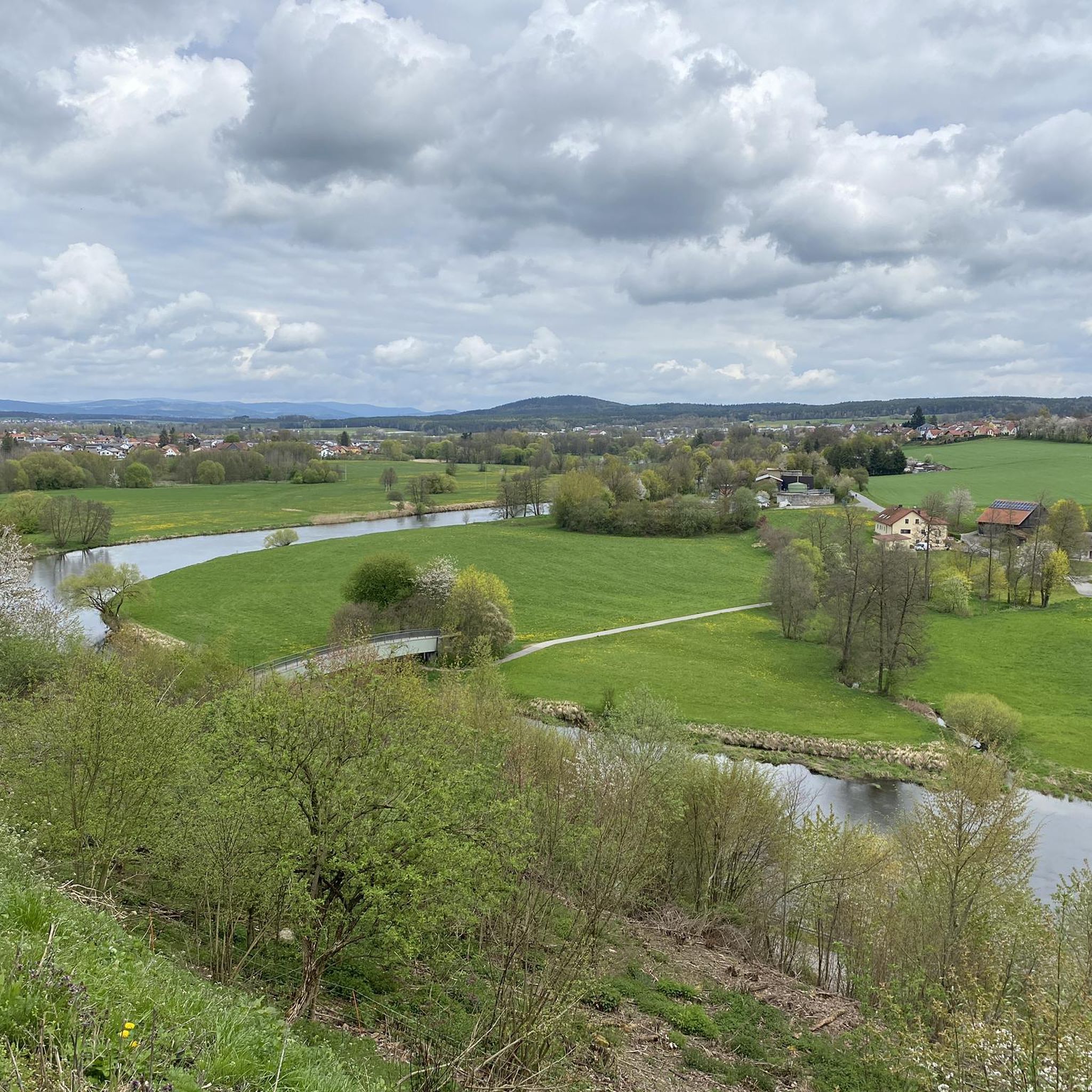
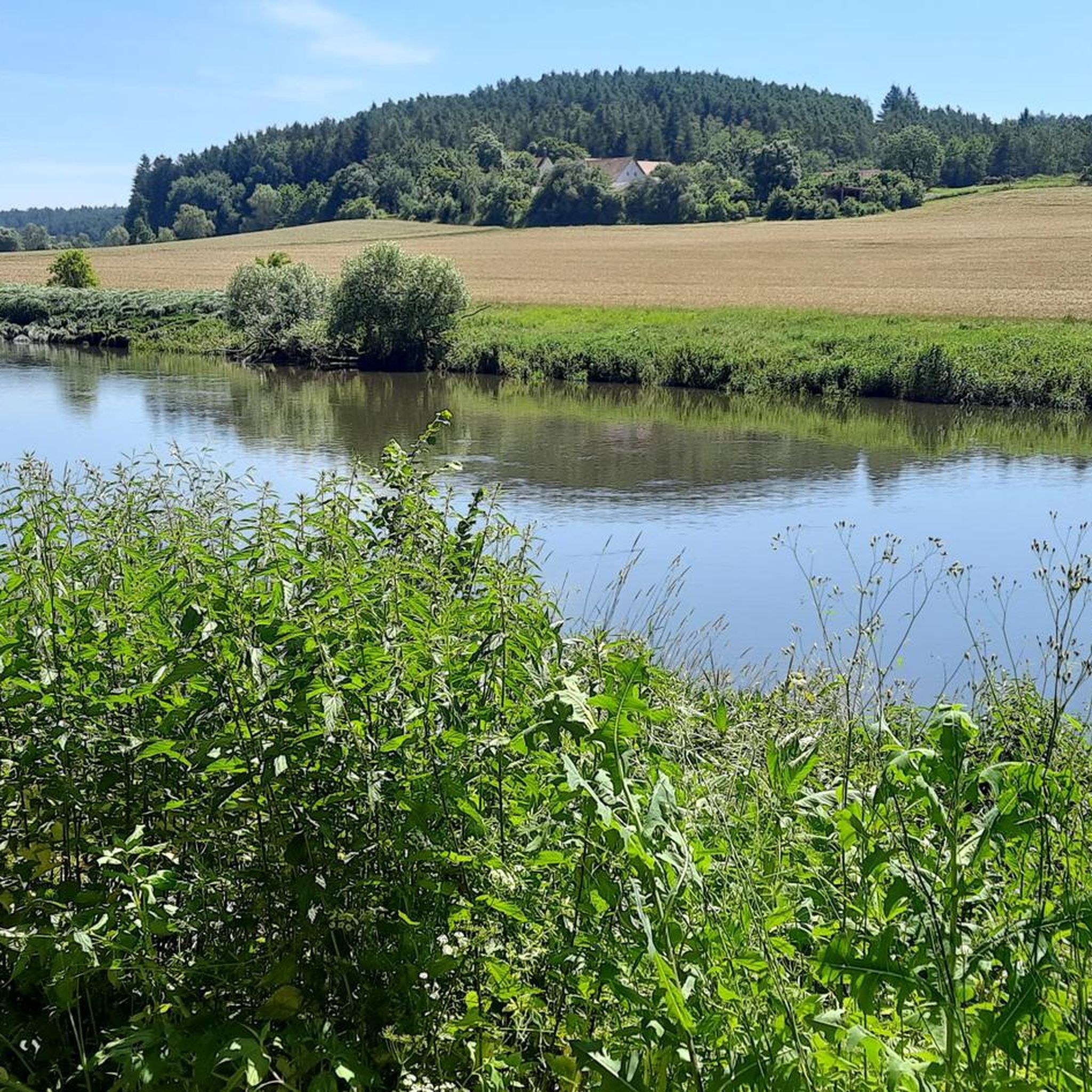
Hiking around Roding, Germany, offers diverse landscapes for outdoor enthusiasts. The region is characterized by the scenic Regen River, which provides opportunities for riverside walks, and the tranquil Neubäuer Lake, a central point for outdoor activities. Varied terrain includes wooded hills and forests, offering a range of experiences from leisurely strolls to more demanding hikes. This area provides a well-developed network of trails suitable for different fitness levels.
Best hiking trails around Roding
- The most popular hiking route is Neubäuer…
Last updated: October 8, 2026
4.5
(182)
673
hikers
Easy hike. Great for any fitness level. Easily-accessible paths. Suitable for all skill levels.
4.4
(146)
501
hikers
7.06km
01:48
20m
20m
Easy hike. Great for any fitness level. Easily-accessible paths. Suitable for all skill levels.

4.7
(28)
111
hikers
9.30km
02:38
200m
200m
Moderate hike. Good fitness required. Easily-accessible paths. Suitable for all skill levels.
4.6
(19)
98
hikers
12.2km
03:22
200m
200m
Moderate hike. Good fitness required. Easily-accessible paths. Suitable for all skill levels.
4.2
(21)
110
hikers
4.85km
01:15
20m
20m
Easy hike. Great for any fitness level. Easily-accessible paths. Suitable for all skill levels.
Get access to more routes and recommendations from other explorers.
Already have an account?
Our route recommendations are based on thousands of hikes, rides, and runs completed by other people on komoot.
Start today with a free account
Your next adventure awaits.

Tips from the Community

Always worth a visit, great highlight.
0
0

Also good to ride with MTB 🚵 But be careful and don't overestimate yourself.
0
0

Quiet place for a break.
0
0

Church of Our Lady of the Nativity Around 1500, Count Fürstenberg built a castle, which presumably stood in the current village center of Neubäu. A wooden chapel was built under the caretaker Hans Georg Rotenthan after 1599. It was expanded with an annex in 1806. Neubäu belonged to the parish of Neukirchen-Balbini. Since 1817, a cooperator was responsible for pastoral care in Neubäu, thus making Neubäu a branch of Neukirchen-Balbini. In 1900, Johann Müllbauer, the parish priest of Neubäu, asked the bishop for permission to build a new church. After the foundation stone was laid by Pastor Christian Wimmer, the church was built in the Neo-Romanesque style. The architect was Johann Baptist Schott from Munich. The sandstone blocks were brought from the nearby Schwärzenberg mountain by manual labor and haulage. Despite a minor accident, construction progressed rapidly. The new church was completed in 1901. On July 20, 1907, Bishop Antonius Henle ceremoniously consecrated the new church. The church consists of a nave crossed by a transept, a church tower to the west, and a semicircular apse to the east. Its walls are articulated externally with pilaster strips and arched friezes. The top square story of the church tower houses the clock tower, while the octagonal one above, behind the bell tower arcades designed as bifora, houses the belfry, in which four church bells hang. A pointed helmet sits on top. The interior is spanned by a groined vault. The transverse arches rest on consoles. The church furnishings date from the time of construction. On the high altar, we see the crucified Jesus with Mary and John; above the crucifixion group, a pelican can be seen. According to legend, the pelican gives its blood to feed its young; this was seen as a symbol of Jesus Christ, who gave his life for us. The left side altar depicts the Sacred Heart motif, while the right side altar depicts the Holy Family. The baptismal font stands in front of the right side altar. In the vault of the apse, Christ the Judge of the World greets the high altar, filled with light and splendor. In the organ loft, Christ is depicted as the "Good Shepherd" surrounded by the four evangelists. Three special images of the Virgin Mary were retained from the old church: the image of the "Mother of God," the image of the "Heart of Mary," and the image of "Mary Help." Source: Information panel and excerpts from www.wikipedia.de
2
0
Franz Sackmann Bridge The bridge is named after Franz Sackmann. He was born on December 17, 1920, in Roding. He moved to Munich in 1933. He graduated from high school in 1939 and then began studying chemistry at the University of Munich. From January 1940, he served as a soldier, almost exclusively at the front, including Stalingrad. He was wounded four times and received numerous decorations. He was a reserve lieutenant. He escaped from Russian captivity in 1945. In 1945, he became a founding member of the CSU and the Junge Union (Young Union). He continued his chemistry studies in 1946; he passed the state examination in 1951. From 1951, he was a member of the CSU state executive committee; from 1950 to 1953, he was executive chairman of the CSU Munich. From 1952 to 1956, he was the state chairman of the Junge Union, and from 1956 to 1961, he was a member of the federal executive committee of the Junge Union of Germany. From 1956, he was the district administrator of the Roding district. He spent time studying politics in the USA, Italy, France, England, and Switzerland. He was a member of the Board of Trustees of the German Research Institute. Since December 5, 1966, he has been State Secretary in the State Ministry for Economic Affairs and Transport. He has been a member of the Bavarian State Parliament since 1954. Franz Sackmann died on October 14, 2011, in Roding. Source: www.bayern.landtag.de
3
0
Heilbrünnl Pilgrimage Church The first religious symbol at the Heilbrünnl was a martyr's column. The predecessor of the present church was a chapel, which had stood since 1668 on the site of a spring known for its miraculous properties. Because the pilgrimage there was very popular, the chapel was expanded just 16 years later. As early as 1677, Johann Schelchshorn from Regensburg cast a 76-pound bell for the Heilbrünnl, which was adorned with an image of the Immaculate Conception. The reputation of the pilgrimage to the Heilbrünnl had grown so much that it became necessary to enlarge the chapel between 1684 and 1691. After 1690, the pilgrimage site was generally called the "Chapel of Our Lady at the Heilbrünnlein." The church in its present form was built in 1730. The church is a late Baroque hall building with a hipped roof and a simple, unadorned facade. The choir is slightly recessed and supports an octagonal turret with an onion dome, profiled by pilasters. A two-story cellar with a hipped roof was added next to the church entrance in 1749. The church is oriented north-south, with the choir to the south. The rich furnishings of the Heilbrünnl contrast with the simple exterior and reflect the church's significance as a pilgrimage destination. The miraculous image, the origin of the pilgrimage to the Heilbrünnl, dates from the 17th century. It is a replica of the miraculous image in the Old Chapel in Regensburg. The image is held by two angel figures, while figures of Mary's parents, Joachim and Anne, stand to the left and right between two pillars. The altarpiece features a painting of God the Father, seated on a globe, surrounded by a wreath of clouds. Next to it is a dove symbolizing the Holy Spirit. The left side altar depicts a crucifixion scene, created in 1671. The figures at the altar are Saints Joseph, Florian, and the Apostle Peter. The right side altar displays a portrait of Saint Sebastian accompanied by Saint Irene, created in 1873. The figures at this side altar depict Saint Wendelin and Saint Leonard, and the third is the Apostle Paul. The fountain basin, made of red marble with white flecks, is oval and about one meter high. Source: Excerpts from www.wikipedia.de
4
0
Blue Grotto It is not a Marian cult site, as is often assumed. It began as a love affair, the love of a Rodinger – he later even became mayor – for a beautiful young girl named Maria Zimmerer. Unfortunately, this girl died of appendicitis at a very young age and is buried in Munich, where she had been employed. In 1929, the enamored Rodinger erected this statue in memory of his beloved, carved from sandstone by the stonemason Hofinger from Oberkreith. There was no road to the grotto at that time. So the statue and all the materials had to be transported by boat across the Regen River from Wiesing. "Dieß'n Wack" was involved in its installation and also immortalized himself with a small painting to the left of the statue. The pastor of Roding at the time had concerns about the grotto, arguing that the statue might be considered a Marian cult site and thus harm the Heilbrünnl (Holy Spring). But this concern was unfounded. In 1977, the Roding-Mitterdorf Hiking Club built a footbridge around the grotto to Fischerwinkel, making it easily accessible on foot. Members of the Wiesing Volunteer Fire Department have thinned out the trees and bushes in front of the grotto to provide a better view from Wiesing. Source: Local information
1
0
Blue Grotto It is not a Marian cult site, as is often assumed. It began as a love affair, the love of a Rodinger – he later even became mayor – for a beautiful young girl named Maria Zimmerer. Unfortunately, this girl died of appendicitis at a very young age and is buried in Munich, where she had been employed. In 1929, the enamored Rodinger erected this statue in memory of his beloved, carved from sandstone by the stonemason Hofinger from Oberkreith. There was no road to the grotto at that time. So the statue and all the materials had to be transported by boat across the Regen River from Wiesing. "Dieß'n Wack" was involved in its installation and also immortalized himself with a small painting to the left of the statue. The pastor of Roding at the time had concerns about the grotto, arguing that the statue might be considered a Marian cult site and thus harm the Heilbrünnl (Holy Spring). But this concern was unfounded. In 1977, the Roding-Mitterdorf Hiking Club built a footbridge around the grotto to Fischerwinkel, making it easily accessible on foot. Members of the Wiesing Volunteer Fire Department have thinned out the trees and bushes in front of the grotto to provide a better view from Wiesing. Source: Local information
3
0
Frequently Asked Questions
How many hiking trails are available in Roding?
Roding offers a wide selection of hiking opportunities, with over 130 trails to explore. These routes cater to various preferences, ranging from leisurely strolls to more challenging treks through diverse landscapes.
What kind of landscapes and natural features can I expect to see while hiking in Roding?
Roding's hiking trails showcase a diverse natural landscape, characterized by dramatic rocky forest gorges, picturesque valleys with streams, and unique rock formations. The Hölltal Rock Formations and the wild, romantic Höllbach Valley (Hölle) Nature Reserve are prominent features. Many trails also follow the scenic course of the Regen River.
Are there any easy, family-friendly hikes in Roding?
Yes, Roding has plenty of easy options suitable for families. One popular choice is the Neubäuer Weiher Forest Playground – Neubäuer Pond loop from Neubäu, an easy 3.2-mile trail that explores the area around Neubäuer Pond. The region offers over 95 easy routes, ensuring there's something for everyone.
Where can I find more challenging hikes in the Roding area?
For experienced hikers seeking a challenge, Roding offers a few more demanding options. The Höllbachtal Trail is a highlight trail that requires sturdy shoes and surefootedness. More extensive options like the Goldsteig via Oberschleif (8.6 miles) or the Engelberg trail (19.0 miles) also provide a significant workout.
Are there any circular hiking routes in Roding?
Many of Roding's trails are designed as circular routes, allowing you to start and end at the same point. A great example is the Lake Neubäuer – Neubäuer Pond loop from Neubäu am See, a 4.4-mile trail that takes you through the scenic landscape surrounding Neubäuer Lake.
What historical landmarks or attractions can I see along the hiking trails?
Beyond natural beauty, Roding's trails often lead to historical sites. The Schwarzenburg Castle Ruins, perched on the Schwarzwihrberg, offers not only a glimpse into the past but also panoramic views of the surrounding hills from its renovated keep. You might also encounter other castle ruins like Kürnburg Castle Ruins.
Are there any hikes that follow the Regen River?
Yes, the Regen River is a central feature of Roding's outdoor offerings, and several hiking trails follow its course. A popular moderate option is the Regen River Trail – Waldhirs Inn Heilbrünnl loop from Roding, which covers 5.9 miles and includes some elevation gain along the river.
What do other hikers enjoy most about hiking in Roding?
The hiking experience in Roding is highly regarded by the komoot community, with an average rating of 4.6 stars from over 600 reviews. Hikers often praise the diverse terrain, from tranquil riverside paths to wooded hills, and the well-developed network of trails that cater to various fitness levels.
Are there any trails with good viewpoints in Roding?
Absolutely. The hike to Schwarzenburg Castle Ruins is particularly rewarding for its panoramic views from the Schwarzwihrberg. Additionally, trails like the Regen River Trail – View of the River Regen loop from Roding offer scenic vistas of the river and surrounding landscapes.
Can I find shorter walks for a quick outdoor experience?
Yes, Roding provides several shorter, easier walks perfect for a quick escape into nature. Options like Marc-Aurel-Ufer (1.7 miles) or Am Brückenbasar (1.8 miles) are ideal for a leisurely stroll. The Franz Sackmann Bridge – Waldhirs Inn Heilbrünnl loop from Roding is another accessible 3.3-mile route.
Most popular routes around Roding
Most popular attractions around Roding

Get inspired with the komoot mobile app


Explore more
Browse the best Hikes in other regions.
