Top 19 Castles around Borgonovo Val Tidone
Best castles around Borgonovo Val Tidone provide a glimpse into the rich history and architecture of the region. Located on the first slopes of the Val Tidone hills, this area features several notable castles. These structures showcase medieval and Renaissance architectural elements, reflecting centuries of defensive and aristocratic history. Visitors can explore well-preserved fortresses and stately residences.
Best castles around Borgonovo Val Tidone
- The most popular castles is Rivalta Castle, a castle that is a large fortified complex overlooking the Trebbia. This sumptuous residence has been chosen by royalty and was once a significant military bastion.
- Another must-see spot is Rezzanello Castle and Church of San Michele Arcangelo, a castle and religious building. Visitors can catch a glimpse of the well-kept castle, which has a trapezoidal plan with four corner towers and a large internal courtyard, surrounded by a seven-hectare park.
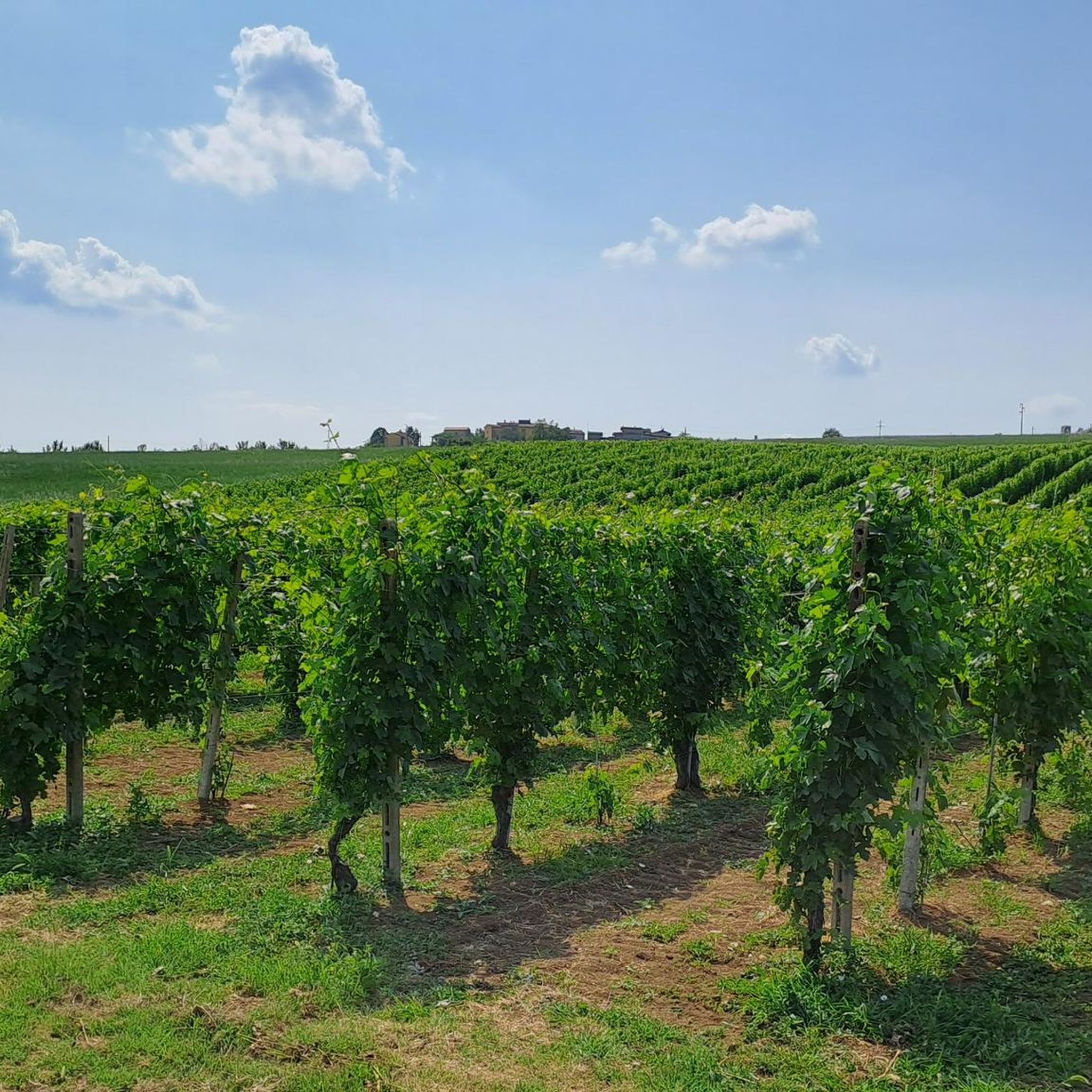
- Visitors also love Momeliano Castle, a historical castle built in brick and stone. This mighty castle, documented since 1368, features a U-shaped plan with four towers and battlements, and houses the cellars of an adjacent winery.
- Borgonovo Val Tidone is known for fortified complexes, ducal properties, and noble residences. The area offers a variety of castles to see and explore, from defensive structures to stately homes with historical frescoes and parks.
- The castles around Borgonovo Val Tidone are appreciated by the komoot community, with more than 80 upvotes and over 110 photos shared by visitors.
Last updated: July 1, 2026
Rivalta Castle
Highlight • Castle
Translated by Google •
Tip by

Rezzanello Castle and Church of San Michele Arcangelo
Highlight • Castle
Translated by Google •
Tip by

Sign up now to discover places like this
Get recommendations on the best single tracks, peaks, & plenty of other exciting outdoor places.
Sign up for free
Rocca of Borgonovo Val Tidone
Highlight • Castle
Piazza Giuseppe Garibaldi, 18, 29011 Borgonovo Val Tidone PC
Translated by Google •
Tip by

Castello di Monticello
Highlight • Castle
Showing Translation
Tip by
Boffalora Castle and Tidone Trail
Highlight • Castle
Translated by Google •
Tip by

Sign up for free to discover even more castles around Borgonovo Val Tidone.
Sign up for free
Already have an account?
Start today with a free account
Your next adventure awaits.
Login or Signup

Tips from the Community

Il Castello di Monticello (Gazzola, PC) is a 14th-century medieval fortification located on the ridge between Valtrebbia and Valluretta. Mentioned since 1372, it was long owned by the Arcelli family and, after being passed to the Farnese and other families, it returned to the Arcelli family in the 19th century. In 1945 it was the scene of partisan battles.
13
0

However, the church of Monticello is dedicated to Saint Stephen :-)
1
0

Monticello Castle was first mentioned in 1372, when it was occupied by troops loyal to the Pope during an anti-Visconti uprising. Located on the ridge that divides Val Trebbia and Val Luretta, Monticello Castle represents a pleasant and harmonious whole from a landscape point of view with the surrounding hilly environment typical of the lower Piacenza Apennines (540 meters above sea level). The structure has an irregular quadrangular plan, but currently shows the clearly visible signs of the various and heterogeneous architectural modifications and additions undergone over the centuries. The front of the castle is on the eastern side, which is dominated by the mass of the portal, equipped in ancient times with a drawbridge; a sturdy square tower rises to the left of the entrance to guard the south side, while two round turrets are placed to protect the north side. The interior develops around two courtyards of different proportions, facing the main buildings, used as homes. All around the fortress, structures of an evidently agricultural nature have arisen in more recent times, which have little to do with the original structure and which emphasize its hybrid aspect, but at the same time soften its forms. The castle is currently used as the headquarters of a local agricultural company, but it is worth noting the stark contrast between the unused parts of the building, almost at risk of collapse in some places, and the inhabited parts, which are better preserved.
1
0
The Castle was first mentioned in a document from 1001. On this occasion, Bishop Sigifredo granted the Benedictine monks of San Savino (Piacenza) some land, including the area of the Castle. The building has a trapezoidal plan and has four circular towers. The first of the four towers dates back to around the year 1000, which only later became four. The Castle was often the scene of clashes and battles. In 1212, the Guelphs of Piacenza took refuge there, threatened by the Ghibellines of Visconti, but they were worsted because they were defeated later in two battles. In the fourteenth century, the Castle was inhabited by Gabriello Boccapiccina, then it passed to the Chiapponi family. When the Chiapponi family died out, in the eighteenth century they were replaced by the Scotti di San Giorgio, who profoundly adapted the building, transforming it into a stately home. At the beginning of the twentieth century, the Castle belonged for a short period to the Lombardi of Genoa; it was then sold to Eng. Giuseppe Manfredi, who had it restored by Prof. Camillo Guidotti. From 1930 to 1987, the building was owned by the Ursuline Mothers of Piacenza. Today, the Castle is used by the current owner as a venue for private events.
0
0

Rivalta Castle is one of the very few European examples of manors surrounded by an ancient village that has largely remained intact today.
0
0
Rivalta Castle is one of the very few European examples of manors surrounded by an ancient village that has largely remained intact today. Mentioned in documents as early as 1048, it is a sumptuous noble residence, surrounded by a magnificent park. The castle shows a quadrangular planimetric development and is characterized by a singular fifteenth-century cylindrical tower, which ends with the unmistakable small tower
0
0
The history of this castle has been tormented, many changes of hands conditioned by bloody events, frauds and family extinctions due to lack of heirs. In 1412 it was owned by the Arcelli family (who were most likely responsible for the first construction). Arranged on a rectangular plan with five stone and brick towers. Four towers that stand out from the corners and an entrance donjon in the center of the north-west façade. The towers have different shapes but all are quadrangular and have battlements covered by roofs. The structure is made of stone except for the projections of the towers which are made of bricks. Although externally it still appears to be in good condition, the complex has significant stability problems.
0
0
The Castle of Rezzanello appears mentioned for the first time in a document from 1001. On this occasion Bishop Sigifredo granted some land to the Benedictine monks of San Savino, including the Castle area. The castle has a trapezoidal plan with four towers that stand out from the corners and a large internal courtyard. The turrets have a round base, are elegantly slender and crowned by a projection supported by arches and covered by a conical roof. The same type of arches in double order creates a decorative motif in the attic. To adapt it to housing needs, numerous large windows were opened, regularly distributed on all the facades. Located in the center of a valley, it is surrounded by a splendid seven-hectare park with centuries-old plants, a fountain and streams. At the beginning of the twentieth century, the castle was transformed into a stately home. The new owner, Eng. Giuseppe Manfredi entrusted the intervention to the architect Camillo Guidotti who conducted it according to the late-romantic criteria then in vogue, altering the original design.
1
0
Frequently Asked Questions
What historical significance do the castles around Borgonovo Val Tidone hold?
The castles in this region offer a deep dive into centuries of history, from medieval defensive structures to noble residences. For instance, the Rocca of Borgonovo Val Tidone was founded in 1196 as a defensive oppidum and later served as a ducal camera for the Farnese family. Castello di Castelnovo Val Tidone, despite numerous reconstructions, largely preserves its 14th-century structure and famously hosted Frederick I Barbarossa in 1155, highlighting its strategic importance.
Are there family-friendly castles to visit in the area?
Yes, several castles are suitable for family visits. The Rocca of Borgonovo Val Tidone is listed as family-friendly and offers a journey through its well-preserved medieval and Renaissance architectural elements. Another great option is Rivalta Castle, a large fortified complex that visitors often enjoy exploring with their families.
What are the best times of year to visit the castles around Borgonovo Val Tidone?
The best time to visit is generally during the spring (April-June) and autumn (September-October) months. The weather is typically mild and pleasant for exploring the castle grounds and any surrounding parks. Summer can also be enjoyable, though it may be warmer. Winter visits are possible, but some outdoor areas or specific castle tours might have reduced hours or availability.
Can I find any castles with notable architectural features?
Absolutely. The Rocca of Borgonovo Val Tidone is constructed entirely of brick, showcasing typical 14th-century Po Valley castle elements like sawtooth motifs and a deep moat. Its entrance hall features 16th-century frescoes. Castello di Castelnovo Val Tidone has a trapezoidal shape with round corner towers and a charming courtyard with a 16th-century Travertine well, reflecting its military architectural style with later aristocratic refinements.
Are there opportunities for outdoor activities near these castles?
Yes, the region around Borgonovo Val Tidone offers various outdoor activities. You can find excellent cycling routes, such as those detailed in the Cycling around Borgonovo Val Tidone guide, which includes routes like the 'Castello di Zavattarello – Lago di Trebecco loop'. For mountain biking enthusiasts, the MTB Trails around Borgonovo Val Tidone guide offers options like the 'Molato Dam – Tidone Trail loop'.
Which castles have unique historical collections or art?
The Rocca of Borgonovo Val Tidone, also known as Castello Zandemaria, was transformed into a stately residence by the Marquises Zandemaria, who converted it into a pinacoteca (art gallery) housing works by renowned masters. Although the artworks were sold in 1875, the castle itself, now the municipal seat, allows visitors to appreciate its historic frescoes and architectural evolution.
What is the typical duration for visiting a castle in this region?
The time required to visit a castle can vary. For a comprehensive tour of a larger castle like Castello di Castelnovo Val Tidone, which offers guided tours and has a historic park, you might spend 1.5 to 2 hours. Smaller or privately owned castles might offer shorter visits or be viewable from the exterior. It's always a good idea to check specific castle opening hours and tour durations beforehand.
Are there any castles that are surrounded by natural parks or gardens?
Yes, Castello di Castelnovo Val Tidone is surrounded by a large park featuring old trees and 18th-century sculptures, offering a pleasant natural setting to explore alongside the fortress. Similarly, Rezzanello Castle and Church of San Michele Arcangelo is set within a splendid seven-hectare park with centuries-old plants, a fountain, and streams.
How can I get to Castello di Castelnovo Val Tidone?
Castello di Castelnovo Val Tidone is located in the municipality of Borgonovo Val Tidone. While it serves as a private residence, it is accessible to the public through guided tours. For detailed directions and visitor information, it is recommended to check resources like visitpiacenza.it.
What do visitors particularly enjoy about the castles around Borgonovo Val Tidone?
Visitors frequently appreciate the well-preserved historical architecture and the sense of stepping back in time. For example, the village surrounding Rivalta Castle is often described as splendid, offering a complete experience with its castle, hotel, and dining options within ancient medieval buildings. The historical significance and the picturesque settings are also highly valued.
Are there any castles that are also wineries or have connections to local produce?
Yes, Momeliano Castle, a mighty historical castle documented since 1368, houses the cellars of an adjacent winery. This offers a unique opportunity to combine a historical visit with an experience of the region's viticulture.
What kind of terrain can I expect on hiking trails near the castles?
The region around Borgonovo Val Tidone, situated on the first slopes of the Val Tidone hills, offers varied terrain. Hiking trails often feature rolling hills, some with moderate elevation changes, and can include paths through vineyards, forests, and along river valleys. You can find more details on specific routes and their difficulty in guides like Gravel biking around Borgonovo Val Tidone, which, while focused on biking, gives an idea of the landscape.
Most popular routes around Borgonovo Val Tidone
Most popular attractions around Borgonovo Val Tidone

Get inspired with the komoot mobile app


Explore more
Looking for the best castles somewhere else? Discover other guides around Borgonovo Val Tidone:
