The best cycling routes around Bettola
4.2
(12)
416
riders
40
rides
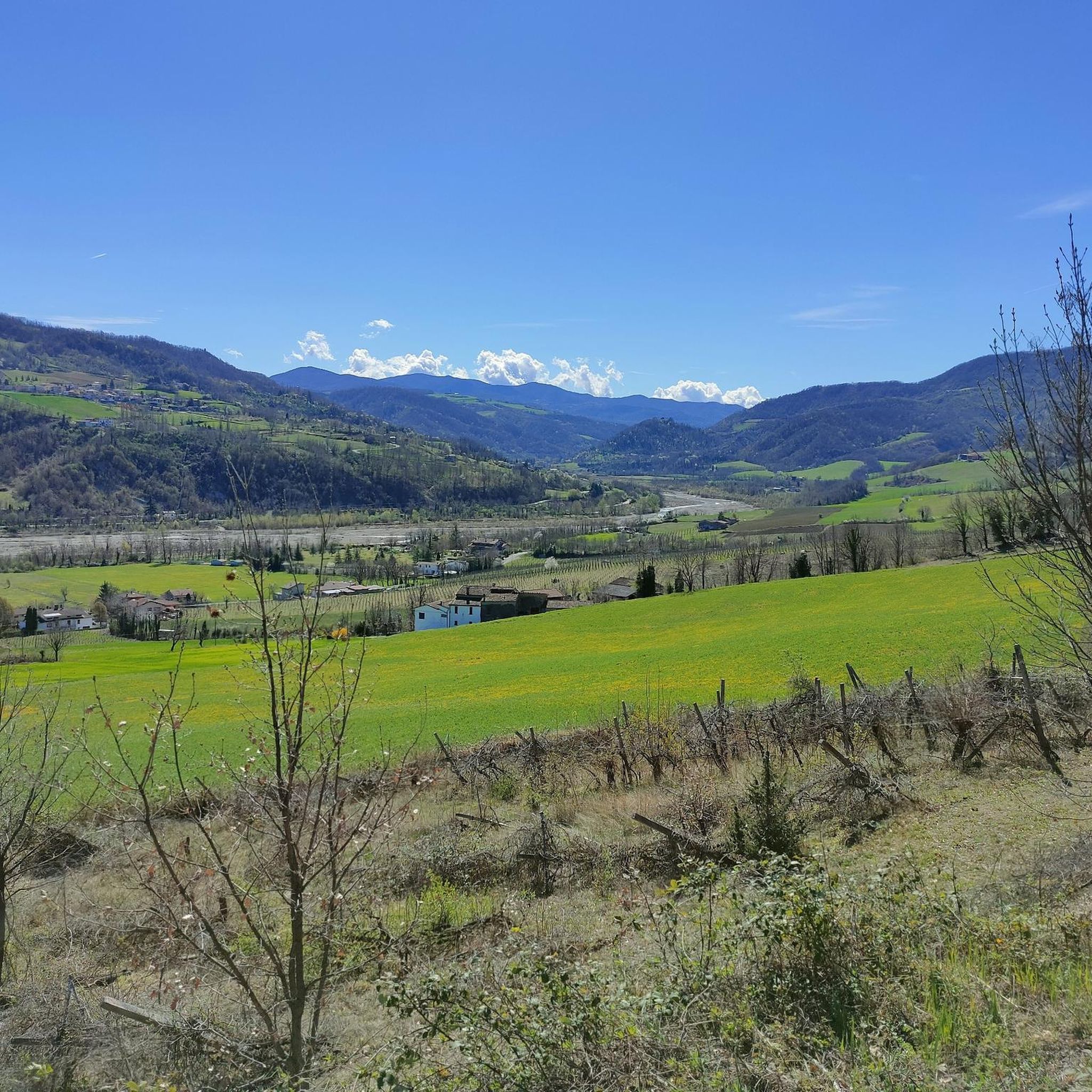
Touring cycling around Bettola offers diverse terrain within the Val Nure and Val Trebbia river valleys, extending into the Apennine foothills. The landscape transitions from gentle gradients along riverine paths to challenging ascents through hills and dense beech forests. Cyclists encounter varied routes, including both paved and unpaved sections, often flanked by rural scenery and historical sites. The region provides a mix of continuous climbs and descents, with panoramic views of the surrounding valleys.
Best touring cycling routes around Bettola
…Last updated: October 18, 2026
5.0
(1)
31
riders
32.9km
02:28
750m
750m
Hard bike ride. Very good fitness required. Mostly paved surfaces. Suitable for all skill levels.
27
riders
81.8km
06:09
1,890m
1,890m
Hard bike ride. Very good fitness required. Mostly paved surfaces. Suitable for all skill levels.

3.0
(1)
30
riders
47.9km
04:24
1,550m
1,550m
Hard bike ride. Very good fitness required. Mostly paved surfaces. Suitable for all skill levels.
5.0
(1)
17
riders
37.5km
03:08
880m
880m
Hard bike ride. Very good fitness required. Mostly paved surfaces. Suitable for all skill levels.
5.0
(1)
20
riders
35.4km
03:06
1,080m
1,080m
Hard bike ride. Very good fitness required. Mostly paved surfaces. Suitable for all skill levels.
Get access to more routes and recommendations from other explorers.
Already have an account?
Our route recommendations are based on thousands of hikes, rides, and runs completed by other people on komoot.
Start today with a free account
Your next adventure awaits.
Tips from the Community

After a stretch that is not at all “cycle-tourist” you descend into this pretty hamlet whose characteristic features are the Church of Sant’Andrea and a fountain of very fresh water.
0
0

A pretty little village with its characteristic castle, a convenient stopover for those taking the Appennino Bike Tour.
1
0
Another hill on the Appennino Bike Tour, going up from Farini you find gentle slopes, along the entire ridge before the hill Apennine panoramas galore.
1
0

Tower where Colombo Domenico, father of Christopher Columbus, was born. Christopher Columbus (Latin Christophorus Columbus) He was born in Genoa, between August 26 and October 31, 1451 – Valladolid, May 20, 1506. He was an Italian navigator and explorer of the Republic of Genoa. Christopher was the firstborn of four children (three boys and a girl) of Domenico Colombo and Susanna Fontanarossa, managers of a small textile company. Probably from Pradello the Colombo family moved to Genoa, with which Bettola had intense commercial relations, to escape the continuous looting of the Visconti militias that raged in the area in the mid-fifteenth century. Piacenza, Bettola and Terrarossa di Mocònesi In the nineteenth century it was instead hypothesized, without substantial foundation, that the Colombo family had Piacenza origins. According to the above conjecture, based on some sixteenth-century documents, Cristoforo would have been the natural son of a nobleman of the Pallastrelli family of Piacenza and of the Jewess Susanna, who only later married Domenico Colombo, Cristoforo's father. According to others, however, the birthplace of Columbus could be identified in the municipality of Bettola, in the Piacenza area. Terrarossa could in fact refer, rather than to the hamlet of Moconesi, to the lands full of iron located near the hamlet of Pradello and owned by the Colombo family. In Pradello there is in fact a medieval stone building that an ancient tradition identifies as the "Colombo tower", used as a small museum. If there is a possibility of the Colombos' Piacenza origins, the supposition of a flight of the family from Pradello to escape the raids of the troops of the Duchy of Milan, which actually occurred in Val Nure in 1439, seems to be discarded. Quinto al Mare, Mocònesi and Bettola are in any case centers located along what was once a trade route between the Genoese and the Po Valley, so it could be considered probable that Giovanni and Domenico Colombo, grandfather and father of the navigator, moved from Quinto or Terrarossa di Mocònesi to Pradello di Bettola. Wikipedia
2
0

Central hub of the Piacenza mid-mountain, between the Nure and Arda valleys. From Prato Barbieri you can go down to Bettola, Morfasso and Gropparello. You can then go up to Passo Santa Franca, and from there reach Farini passing through Groppallo. Beautiful views guaranteed.
0
0
In Pradello Colombo di Bettola the tower belonged (so it seems) to the family of Christopher Columbus. Home to the Columbian museum
0
0

Very nice dirt roads, really recommended both in Gravel and MTB. Only a few sections are a bit rough.
0
0

Wonderful castle, worth visiting at least once
0
0
Frequently Asked Questions
What kind of terrain can I expect when touring cycling around Bettola?
The region offers a diverse range of terrain, transitioning from gentle gradients along riverine paths in the Val Nure and Val Trebbia to more challenging ascents through hills and dense beech forests as you venture towards the Apennine foothills. You'll encounter both paved and unpaved sections, often flanked by picturesque rural scenery and historical sites.
How many touring cycling routes are available in the Bettola area?
There are over 35 touring cycling routes available around Bettola, catering to various skill levels. While many routes feature challenging climbs and descents, there are also paths with gentler gradients, making the area accessible to a broad spectrum of cyclists.
Are there any circular touring cycling routes near Bettola?
Yes, many routes around Bettola are designed as loops. For example, the Bettola – Prato Barbieri Pass loop from Bettola offers panoramic views, while The Witches' Tree – Bettola loop from Bettola takes you through rural landscapes and forests.
What are some challenging touring cycling routes for experienced riders?
For experienced cyclists seeking a challenge, the Bettola – Passo del Pelizzone loop from Bettola is a difficult 50.8-mile (81.8 km) route featuring continuous climbs and descents through dense forests. Another demanding option is the Tomarlo Pass – Bettola loop from Bettola, which covers nearly 89 km with significant elevation changes.
What can I see along the touring cycling routes around Bettola?
The routes are rich in natural beauty and historical sites. You can cycle through verdant forests, past old farmhouses, and alongside rivers. Notable attractions include the distinctive Ponte Gobbo (Bobbio), various historical castles like Monticello Castle, and natural features such as Riglio Waterfalls and the scenic Monte Denavolo Summit Cross. You might also pass charming villages and the Mulino di Riè.
What do other touring cyclists enjoy most about cycling in Bettola?
The area is highly rated by the komoot community, with an average score of 4.4 stars from over 10 reviews. Cyclists often praise the diverse terrain, the combination of river valleys and challenging hills, and the cultural immersion offered by historical castles and charming villages. The tranquil, less-trafficked roads also contribute to an enjoyable experience.
Are there any family-friendly touring cycling options near Bettola?
While many routes around Bettola involve significant elevation, the region's diverse terrain includes flatter riverine paths, particularly closer to Piacenza, which can be suitable for families. These paths, such as sections of the Trebbia Cycle Route, offer a peaceful environment away from heavy traffic. Look for routes with gentler gradients if cycling with children.
When is the best time of year to go touring cycling in Bettola?
Spring and autumn are generally ideal for touring cycling in Bettola. In spring, you'll enjoy vibrant wildflowers and pleasant temperatures, while autumn offers beautiful foliage. The numerous forests provide ample shade, making summer rides more comfortable, especially in the mornings or late afternoons. Winter can be challenging due to colder temperatures and potential snow in higher elevations.
Are there any specific viewpoints or panoramic spots along the routes?
Yes, the region is known for its panoramic views. The Bettola – Prato Barbieri Pass loop from Bettola offers sweeping vistas from Prato Barbieri Pass, which acts as a natural divide between Val Nure and Val D'Arda. Many routes winding through the upper Val Nure and along mountain ridges also provide extensive views of both the Val Nure and Val Trebbia.
What kind of historical sites can I visit while cycling?
The Piacenza region is famous for its historic castles. Along your routes, you might encounter well-preserved fortresses like Monticello Castle. The area also features charming traditional villages and ancient abandoned farms, offering glimpses into local history and culture. The Sanctuary of Saint Bernardino – Bettola loop from Bettola is another route that passes a significant historical religious building.
Is public transport available to access touring cycling routes in Bettola?
Piacenza, the provincial capital, is a significant cycling hub with good connections. While direct public transport options specifically for touring cyclists to Bettola might be limited, you can often reach Piacenza by train and then cycle to Bettola or other starting points. For detailed information on regional transport, it's advisable to check local bus schedules.
Where can I find information about the Trebbia Cycle Route?
The Trebbia Cycle Route is a notable path in the region, transitioning from urban areas to unpaved roads within the Trebbia River Regional Park. For more details on this specific route and others in the Emilia-Romagna region, you can visit visitemilia.com.
Most popular attractions around Bettola

Get inspired with the komoot mobile app


Explore more
Browse the best Cycling routes in other regions.
