Attractions and Places To See around Deruta - Top 20
Best attractions and places to see around Deruta, a charming hill town in Umbria, Italy, is renowned for its majolica ceramics and artistic heritage. Situated in the Tiber Valley, the town offers picturesque views of the surrounding Umbrian countryside. Visitors can explore notable landmarks, cultural sites, and points of interest that reflect its rich history and traditions. The area's natural clay deposits historically contributed to its ceramic industry.
Best attractions and places to see around Deruta
- The most popular attractions is Rocca Paolina — The Underground City, a historical site that features a mysterious series of tunnels and arched stairwells, remnants of a Renaissance fortress. It offers a unique urban experience with escalators leading through its ancient walls.
- Another must-see spot is Piazza Italia, a viewpoint with impressive statues and benches. It provides a relaxing spot in the city center.
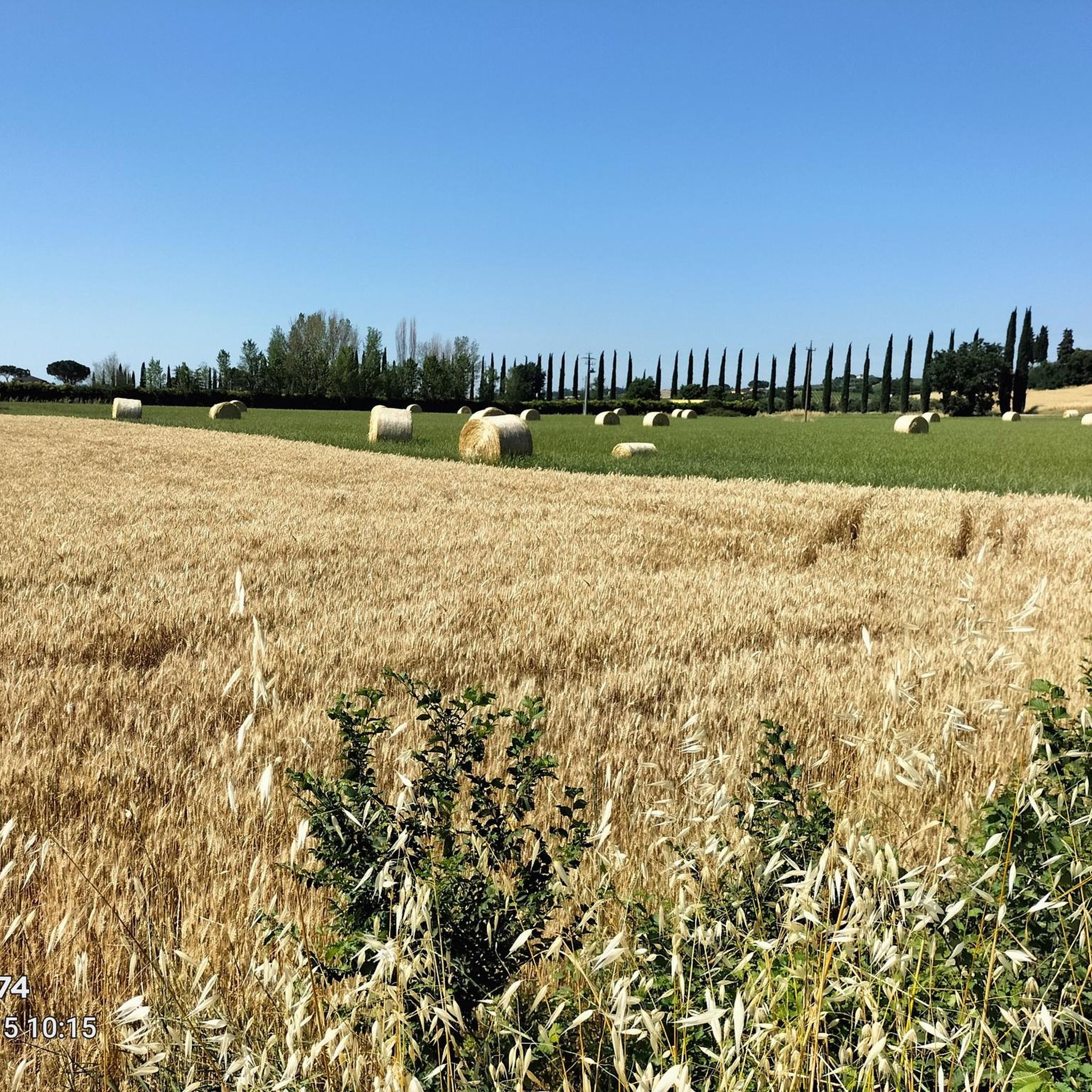
- Visitors also love Cannara village center, a settlement located in the heart of the Umbrian plain. It boasts ancient origins and is known for its PGI red onion.
- Deruta is known for its exquisite majolica ceramics, historic landmarks, and cultural sites. The town offers a variety of attractions to see and explore, from ancient palaces to specialized museums.
- The attractions around Deruta are appreciated by the komoot community, with 95 upvotes and 56 photos shared.
Last updated: October 10, 2026
Rocca Paolina — The Underground City
Highlight • Historical Site
A mysterious series of tunnels gives a premature glimpse of Perugia's nooks and crannies. The jumble of cobbled streets and arched stairwells is essentially all that remains of a once-imposing fortress.
Today these arched foundations are part of a popular route that takes visitors from Piazza Partigiani into the city. Riding through the walls on the many escalators (scale mobili) is a typical urban experience. It feels like entering a lost world, with secret doors that reveal one shop or another for art exhibitions.
Translated by Google •
Tip by

Cannara village center
Highlight • Settlement
Translated by Google •
Tip by

Sign up now to discover places like this
Get recommendations on the best single tracks, peaks, & plenty of other exciting outdoor places.
Piazza Italia
Highlight • Viewpoint
Tip by

Baglioni Tower (Tower of Janus), Torgiano
Highlight • Monument
Translated by Google •
Tip by

Gualdo Cattaneo: Historic Village and Fortress
Highlight • Settlement
Located between the Umbrian and Tiber valleys, on the foothills of the Martani mountains, this village has roots that date back to 975. The Sonoran fortress is its most significant monument. The church of Saints Anthony and Antoninus, dating back to 1260, houses the relics of the two holy martyrs and of Blessed Ugolino in its crypt. The church of Sant'Agostino, founded in 1136, originally Benedictine, features a notable crucifix from 1482.
Despite the steep but short climbs, a visit to this village is absolutely unmissable.
Translated by Google •
Tip by

Sign up for free to discover even more attractions around Deruta.
Already have an account?
Start today with a free account
Your next adventure awaits.
Tips from the Community

Memory of the Renaissance Baglioni family
0
0

ARCHITECTURAL STRATIFICATIONS Visiting this area of the Rocca, where Via Bagliona meets the shorter Via alla Piazza Gran-de, the complex and fascinating interplay between the remains of the medieval quarter and the structures of the papal fortress can be seen more clearly. The limestone and travertine walls of the ground floor of the medieval buildings, the pointed arches of the entrances to houses and shops and the base of Gentile Ba-glioni's tower blend with the brick vaults that cover the streets and the great foundation columns of the fortress. The old buildings were gutted and the underground chambers of the Rocca Paolina made. The destruction of a large part of the city and the construction of the Rocca in its place was a tearing wound for Perugia, which thus lost the quarter with its most elegant houses and the church of Santa Maria dei Servi, which housed many tombs of noble families and remarkable works of art. The keystone of its entrance is still visible. One of the frescoes by Benedetto Bonfigli (second half of the 15th century) in the chapel of the Palazzo dei Priori (now part of the National Gallery of Umbria) represents precisely this area of the medieval city and remains the most important evidence of how it was before the construction of the fortress.
1
0
ROCCA PAOLINA This underground structure, known as Rocca Paolina ("Pauline Fortress"), is the result of the building on buildings that took place in different eras. In the Middle Ages (12th-16th centuries) in this district stood the tower houses of some aristocratic Perugian families. In the 15th century the most important of these buildings belonged to the Baglioni family, the most powerful in Renaissance Perugia. In 1540, after the Salt War, which broke out following the rise in the price of salt and the refusal of Perugia to accept the rule of the Pope, Perugia lost its independence and was annexed to the Papal States. Pope Paul II had a fortress built to definitively subjugate the city and commissioned the architect Antonio da Sangallo the Younger to build it in this area, raising it above the medieval buildings. The fortress was called "Rocca Paolina" because Paul Ill ordered its construction. To speed up the works, which were completed in 1543, the fortress did not completely eliminate the existing buildings, but instead integrated them, preserving many parts (walls, corners, streets, arches), creating the effect of a practically unique underground city. The ancient road network, and in particular the long Via Bagliona that runs through the entire fortress, is still clearly visible today; in the Middle Ages these streets were of course open to the sky, and above the buildings rose tall towers, the instruments and symbols of power and prestige. Only one of the many towers that existed in the medieval city remains intact today in another area of the historic center, the Torre degli Sciri (or Torre degli Scalzi), but more or less considerable fragments can still be identified of about thirty of the forty towers remembered by tradition.
2
0

Piazza Italia is more like a park than a piazza. It is a very small green garden area with a winding path, park benches, colorful flowerbeds, old trees, statues and fountains. Its centerpiece is a large and imposing statue of Vittorio Emanuele II on horseback. At one end is a pond-like fountain with a graceful siren statue. At the other end is a matching fountain with the whimsical statue of a small child.
0
0
From the Partigiani car park, the big surprise! Escalators take you back a thousand years. You enter a medieval landscape with buildings and narrow streets that are as intact as they were centuries ago.
1
0

Gualdo Cattaneo is a small medieval village perched on the slopes of the Martani Mountains in a particularly suggestive position. The first historical information about the town dates back to the time of Emperor Otto II, who founded the castle in 975, entrusting it as a fief to the Germanic count Edoardo Cattaneo. Its perched position was militarily strategic and very often at the center of bitter disputes and domination between Foligno and Spoleto. In the main square of the village stands the mighty fortress from 1494, triangular in shape with three towers communicating with each other. The 13th century parish church is interesting. with a beautiful thirteenth-century crypt inside; the church of Sant'Agostino built in 1136 with frescoes from the Foligno school and the church of Sant'Andrea.
0
0

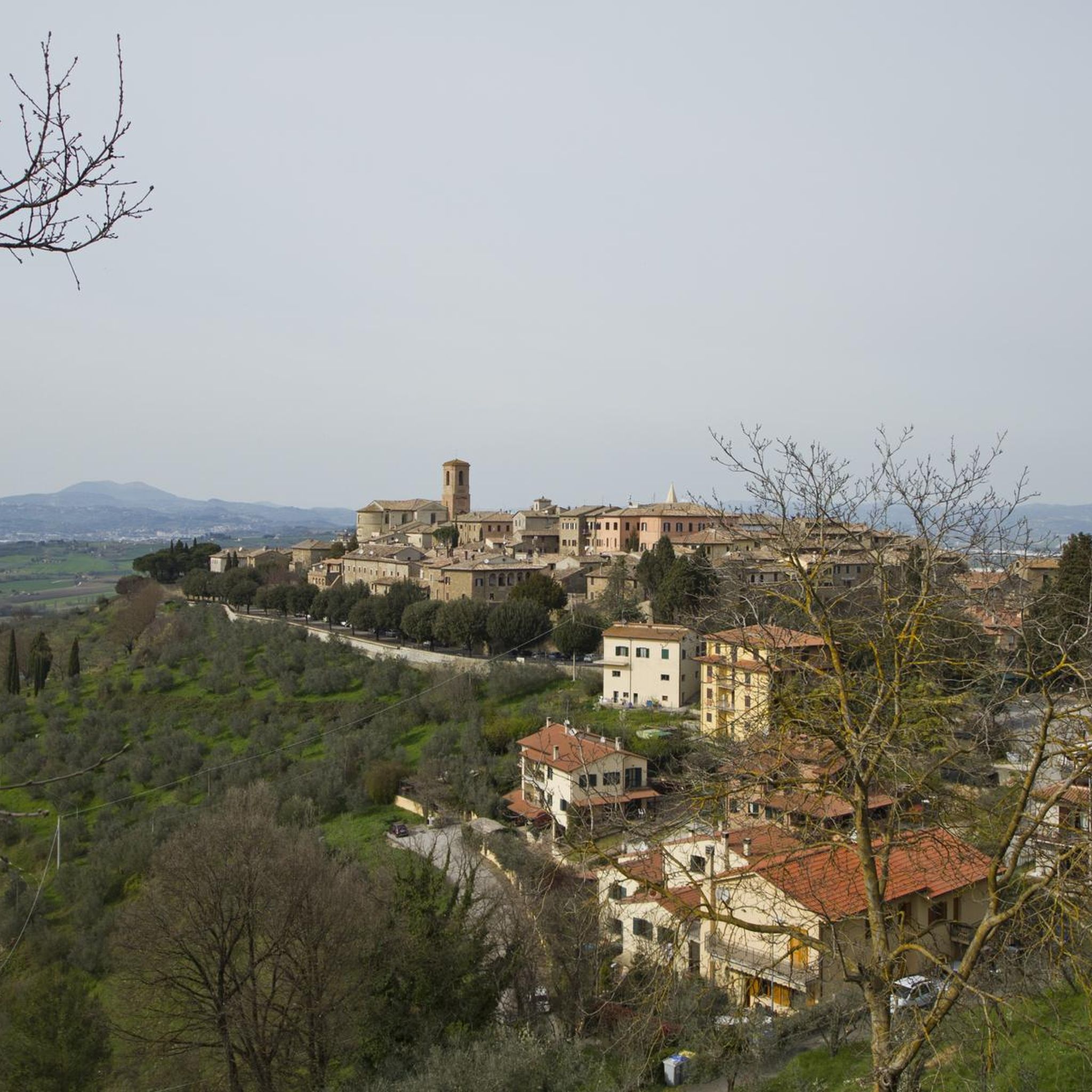
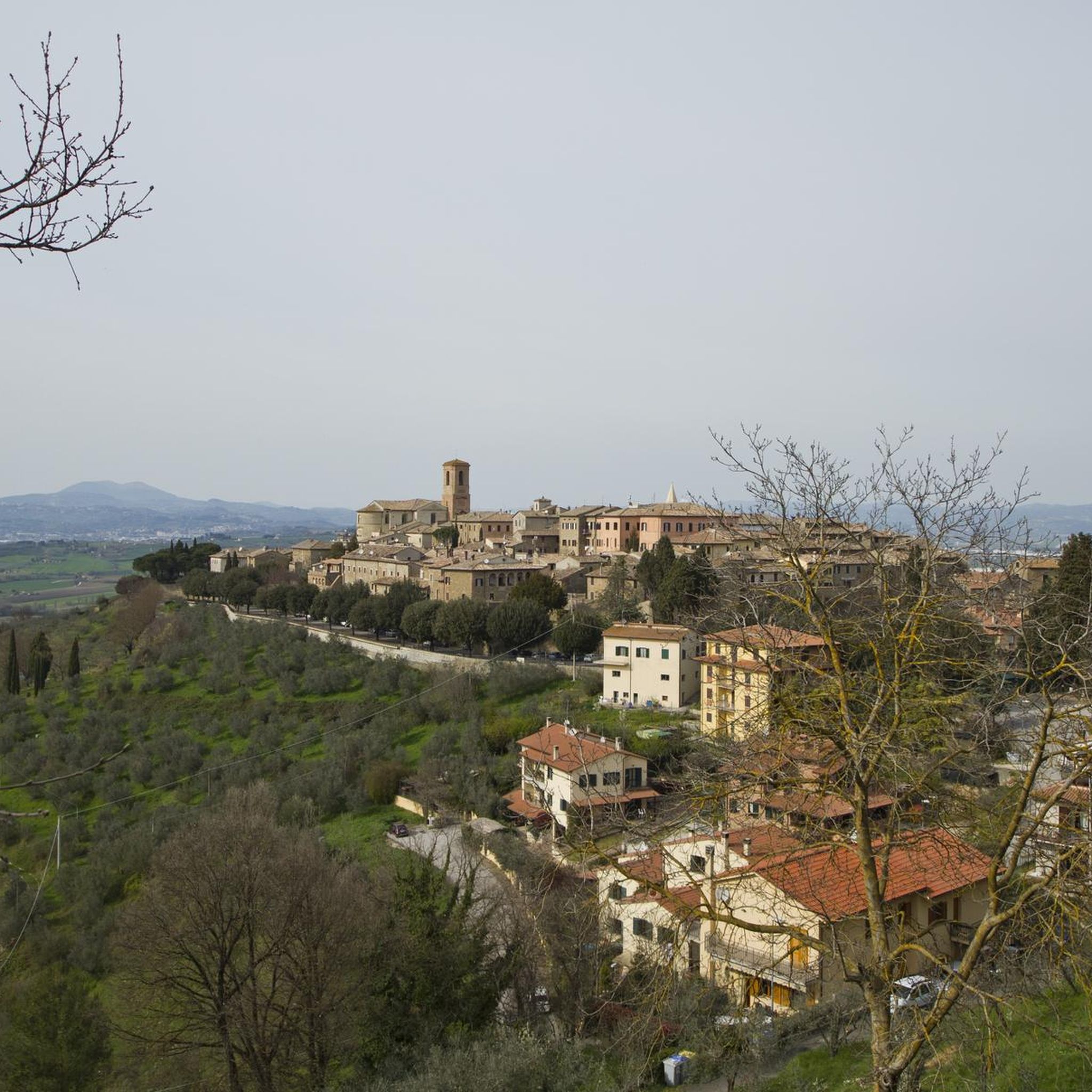
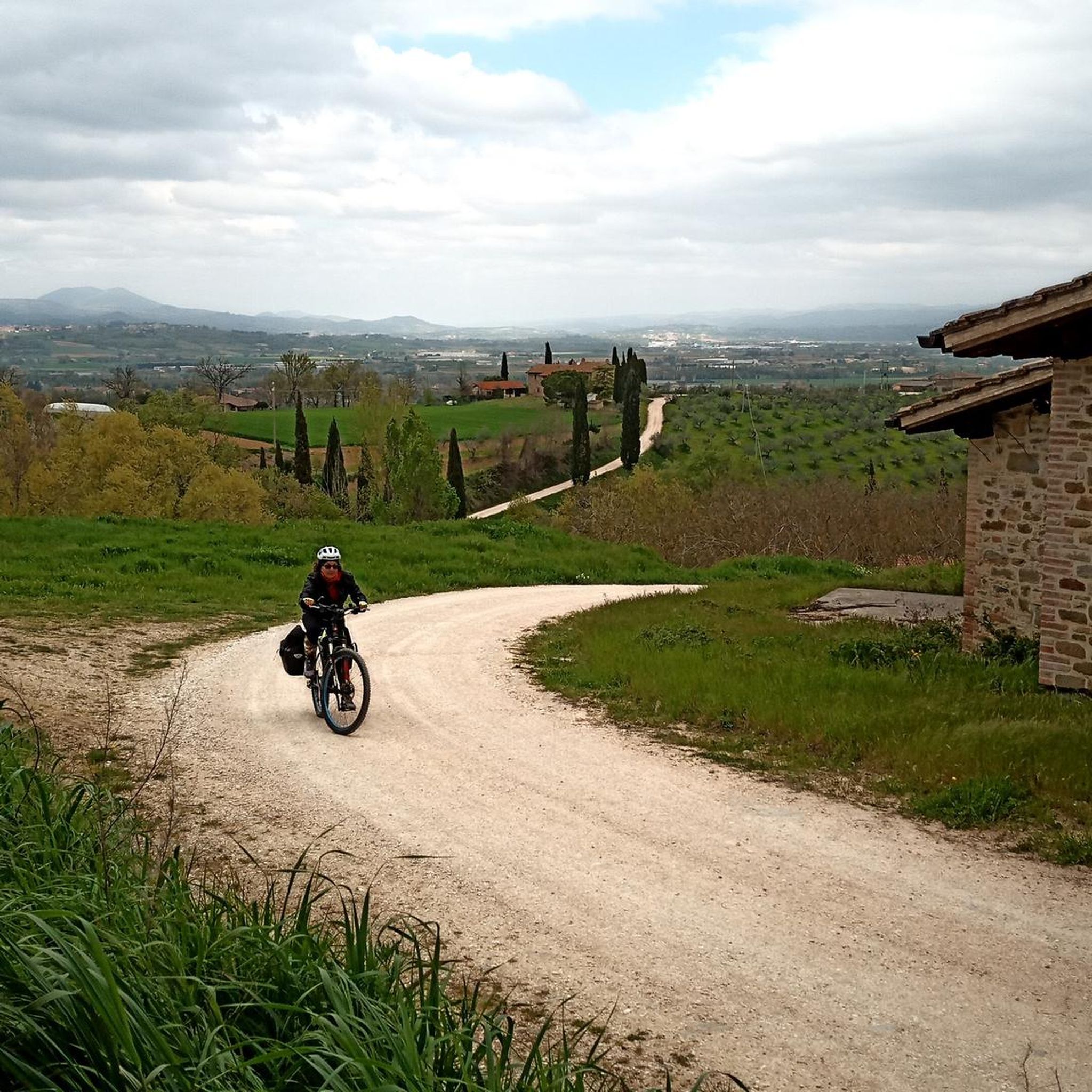
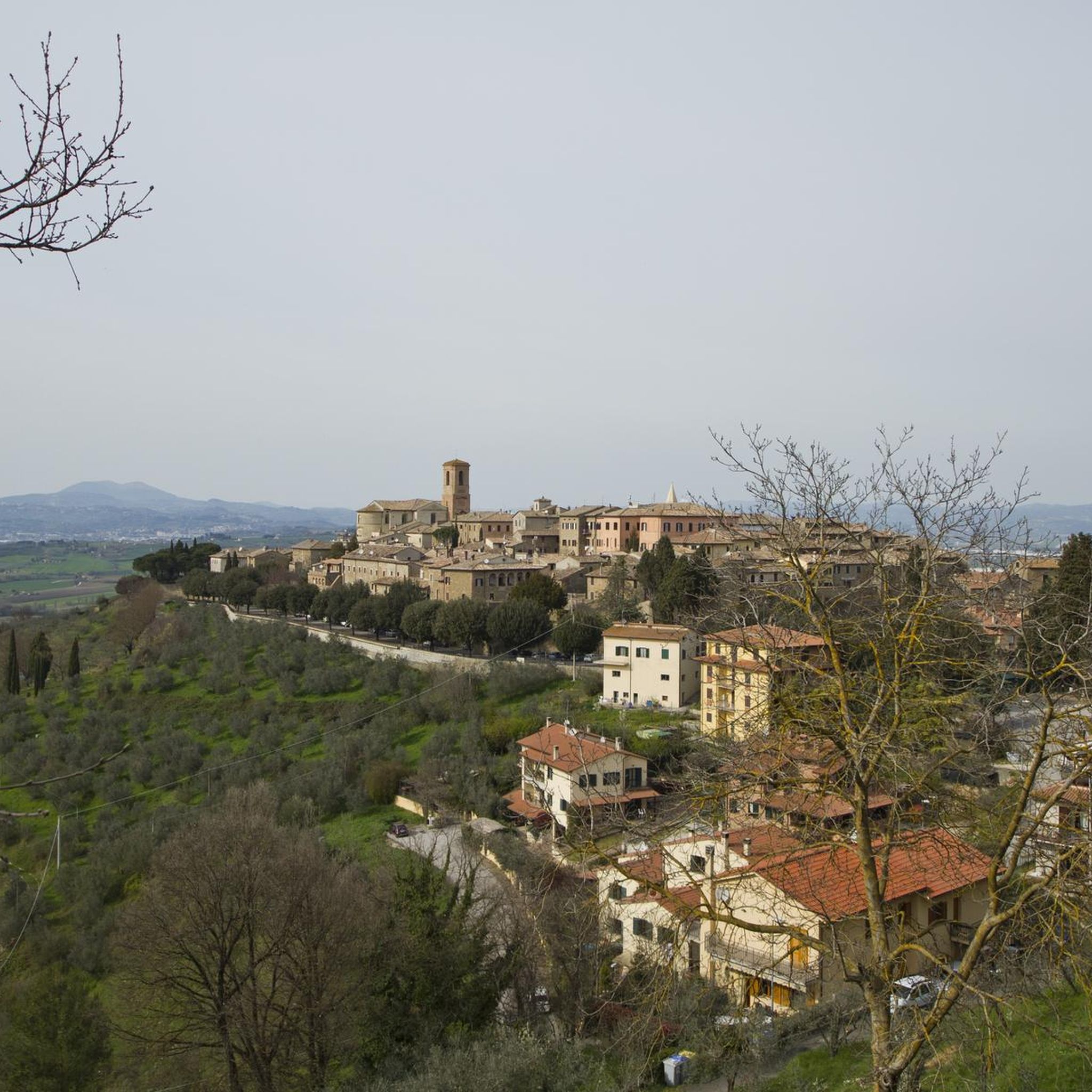
Indicated as one of the most beautiful villages in Italy, it stands around beautiful countryside on cycleable and very suggestive roads. You get there via easy climbs and from there you go in many directions. The abundant vineyards that come across embellish the landscape
3
0
Torgiano, which originates from an ancient pre-Roman and Roman settlement, is a fortified village, located at the confluence of the Chiascio and Tiber rivers, nestled among hills rich in vineyards and olive groves. Just outside the walls, reachable from Viale della Rimembranza, between two rows of cypress trees, stands the Baglioni Tower, made of sandstone.
0
0
Frequently Asked Questions
What cultural and historical sites can I explore in Deruta?
Deruta is rich in history and culture. You can visit the Regional Museum of Ceramics, housed in a 14th-century Franciscan convent, which is the oldest ceramics museum in Italy. Explore the Palazzo dei Consoli, dating back to 1300, which also contains the Municipal Art Gallery. Don't miss the Church of San Francesco with its 14th-century frescoes, or the ancient Grazia Furnace, a well-preserved 16th-century Renaissance kiln.
Where can I experience Deruta's famous majolica ceramics?
Deruta is world-renowned for its majolica ceramics. You can visit the Regional Museum of Ceramics to trace the history of this tradition. Many ceramic workshops and stores, such as Maioliche Nulli and Sambuco Ceramics Store, are open for visitors to observe artisans at work and purchase hand-painted pottery. The MOD Deruta Heritage Workshop offers guided tours to see the entire pottery-making process.
Are there any family-friendly attractions around Deruta?
Yes, several attractions are suitable for families. The Rocca Paolina — The Underground City offers a unique urban experience with escalators through ancient walls, which can be fascinating for children. Piazza Italia is a relaxing spot with impressive statues and benches. The Regional Museum of Ceramics can also be an engaging educational experience for all ages.
What kind of outdoor activities can I do near Deruta?
The area around Deruta offers various outdoor activities. You can explore the Umbrian countryside through cycling, mountain biking, or running. For specific routes, check out the MTB Trails around Deruta, Cycling around Deruta, or Running Trails around Deruta guides for detailed routes and difficulty levels.
Are there any scenic viewpoints or natural features to enjoy?
Yes, Deruta, being a hill town in the Tiber Valley, offers picturesque views. The Panoramic Gardens provide sweeping views of the Umbrian countryside. Piazza Italia is a great viewpoint in the city center. The Castle of St. Apollinaris also offers a beautiful panoramic point over the Fersenone Valley.
What is the Sanctuary of Our Lady of the Baths known for?
The Sanctuary of Our Lady of the Baths (Santuario della Madonna dei Bagni), located just outside the village in Casalina, is famous for its unique collection of over 700 ceramic ex-voto plaques. These plaques cover its interior walls and were placed there following a reported miraculous event in 1687, making it a significant cultural and religious site.
Can I find any ancient architecture or landmarks in Deruta?
Absolutely. Deruta features several ancient architectural gems. The Palazzo dei Consoli dates back to around 1300. You can also see the Porta San Michele Arcangelo, one of the ancient gates to the old town, with remnants of medieval walls. The Church of San Francesco is a Gothic church consecrated in 1388, and the Ancient Grazia Furnace is a well-preserved 16th-century Renaissance kiln.
What is <a href="https://www.komoot.com/highlight/5071564" target="_blank" rel="noopener">Rocca Paolina — The Underground City</a>?
Rocca Paolina — The Underground City is a historical site in Perugia, a short distance from Deruta. It features a mysterious series of tunnels and arched stairwells, which are remnants of a Renaissance fortress built for Pope Paul III. It offers a unique urban experience with escalators leading through its ancient walls, feeling like an entry into a lost world.
Is there a village nearby known for its local produce?
Yes, Cannara village center, located in the heart of the Umbrian plain, boasts ancient origins and is particularly known for its PGI red onion. It's a charming settlement where you can experience a typical Umbrian village atmosphere.
What is the <a href="https://www.komoot.com/highlight/2975496" target="_blank" rel="noopener">Baglioni Tower (Tower of Janus), Torgiano</a>?
The Baglioni Tower (Tower of Janus), Torgiano is a significant landmark in the nearby village of Torgiano. Built in the 13th century, it symbolizes Torgiano and bears witness to the presence of an ancient city wall. Torgiano itself is considered one of "The Most Beautiful Villages in Italy" and is surrounded by beautiful countryside.
What do visitors enjoy most about the attractions around Deruta?
Visitors particularly appreciate the rich historical and cultural immersion offered by sites like the Regional Museum of Ceramics and the ancient architecture. The unique experience of Rocca Paolina — The Underground City is also highly rated. The scenic views from places like Piazza Italia and the Panoramic Gardens are also a favorite among visitors.
Most popular attractions around Deruta

Get inspired with the komoot mobile app


Explore more
Still not found the Highlight you’re looking for? See guides of the top attractions in other regions:
