Attractions and Places To See around San Cesareo - Top 20
Best attractions and places to see around San Cesareo offer a blend of historical sites, cultural points of interest, and access to natural beauty. This town in the Metropolitan City of Rome provides a glimpse into local Italian heritage and ancient history. The area features ancient Roman constructions, including portions of streets and aqueducts, alongside significant natural monuments. Visitors can explore a variety of landscapes and historical landmarks within and near San Cesareo.
Best attractions and places to see around…
Last updated: October 9, 2026
Tempesta Spring
Highlight • Natural Monument
Translated by Google •
Tip by

Sacred Way - Monte Cavo
Highlight • Trail
Translated by Google •
Tip by

Sign up now to discover places like this
Get recommendations on the best single tracks, peaks, & plenty of other exciting outdoor places.
Acqua Donzella Spring
Highlight • Natural Monument
Tip by

Greek Abbey of Saint Nilus
Highlight • Religious Site
Translated by Google •
Tip by

Hadrian's Villa
Highlight • Historical Site
Translated by Google •
Tip by

Sign up for free to discover even more attractions around San Cesareo.
Already have an account?
Start today with a free account
Your next adventure awaits.

Tips from the Community

Sign indicates that the water here is not drinkable
0
0

Villa Adriana was built by Hadrian between 118 and 138 AD as an imperial residence. The complex covers about 120 hectares and includes palaces, baths, libraries, gardens, temples, and pavilions inspired by the places visited by the emperor during his travels. Many buildings were connected by a network of roads and underground passages for the service staff, so as not to interfere with court life. Since 1999, Villa Adriana has been included in the UNESCO World Heritage list and represents one of the most important testimonies of Roman architecture.
1
0

A piece of Byzantium at the foot of Rome: the Abbey of San Nilo ⛪ Entering the courtyard of the Abbey of Grottaferrata means traveling back in time. Founded in 1004, it is a place of silence and millennial beauty. Don't miss the Grotta Ferrata (from which the town takes its name) and the splendid Farnese Chapel with frescoes by Domenichino. An oasis of peace ideal for a contemplative stop during your tour of the Castelli.
0
0

After a long time, the water has returned, perhaps thanks to the rains of the past few months. There are also some tadpoles that have been placed in the fountain.
0
0
Fontan Tempesta is much more than a simple spring: it is a melting pot of history, geology, and legend located in the heart of the Castelli Romani Park, along the ancient path connecting Genzano, Nemi, and Rocca di Papa. 1. History and Name The name "Tempesta" has ancient roots. Some historians link it to the Tempesta family, local nobles in the Middle Ages. Others, more romantically, maintain that the area is so named for the frequency of intense atmospheric phenomena due to the particular shape of the Nemi volcanic crater, which "attracts" thunderstorms. 2. A Hydrographic Turning Point The spring is located approximately 600 meters above sea level. Geologically, the water that flows here is the result of filtering through the pyroclastic rocks of the Laziale Volcano. The fact that it has returned to flow after years of drought is an important sign of the restoration of surface water tables, often strained by the scarce rainfall of recent years. 3. Crossroads of Pilgrims and Wayfarers Historically, Fontan Tempesta was an obligatory stop for those traveling the Southern Via Francigena or for pilgrims heading to the Temple of Diana in Nemi. Even today, it is a favorite "turning point" for bikers and hikers because it represents the coolest and most sheltered spot in the forest, where the microclimate remains humid even in the height of summer.
0
0

Nice spot to make pause and regain energy. Don’t expect water flowing during summer months
0
0

Hello Do you know if the trail is exposed in any places? We have a 15-month-old baby, and my wife is particularly afraid of the exposed sections. Thank you very much.
0
0

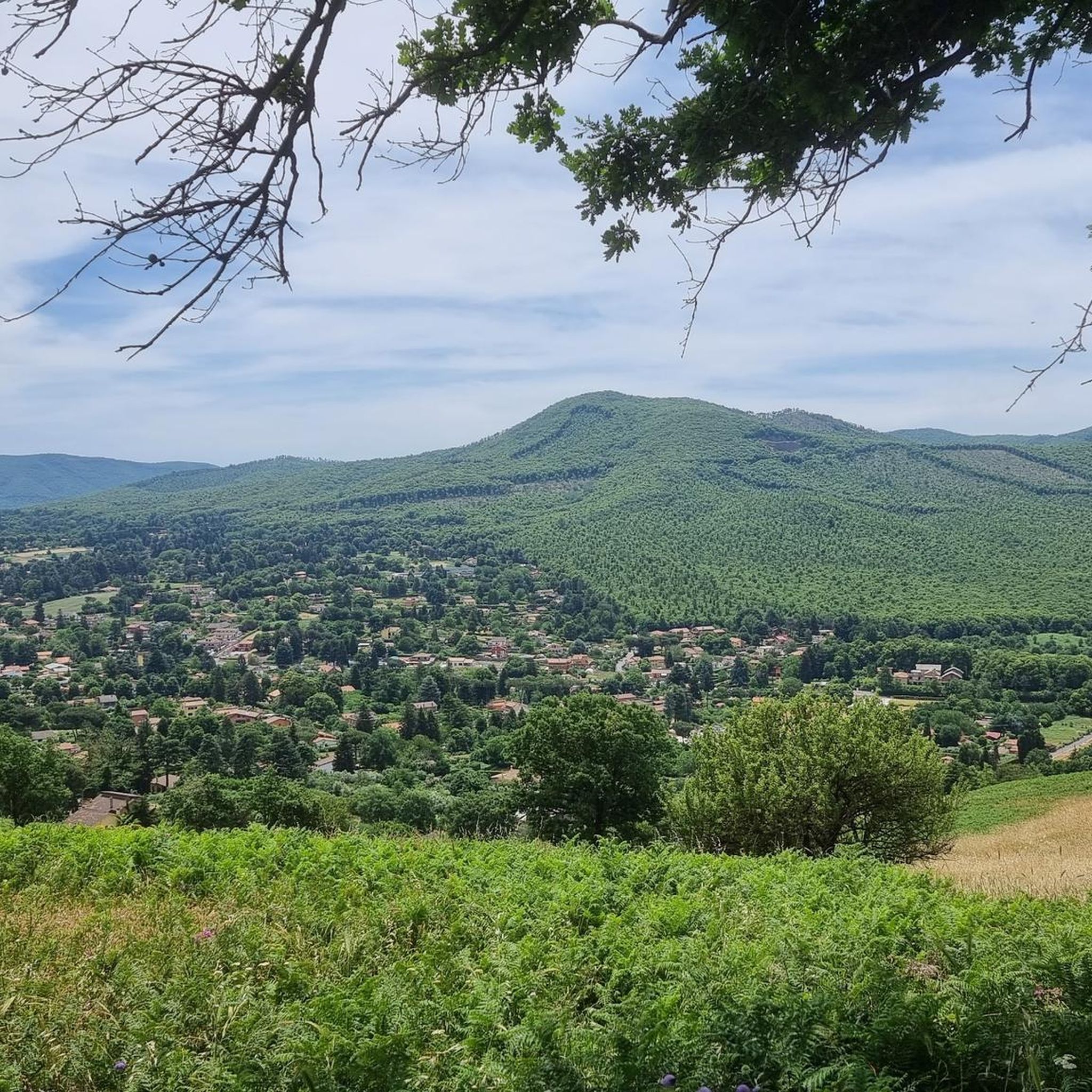
A 2000 year old road in perfect condition and a spectacular view of the two lakes
0
0
Frequently Asked Questions
What historical sites can I explore in and around San Cesareo?
San Cesareo itself boasts historical landmarks like the 17th-century Collegiate Church of San Tommaso da Villanova and the Papal Palace in Piazza della Libertà, along with the ruins of a Roman nymphaeum known as "La Torraccia." Nearby, you can visit the ancient Roman sanctuary of Santuario Fortuna Primigenia and the National Archaeological Museum in Palestrina, or the UNESCO World Heritage site of Ruins of Tusculum, offering a glimpse into a thriving Lazio town.
Are there any natural monuments or scenic spots near San Cesareo?
Yes, the area offers several natural attractions. You can visit Tempesta Spring, a suggestive fountain within the Colli Albani park's trail system. Another notable spot is Acqua Donzella Spring, a natural valley with historical significance. For panoramic views, the Sacred Way - Monte Cavo leads to "Occhialone," offering views of Lake Albano and Lake Nemi. Additionally, the Parco di Villa Gregoriana in Tivoli features a grand waterfall and scenic views.
What kind of outdoor activities or trails are available near San Cesareo?
The region around San Cesareo is excellent for outdoor enthusiasts. You can find numerous routes for cycling, gravel biking, and road cycling. For instance, there are challenging cycling routes like the Ponte Lucano – Borgo di Poli loop, or gravel biking options such as the Pratoni del Vivaro – Sacred Way - Monte Cavo loop. For road cycling, consider the Monti Prenestini loop. You can find more details and specific routes in the Cycling around San Cesareo, Gravel biking around San Cesareo, and Road Cycling Routes around San Cesareo guides.
Are there family-friendly attractions in the San Cesareo area?
Families can enjoy the Greek Abbey of Saint Nilus, a historical religious building with a rich past. Nearby, the Museo del Giocattolo (Toy Museum) offers a delightful collection that can engage children and adults alike. Exploring the natural springs and easy sections of the trails can also be a pleasant family activity.
Where can I find ancient Roman ruins or constructions in the area?
San Cesareo itself has various Roman constructions, including parts of ancient streets and aqueducts, and the ruins of "La Torraccia," a Roman nymphaeum. Further afield, the Santuario Fortuna Primigenia in Palestrina is an important archaeological site. A must-see is Ruins of Tusculum, an ancient Latin city, and the expansive UNESCO World Heritage site of Villa Adriana (Hadrian's Villa) in Tivoli, showcasing impressive imperial architecture.
Are there any museums or art galleries worth visiting near San Cesareo?
Yes, the region offers several cultural institutions. You can explore the Museo del Giocattolo (Toy Museum) for a unique collection. In Palestrina, the Palazzo Barberini houses the National Archaeological Museum, featuring significant regional finds. The Pinacoteca di San Silvestro displays 17th-century sacred paintings, and the Museo dell'Abbazia di San Nilo contains sarcophagi and sacred objects. The Museo Archeologico di Artena also offers a large collection of artifacts from various historical periods.
What is the Greek Abbey of Saint Nilus and why is it significant?
The Greek Abbey of Saint Nilus, also known as the territorial Abbey of Santa Maria di Grottaferrata, is a Byzantine-rite abbey founded in 1004 AD. It is dedicated to San Nilo da Rossano and is historically significant as one of the last remaining Byzantine monasteries in Italy. It offers a unique cultural and religious experience, with a rich history of monastic life and art.
What do visitors enjoy most about the attractions around San Cesareo?
Visitors particularly appreciate the blend of historical depth and natural beauty. The Sacred Way - Monte Cavo is loved for its historical Roman paving and the stunning panoramic views it offers. Natural spots like Tempesta Spring are cherished for their tranquil immersion in nature. The area's rich history, from ancient Roman ruins to medieval structures, combined with scenic trails, makes for a diverse and engaging experience.
Are there any notable palaces or villas to visit in the vicinity?
Absolutely. The Papal Palace in San Cesareo's Piazza della Libertà is a significant local landmark. Further afield, Tivoli is home to two UNESCO World Heritage sites: Villa Adriana (Hadrian's Villa), an immense archaeological complex, and Villa d'Este, famous for its Renaissance palace and elaborate gardens with numerous fountains. In Palestrina, the Palazzo Barberini is also a notable historical building.
What are some hidden gems or less-known spots to discover?
Beyond the main attractions, consider visiting the Eremo Tuscolano di Camaldoli, a hermitage offering a tranquil and historically rich site. The Acqua Donzella Spring, while a natural monument, also holds local legends and historical significance, making it a unique discovery. Exploring the smaller Roman constructions and mosaics uncovered in San Cesareo can also reveal fascinating insights into the area's ancient past.
What is the best time of year to visit San Cesareo and its attractions?
The spring and autumn months are generally ideal for visiting San Cesareo and its surrounding attractions. The weather is pleasant for exploring historical sites and enjoying outdoor activities without the intense heat of summer. During these seasons, the natural landscapes are vibrant, and the conditions are comfortable for hiking and cycling.
Most popular routes around San Cesareo
Most popular attractions around San Cesareo

Get inspired with the komoot mobile app


Explore more
Still not found the Highlight you’re looking for? See guides of the top attractions in other regions:
