Attractions and Places To See around Castellino Del Biferno - Top 12
Best attractions and places to see around Castellino Del Biferno include historical sites, natural reserves, and cultural landmarks. This charming town, nestled in Italy's Molise region, offers a glimpse into rich history and picturesque natural landscapes. Perched on a tufa rock, it provides panoramic views of the Biferno valley, the main river of Molise. The area features ancient churches, intricate stone portals, and natural oases.
Best attractions and places to see around Castellino Del Biferno
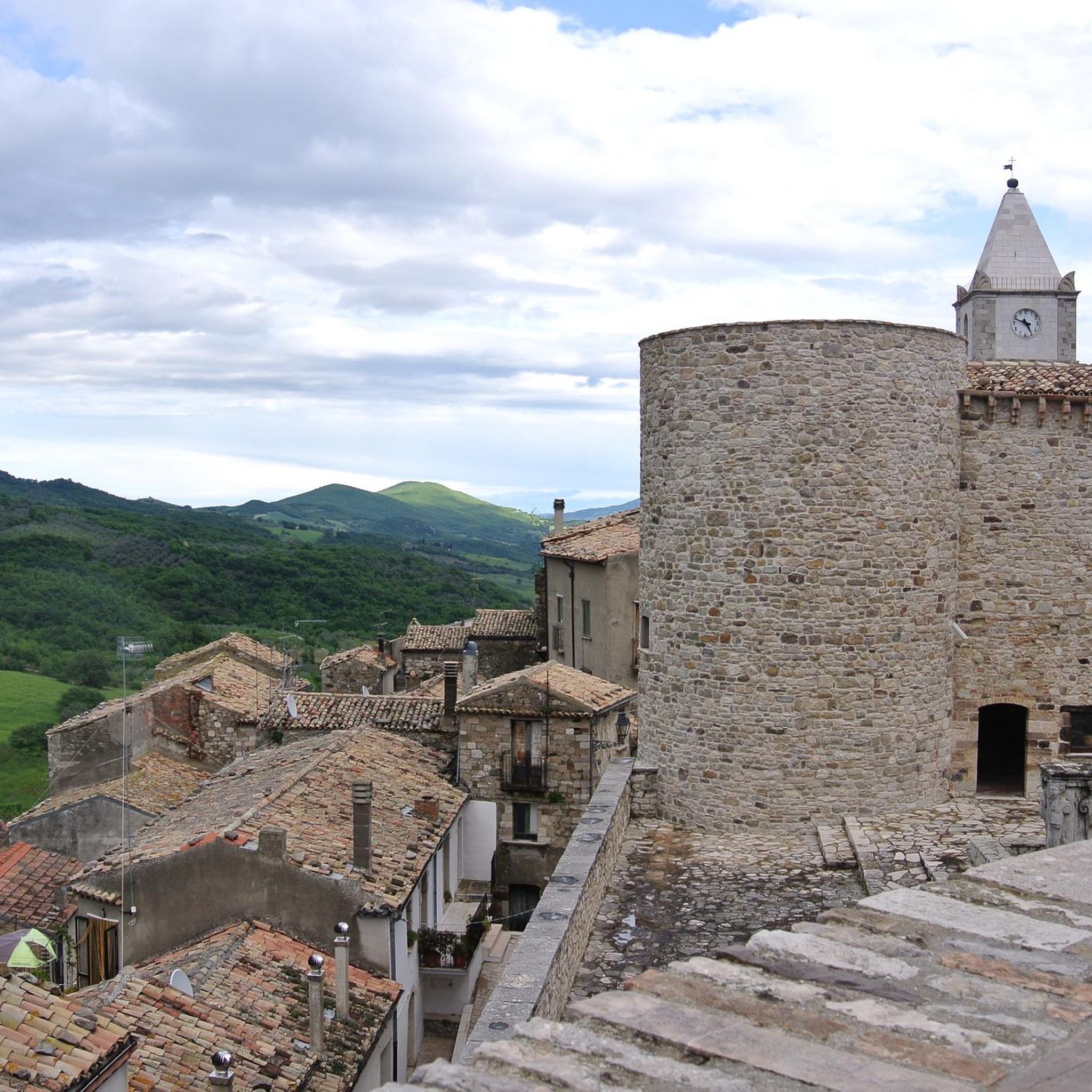
- The most popular attractions is Sant'Angelo Limosano Historic Village, a settlement that boasts medieval ramparts and a medieval church from the 13th century. From some points, it offers views of the Tremiti islands and the tops of the Maiella mountains.
- Another must-see spot is Bosco Casale Regional Nature Reserve, a forest characterized by oak woods. This protected area is home to over 110 species of birds, including various birds of prey.
- Visitors also love Church of Santa Maria della Strada, a small religious building from the 1100s. This perfectly preserved church offers a place for relaxation and contemplation of nature and architecture.
- Castellino Del Biferno is known for its historic villages, regional nature reserves, and ancient religious buildings. The region offers a variety of attractions to see and explore, from cultural sites to natural landscapes.
- The attractions around Castellino Del Biferno are appreciated by the komoot community, with 3 upvotes and 7 photos shared.
Last updated: July 1, 2026
Sant'Angelo Limosano Historic Village
Highlight • Settlement
Translated by Google •
Tip by

Bosco Casale Regional Nature Reserve
Highlight • Forest
lipu.it/oasi-casacalenda-campobasso
Translated by Google •
Tip by

Sign up now to discover places like this
Get recommendations on the best single tracks, peaks, & plenty of other exciting outdoor places.
Sign up for free
LA TAVERNA DEL CORTILE
Highlight • Historical Site
Built in the 17th century, the tavern was a strategic stopping point, a crossroads between the rural and urban worlds. Here, people ate, prayed, exchanged news, and found solace. Its location at the gates of the city made it a place of transition between pastoral and urban culture.
Its importance is linked to the convergence of two sheep tracks:
- the Cortile–Centocelle track, which connected the Celano–Foggia sheep track
- the Cortile–Matese track, which connected the Castel di Sangro–Lucera sheep track with the Pescasseroli–Candela, passing through Bojano and Sepino
This double connection made the Taverna del Cortile a vital hub for transhumance, where flocks, merchants, pilgrims, and travelers met. It was a hub between the major grassy arteries that crisscrossed Molise, and contributed to the economic and cultural development of the area.
Today, although no longer active, the tavern retains a strong identity. It is mentioned in cultural walks, hikes, and gravel rides that celebrate the memory of transhumance. Its charm endures in the landscape, in the stories, and in its symbolic function as the gateway to the Molise sheep tracks. by Molise Trail
Translated by Google •
Tip by

Civitacampomarano
Highlight • Settlement
Translated by Google •
Tip by

Tratturo Molisano in the Surroundings of Campobasso
Highlight • Trail
Translated by Google •
Tip by

Sign up for free to discover even more attractions around Castellino Del Biferno.
Sign up for free
Already have an account?
Start today with a free account
Your next adventure awaits.
Login or Signup
Popular around Castellino Del Biferno

Tips from the Community

The Taverna del Cortile is one of the most significant sites in the Molise sheep-track network. Located in the countryside north of Campobasso, it has been a key stop for transhumance for centuries, offering shelter and refreshment to shepherds and their flocks traveling between the Abruzzo highlands and the pastures of Puglia. Built in the 17th century, the tavern was a strategic stopping point, a crossroads between the rural and urban worlds. Here, people ate, prayed, exchanged news, and found solace. Its location at the gates of the city made it a place of transition between pastoral and urban culture. Its importance is linked to the convergence of two sheep tracks: - the Cortile–Centocelle track, which connected the Celano–Foggia sheep track - the Cortile–Matese track, which connected the Castel di Sangro–Lucera sheep track with the Pescasseroli–Candela, passing through Bojano and Sepino This double connection made the Taverna del Cortile a vital hub for transhumance, where flocks, merchants, pilgrims, and travelers met. It was a hub between the major grassy arteries that crisscrossed Molise, and contributed to the economic and cultural development of the area. Today, although no longer active, the tavern retains a strong identity. It is mentioned in cultural walks, hikes, and gravel rides that celebrate the memory of transhumance. Its charm endures in the landscape, in the stories, and in its symbolic function as the gateway to the Molise sheep tracks. by Molise Trail
0
0

Molise tratturo near Campobasso, recognized as a "cultural monument" for the pastoral transhumance of southern Italy 🇮🇹, on the occasion of August 12 every year the palio of the districts of Ripalimosani is run with horses right on the Tratturo.
0
1

The Bosco Casale Regional Nature Reserve is located in the municipality of Casacalenda, Molise. It occupies two thirds of the Bosco Casale, an ancient hilly oak forest, with traces of Hannibal's camp. This protected area is characterized by Cerro, Farnetti, Biancospini and Agrifogli woods. It is home to over 110 species of birds, including birds of prey such as buzzards, honey buzzards and sparrowhawks. The Oasis offers paths, educational panels, a visitor center and various naturalistic activities. An enchanting place to immerse yourself in the beauty of the Molise nature. http://www.lipu.it/oasi-casacalenda-campobasso
1
0
Civitacampomarano is a typical medieval village with narrow streets, stairways and an imposing Angevin Castle. The territory is characterized by overhanging gullies and gorges, fields of olive trees and wooded areas. https://www.viaggiomolise.it/civitacampomarano/
0
0

Civitacampomarano is a small village with very ancient origins dating back to the Samnite era. It has kept its medieval aspect with its Angevin castle and many churches to visit, and you cannot miss a walk through the alleys to admire the many murals made by street artists during an urban art festival that takes place every year in June.
2
0

Small village in the province of Campobasso, it boasts medieval ramparts and a medieval church (XIII) with a chapel dedicated to Pietro da Morrone (later Pope Celestino V)
1
0

The town is located at 900 m a.s.l. and, from some points of the place, you can see the Tremiti islands and the tops of the Maiella. On the hill there is a castle, albeit in advanced ruins. There is no certain information about the birth of Sant’Angelo Limosano for sure, however, it is known that in the past it was the fortress of the nearby town of Limosano. The last feudal lords were the de Attellis who ruled the territory from 1650 until the abolition of feudalism. The conditions of the town improved when, in the seventeenth century, the baron moved from the top of the castle to the inhabited center and when Cardinal Vincenzo Maria Orsini took important initiatives during his numerous pastoral visits. Sant’Angelo Limosano claims the Sant Angiolese citizenship of Pope San Pier Celestino (Celestino V), who has not yet been recognized as the dispute with Isernia is still underway. It is also the birthplace of the self-taught inventor Alessio Marone to whom the Corso that winds under the great Vittorio Emanuele III ramp, the main access road to the town, is named. Il Marone is remembered for the invention of the electromagnetic-chemical telegraph and the Maltese cross tubular bridges. The parish church of Santa Maria Assunta in Cielo, restored over the past centuries, is a harmonious building to visit. Another place to admire is the ancient church of San Pier Celestino which in 1695 was transformed by Cardinal Orsini into a granary because it had not been restored according to his orders. Going along via del Municipio, you arrive at Rua and Contrada di San Pietro. Places linked to the name of Pope Angelico are the "hill" and the "Fonte di San Pietro" from which water begins to flow after the winter, a few days before the feast of the Saint, on 19 May. Worth visiting is the sanctuary of the Madonna delle Stelle, built two kilometers from the town, to the west, following the discovery of a statue of the Madonna on January 3, 1926.
0
0
Frequently Asked Questions
What historical and cultural attractions are there in Castellino Del Biferno?
Castellino Del Biferno is rich in history. You can explore the Sant'Angelo Limosano Historic Village, known for its medieval ramparts and 13th-century church. The town itself features the rebuilt 18th-century Church of San Pietro in Vincoli with its ancient baptismal font and 1812 wooden choir, and the 14th-century Church of Madonna delle Grazie, famous for a horseshoe imprint legend. Don't miss the intricate stone portals crafted by local stonemasons throughout the historic center, or the exhibition on local craftsmanship at the Municipal Library. The Church of Santa Maria della Strada, an 1100s religious building, also offers a peaceful historical experience.
Are there natural areas or reserves to explore near Castellino Del Biferno?
Yes, the area offers several natural havens. The Bosco Casale Regional Nature Reserve is a protected oak forest home to over 110 bird species, including birds of prey. You can also visit Fonte Murata, a natural oasis with restored fountains nestled within the woods, or the Oasi Naturalistica Colle di Toro, which provides green trails for nature walks and opportunities to observe local flora and fauna.
What outdoor activities can I do near Castellino Del Biferno?
The region around Castellino Del Biferno is excellent for outdoor enthusiasts. You can find various routes for mountain biking, road cycling, and running. For mountain biking, consider routes like "Civitacampomarano and Bosco di Trivento." Road cyclists might enjoy the "Campobasso City Highlights loop from Santa Maria della Strada." Runners have options such as the "Running loop from Ripalimosani." You can find more details and routes on the respective guide pages for MTB Trails, Road Cycling Routes, and Running Trails around Castellino Del Biferno.
Are there any family-friendly attractions or activities in the area?
Absolutely. The Bosco Casale Regional Nature Reserve is categorized as family-friendly, offering paths and naturalistic activities suitable for all ages. The Church of Santa Maria della Strada provides a peaceful setting for contemplation that families can enjoy together. The Oasi Naturalistica Colle di Toro also features green trails and a large swimming pool, making it a great spot for families to relax and explore nature.
What is the best time of year to visit Castellino Del Biferno?
The Molise region generally enjoys pleasant weather from spring through early autumn, making these seasons ideal for visiting Castellino Del Biferno. Spring (April-May) offers lush landscapes and comfortable temperatures, while early autumn (September-October) provides mild weather perfect for outdoor activities and exploring historical sites. Summer (June-August) is also popular, especially for enjoying natural oases like Fonte Murata and the Oasi Naturalistica Colle di Toro.
Where can I find unique local traditions or festivals in Castellino Del Biferno?
Castellino Del Biferno is known for its vibrant traditions. "U Pizzicantò" is a famous festival held during the celebrations of Saint Anthony of Padua, featuring a competition where teams form human pyramids and parade through town. Another notable event is the Sagra delle Sagnitelle, which celebrates handmade pasta, offering a taste of local culinary heritage.
Are there any significant viewpoints or panoramic spots in Castellino Del Biferno?
Yes, Castellino Del Biferno is perched on a tufa rock, offering a dominant position with panoramic views of the Biferno valley. From certain points in the Sant'Angelo Limosano Historic Village, you can even see the Tremiti islands and the peaks of the Maiella mountains.
What is the significance of the Tratturo Molisano near Castellino Del Biferno?
The Tratturo Molisano in the Surroundings of Campobasso is recognized as a "cultural monument" for the pastoral transhumance of southern Italy. These ancient sheep tracks, like the one near Campobasso, were vital routes for shepherds and their flocks for centuries, connecting different regions and fostering cultural exchange. The LA TAVERNA DEL CORTILE was a significant stopping point on this network.
Can I find places to eat or stay in Castellino Del Biferno?
While specific establishments are not detailed in the guide, Castellino Del Biferno, like many Italian towns, offers local eateries and accommodation options. For more information on restaurants, hotels, or agriturismo options, it is recommended to check local tourism resources or travel websites for the Molise region.
What is the Biferno River Valley, and how can I experience it?
The Biferno River Valley is a prominent natural feature, with Castellino Del Biferno offering panoramic views over it. The Biferno is the main river of Molise, originating in the Matese area. You can experience the valley by enjoying the views from the town or by exploring the natural areas and trails that run alongside or near the river, such as those found in the nearby nature reserves.
Are there any specific hiking trails recommended for beginners or those looking for easy walks?
While specific difficulty levels for all walking paths are not detailed, the Oasi Naturalistica Colle di Toro and Fonte Murata offer green trails and walking paths that are generally suitable for leisurely strolls and nature observation. For running, there are easy routes like the "Colle San Vito loop from Matrice-Montagano-S.Giovanni in Galdo" which could also be suitable for easy walks.
What should I know about parking when visiting attractions in Castellino Del Biferno?
Parking in the historic center of Castellino Del Biferno may be limited due to its narrow streets. It's advisable to look for designated parking areas on the outskirts of the historic core. For natural attractions like the Oasi Naturalistica Colle di Toro, there are typically dedicated parking facilities. Always check local signage for specific parking regulations.
Most popular routes around Castellino Del Biferno

Get inspired with the komoot mobile app


Explore more
Still not found the Highlight you’re looking for? See guides of the top attractions in other regions:
