Attractions and Places To See around Villa Di Briano - Top 9
Best attractions and places to see around Villa Di Briano, a municipality in Italy's Campania region, offer a blend of historical, cultural, and natural points of interest. This area, situated in the Province of Caserta, provides opportunities to explore local architecture and historical sites. The region is characterized by its natural beauty, lying within the "Regi Lagni" zone, which offers various itineraries for outdoor activities. Visitors can find a mix of ancient landmarks and cultural sites within and near the…
Last updated: June 24, 2026
Campanian Amphitheater
Highlight • Historical Site
Translated by Google •
Tip by

Royal Palace of Carditello
Highlight • Historical Site
Translated by Google •
Tip by

Sign up now to discover places like this
Get recommendations on the best single tracks, peaks, & plenty of other exciting outdoor places.
Sign up for free
Arch of Hadrian
Highlight • Monument
Translated by Google •
Tip by

Porta Napoli (Annunziata Arch), Aversa
Highlight • Monument
Translated by Google •
Tip by

Church of the Santella or of Santa Maria delle Grazie
Highlight • Religious Site
Translated by Google •
Tip by
Sign up for free to discover even more attractions around Villa Di Briano.
Sign up for free
Already have an account?
Start today with a free account
Your next adventure awaits.
Login or Signup



Tips from the Community

The bell tower with the arch and the clock, known as Porta Napoli, is the monument with which the city of Aversa is usually identified
0
0

Beautiful Roman amphitheater, passing by in a hurry you can't help but be attracted and get closer to see it better. Advised!!
0
0


In the era of the Roman emperors, it was often customary for such a "triumphal arch" to be dedicated to them after a military victory over enemies of the empire. Of course, like this "Arco di Adriano", it was given the name of the respective emperor in whose honor it was built in what is now Santa Maria Capua Vetere.
1
0

Imposing historically important structure that is worth a visit
0
0

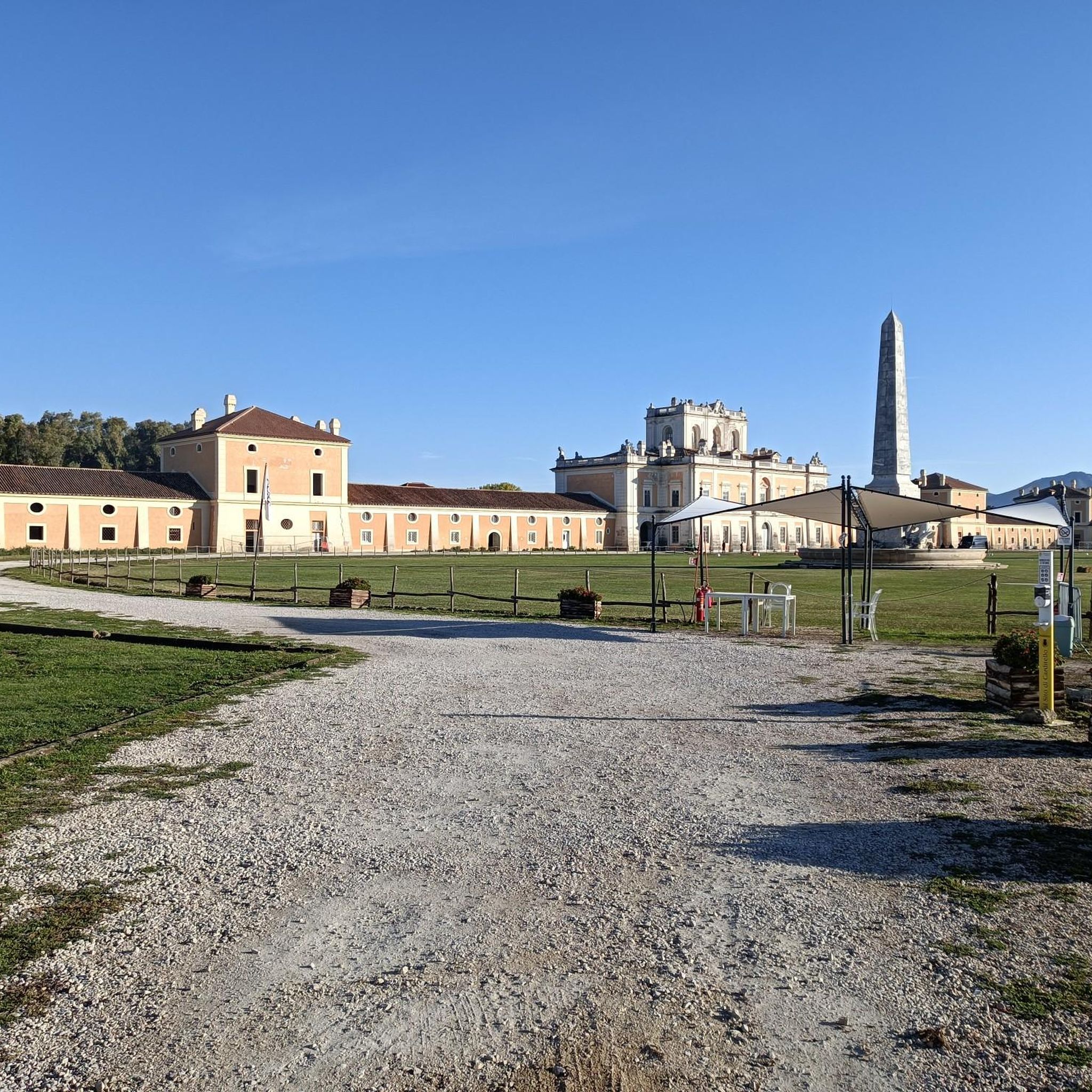
The Carditello palace is a Bourbon residence commissioned by Ferdinand IV of Bourbon in the 18th century for hunting, horse breeding and agricultural production. It is a neoclassical complex that can be visited and managed by the Carditello Foundation.
1
0

The church of Santa Maria delle Grazie, better known as la Graziella, is one of the oldest churches in Reggio Calabria. The building's inauguration dates back to March 29, 1691, as evidenced by a marble inscription on the facade. "It pleased God, the most excellent maxim, that the same Lord God, in 1641, performed numerous miracles for the benefit of these peoples, painting the ancient image of Holy Mary of All Graces, Virgin Spring, Pit of Mercy, in the corner of the nearby field. For this reason, the pious people of the faithful wanted this temple to be built for the custody of such a great treasure, to which, having fulfilled all the rites of blessing and consecration, he brought you with a solemn procession on March 29, 1691 and placed the reproduced image in the fragment of the wall.
4
0
The Arch of Hadrian is an ancient Roman triumphal arch in Santa Maria Capua Vetere. It was originally a triple arch, but today only three pylons and one of the side arches remain. It spanned the Via Appia and provided an ideal entrance to the city.
7
0
Frequently Asked Questions
What historical and cultural sites can I explore within Villa Di Briano itself?
Within Villa Di Briano, you can visit the ancient Sanctuary of Maria Santissima di Briano, known for its Romanesque structure and 11th-century frescoes. The Parish Church of Santa Maria Assunta in Cielo, with its distinctive campanile, and the 17th-century Church of San Francesco Saverio are also notable. Strolling through the characteristic historic center allows you to admire local architecture, including the imposing tower of Palazzo Pallavicino.
Are there significant Roman historical sites near Villa Di Briano?
Yes, the area boasts impressive Roman historical sites. You can visit the magnificent Campanian Amphitheater in Santa Maria Capua Vetere, a significant example of Roman architecture. Also nearby is the Arch of Hadrian, an ancient Roman triumphal arch that once spanned the Via Appia, marking an entrance to the city.
What is the Royal Palace of Carditello, and can I visit it?
The Royal Palace of Carditello is a historical site that served as a Bourbon residence for hunting, horse breeding, and agricultural production. This neoclassical complex, commissioned by Ferdinand IV of Bourbon in the 18th century, is now managed by the Carditello Foundation and is open for visits.
What kind of natural landscapes and outdoor opportunities are there around Villa Di Briano?
Villa Di Briano is situated in the "Regi Lagni" zone, an area rich in natural beauty. You can enjoy pleasant walks amidst the pristine nature and breathtaking landscapes. The municipality offers various itineraries for those interested in nature, including mountain trails for hiking enthusiasts. While specific named parks are not detailed, the general landscape provides ample opportunities for outdoor activities.
Are there opportunities for hiking or walking near Villa Di Briano?
Yes, the region around Villa Di Briano offers various itineraries for nature walks and mountain trails. For more structured outdoor activities, you can explore numerous running routes, including loops from San Marcellino and Casal di Principe, which can be found in the Running Trails around Villa Di Briano guide.
Can I go cycling around Villa Di Briano?
Absolutely. The area around Villa Di Briano is suitable for cycling. You can find various routes for touring bicycles and road cycling, ranging from easy to difficult. Examples include the 'Royal Palace of Caserta – Amphitheatre of Capua loop' and the 'Historic Center of Capua – The Moats of Capua loop'. More details are available in the Cycling around Villa Di Briano guide and the Road Cycling Routes around Villa Di Briano guide.
Are there family-friendly attractions suitable for children near Villa Di Briano?
Many of the historical sites are considered family-friendly. The Campanian Amphitheater, Royal Palace of Carditello, and Arch of Hadrian are all categorized as family-friendly, offering engaging historical experiences for all ages.
Are there any wheelchair-accessible attractions in the area?
Yes, the Arch of Hadrian in Santa Maria Capua Vetere is noted as being wheelchair accessible, allowing for easier exploration of this ancient Roman monument.
What cultural traditions or events are unique to Villa Di Briano?
Villa Di Briano is known for its annual festival of Maria Santissima di Briano, held on the Sunday after Easter. This lively event features colorful floats, traditional dances, and folk songs, drawing believers from across the region. The town also observes the tradition of the "vattienti" during festivities, involving frenetic dancing, which is a deeply rooted tradition in parts of Southern Italy.
What is Porta Napoli (Annunziata Arch) in Aversa?
The Porta Napoli (Annunziata Arch) in Aversa is an imposing and historically important structure. It features a bell tower with an arch and a clock, and it is often identified as a symbol of the city of Aversa, making it worth a visit for its architectural and historical significance.
What is the best time of year to visit Villa Di Briano?
While specific seasonal recommendations for all attractions are not available, the annual festival of Maria Santissima di Briano, held on the Sunday after Easter, offers a vibrant cultural experience. Generally, spring and autumn provide pleasant weather for exploring historical sites and enjoying outdoor activities in the region's natural landscapes.
Most popular routes around Villa Di Briano

Get inspired with the komoot mobile app


Explore more
Still not found the Highlight you’re looking for? See guides of the top attractions in other regions:
