The best cycling routes around Caraffa Di Catanzaro
4.5
(93)
564
riders
51
rides
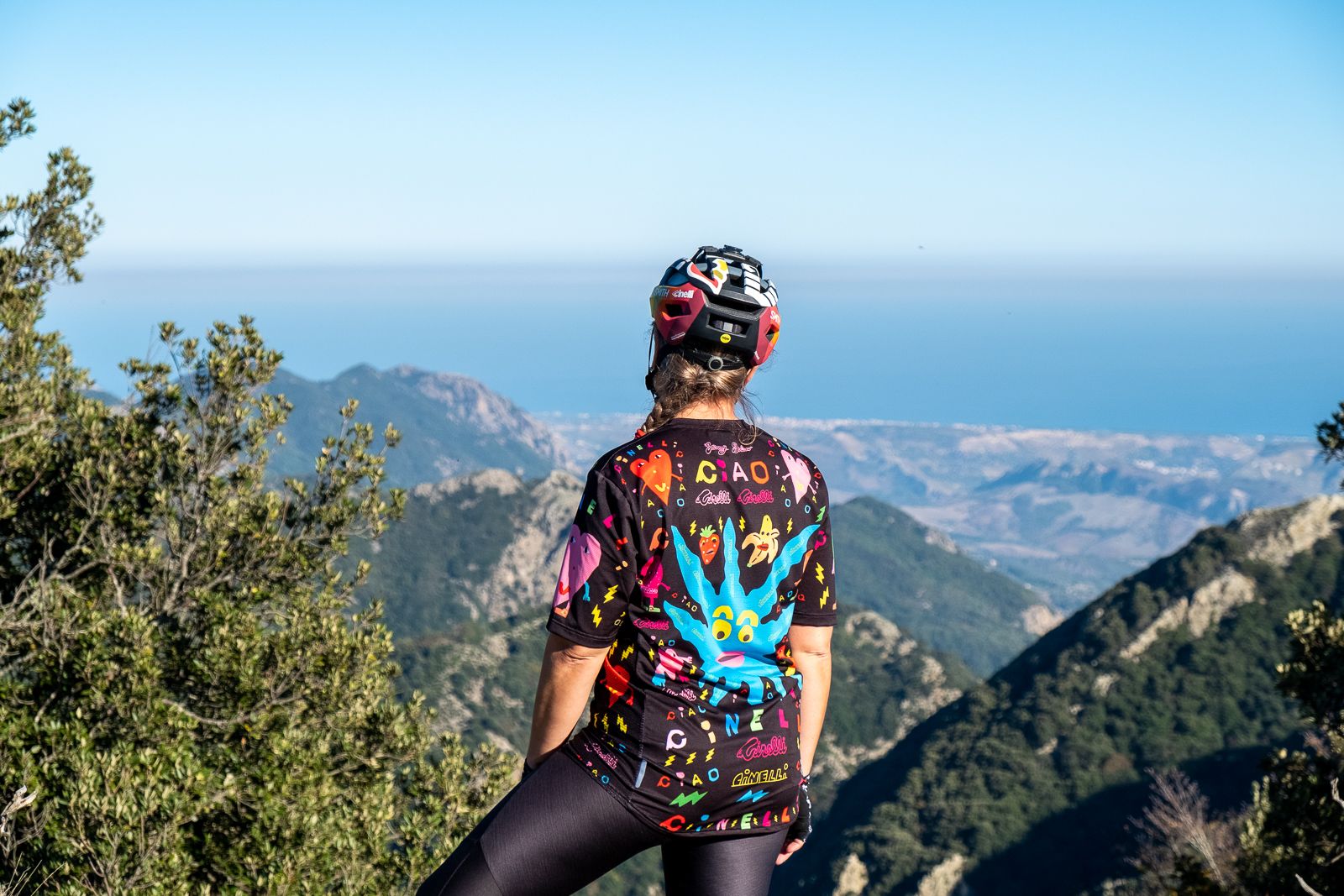
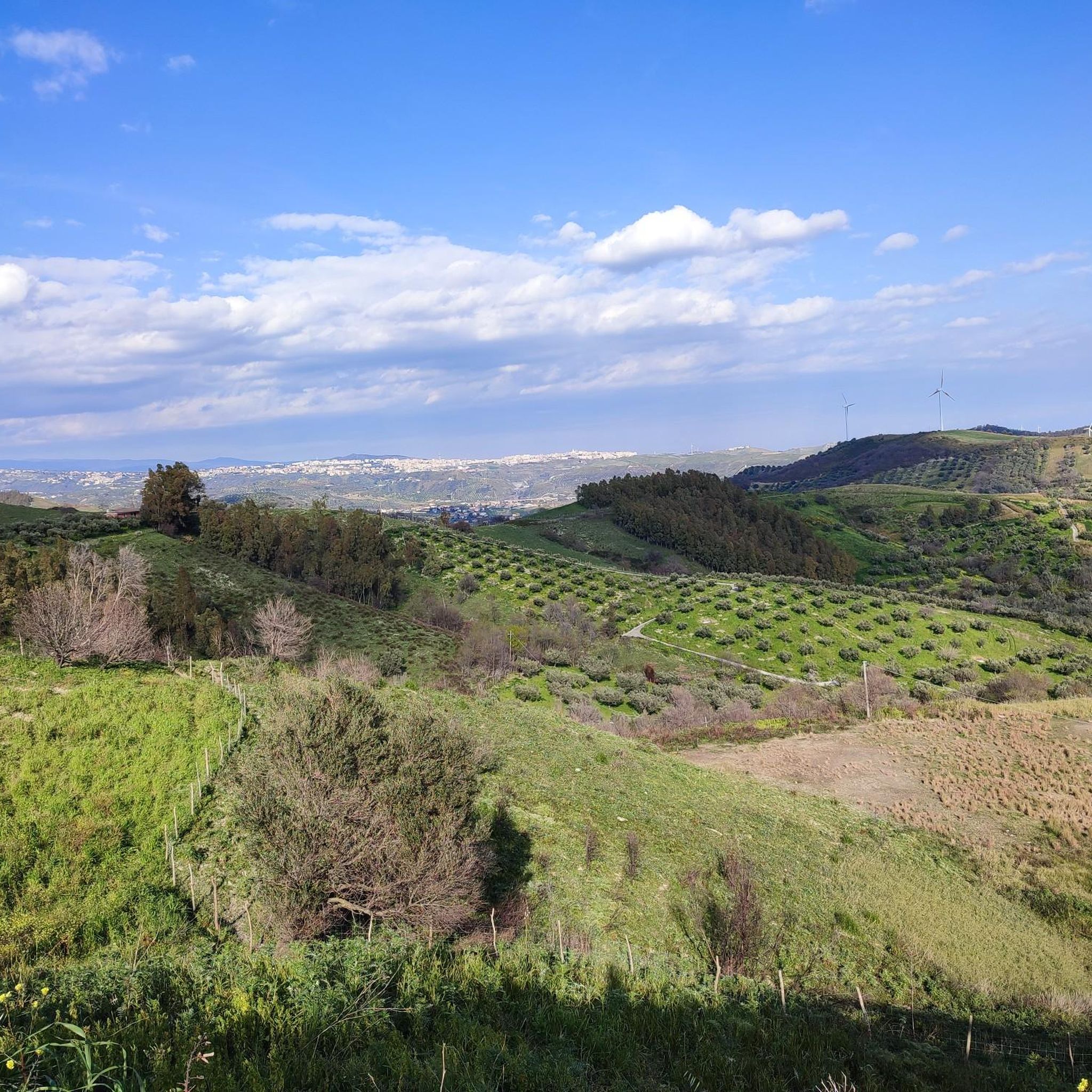
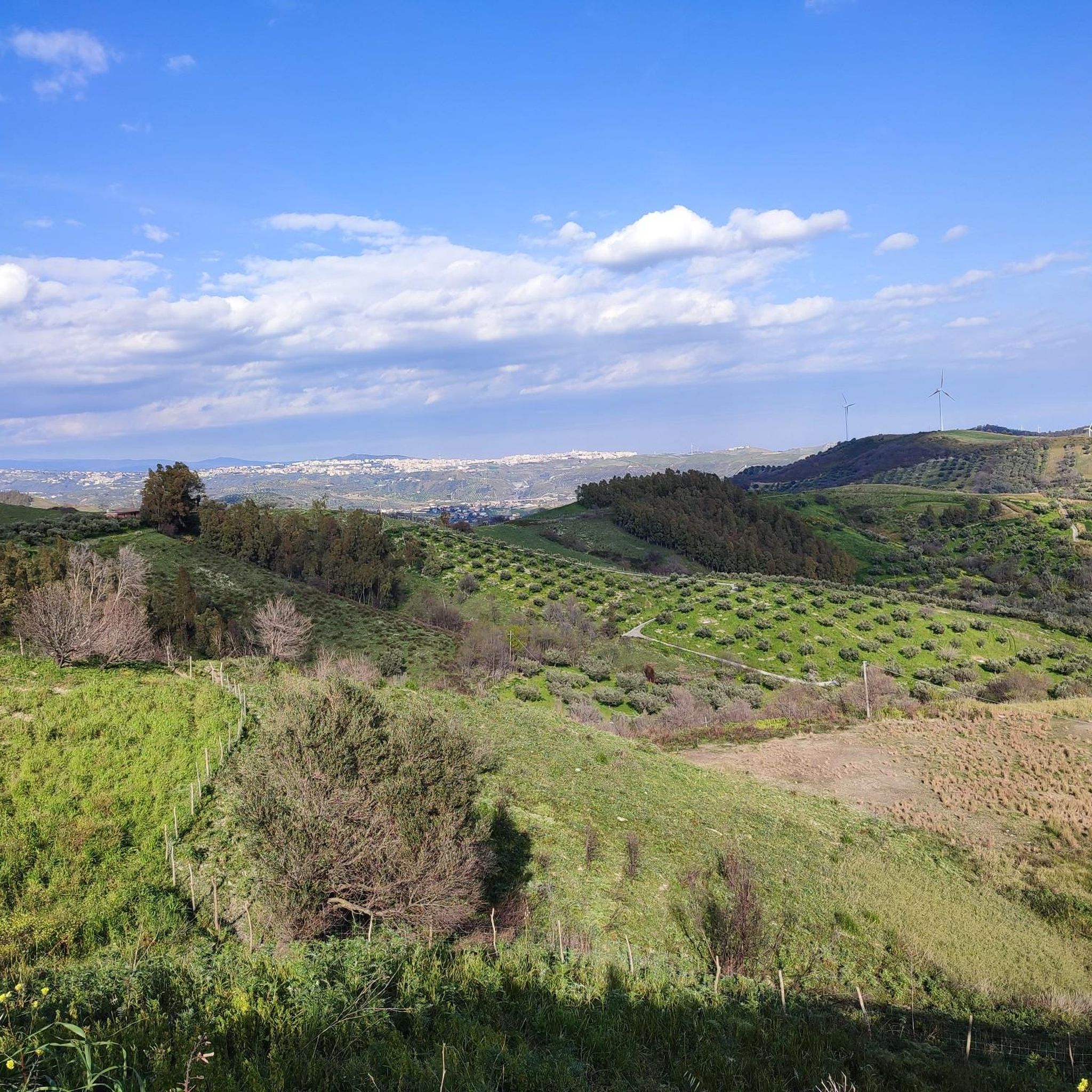
Touring cycling routes around Caraffa Di Catanzaro traverse diverse landscapes, characterized by green hilly terrain and river valleys. The region's strategic location on the Catanzaro Isthmus provides unique views of both the Tyrrhenian and Ionian Seas. Many routes wind through ancient olive groves, offering varied scenery for cyclists. The area also provides access to broader natural areas like the Sila National Park and Serre Park.
Best touring cycling routes around Caraffa Di Catanzaro
- The most popular touring cycling route is…
Last updated: October 11, 2026
4.6
(36)
188
riders
Embark on a challenging touring bicycle adventure from Marcellinara to Taverna, traversing the Pentone pass at the foot of the Sila National Park. This difficult 55.8-mile (89.8 km) route demands…
1
riders
58.8km
04:15
1,280m
1,280m
Challenging 36.5-mile touring cycling loop from Girifalco, climbing Monte Covello for panoramic views of Calabria's diverse landscapes.

4.6
(8)
35
riders
123km
09:04
2,740m
2,740m
Hard bike ride. Very good fitness required. Mostly paved surfaces. Suitable for all skill levels.
4.3
(3)
15
riders
104km
07:45
2,370m
2,370m
Hard bike ride. Very good fitness required. Mostly paved surfaces. Suitable for all skill levels.
5.0
(1)
14
riders
81.4km
04:59
650m
650m
Hard bike ride. Very good fitness required. Mostly paved surfaces. Suitable for all skill levels.
Get access to more routes and recommendations from other explorers.
Already have an account?
Our route recommendations are based on thousands of hikes, rides, and runs completed by other people on komoot.
Start today with a free account
Your next adventure awaits.

Other adventures around Caraffa Di Catanzaro

Tips from the Community

great stop hotel 2 mari , perfect from A to Z, all the staff and Antonio were invaluable and very friendly excellent value for money, wonderful rooms and dinner, everything needed for bike maintenance ..... rooms and service included 👍👍👍
0
0

Scolacium Archaeological Park The Scolacium Archaeological Park and the adjacent Antiquarium (on the estate of Baron Mazza, with an adjacent olive mill museum) were built in 1982 in the village of Roccelletta di Borgia (Czech Republic) on a vast area of olive trees. The area includes not only the remains of the 11th-century Norman basilica dedicated to Santa Maria della Roccella, but also the remains of the ancient Roman colony of Scolacium, built in 120 BC on the ruins of the Greek colony of Scylletium. Excavations, which began in 1965, did not reveal any wall structures of the Greek city, but the unearthed abundant pottery and coin material dating back to the 6th century BC suggests a topographical overlap between the two cities. The material discovered is on display in the Antiquarium. The remains of Scolacium's city walls are much more significant: facing the sea is the Roman Forum, a large rectangular area paved with square tiles and surrounded by colonnades (Caesareum, Curia, and a thermal court), which also houses the remains of a small temple, a monumental fountain, and a courthouse. A large number of statues and portraits dating from between the first and third centuries AD come from this area. On the hill behind the Forum is the theater, with a capacity of 3,500 spectators, built between the first and second centuries AD. From the theater scene come several portrait heads from the Julio-Claudian and Flavian periods, as well as two large white marble statues of Togati. Recently, a second-century AD amphitheater, three thermal complexes, a necropolis, and an aqueduct have been identified above the hill. Text / Source: Ministry of Tourism, Territorial Marketing and Mobility https://calabriastraordinaria.it/luoghi/parco-archeologico-di-scolacium-borgia
13
0
Statue of the Madonna, Piazza Maria Ausiliatrice, Soverato Consecration of the City of Soverato To Mary Help of Christians, May 24, 2000 Marian Year 1954
14
0
Chiesa Santa Maria delle Nevi, Girifalco Mother Church of Santa Maria delle Nevi The Mother Church of Santa Maria delle Nevi in Girifalco, in the province of Catanzaro, is the town's most important parish church. Its origins date back to the 16th century, when it was originally dedicated to the Madonna delle Nevi, a title inherited from the previous mother church in the Pioppi Vecchi district. After the devastating earthquake of 1783, the building was rebuilt on the site of the Church of Santa Maria delle Grazie, part of the old Dominican monastery founded by Bishop Lauro in 1548. The reconstruction was entrusted to the architect Ermenegildo Sintes, a pupil of Luigi Vanvitelli. However, the original design was modified and reduced in size during the construction phase. The facade of the church, originally built in the Baroque style, underwent several renovations, especially after the 1905 earthquake, giving it a more modern appearance. It has a large stone portal flanked by two niches and a double access staircase. The secondary entrance, framed by an ashlar portal, is located at the foot of the bell tower, which houses three bells and a clock. The interior of the church is characterized by the color white, a symbol of both the Marian title and the Dominican Order. The nave is decorated with arches with friezes and gilded capitals. On the left side is the Altar of Paradise, with an ancient sculptural group depicting the Ascension of Christ from the Convent of San Antonio of the Reformed. The presbytery is dominated by a large painting of the Madonna delle Nevi, protecting the snow-covered village of Girifalco from above, a work by Domenico Cefaly (1932-2003), a descendant of the painter Andrea Cefaly. Other works of art housed in the church include a 17th-century polychrome statue of Saint Rocco from Montpellier, a painting of the Madonna della Neve by Luciano Ricchetti, and the 17th-century Madonna del Garofano. The Mother Church of Santa Maria delle Nevi represents an important spiritual and cultural center for the community of Girifalco, testifying to centuries of history, art, and religious devotion. Text / Source: visitgirifalco.com / Municipality of Girifalco https://visitgirifalco.com/trip/chiesa-matrice-santa-maria-delle-nevi/
14
0
Girifalco lies in the center of the Isthmus of Catanzaro. Girifalco lies in the center of the Isthmus of Catanzaro, the narrowest point of the Italian peninsula, at the foot of Monte Covello (848 m above sea level), a subrange of Monte Serralta in the northern Serre region, at an altitude of 456 m above sea level. As some finds in the Caria district show, there were settlements in the upper reaches of the Alessi stream before Magna Graecia. In the early 17th century, Girifalco was a fief of the Caracciolo family and then belonged to the Ravaschieri family. After a few years, the fief returned to the Caracciolo family thanks to the marriage between Duchess Ravaschieri of Girifalco and a certain Annibale Caracciolo. From them was born Fabrizio Caracciolo, second Duke of Girifalco, the creator of a very prosperous period for the feud during his duchy, which lasted from 1634 to 1683 and consolidated the socioeconomic development of the city with the presence of the university and the feudal institution. Duke Caracciolo had the Reformed Convent built in 1635 and donated it to the Friars Minor, who erected a statue in his gratitude and placed it near the convent itself. Mayor Carlo Pacino commissioned important works such as the first municipal hall around the mid-1600s, the extension of the Church of San Rocco, and a few decades later, in 1663, the monumental Baroque fountain. In the 17th century, the inhabited center expanded more and more, and there were several churches (the ones of San Rocco and the matrix of the Pioppi district being the most important), two important monasteries, the Municipal House, the Ducal Palace (the Duke's residence), and even the city's coat of arms was built. At the end of the 18th century, another earthquake struck Calabria and the town of Girifalco, the one of March 28, 1783. The center was destroyed or severely damaged, as was the Pioppi district, including the mother church (already severely damaged in the 1638 earthquake and subsequently renovated), which would never be rebuilt. Its functions were transferred to the church of the Dominican convent, which thus became the new mother church. Text / Source: Comunicazione Girifalco https://unsic.it/comunicazione/girifalco/
15
0
The Village of Girifalco The village of Girifalco lies at the foot of Monte Covello, between the Gulf of Squillace and the Gulf of Sant'Eufemia, and in the heart of the Isthmus of Catanzaro, the narrowest point of the Italian peninsula. Girifalco owes its origins to the destruction of the two older villages of Toco and Caria by the Saracens in 836. The villagers sought refuge on the rock known as the "Pietra dei Monaci" ("Monk's Stone"). Text / Source: turiscalabria.it http://www.turiscalabria.it/website/?lang=de&categoria=/wo/paesi/&view_type=s&id=639&title=.html
15
0

Maradona murals often combine religious style (such as icons and images of saints) with pop culture.
1
0
Diego Maradona's murals in Naples and Calabria create a kind of symbolic bridge between the two parts of southern Italy, where the figure is not only an icon of football, but also of the identity, rebellion and pride of the people of the south.
1
0
Frequently Asked Questions
How many touring cycling routes are available around Caraffa Di Catanzaro?
There are over 60 touring cycling routes around Caraffa Di Catanzaro, offering a wide range of options for different skill levels. Over 500 touring cyclists have explored the varied terrain using komoot.
Are there any easy touring cycling routes for beginners or families?
While many routes are challenging, there is at least one easy touring cycling route available. Additionally, there are 14 moderate routes that might be suitable for beginners looking for a slightly longer ride or families with some cycling experience. For a moderate option, consider the View of Caminia Beach loop from Dulcino, which is about 43 km long.
What kind of landscapes can I expect to see on a touring cycling route in Caraffa Di Catanzaro?
Touring cycling routes in Caraffa Di Catanzaro feature diverse landscapes, including green hilly terrain, river valleys, and ancient olive groves. The region's unique location on the Catanzaro Isthmus also provides stunning views of both the Tyrrhenian and Ionian Seas.
Are there any circular touring cycling routes in the area?
Yes, many of the touring cycling routes around Caraffa Di Catanzaro are circular. For example, the challenging Tiriolo – Girifalco loop from Catanzaro and the Tiriolo – Public fountain loop from Catanzaro are both popular circular options that lead through hilly terrain and local town centers.
What are some notable attractions or landmarks I can visit along the cycling routes?
The region offers several interesting landmarks. You can cycle past Monte Covello, known for its lush greenery, or explore the charming settlements of Tiriolo and Girifalco. Further afield, you might encounter historical sites like the Norman Castle of Squillace or the Church of Santa Maria della Pietà, Squillace.
What do other touring cyclists enjoy most about cycling in Caraffa Di Catanzaro?
The touring cycling routes in Caraffa Di Catanzaro are highly rated by the komoot community, with an average score of 4.7 stars from over 60 reviews. Cyclists often praise the diverse landscapes, significant elevation gains, and the stunning distant sea panoramas.
Are there any routes that offer coastal views?
Yes, due to Caraffa Di Catanzaro's strategic location on the Catanzaro Isthmus, many routes provide unique views of both the Tyrrhenian and Ionian Seas. The 'View of the Beach Near Crotone – Olive Grove View loop from Catanzaro' is a demanding path offering coastal views, and the Historic center of Pizzo – View of the sea in Pizzo loop from Marcellinara also offers sea views.
Can I find challenging routes with significant elevation gain?
Absolutely. Caraffa Di Catanzaro is known for its challenging terrain with significant elevation gains. Many routes are classified as difficult, such as the From Marcellinara to Taverna through the Pentone pass at the foot of the Sila National Park, which features over 2,300 meters of ascent.
Are there opportunities to connect to larger natural parks from Caraffa Di Catanzaro?
Yes, the region provides access to broader natural areas. Cyclists can find connections to the Sila National Park and Serre Park, offering further opportunities for exploration and longer rides within protected natural environments.
What is the best time of year for touring cycling in Caraffa Di Catanzaro?
While specific weather data isn't provided, the region's Mediterranean climate generally makes spring and autumn ideal for cycling, offering pleasant temperatures. Summer can be warm, but routes with coastal breezes or higher elevations might still be enjoyable. It's always advisable to check local weather forecasts before your ride.
Are there any routes that pass through traditional towns or villages?
Yes, several routes lead through local town centers, allowing you to experience the historical charm of the region. The 'Tiriolo – Soveria Mannelli Town Center loop from Settingiano' is an example of a trail that takes you through hilly terrain and local towns.
Where can I find parking for touring cycling routes in Caraffa Di Catanzaro?
While specific parking locations for each route are not detailed, starting points for many routes are often near towns or villages like Catanzaro, Marcellinara, or Settingiano, where public parking facilities are typically available. It's recommended to check the specific route details on komoot for suggested starting points and potential parking information.
Most popular attractions around Caraffa Di Catanzaro

Get inspired with the komoot mobile app


Explore more
Browse the best Cycling routes in other regions.
