Attractions and Places To See in Aiako Harria - Top 20
Best attractions and places to see in Aiako Harria, a natural park in the Pyrenean foothills in Gipuzkoa, Spain, offers a blend of natural beauty, historical significance, and cultural insights. The park is characterized by the striking Aiako Harria Massif and diverse ecosystems including oak and beech woods. It is a destination for exploring geological formations, historical mining sites, and ancient monuments.
Best attractions and places to see in Aiako Harria
- The most popular attractions is Aitzondo Waterfall, a…
Last updated: July 6, 2026
Irugurutzeta Furnaces
Highlight • Monument
After being calcined, the iron ores were loaded onto …
Translated by Google •
Tip by

Aitzondo Waterfall
Highlight • Waterfall
Translated by Google •
Tip by

Sign up now to discover places like this
Get recommendations on the best single tracks, peaks, & plenty of other exciting outdoor places.
Sign up for free
Tunnels of the Old Meazuri Mines
Highlight • Structure
Translated by Google •
Tip by

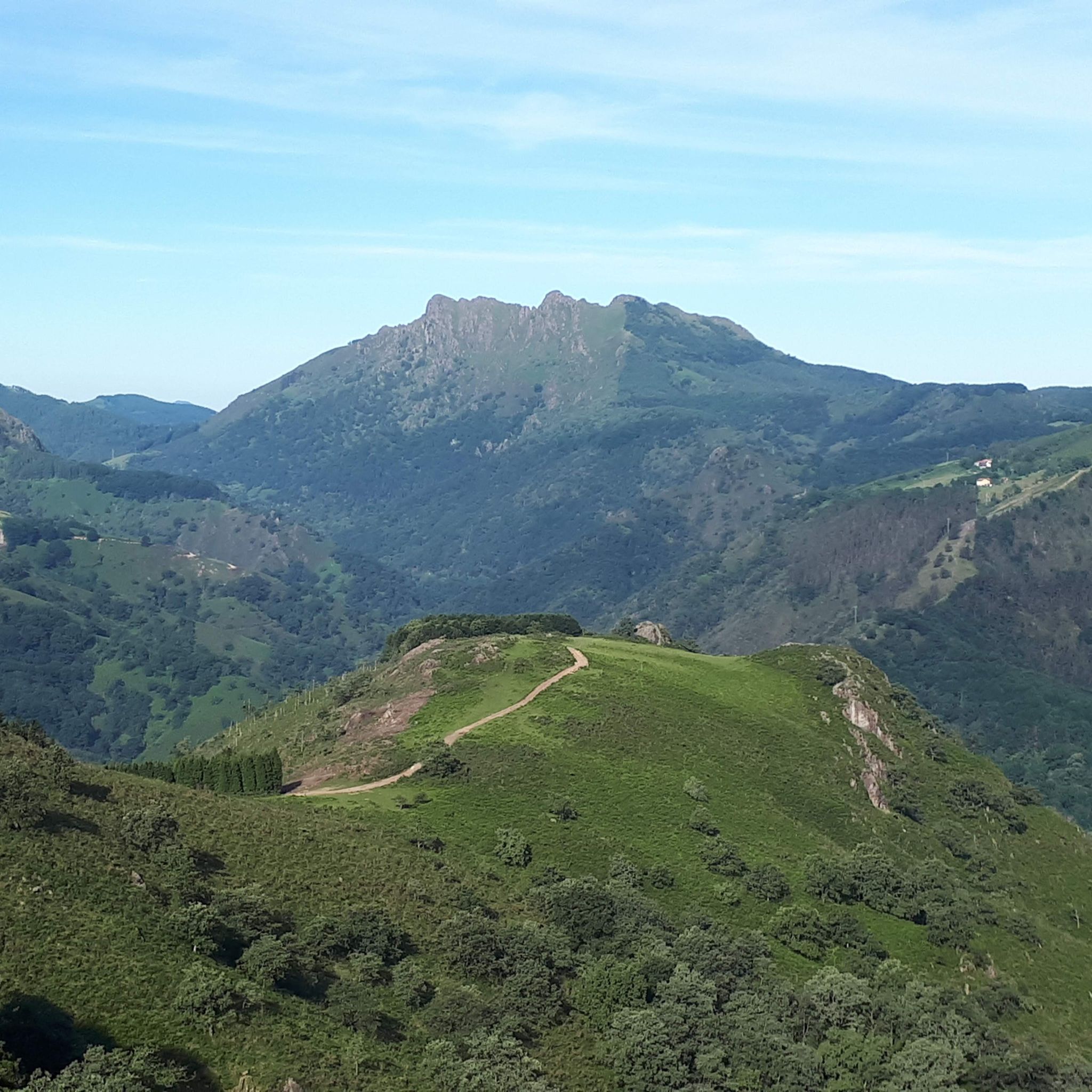
Irumugarrieta Peak (811 m)
Highlight • Summit
Translated by Google •
Tip by

Arditurri Mining Complex
Highlight • Historical Site
Translated by Google •
Tip by

Sign up for free to discover even more attractions in Aiako Harria.
Sign up for free
Already have an account?
Start today with a free account
Your next adventure awaits.
Login or Signup


Other adventures in Aiako Harria

Tips from the Community

Caution! Approaching Irumugarrieta Peak from the south, you have to climb a serious, vertical wall. Unfortunately, with a dog, we had to give up here and fought our way down cross-country through the undergrowth. The other way around, it probably won't work with a dog even without abseiling. The tour is still very beautiful, but I wouldn't do the special descent again.
1
0

Access to the foot of the waterfall is dangerous and from the path, you can't see much ☹️
0
0

These types of tunnels are those of the old mining train route, since, due to the difficult orography, they had to be excavated to avoid the slopes of the mountain.
0
1

The Aitzondo waterfall is located in the Aiako Harria natural park, at the western end of the Pyrenees. This waterfall is one of the largest in Guipuzcoa, with a drop of 140 meters that ends in a small pond.
1
0
The old mines of Meazuri exploited iron carbonate, which was very abundant in the area. The mineral was very abundant, but its metallic grade was very low, so it was later treated in calcination furnaces to transform it into iron oxide. This procedure considerably enriched the ore, eliminating impurities and increasing its metallic grade between 10 and 20%. Today the route of the old mining train and the tunnels that were excavated to avoid the slopes of the mountain are still preserved.
0
1

Place very close to the Ola cider house, it is usually very crowded, the ruins are very good and are the starting point to visit the lower part of the Aitzondo waterfall along a very beautiful route, or by going up the always demanding Enbido, see the part waterfall or enter the Aiako Harria natural park
0
0

The Irugurutzeta ovens constitute the largest battery of ovens in Gipuzkoa and one of the most important in the Basque Country. After being calcined, the iron ores were loaded onto the wagons and from there they left for the Kostorbe station in the Irun neighborhood of Mendibil. From there, they were transported to Hendaye (for subsequent export to other areas of France, such as Bayonne or the Landes, and even to other countries such as Belgium, Germany or England), and to the ports of Pasaia, Bilbao... Their destination was the Blast Furnaces.
0
0

Hello, I have already been to this waterfall, but do not know the way to get to the foot of the waterfall. Do you have a trace that goes there? Thanks
2
1
Frequently Asked Questions
What natural features can I explore in Aiako Harria?
Aiako Harria is renowned for its striking natural beauty. You can discover the impressive Aitzondo Waterfall, one of Gipuzkoa's largest with a 140-meter drop. The park is named after the granite Aiako Harria Massif, featuring peaks like Irumugarrieta Peak (811 m), which offers magnificent views. The area also includes the Añarbe Reservoir, surrounded by oak and beech woods, and vital streams like Endara and Aitzondo.
Are there historical sites to visit in Aiako Harria?
Yes, Aiako Harria boasts a rich industrial and prehistoric past. A key historical attraction is the Arditurri Mining Complex, which operated from before Roman times until 1984 and is now open to the public. You can also explore the Irugurutzeta Furnaces, showcasing the region's iron processing history, and the Tunnels of the Old Meazuri Mines, part of a former mining train route.
What kind of hiking trails are available in Aiako Harria?
The park is crisscrossed with well-blazed trails suitable for various levels. You can find routes that lead to natural wonders like the Aitzondo Waterfall or historical sites such as the Arditurri Mining Complex. For more specific hiking options, including mountain hikes, you can explore the routes listed in the Mountain Hikes in Aiako Harria guide.
Can families with children find suitable activities or trails?
Yes, Aiako Harria offers options for families. The former mining railway route has been converted into a walking and cycling path, which is generally suitable for easier strolls. Exploring the Arditurri Mining Complex with its interpretation center can also be an engaging educational experience for children.
Where can I find impressive viewpoints in Aiako Harria?
For breathtaking vistas, head to Irumugarrieta Peak (811 m), one of the three prominent peaks of the Aiako Harria Massif. From here, you can enjoy expansive views stretching from San Sebastián to the Navarro and French Pyrenees. The park also offers views of Txingudi Bay and the towns of Hondarribia, Irun, and Hendaye.
What is the best time of year to visit Aiako Harria for outdoor activities?
Aiako Harria is beautiful year-round, but for outdoor activities like hiking and cycling, spring and autumn generally offer the most pleasant weather. Temperatures are mild, and the natural landscapes are vibrant with spring blooms or autumn colors. Summer can also be a good time, though it might be warmer, while winter offers a different, often quieter, experience.
Are there options for cycling or mountain biking near the attractions?
Absolutely. The region around Aiako Harria is well-suited for cycling and mountain biking. The former mining railway route has been repurposed into a walking and cycling path. For more detailed routes, you can check out the Gravel biking in Aiako Harria and Cycling in Aiako Harria guides, which feature various routes for different skill levels.
What is the history behind the mining sites in Aiako Harria?
The mining history in Aiako Harria is extensive, dating back before the Roman Empire. The Arditurri Mining Complex, for instance, extracted silver, iron, lead, zinc, fluorite, and blende for centuries. The Tunnels of the Old Meazuri Mines exploited abundant iron carbonate. These sites highlight the region's industrial past and its significant contribution to the economy through mineral extraction.
Are there any ancient archaeological sites or monuments to see?
Yes, the park and its surroundings are home to various ancient sites, offering a glimpse into a long-forgotten past. You can find megalithic monuments such as cromlechs (like those of Oianleku), burial mounds, and dolmens. An example is the Aitzetako Txabala dolmen, which is over 5,000 years old and located near Errenteria.
What are the options for parking when visiting attractions in Aiako Harria?
While specific parking details for every attraction might vary, many trailheads and popular sites within Aiako Harria Natural Park have designated parking areas. It's advisable to check local signage upon arrival or consult specific route descriptions on komoot for parking recommendations near your chosen starting point.
Can I bring my dog on trails in Aiako Harria?
Many trails in Aiako Harria Natural Park are dog-friendly, allowing you to explore with your canine companion. However, it's always recommended to keep dogs on a leash, especially in areas with wildlife or near livestock, and to follow local regulations regarding pet access to ensure a pleasant experience for everyone.
What makes the Aiako Harria Massif significant?
The Aiako Harria Massif is significant for several reasons. It's a striking granite formation that gives the natural park its name, featuring three prominent peaks: Irumugarrieta, Txurrumurru, and Erroilbide. These ancient geological formations provide not only challenging climbs but also offer panoramic views and are central to the park's unique landscape and biodiversity.
Most popular routes in Aiako Harria
Most popular attractions in Aiako Harria

Get inspired with the komoot mobile app


Explore more
Still not found the Highlight you’re looking for? See guides of the top attractions in other regions:
