The best MTB trails around Pemfling
4.7
(2345)
6,873
riders
682
rides
Mountain bike trails around Pemfling are situated within the Upper Bavarian Forest Nature Park, offering a diverse landscape for cycling. The region features a mix of dense forests, rolling hills, and varied terrain, with the Regen River adding to its natural character. Mountain bikers can expect a range of experiences from forest paths to ascents and descents.
Best mountain bike trails around Pemfling
- The most popular mountain bike trail is View of Buchberg – Luitpold Tower loop from Waffenbrunn,…
Last updated: May 7, 2026
4.1
(7)
16
riders
24.5km
01:52
410m
410m
Moderate mountain bike ride. Good fitness required. Advanced riding skills necessary.
5.0
(5)
6
riders
26.3km
02:15
500m
500m
Moderate mountain bike ride. Good fitness required. Advanced riding skills necessary.

Sign up for free
5.0
(3)
9
riders
20.8km
01:51
440m
440m
Moderate mountain bike ride. Good fitness required. Advanced riding skills necessary.
5.0
(4)
12
riders
22.5km
01:19
90m
90m
Easy mountain bike ride. Great for any fitness level. Suitable for all skill levels.
5.0
(9)
7
riders
20.4km
01:24
220m
220m
Easy mountain bike ride. Great for any fitness level. Suitable for all skill levels.
Get access to more routes and recommendations from other explorers.
Sign up for free
Already have an account?
Our route recommendations are based on thousands of hikes, rides, and runs completed by other people on komoot.
Start today with a free account
Your next adventure awaits.
Login or Signup

Tips from the Community

Frequently used bridge over the Regen
1
0

Thierlstein Castle The castle was founded by the Thierlinger family, who also gave it its name. They were originally ministeriales (unfree knights) of the Margraves of Cham. With the death of the Counts of Bogen in 1242, the Thierlingers became part of Bavaria. Thierlstein Castle, then known as Lichtenstein, was not built until around 1360. The name refers to the light-colored quartz rock on which the castle stands; it belongs to the Pfahl, a 150-kilometer-long quartz vein that also outcrops in Weißenstein. Stephanus de Türlstein is mentioned in a papal document from 1365. Other owners include Ebo in 1374 and Erasmus in 1384. They held administrative offices for the Bavarian Duke, including Stefan II in 1411 as administrator in Cham and Ulrich II, who was administrator in Neunburg. However, from 1488 onwards, Hans II participated in the Löwler uprising against the Duke and, as punishment, had to cede Thierlstein to his son. The castle became a Bavarian Hofmark (manorial estate) and declined in importance. In the 16th century, the Thierlinger family became Protestant, and the last representative, Georg Bernhardt Thierlinger, died in 1620 at the Battle of White Mountain during the Thirty Years' War. Afterwards, the castle changed hands frequently and is now owned by the Barons von Schacky. Of the medieval castle, primarily the palace on the rock remains, protected by a well-preserved round keep on the vulnerable side. This keep has a diameter of 6 meters, walls 2 meters thick, and is built of rubble stone. The pointed-arch entrance is located 12 meters above ground. The living space is similarly tiny to that of the tower at the Treffelstein castle ruins. In the 16th century, the surrounding buildings were added; they appear to fill the space of an earlier outer bailey. Further alterations followed, including Baroque renovations in the 18th century, Neo-Gothic remodeling in 1894, and restorations in 1972 and 1989. Excavations unearthed numerous late medieval artifacts and also revealed a drawbridge on the south side next to the keep. The ground plan, the outer walls, and Appian's illustration suggest that a tiny, square courtyard once separated the keep from the residential building, which was later built over. Today, a castle brewery stands on the outer bailey grounds, and its rooms can be rented for events. The castle itself is privately owned and not open to the public. Source: www.burgenseite.de
4
0
A traditional, family-run inn with a beer garden and "fair prices" 👍
0
0

From here you have a magnificent view.
0
0
Pilgrimage Chapel Streicherröhren To trace the history of this pilgrimage chapel, we come across an old hand-drawn map from around 1570, which is located in the Bavarian State Archives in Munich. On this map, a small wayside shrine is marked on the road between Untertraubenbach and Roding—a shrine that may have been the origin of the Streicherröhren pilgrimage site. According to tradition, the origin of the pilgrimage itself is attributed to a miracle that is said to have occurred in 1661. While this cannot be historically verified, we do know that in 1715 there was a wooden chapel in Streicherröhren, which was already visited by many pilgrims, and that votive tablets had been placed there decades earlier. The small pilgrimage evidently enjoyed considerable popularity, which also explains why it subsequently attracted opponents, particularly in Roding, who, due to their own pilgrimage to Heilbrünnl, viewed the development of Streicherröhren with envy. The parish priest of Roding complained in Regensburg about the "unauthorized gatherings" and "superstition" and was thus able to obtain permission, with the consent of the local landowner, to discontinue the pilgrimage. On his own initiative, he sent men to Streicherröhren, had the chapel dismantled, and the offerings, the miraculous image, and the votive tablets brought back to Roding. With the permission of Elector Max Emmanuel of Bavaria, the chapel was rebuilt, and a new miraculous image was presented in 1718. When the pilgrimage declined towards the end of the 18th century, a miraculous healing, confirmed by both ecclesiastical and secular authorities, helped to revive it. The chapel was renovated, and the miraculous image, previously painted on glass, was replaced with one on wood. During the 19th century, the chapel acquired its present form: Framed within a simple fieldstone structure, the miraculous image, a simple depiction of the Virgin Mary with the Christ Child as Queen, was placed behind a simple iron grille. Donated votive tablets and images, as well as candles and inscriptions inside the chapel, show us that Streicherröhren is still visited by many people seeking help and solace. Source: Excerpts from www.bayerischer-wald.de
2
0
Wetterfeld Castle Ruins As early as 1118, Gottfried von Wetterfeld appears as an influential ministerialis (unfree knight) of the Diepoldings, the powerful Margraves of Cham and Vohburg. He seems to have maintained good relations with many monasteries, especially Reichenbach Abbey—no wonder, since Abbot Reginboto was his brother. Numerous donations to various monasteries by Gottfried are documented, a widespread practice among knights to secure their salvation. In a donation from 1155, Heinrich is even mentioned as an imperial ministerialis, which demonstrates the family's rapid political rise. In 1179, Karl and Heinrich "de Weterinfeld" appear, after which the family disappears from the historical record. It is not until 1268 that we hear of a Deinhardus, who is now subject to the Bavarian dukes; perhaps they lost their independence with the inheritance of the Hohenstaufen dynasty. From 1283 onward, the Wittelsbachs sent judges to Wetterfeld. Ducal ministeriales from the surrounding area succeeded in office: Hauzendorfer, Katzdorfer, Zenger, and others. In 1322, it was pledged to the Chamerau family. In 1329, Wetterfeld came under the control of the Palatine line of the Wittelsbachs, who also appointed judges. In 1410, it passed to the sub-principality of Neumarkt-Neunburg, with the Degenberger, Nothaft, and Zenger families, among others, serving as administrators. During the Hussite raids of 1428 and 1433, the castle was destroyed and subsequently rebuilt. A unique feature of Wetterfeld is the four "castle guards"—four legally independent building complexes within the castle, which were granted separately—making the ownership situation quite complex. In 1621, during the Thirty Years' War, the Upper Palatinate, including Wetterfeld, came under the rule of Duke Maximilian of Bavaria. Later in the war, Wetterfeld was destroyed twice by the Swedes and subsequently rebuilt. But the castle and its buildings continued to deteriorate, and the administrators increasingly relocated their offices outside the castle. In 1812, the administrative office was moved to Roding, the castle grounds were subdivided, and private houses were built over. Wetterfeld is a moated castle—a branch of the Regen River bordered the complex to the northeast. The still clearly visible, deep, walled moat could be filled with sluice gates in case of attack. Essentially, only the large gate tower, built of rubble stone with corner quoins, remains. Its upper, habitable floors make it a variation of the late medieval residential tower. Source: www.burgenseite.de
1
0

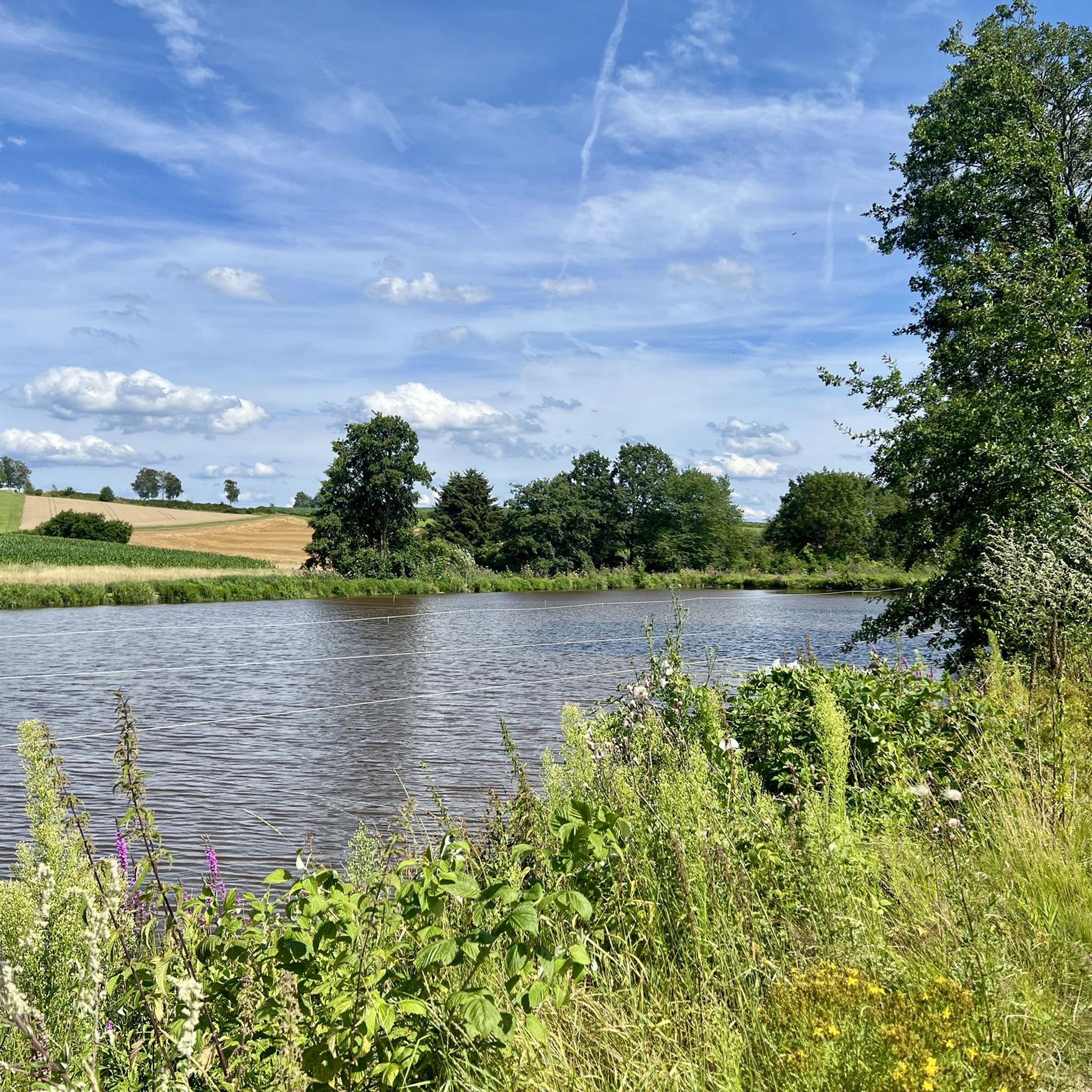
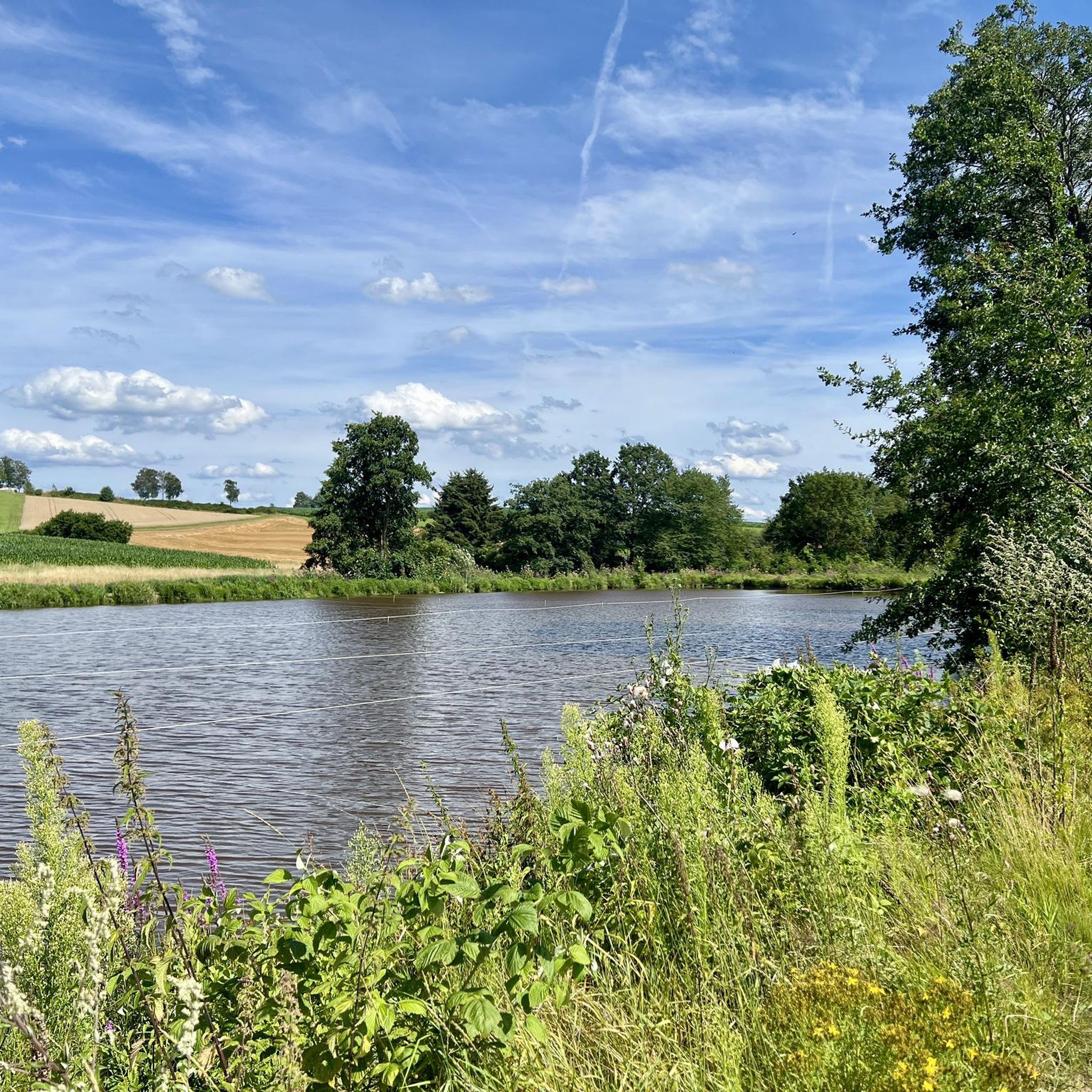
From the observation tower you can enjoy a fantastic view of the Regen and the surrounding fields and meadows.
0
0

New bridge over the Regen. Everything's fine.
1
0
Frequently Asked Questions
How many mountain bike trails are there around Pemfling?
There are nearly 700 mountain bike trails around Pemfling. The region offers a diverse landscape within the Upper Bavarian Forest Nature Park, with options for various skill levels.
What kind of terrain can I expect on mountain bike trails in Pemfling?
Pemfling's mountain bike trails feature a mix of dense forests, rolling hills, and varied terrain. You'll find everything from forest paths to challenging ascents and descents, with the Regen River adding to the natural character.
Are there easy mountain bike trails suitable for beginners in Pemfling?
Yes, Pemfling offers a good selection of easy mountain bike trails. For example, the Regen River Bridge – Wetterfeld Castle Ruins loop from Loibling is an easy 22.5 km route with minimal elevation gain, perfect for a relaxed ride along the river.
When is the best time of year for mountain biking in Pemfling?
The spring and autumn months are considered ideal for mountain biking in Pemfling. During these seasons, you can expect pleasant temperatures and stable weather conditions, which are perfect for longer tours.
Are there any family-friendly mountain bike routes in Pemfling?
Many of the easier routes in Pemfling are suitable for families. Trails with less elevation and varied scenery, such as the Regen River Bridge – View of Cham from Traubenberg loop from Loibling, offer a pleasant experience for riders of different ages and abilities.
What are some notable landmarks or natural features I can see along the trails?
While riding, you can explore several interesting points. The Schwarzenburg Castle Ruins offer historical insights, and the Stone Wall (Schwarzwihrberg) is a significant natural monument. The Regen River itself provides a refreshing backdrop to many routes.
Are there any bike parks near Pemfling for more advanced riders?
Yes, for those seeking more adrenaline, there are several bike parks near Pemfling. You can find specially designed tracks with jumps, drops, and other obstacles. Explore options like the Schützensteig Trail or the Pumptrack Rötz for a different kind of challenge.
What do other mountain bikers enjoy most about the trails in Pemfling?
The mountain bike trails in Pemfling are highly rated by the komoot community, with an average score of 4.7 stars from over 2,300 reviews. Riders often praise the diverse terrain, the dense woodlands, and the well-maintained paths that offer a varied experience for all skill levels.
Are there any challenging mountain bike routes for experienced riders?
Absolutely. Pemfling offers nearly 100 difficult mountain bike trails for experienced riders. Routes like the Bärenhöhle Trail Sign – Inn Zum Wirts Wast loop from Grafenkirchen feature significant elevation gain and diverse forest scenery, providing a demanding ride.
Can I find circular mountain bike routes in Pemfling?
Yes, many of the mountain bike routes in Pemfling are designed as loops, allowing you to start and end at the same point. An example is the View of Buchberg – Luitpold Tower loop from Waffenbrunn, a moderate 24.5 km trail that takes you through varied forest terrain.
Are dogs allowed on the mountain bike trails in Pemfling?
While specific regulations for dogs on mountain bike trails are not detailed, generally, dogs are welcome on many outdoor paths in the region. It's always recommended to keep dogs on a leash, especially in forested areas or near wildlife, and to respect local signage.
Are there places to eat or stay near the mountain bike trails in Pemfling?
While specific cafes or pubs directly on the trails are not listed, the charming old town of Cham is a short distance away and offers opportunities for leisurely strolls and places to eat. You can find various accommodation options in the surrounding towns and villages.
Most popular attractions around Pemfling

Get inspired with the komoot mobile app


Explore more
Browse the best MTB trails in other regions.
