Attractions and Places To See in Lake Kerkini National Park - Top 11
Best attractions and places to see in Lake Kerkini National Park, a significant wetland in northern Greece, centers around an artificial lake formed by a dam on the Strymonas river. This area has evolved into an important biotope, supporting diverse wildlife. The region offers 11 distinct places to explore, ranging from natural landscapes to historical sites.
Best attractions and places to see in Lake Kerkini National Park
- The most popular attractions is Kerkini Dam, an other man-made structure that forms the artificial lake of Kerkini. Beyond the dam, a marshy area provides habitat for many birds, including the pelican crape.
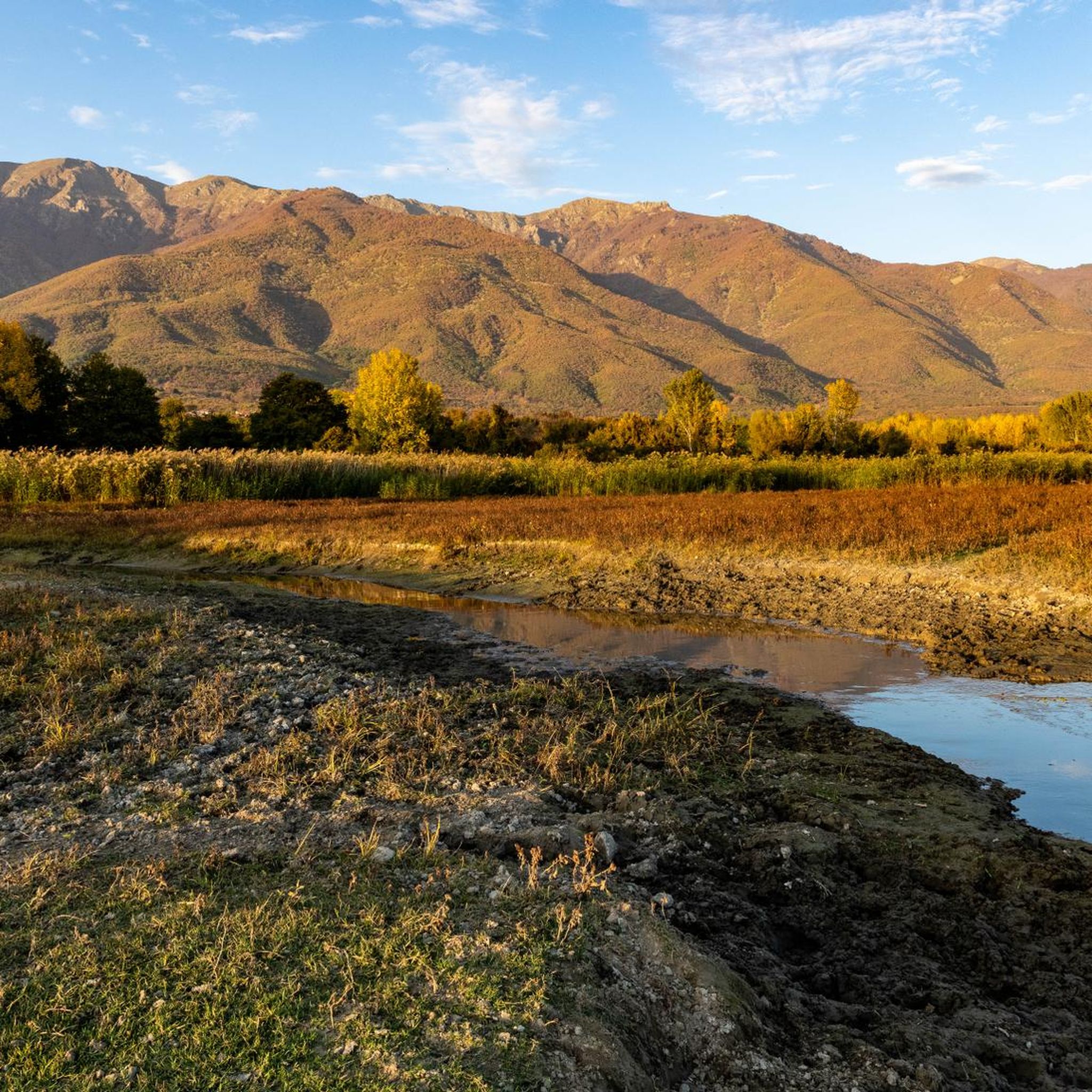
- Another must-see spot is Lake Kerkini Wetland, an artificial lake created from a dam in 1932. It serves as a sanctuary for 30 species of freshwater fish and 300 species of birds, including thousands of wintering flamingos.
- Visitors also love Ano Poroia Village, a historic settlement founded in the late 18th century. Its history includes a diverse population and occupations like agriculture and silkworm farming, making it a culturally significant site.
- Lake Kerkini National Park is known for its natural monuments, historical sites, and diverse settlements. Visitors can explore artificial lakes, wetlands, and culturally rich villages.
- The attractions in Lake Kerkini National Park are appreciated by the komoot community, with 2 upvotes and 5 photos shared.
Last updated: October 16, 2026
Ano Poroia Village
Highlight • Settlement
In the "Ethnographie des vilayets d'Adrianople, de Monastir et de Salonique" (published in 1878 in Constantinople and in relation to the population) it was written that Gorni Poroi was a village and had 320 households with 1,000 Bulgarians and 60 Aromanians.
At first, both Bulgarians and Aromanians adhered to the same liturgy and belonged to a unified church ministering in Greek.
More about the checkered history at en.wikipedia.org/wiki/Ano_Poroia
Translated by Google •
Tip by

Kerkini Dam
Highlight • Structure
Translated by Google •
Tip by

Sign up now to discover places like this
Get recommendations on the best single tracks, peaks, & plenty of other exciting outdoor places.
Fort Roupel Observation Post
Highlight • Historical Site
The fortress also became famous during the Second World War, when the advance of the German armies on this section of the front was stopped here. On the eve of World War II, Fort Roupel was incorporated into the Metaxas Line, a new line of defenses built to repel an invasion of Greece by Bulgaria. For three days the fortress withstood the German attack and was only abandoned by its men after the surrender of the Greek army in Thessaloniki.
Today one of the galleries of the fortress is open to visitors, as well as a small museum and the pavilion for visitors, the observatory and the memorial to fallen soldiers. On the gallery, the visitor has the opportunity to relive the moments of the battle. In addition, parts of the 23-kilometer tunnel are accessible to visitors.
Translated by Google •
Tip by
Lake Kerkini Wetland
Highlight • Lake
The original purpose of Lake Kerkini was to regulate the water level of the Strymonas to prevent flooding further downstream. In addition to this use, water was increasingly withdrawn from Lake Kerkini over the years to irrigate agricultural areas along the Strumas plain and the Serres-Sidirokastro plain. A new dam was built in 1982 as a result of the meanwhile lower water level, also due to the sediment input of the river Strymonas and thus the reduced capacity.
In addition to being used for flood protection and for irrigating agricultural land, Lake Kerkini has developed into an important wetland biotope. 30 species of freshwater fish and 300 species of birds live in and around Lake Kerkini. In addition to birds and fish, there are also rare animals such as wolves. Thousands of flamingos wintering here have been a highlight since the 1990s.
Source: Excerpts from de.wikipedia.org/wiki/Kerkini-See and discovergreece.com/de/macedonia/lake-kerkini
Translated by Google •
Tip by
Finish Parcours #TCRNo9 // Thessaloniki
Highlight (Segment) • Settlement
The history of the city is a rich tapestry of radicalism and anarchy, borne from its place on the historical frontier of Europe and Asia, and mirrored in the architecture we see today. At its heart lies the White Tower, which in its various guises — Byzantine, Ottoman, and modern Greek — has stood witness to this transient border since the 12th Century.
Here our riders will finish, and have the opportunity to dip their wheels into the Aegean, signalling the end of their Transcontinental journey, and the chance to rest their weary bodies.
Tip by

Sign up for free to discover even more attractions in Lake Kerkini National Park.
Already have an account?
Start today with a free account
Your next adventure awaits.
Popular around Lake Kerkini National Park
Other adventures in Lake Kerkini National Park

Tips from the Community

Finish Parcours #TCRNo9 // Thessaloniki
0
0

TCRNo9 finishes on the shores of the Aegean Sea, where the city of Thessaloniki marks the end of the adventure for our successful riders, having started thousands of kilometres away on the edge of western Europe. The history of the city is a rich tapestry of radicalism and anarchy, borne from its place on the historical frontier of Europe and Asia, and mirrored in the architecture we see today. At its heart lies the White Tower, which in its various guises — Byzantine, Ottoman, and modern Greek — has stood witness to this transient border since the 12th Century. Here our riders will finish, and have the opportunity to dip their wheels into the Aegean, signalling the end of their Transcontinental journey, and the chance to rest their weary bodies.
0
0

Lake Kerkini dams the Strymonas (Struma) river coming from Bulgaria. It is an artificial lake that was created from a dam in 1932 and over time has transformed the surrounding area into a true paradise. A sanctuary for birds and people alike, the calm, serene lake is ideal for bird watching and fishing. The original purpose of Lake Kerkini was to regulate the water level of the Strymonas to prevent flooding further downstream. In addition to this use, water was increasingly withdrawn from Lake Kerkini over the years to irrigate agricultural areas along the Strumas plain and the Serres-Sidirokastro plain. A new dam was built in 1982 as a result of the meanwhile lower water level, also due to the sediment input of the river Strymonas and thus the reduced capacity. In addition to being used for flood protection and for irrigating agricultural land, Lake Kerkini has developed into an important wetland biotope. 30 species of freshwater fish and 300 species of birds live in and around Lake Kerkini. In addition to birds and fish, there are also rare animals such as wolves. Thousands of flamingos wintering here have been a highlight since the 1990s. Source: Excerpts from https://de.wikipedia.org/wiki/Kerkini-See and https://www.discovergreece.com/de/macedonia/lake-kerkini
4
0
Ano Poroia was founded in the late 18th century (c. 1800) by Aromanians (mainly) from the Pindus mountains after expulsions led by Ali Pasha from Ioannina. During the 19th century the village was one of the largest and most developed in Demirhisar Kaza des Serres Sandjak. The main occupations were agriculture (tobacco, flax, cotton, barley, rye), silkworm farming and trade. The population was made up of Greeks, Aromanians, Bulgarians and Turks. In the "Ethnographie des vilayets d'Adrianople, de Monastir et de Salonique" (published in 1878 in Constantinople and in relation to the population) it was written that Gorni Poroi was a village and had 320 households with 1,000 Bulgarians and 60 Aromanians. At first, both Bulgarians and Aromanians adhered to the same liturgy and belonged to a unified church ministering in Greek. More about the checkered history at https://en.wikipedia.org/wiki/Ano_Poroia
4
0
Fort Roupel is a fortress on the northern border of central Macedonia in Greece, built in 1914 because this place is of strategic importance for access to either Greek or Bulgarian territory. During World War I, on May 25, 1916, the Royal Greek Government of Athens allowed the fortress to be surrendered to the Germans and their Bulgarian allies as a counterweight to the Allied forces stationed in Thessaloniki. The German-Bulgarian troops then occupied most of East Macedonia without resistance. The fortress also became famous during the Second World War, when the advance of the German armies on this section of the front was stopped here. On the eve of World War II, Fort Roupel was incorporated into the Metaxas Line, a new line of defenses built to repel an invasion of Greece by Bulgaria. For three days the fortress withstood the German attack and was only abandoned by its men after the surrender of the Greek army in Thessaloniki. Today one of the galleries of the fortress is open to visitors, as well as a small museum and the pavilion for visitors, the observatory and the memorial to fallen soldiers. On the gallery, the visitor has the opportunity to relive the moments of the battle. In addition, parts of the 23-kilometer tunnel are accessible to visitors.
4
0

Beyond the dam that forms the artificial lake of Kerkini, in the homonymous national park, the water forms a marshy area where many birds can be observed, including the pelican crape, one of the rarest of the existing pelicans
0
0
Frequently Asked Questions
What natural features can I explore in Lake Kerkini National Park?
The park is centered around Lake Kerkini Wetland, an artificial lake created by a dam on the Strymonas river. This area has become a significant wetland biotope, home to diverse wildlife. You can also visit the Kerkini Dam itself, which forms the lake and features a marshy area where many birds, including the pelican crape, can be observed.
What historical sites are there to visit in Lake Kerkini National Park?
You can explore Ano Poroia Village, a historic settlement founded in the late 18th century with a rich past of diverse populations and traditional occupations like agriculture and silkworm farming. Another significant historical site is the Fort Roupel Observation Post, a fortress with a strategic history from both World War I and World War II, where parts of its galleries and a small museum are open to visitors.
Are there family-friendly activities in Lake Kerkini National Park?
Yes, several attractions are suitable for families. The Lake Kerkini Wetland offers excellent opportunities for birdwatching, which can be fascinating for all ages. Ano Poroia Village provides a glimpse into local history and culture, and the Kerkini Dam area is also considered family-friendly for observing the marshy landscape and birdlife.
What is the best time to visit Lake Kerkini for birdwatching?
Lake Kerkini is renowned for its birdlife, especially during migration seasons. Thousands of flamingos winter here, making the colder months (late autumn to early spring) a highlight for birdwatching. The lake is a sanctuary for 300 species of birds, so there are opportunities year-round, but winter offers spectacular sights of large flocks.
What outdoor activities can I do near these attractions?
The Lake Kerkini National Park area offers various outdoor activities. You can find numerous cycling routes, such as the 'Mesaía – Aetovoúni loop' or the 'Lake Kerkini Wetland – Kerkini Dam loop'. For hikers, there are trails like the 'Ano Poroia Village loop' or the 'Lake Kerkini Wetland – Kerkini Lake Harbor loop'. You can find more details and routes in the Cycling in Lake Kerkini National Park and Hiking in Lake Kerkini National Park guides.
Are there easy walking trails around Lake Kerkini?
Yes, there are trails suitable for easier walks. For instance, the 'Lake Kerkini Wetland – Kerkini Lake Harbor loop' from Kerkini is an easy 5.9 km (3.7 miles) hike. These trails offer a chance to enjoy the natural beauty and observe wildlife without strenuous effort. You can find more options in the Hiking in Lake Kerkini National Park guide.
Can I spot rare wildlife in Lake Kerkini National Park?
Absolutely. The Lake Kerkini Wetland is a crucial biotope supporting 30 species of freshwater fish and 300 species of birds, including thousands of wintering flamingos and the rare pelican crape. Beyond birds and fish, the area is also home to rare animals such as wolves, making it a prime location for wildlife enthusiasts.
What do visitors enjoy most about Lake Kerkini National Park?
Visitors particularly appreciate the serene atmosphere and the rich biodiversity of the park. The opportunity for birdwatching, especially seeing the large flocks of flamingos and pelicans, is a major draw. The blend of natural beauty with historical sites like Ano Poroia Village also adds to the appeal, offering a diverse experience.
Are there any viewpoints to get a good overview of Lake Kerkini?
While not explicitly listed as a dedicated viewpoint for the lake, the Fort Roupel Observation Post offers panoramic views of the surrounding area, which may include parts of the lake and its landscape, given its strategic location. Exploring the areas around the Kerkini Dam and the wetland also provides excellent perspectives of the lake.
What is the significance of the Kerkini Dam?
The Kerkini Dam is a crucial man-made structure that created the artificial Lake Kerkini. Its original purpose was to regulate the water level of the Strymonas river to prevent flooding downstream and to irrigate agricultural areas. Over time, the area beyond the dam has transformed into a vital marshy habitat, supporting a diverse array of birdlife, including the pelican crape.
Can I find cafes or places to eat near Lake Kerkini National Park?
While specific cafes are not listed in the highlights, villages like Ano Poroia Village, being historic settlements, typically offer local tavernas and cafes where visitors can enjoy traditional Greek cuisine and refreshments. Exploring these local villages around the lake is recommended for dining options.
Most popular routes in Lake Kerkini National Park
Most popular attractions in Lake Kerkini National Park

Get inspired with the komoot mobile app


Explore more
Still not found the Highlight you’re looking for? See guides of the top attractions in other regions:
