The best cycling routes around Mötzingen
4.7
(103)
429
riders
36
rides
Touring cycling around Mötzingen is characterized by its location in the Heckengäu region, featuring rolling plateaus and valleys defined by hedges. The area offers a mix of gentle and undulating terrain, with access to the Nagold Valley Cycle Path for river-side routes. Cyclists can also reach the diverse landscapes of the Black Forest and the Swabian Alb, which provide options ranging from dense forests and rolling hills to more challenging mountain routes.
Best touring cycling routes around Mötzingen
- The most…
Last updated: October 2, 2026
4.8
(5)
32
riders
Moderate bike ride. Good fitness required. Mostly paved surfaces. Suitable for all skill levels.
5.0
(4)
25
riders
31.0km
01:53
270m
270m
Moderate bike ride. Good fitness required. Mostly paved surfaces. Suitable for all skill levels.

5.0
(7)
45
riders
Moderate bike ride. Good fitness required. Mostly paved surfaces. Suitable for all skill levels.
4.5
(4)
29
riders
16.3km
01:00
140m
140m
Easy bike ride. Great for any fitness level. Mostly paved surfaces. Suitable for all skill levels.
4.2
(6)
24
riders
Moderate bike ride. Good fitness required. Mostly paved surfaces. Suitable for all skill levels.
Get access to more routes and recommendations from other explorers.
Already have an account?
Our route recommendations are based on thousands of hikes, rides, and runs completed by other people on komoot.
Start today with a free account
Your next adventure awaits.


Tips from the Community

The central Neckar facilities extend south of the river. Here you will find the well-kept city garden with shady paths, old trees, playgrounds, and sunbathing lawns. The Josef-Eberle-Brücke bridge leads directly from here into the old town.
3
0
The Josef-Eberle-Brücke is an elegant pedestrian and cycle bridge that directly connects Rottenburg's old town across the Neckar river with the parklands on the south bank. A slender, slightly curved steel and concrete construction that blends harmoniously into the river and townscape. Named after the writer, publicist, and publisher Josef Eberle (1901–1986), who was born in Rottenburg and became known under the pseudonym Sebastian Blau as a significant Swabian dialect poet.
3
0
The history of the Flurkreuz is not documented in writing. Only by interviewing around 40 contemporary witnesses, mostly "Ehgner", was light shed on the darkness of the past. The church caretaker Gertrud Edelmann and the parsonage maid Martha Weckerle reported that the money for the creation of the Flurkreuz was donated by the former St. Moriz town pastor August Zell. Among the "cross initiators" were Mayor Josef Schneider, town councilor Wilhelm Heberle and architect Martin Schilling. He had rock fragments from the central pillar of the Obere Brücke, blown up in 1945, recovered from the Neckar. As a sign of thanks for surviving the war, Heinrich Schneider from Bad Niedernau and his journeyman Hermann Geiger processed the sandstone from the town forest into the Flurkreuz. The cross was consecrated in 1947.
3
0

Beautiful fountain in the city park - nearby many seating areas and a café on the shore. a good place to chill.
5
0

The wayside cross we encounter here does not bear the Corpus Christi; instead, a Bible verse from the Gospel of John (Chapter 15) is incorporated into the beams: 'I am the vine, you are the branches.' In a reflection on the seven biblical 'I am' sayings of Jesus, Sr. Thekla Baumgart OSB writes: + 'The images all come from Jesus' everyday life and were catchy and understandable for the people of his time. For us today, some are understandable, while others are alien, or their significance has changed. What the seven 'I am' sayings have in common is their structure: the self-declaration 'I am...' (I am the vine) is followed by the consequence, i.e., a call to action – Whoever remains in me. This then leads into a promise: bears rich fruit.'
0
1

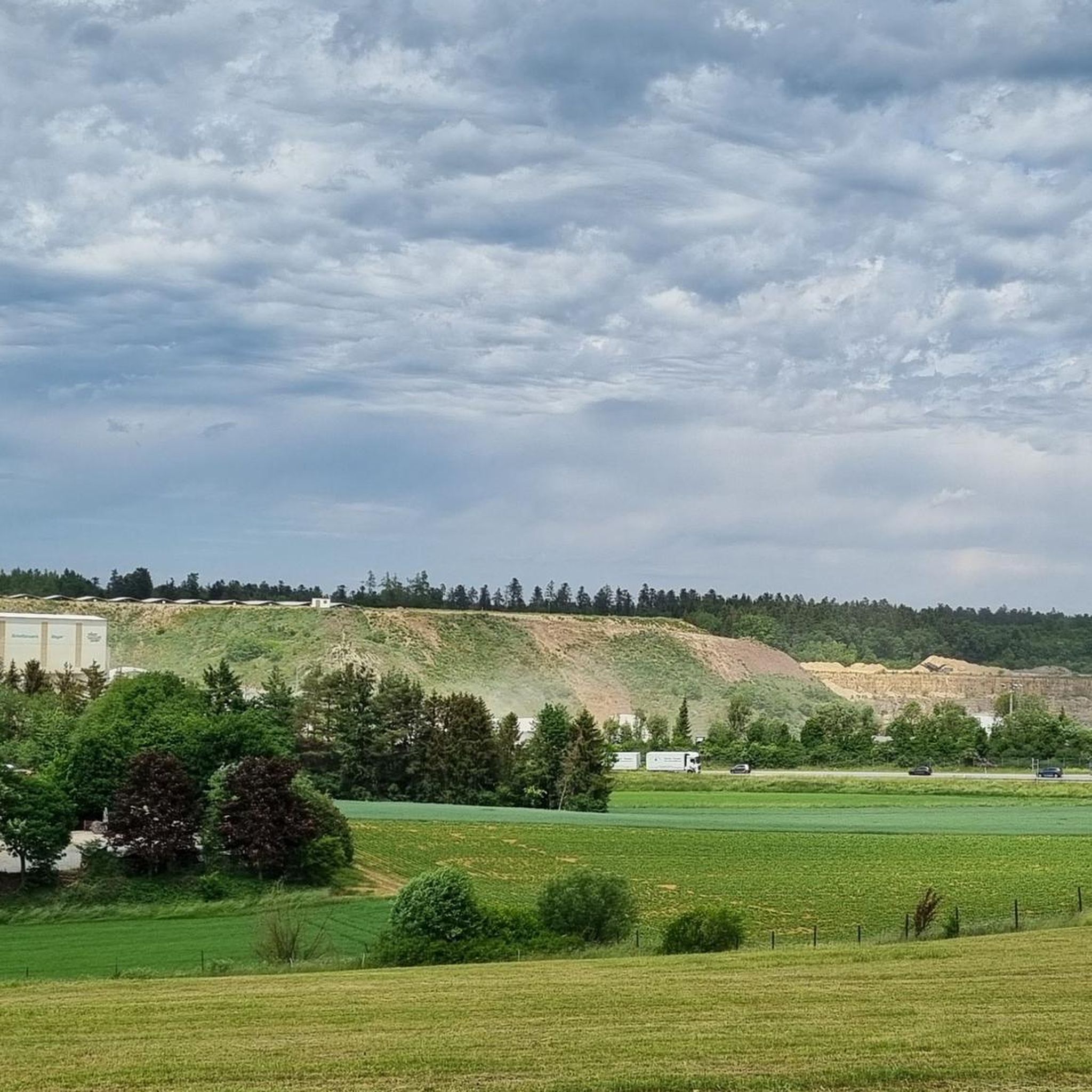
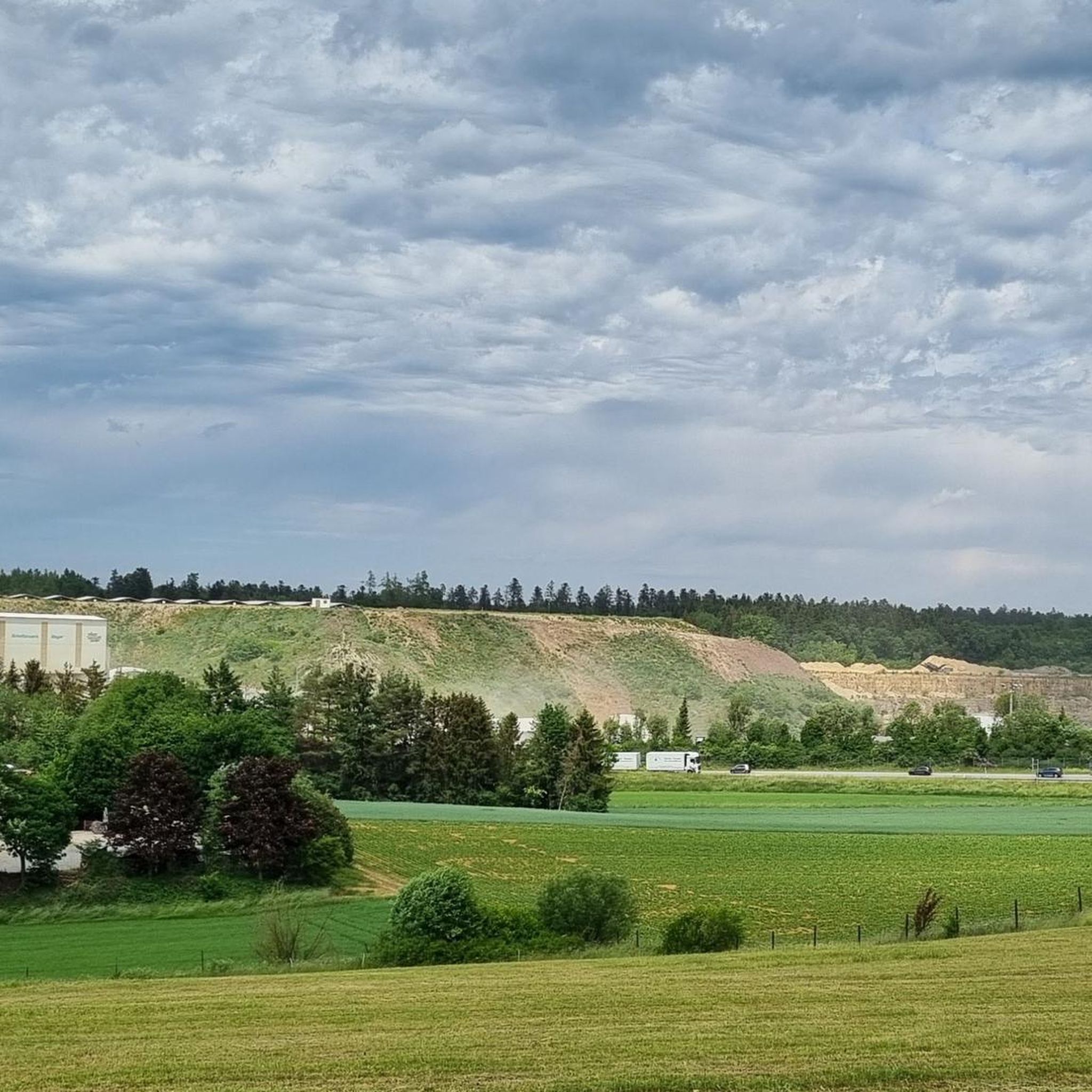
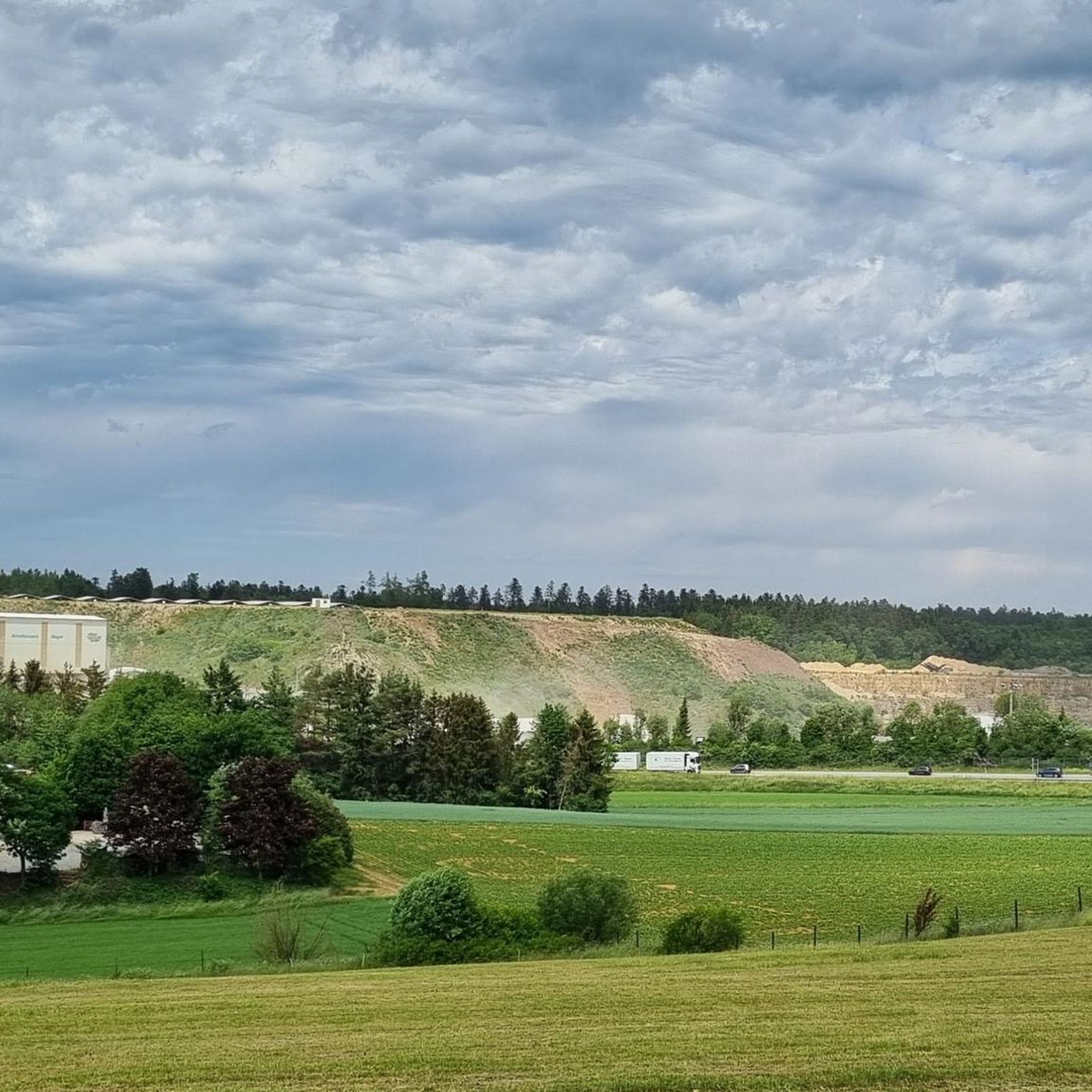
Great view from the bike path over Altingen, Kayh and Mönchberg to the Schönbuch
5
0

The “Posthotel zur Sonne” (Post Hotel at the Sun) was built in 1697 as one of the first larger buildings outside the Upper Gate on the Vorstadtplatz (Suburb Square) by butcher, innkeeper, and mayor Johann Philipp Deublin. In the 18th century, there was already a royal route for coaches that led from Stuttgart via Nagold to Freudenstadt and Strasbourg. In 1807, King Frederick established a post office in the Gasthaus zur Sonne. A stable for changing horses was added in 1812. At times, up to 50 animals were housed there. In 1898, the business moved to a new post office building on Leonhardstraße. Under Paul and Emma Luz, the post office was transformed into a hotel. During renovations in 1906, running water and electricity were installed. Professor Robert Nachbauer from Stuttgart had the magnificent half-timbering in the Franconian style uncovered and designed the artistically significant inn sign. `` . ... . After taking over the hotel in 1950, Karl-Friedrich and Lore Scholl had it modernized. Until its sale in 1984, the Hotel Post remained in the possession and management of the same family for generations, although the names changed: Deublin, Gschwindt, Luz, and Scholl.
9
0
Today, on a Sunday at the end of October, you can finally see the market square in its full size. Without market stalls and without large crowds.
14
0
Frequently Asked Questions
How many touring cycling routes are available around Mötzingen?
There are 38 dedicated touring cycling routes around Mötzingen, offering a variety of options for different skill levels. This includes 15 easy routes, 16 moderate routes, and 7 more challenging tours.
What kind of terrain can I expect when cycling in the Mötzingen area?
Mötzingen is situated in the Heckengäu region, characterized by rolling plateaus and valleys defined by hedges, offering a mix of gentle and undulating terrain. You can also access the Nagold Valley Cycle Path for more riverside routes, or venture towards the Black Forest and Swabian Alb for more challenging mountain routes with significant elevation gains.
Are there any family-friendly cycling routes in Mötzingen?
Yes, Mötzingen offers several family-friendly options, particularly those that connect to the Nagold Valley Cycle Path. This path is known for being largely family-friendly with mostly slight descents and paved sections away from major roads. For a local easy loop, consider the Mötzinger Grund – Öschelbronn Velodrome loop from Mötzingen, which is 16.3 km long and has minimal elevation gain.
What are some scenic highlights or viewpoints along the cycling routes?
Cyclists can enjoy various scenic highlights. The Turkeys Near Gültstein – View of Altingen loop from Mötzingen offers views of the surrounding Heckengäu landscape. For broader vistas, the Hohennagold Castle Ruins provide extensive views over the Nagoldtal and Heckengäu, and sometimes even the Swabian Alb. You can also find panoramic views from the View of Horb and the Neckar Valley from the Former Kreuzkapelle Site.
Are there any circular cycling routes starting from Mötzingen?
Yes, many routes around Mötzingen are designed as loops. For example, the popular Weggental Pilgrimage Church – Neckar Riverside in Rottenburg loop from Mötzingen is a 37.7 km moderate route. Another option is the Old Post Hotel, Nagold – Baisingen Forest Chapel loop from Mötzingen, covering 26.5 km.
What do other touring cyclists say about the routes in Mötzingen?
The touring cycling routes in Mötzingen are highly rated by the komoot community, with an average score of 4.8 stars from over 70 reviews. More than 400 touring cyclists have used komoot to explore the varied terrain, often praising the scenic beauty and diverse options available.
Can I access the Black Forest or Swabian Alb for more extensive cycling from Mötzingen?
Yes, Mötzingen's strategic location provides excellent access to both the Black Forest and the Swabian Alb. The Black Forest, to the west, offers over 1,000 kilometers of marked cycle paths with dense forests and challenging climbs. To the southeast, the Swabian Alb features impressive landscapes, including juniper heathland and prehistoric rock formations, with routes like the 4-star certified Alb Valleys Cycle Route.
Are there any historical or cultural attractions along the cycling paths?
Absolutely. The Nagold Valley Cycle Path, easily accessible from Mötzingen, winds through charming towns like Nagold and Calw (Hermann Hesse's birthplace), and past historical sites such as the monasteries in Wildberg and Hirsau. Locally, you can visit the Herrenberg Market Square or the Historic Water Wheel in Wildberg.
What is a good moderate touring cycling route for an intermediate cyclist?
For an intermediate cyclist, the Vollmaringer Pond – Baisingen Forest Chapel loop from Mötzingen is a great choice. It's a moderate 23 km route with about 175 meters of elevation gain, offering a good balance of distance and challenge without being overly strenuous.
Are there any specific natural features or landmarks to look out for?
The Heckengäu region itself is defined by its distinctive 'Hecken' (hedges) that shape the landscape. You can also find natural landmarks like the Ziegel/Steinberg on the 7 Mountains Trail and Wolfsberg (526 m), which are mountain peaks offering elevated views.
Most popular routes around Mötzingen
Most popular attractions around Mötzingen

Get inspired with the komoot mobile app


Explore more
Browse the best Cycling routes in other regions.
