The best road cycling routes around Miltach
4.5
(355)
4,574
riders
197
rides
Road cycling routes around Miltach are situated within the Bavarian Forest, offering varied terrain for cyclists. The region features a mix of quiet roads, dedicated cycleways, and paved surfaces, making it suitable for road biking. Cyclists can expect routes that traverse gentle valleys and include moderate ascents, connecting to neighboring towns and natural features. The landscape is characterized by its low mountain range environment.
Best road cycling routes around Miltach
- The most popular road cycling route is Café Waffel loop…
Last updated: October 13, 2026
5.0
(3)
50
riders
45.2km
02:22
400m
400m
Moderate road ride. Good fitness required. Some segments of this route may be unpaved and difficult to ride.
5.0
(1)
16
riders
41.8km
01:53
360m
360m
Moderate road ride. Good fitness required. Mostly well-paved surfaces and easy to ride.

2.0
(1)
12
riders
53.9km
02:52
890m
890m
Moderate road ride. Good fitness required. Some segments of this route may be unpaved and difficult to ride.
15
riders
42.0km
02:01
270m
270m
Moderate road ride. Good fitness required. Some segments of this route may be unpaved and difficult to ride.
15
riders
51.5km
02:43
830m
830m
Moderate road ride. Good fitness required. Some segments of this route may be unpaved and difficult to ride.
Get access to more routes and recommendations from other explorers.
Already have an account?
Our route recommendations are based on thousands of hikes, rides, and runs completed by other people on komoot.
Start today with a free account
Your next adventure awaits.

Other adventures around Miltach

Tips from the Community

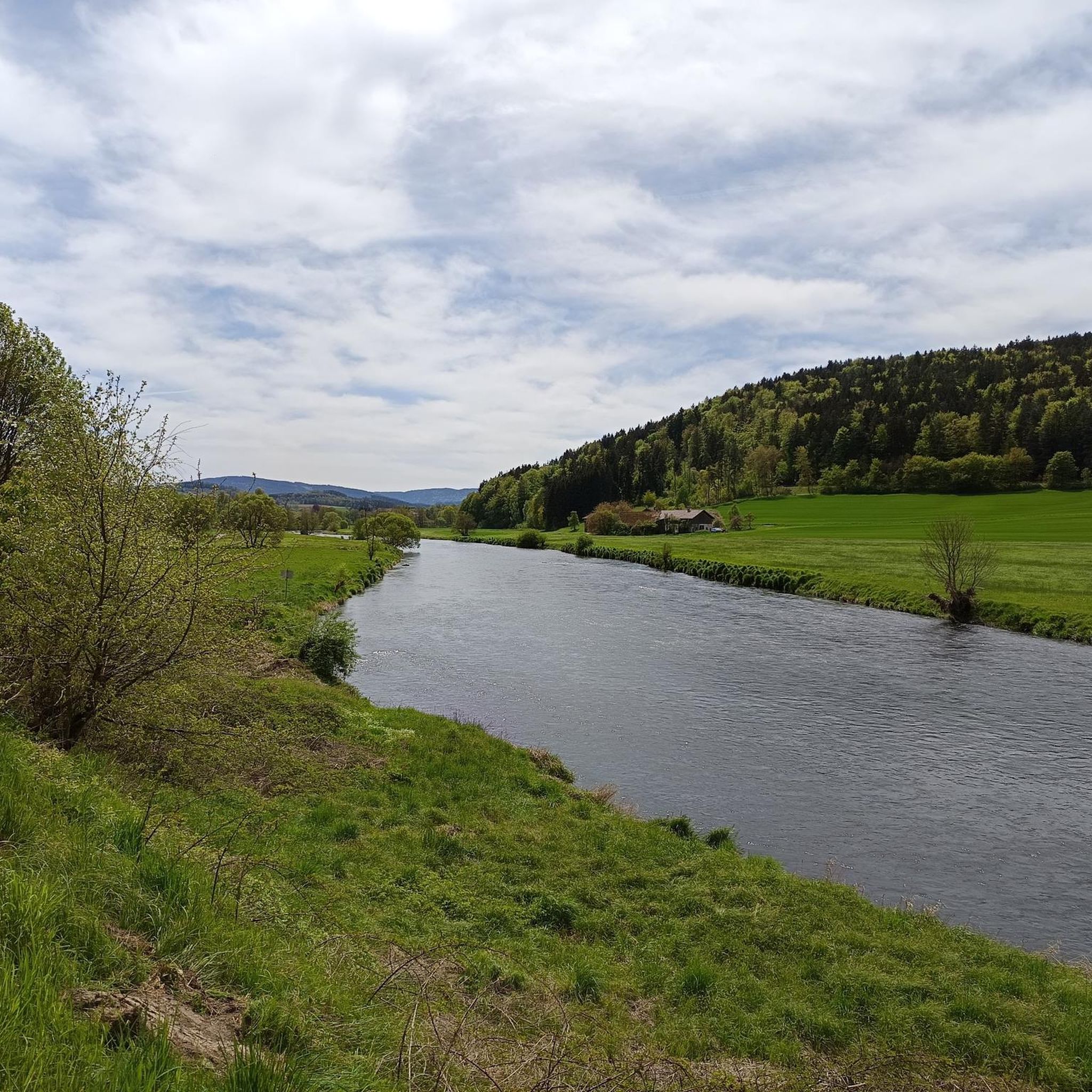
The cycle path runs directly along the Regen river and therefore naturally has no significant climbs.
1
0

The white Regen, rather inconspicuous compared to the black one, and its brother join near Bad Kötzting to form the Regen. Within Bad Kötzting, the white Regen is accompanied by an easily walkable, approximately 3 km long riverside path.
0
0
striking church in Chammünster which is easily recognizable from afar due to its twin towers
0
0

Delicious beer, pork knuckles, sulzn, whatever you need
0
0

Located on the edge of the park
0
0

It is the only one of the original four city gates still standing. It was originally called the Castle Gate, as the Cham Castle stood on the site of the adjacent old building. However, after it lost its former function, an electoral brewery for wheat beer was established here in 1642. Thus, the Castle Gate became popularly known as the "Beer Gate." Its squat shape with its massive round towers and covered pointed arch is reflected in the coat of arms of the city of Cham as a landmark.
5
0

Beautiful view with beer garden behind the church
1
0

Parish Church of the Assumption of Mary The first church was probably a wooden building, as was common at the time. It was probably destroyed during one of the Hungarian raids around 910. The second church was probably built in the Romanesque style from Regensburg and destroyed by King Ottokar II of Bohemia. Construction of an early Gothic church began in the second half of the 13th century. The stonemason's marks indicate the involvement of the Regensburg Cathedral workshop. The north tower and choir of this third church, as well as the beginning of the early Gothic triumphal arch, are still preserved. The south tower had to be rebuilt in the 19th century due to dilapidation. Major damage to this third church during the Hussite Wars made it necessary to rebuild the three-aisled hall. The fourth, late Gothic church was built on the remains of the columns and old foundations. The church complex stands within the quadrangle of a formerly fortified cemetery; it is a three-aisled structure with twin towers. In the southwest corner stands the St. Anne's Chapel, and in the northeast corner is the two-room charnel house with the mortuary, which has been built over since 1965. The Baroque high altar was probably built by Fidelis Ittelsberger from Cham; the altar is a High Baroque backdrop altar. A total of 26 putti and angels accompany the oil painting at the rear. Figures of the apostles Peter and Paul act as altar guardians. The altarpiece of the right side altar depicts the attire of St. Walburga by her uncle Boniface. The two are surrounded by Walburga's two brothers, Willibald and Wunibald, and her parents Richard and Wuna. The altar guardians are the figures of Barbara with chalice and sword, and Catherine with book and palm. The left side altar was built in 1939 by the Schierer workshop in Cham for the 1200th anniversary celebrations, based on the right altar. The altarpiece depicts the Archangel Michael fighting the dragon. Church painter Willi Diernhöfer painted it in 1939. The two patron saints of cattle, Leonhard and Wendelin, serve as altar guardians. The church's oldest furnishing is a Romanesque baptismal font in the shape of a hemisphere. Christ and the twelve apostles can be seen around the font, with plant ornaments in between. Approximately 130 epitaphs and gravestones have been preserved on the walls, the exterior walls, and the interior floor. Source: Excerpts from www.wikipedia.de
4
0
Frequently Asked Questions
What kind of terrain can I expect on road cycling routes around Miltach?
Road cycling routes in Miltach are situated within the Bavarian Forest, offering varied terrain. You'll find a mix of quiet roads, dedicated cycleways, and paved surfaces. The landscape includes gentle valleys and moderate ascents, characteristic of a low mountain range environment.
Are there routes suitable for beginners or those looking for an easy ride?
Yes, Miltach offers easy road cycling routes. For instance, the Café Waffel loop from Miltach is an easy 21.8 km trail with a manageable elevation gain of 185 meters, typically completed in about an hour.
What are some options for more challenging or long-distance road cycling?
For those seeking a challenge, Miltach has several difficult routes. The The Powder Tower in Straubing – Danube River loop from Miltach is a demanding 111.1 km route with over 1400 meters of elevation gain. Another difficult option is the Falkenstein Castle – View of Konzell and Gäuboden loop from Miltach, covering 81.2 km with significant climbs.
What interesting landmarks or natural features can I see along the road cycling routes?
The region around Miltach is rich in natural beauty and historical sites. You can explore impressive natural monuments like the Großer Pfahl rock formation, or enjoy picturesque views of the Regental valley. Some routes pass by historical sites such as the Red Biertor and Thierlstein Castle, as seen on the The Red Biertor of Cham – Thierlstein Castle loop from Miltach. The nearby Lake Blaibach also offers a scenic cycling experience along its shores.
Are there any scenic viewpoints accessible by road bike?
Yes, the Bavarian Forest region provides numerous scenic viewpoints. Peaks like Kreuzfelsen and Käsplatte offer breathtaking panoramic views of the surrounding area, including Bad Kötzting and the anterior Bavarian Forest. While these peaks might require a short hike from a cycling route, many routes themselves offer elevated sections with expansive vistas, such as the To Kramerwirt – View of Tresdorf loop from Miltach.
What is the best time of year for road cycling in Miltach?
The best time for road cycling in Miltach is generally from spring to autumn. During these seasons, the weather is typically mild, and the natural landscapes of the Bavarian Forest are at their most vibrant. Summer offers longer daylight hours, while spring and autumn provide comfortable temperatures and beautiful scenery.
Are there any circular road cycling routes available?
Yes, many of the road cycling routes around Miltach are designed as loops, allowing you to start and end in the same location. Examples include the easy Café Waffel loop from Miltach and the more challenging The Powder Tower in Straubing – Danube River loop from Miltach.
What do other road cyclists think about the routes in Miltach?
The road cycling routes in Miltach are highly rated by the komoot community, with an average score of 4.5 stars from over 200 reviews. More than 4000 road cyclists have used komoot to explore Miltach's varied terrain, often praising the quiet paved roads and diverse landscape.
Are there places to eat or stay along the routes?
Miltach and the surrounding towns like Bad Kötzting offer various amenities for cyclists. You can find cafes, pubs, and accommodation options to refuel and rest. The region is well-equipped to cater to visitors, ensuring you have access to services during your ride.
Is Miltach accessible by public transport for cyclists?
Miltach is generally accessible by public transport, which can be useful for reaching starting points or returning from longer tours. It's advisable to check local train and bus schedules for specific routes and bike carriage policies, as these can vary.
Are there any family-friendly road cycling routes in Miltach?
While road cycling often involves longer distances, some routes around Miltach are suitable for families looking for an easier ride. The Café Waffel loop from Miltach, for example, is an easy route with a moderate distance and elevation gain, making it a good option for families with some cycling experience.
Most popular routes around Miltach
Most popular attractions around Miltach

Get inspired with the komoot mobile app


Explore more
Browse the best Road cycling routes in other regions.
