The best traffic-free bike rides around Narewka
4.7
(237)
1,340
riders
49
rides
Touring cycling around Narewka offers an immersive experience within the unique natural landscape of northeastern Poland. The region is characterized by its proximity to the ancient Białowieża Forest, one of Europe's last primeval forests, providing extensive routes through dense woodlands. The Narewka River meanders through the area, and the vast Siemianówka Reservoir adds significant water features to the generally flat terrain. This combination creates an ideal environment for no traffic touring cycling routes, allowing for wildlife observation and exploration of…
Last updated: September 2, 2026
4.8
(13)
57
riders
43.0km
03:12
110m
120m
This moderate 26.7-mile touring cycling loop through Białowieża Forest offers varied terrain, wildlife spotting, and cultural highlights.
4.9
(25)
152
riders
Moderate bike ride. Good fitness required. Mostly paved surfaces. Suitable for all skill levels.

Sign up for free
5.0
(22)
122
riders
Moderate bike ride. Good fitness required. Mostly paved surfaces. Suitable for all skill levels.
4.6
(18)
65
riders
Hard bike ride. Very good fitness required. Mostly paved surfaces. Suitable for all skill levels.
4.8
(15)
61
riders
34.3km
02:38
120m
120m
Moderate bike ride. Good fitness required. Mostly paved surfaces. Suitable for all skill levels.
Get access to more routes and recommendations from other explorers.
Sign up for free
Already have an account?
Our route recommendations are based on thousands of hikes, rides, and runs completed by other people on komoot.
Start today with a free account
Your next adventure awaits.
Login or Signup
Popular around Narewka
Other adventures around Narewka

Tips from the Community

The series »Treasures of the World – Heritage of Humanity« presents special places from all countries, cultures, and eras in short segments (unfortunately only available in German), which have one thing in common despite all their differences: they are selected as UNESCO World Heritage or Natural Heritage sites. The fifteen-minute film segment can be accessed in the ARD media library at the following link => https://www.ardmediathek.de/video/schaetze-der-welt/nationalpark-belovezhskaya-pushcha-bialowieza-polen-folge-257/swr/Y3JpZDovL3N3ci5kZS82OTA1OTI2
0
0

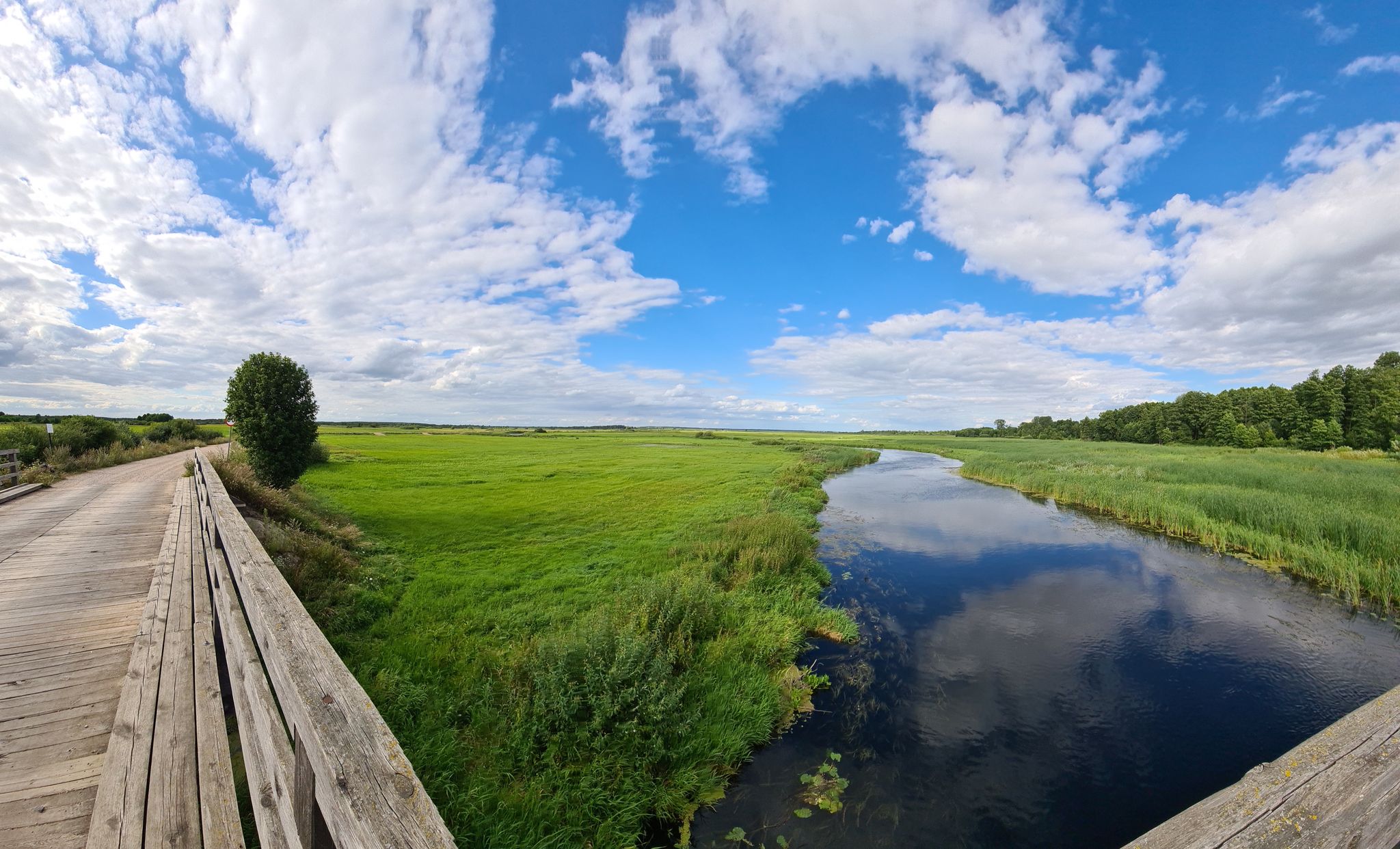
Bridge on the upper section of the Narewka River, right after the small bridge, the path begins - the "Carska Tropina" nature trail, running along the river valley with two observation towers.
0
0

The Royal Oak Trail in the Stara Białowieża forest is a picturesque educational trail leading through the former settlement, where archaeological research indicates the original Białowieża was founded. A wooden footbridge winds through ancient oak trees named after Polish and Lithuanian kings, creating a unique blend of history and nature.
3
0

Next to the bridge, you can see the remains of a concrete narrow-gauge railway bridge. The aim of this investment was to exploit the forest by providing transport of cut trees to the sawmill. The construction was started by the Germans in 1916, who occupied these areas. Forced labor was used for the construction – prisoners of war. By the end of World War I, 85 km of tracks had been built and as a result, the Białowieża Forest was devastated :-(
0
0
The most beautiful road through the Białowieża Forest with relatively little car traffic.
0
0

An open-air museum of the old narrow-gauge railway in this area. Interesting! This railway was built during World War I and was used until the 90s, primarily for the purpose of exploiting forests (wood). Today, it is quiet here in this clearing and it is certainly a nice place to visit.
1
0
Babia Góra is a small village in the Podlaskie Province, surrounded by forests and lakes, ideal for a bike ride away from the hustle and bustle of the tourist world. There are quiet asphalt and gravel roads in the area, and the slightly hilly terrain provides interesting views, especially in summer. It is a good place to use as a base for exploring the Suwałki Region, especially if you are planning a route towards nearby lakes such as Wiżajny or Hańcza. There is no large tourist infrastructure in the village itself, so it is worth having a supply of food and drink with you.
2
0

The Palace Park was established after 1895 as an integral part of the private hunting residence of the Russian tsars, built in the years 1889-1894. The name of the park "Palace" refers to the most important building, this residence, which was the tsar's palace (it burned down in 1944 and was finally demolished in 1962). The palace was accompanied by a complex of other buildings. Some of them were intended for the needs of the court and the tsar's service: the Orthodox church, the Drivers' House, the Bath House, the Management House, the stable house, the Świcki House, the Marshal's House, the Jegierski House. The remaining buildings were of an economic and industrial nature: the Cossack stable, the arsenal, the mill, the power plant, the barn, the garages. This hunting residence was surrounded by a park of over 50 hectares. The park was designed by Walerian Kronenberg (1859-1934), one of the most outstanding and fashionable designers of garden and park layouts from the turn of the century. He also designed over 300 larger and smaller parks in Poland, Lithuania, Russia and Crimea. In Warsaw alone, Kronenberg designed, among others, the Horse Racing Grounds and Agricola. bpn.com.pl/index.php?option=com_content&task=view&id=32
3
0
Frequently Asked Questions
How many no-traffic touring cycling routes are available around Narewka?
There are over 45 dedicated no-traffic touring cycling routes around Narewka, offering a wide range of distances and difficulties suitable for various skill levels.
What is the typical terrain like on no-traffic touring cycling routes in Narewka?
The terrain around Narewka is generally flat, making it accessible for most cyclists. Routes feature a mix of surfaces, including asphalt roads (often 75-85%), well-passable gravel roads, and unpaved forest paths, providing varied cycling experiences through the region's natural landscapes.
Are there any family-friendly no-traffic cycling routes in Narewka?
Yes, Narewka offers several family-friendly options. The 'Small Narewka Bike Loop' is a 17 km trail through the northern edge of Białowieża Forest, known for its short, almost flat terrain and numerous rest areas. Many routes are designed to be accessible for casual cyclists and families.
Can I bring my dog on the no-traffic touring cycling routes?
While many routes are suitable for cycling with dogs, especially on forest paths, it's important to be aware of regulations within the Białowieża National Park, where dogs may not be permitted on all trails. Always check local signage and park rules before setting out. Keep your dog on a leash for their safety and to protect wildlife.
What kind of natural features and landmarks can I expect to see along the routes?
You'll encounter diverse natural features and historical landmarks. Highlights include the ancient trees of the Royal Oaks Trail, the serene Krynoczka Holy Spring and Chapel, and the Place of Power. You might also spot European Bison at the European Bison Reserve. The Palace Park and the historic Białowieża Palace Station Pavilion are also notable stops.
Are there any circular no-traffic touring routes available?
Yes, Narewka is well-suited for circular touring. An excellent option is the Narewka Loop Trail, which offers a moderate 43 km ride. Other circular routes like the Białowieża National Park – Palace Park loop from gmina Narewka also provide great experiences.
What is the best time of year to visit Narewka for no-traffic touring cycling?
The best time to visit Narewka for touring cycling is typically from spring to early autumn (April to October). During these months, the weather is pleasant, and the forest is vibrant. Summer offers lush greenery, while spring and autumn provide beautiful colors and fewer crowds. Winter cycling is possible but requires appropriate gear and awareness of snow conditions.
What do other touring cyclists enjoy most about cycling in Narewka?
The area is highly rated by the komoot community, with an average score of 4.9 stars. Reviewers often praise the quiet, traffic-free nature of the routes, the stunning natural beauty of the Białowieża Forest, and the opportunities for wildlife spotting, especially bison and various bird species.
Are there cafes or pubs along the no-traffic cycling routes in Narewka?
While many routes venture into natural areas, Narewka and surrounding villages offer cafes, restaurants, and guesthouses where you can refuel. It's advisable to plan your stops, especially on longer routes, as services may be spread out. Packing snacks and water is always a good idea.
Is parking available near the start of the no-traffic touring cycling routes?
Yes, parking is generally available in Narewka village and at various access points to the Białowieża Forest and Green Velo trail sections. Look for designated parking areas near trailheads or in village centers. Public transport options to Narewka are limited, so driving and parking is often the most convenient way to access the routes.
Do I need any special permits to cycle in the Białowieża Forest area?
Generally, cycling on marked trails outside the strictly protected areas of Białowieża National Park does not require special permits. However, if you plan to enter specific national park zones or engage in guided tours within the strictly protected areas, permits might be necessary. Always check the official Białowieża National Park website for the latest regulations before your visit.
Most popular attractions around Narewka

Get inspired with the komoot mobile app


Explore more
Browse the best Cycling routes in other regions.
