The best hikes from bus stations around Merida
4.5
(287)
1,567
hikers
39
hikes
Bus station hiking trails around Merida, Spain, offer access to a landscape shaped by Roman history and the Albarregas and Guadiana rivers. The region features a relatively flat terrain, with gentle elevations and open plains, making it suitable for accessible walks. The trails often follow ancient Roman roads and aqueducts, providing a blend of natural scenery and historical landmarks. This area is characterized by its Mediterranean climate and agricultural lands, with routes frequently passing through olive groves and riverside paths.
…Last updated: June 23, 2026
4.5
(10)
40
hikers
11.2km
02:57
100m
90m
Moderate hike. Good fitness required. Easily-accessible paths. Suitable for all skill levels.
4.4
(5)
58
hikers
6.20km
01:38
60m
60m
Easy hike. Great for any fitness level. Easily-accessible paths. Suitable for all skill levels.

Sign up for free
5.0
(1)
27
hikers
6.06km
01:36
60m
60m
Easy hike. Great for any fitness level. Easily-accessible paths. Suitable for all skill levels.
5.0
(3)
16
hikers
11.0km
02:51
70m
70m
Moderate hike. Good fitness required. Easily-accessible paths. Suitable for all skill levels.
15
hikers
6.89km
01:45
20m
20m
Easy hike. Great for any fitness level. Easily-accessible paths. Suitable for all skill levels.
Get access to more routes and recommendations from other explorers.
Sign up for free
Already have an account?
Our route recommendations are based on thousands of hikes, rides, and runs completed by other people on komoot.
Start today with a free account
Your next adventure awaits.
Login or Signup



Other adventures around Merida


Tips from the Community

In Tarragona, Mérida has the most Roman remains that are worth seeing one by one. The city of Mérida is on the Unesco World Heritage List. There is so much beauty to see!!
14
0
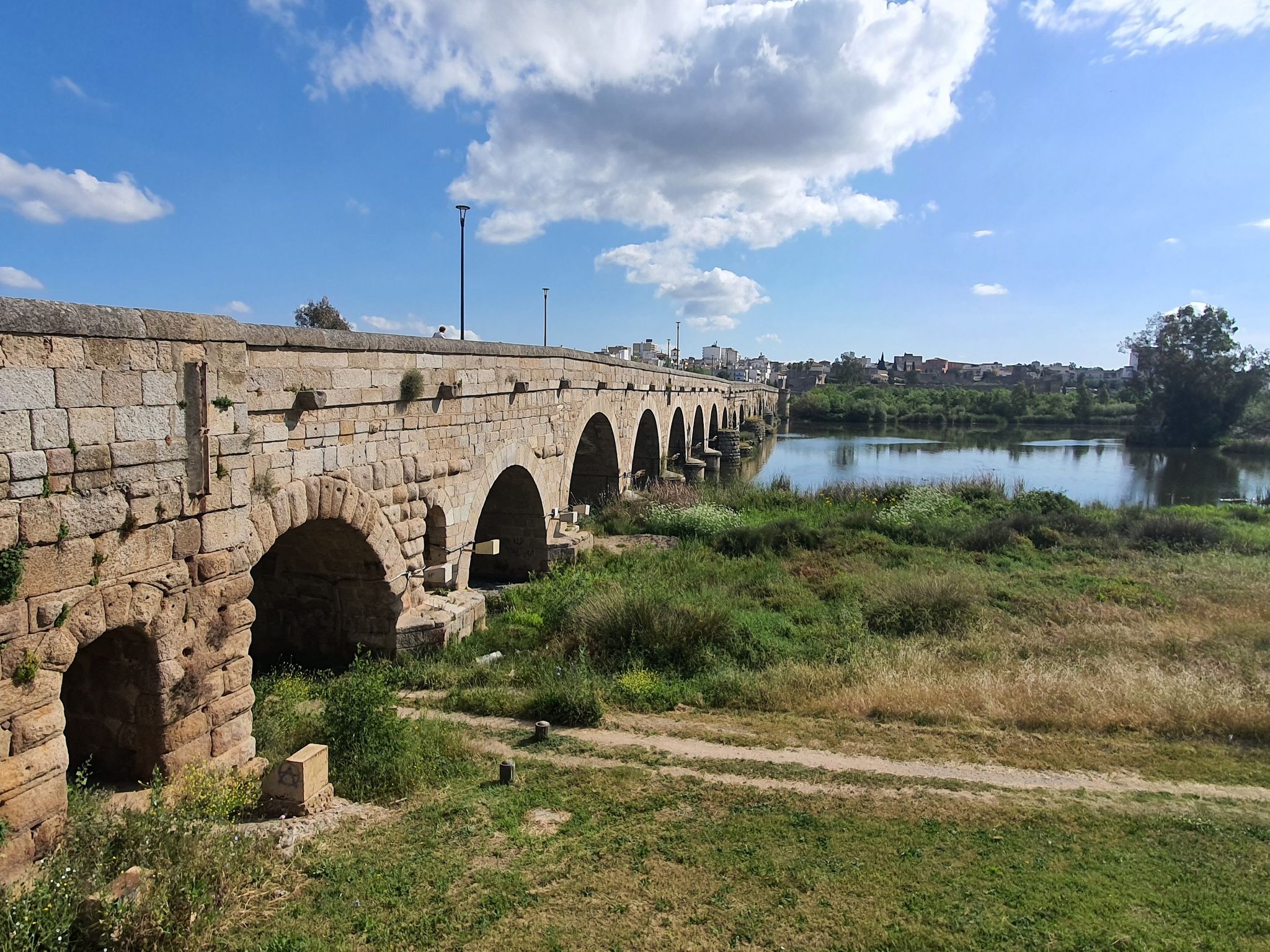
The Puente Romano crosses the Guadiana river and, with its 64 granite arches and a length of 800m, is one of the most striking remains from this period.
14
0
The Roman Bridge crosses the river Guadiana and, with its 64 granite arches and a length of 800m, is one of the most striking remains from this period.
14
0
After Tarragona, Mérida has the most Roman remains, each one worth the effort. The city of Mérida is on the UNESCO World Heritage list.
12
0

Roman Bridge and Alcazaba of Mérida. A beautiful place to stroll along the river and immerse yourself in Roman history.
5
0

For lovers of Roman culture and art, Mérida is the perfect city.
0
0

17 Euro admission
0
0

The Mithraeum House is an ancient Roman villa that belonged to a noble family. The well-preserved parts of this magnificent house were arranged around a large courtyard. Parts of the walls, decorated with frescoes and mosaics, and especially the floors, are still well preserved. The site is famous for its unique cosmological mosaic, an intricate depiction of the universe. The detailed depictions of the sky, the sun, and the signs of the zodiac testify to the advanced artistic and scientific knowledge of the Romans. The Roman columbaria are located nearby. This ancient burial site offers a fascinating insight into Roman burial practices. Mérida was once one of the most important cities of the Roman Empire and boasts some of the best-preserved archaeological remains in Europe.
1
0
Frequently Asked Questions
How many bus station hiking trails are available around Merida?
There are over 35 bus-accessible hiking trails around Merida, offering a variety of experiences for all skill levels. You'll find 24 easy routes and 15 moderate routes to explore.
What kind of historical sites can I explore on bus-accessible hikes in Merida?
Many bus-accessible hikes in Merida lead you through ancient Roman heritage. For instance, you can follow the Roman Theatre of Mérida – Arch of Trajan loop or the Roman Bridge of Mérida – Los Milagros Aqueduct loop. These routes allow you to discover highlights like the Temple of Diana (Mérida), the Los Milagros Aqueduct, and the iconic Roman Bridge of Mérida.
Are there any circular routes accessible from Merida bus stations?
Yes, many of the bus-accessible trails are circular, allowing you to start and end your hike at the same point. Examples include the Temple of Diana (Mérida) – Arch of Trajan loop and the Acueducto de los Milagros – Los Milagros Aqueduct loop, which are both easy options.
What natural attractions can I find on bus-accessible hikes around Merida?
While Merida is renowned for its Roman history, the surrounding region offers beautiful natural landscapes. You can find routes that pass by impressive Roman engineering like the Proserpina Roman Dam, which also features the Proserpina Reservoir. The wider Merida region, particularly towards the Andes, is known for stunning glacial lakes like Laguna de Mucubají and various viewpoints offering panoramic vistas.
What is the best time of year for hiking in Merida?
Merida's climate is generally mild, but the best time for hiking is typically during the dry season, which runs from October to May. This period offers more stable weather conditions, making trails more accessible and enjoyable. During the rainy season (June to September), trails can be muddy, and afternoon showers are common.
Are there family-friendly bus-accessible hikes in Merida?
Absolutely! Many of the bus-accessible trails are rated as easy, making them suitable for families. Routes like the Arch of Trajan – Temple of Diana (Mérida) loop are relatively short and have minimal elevation gain, perfect for an outing with children.
What should I wear and bring for hiking on bus-accessible trails in Merida?
For most bus-accessible trails around Merida, comfortable walking shoes are essential. Depending on the season, light layers are advisable, as temperatures can vary. Always bring water, sun protection (hat, sunscreen), and a fully charged phone. If you plan to explore higher altitude areas further afield, be prepared for cooler temperatures and potential rain, even in the dry season.
What do other hikers enjoy most about these bus-accessible trails?
The komoot community highly rates these trails, with an average score of 4.5 stars from over 250 ratings. Hikers frequently praise the unique opportunity to combine easy public transport access with immersive historical exploration, often highlighting the well-preserved Roman monuments and the convenience of circular routes.
Are these bus-accessible trails dog-friendly?
While specific regulations can vary by site, many public paths and natural areas in Merida are generally dog-friendly, especially if your dog is on a leash. It's always best to check local signage at the trailhead for any specific restrictions. Remember to bring water for your dog and clean up after them.
Can I see any waterfalls on bus-accessible trails near Merida?
While the immediate bus-accessible trails within Merida focus more on historical sites, the wider Merida region in the Venezuelan Andes is known for its impressive waterfalls, such as those near El Vigía or the Chorros de Milla. To reach these, you might need to combine bus travel with a local taxi or a longer hike from a more distant bus stop.
What kind of wildlife might I encounter on these trails?
On trails closer to Merida, you might spot common urban and rural birds, small reptiles, and insects. As you venture into the more natural areas accessible by bus, particularly towards the Sierra Nevada National Park, the biodiversity increases. You could encounter unique flora like *frailejón* plants and various bird species. For larger wildlife like spectacled bears, you would need to explore deeper into the national parks.
Most popular routes around Merida
Most popular attractions around Merida

Get inspired with the komoot mobile app


Didn’t find what you were looking for?
Check out more Hikes throughout Merida below and find the perfect route in your destination.
Explore more
Browse the best Hikes in other regions.
