The best traffic-free bike rides around Seia
4.8
(16)
335
riders
9
rides
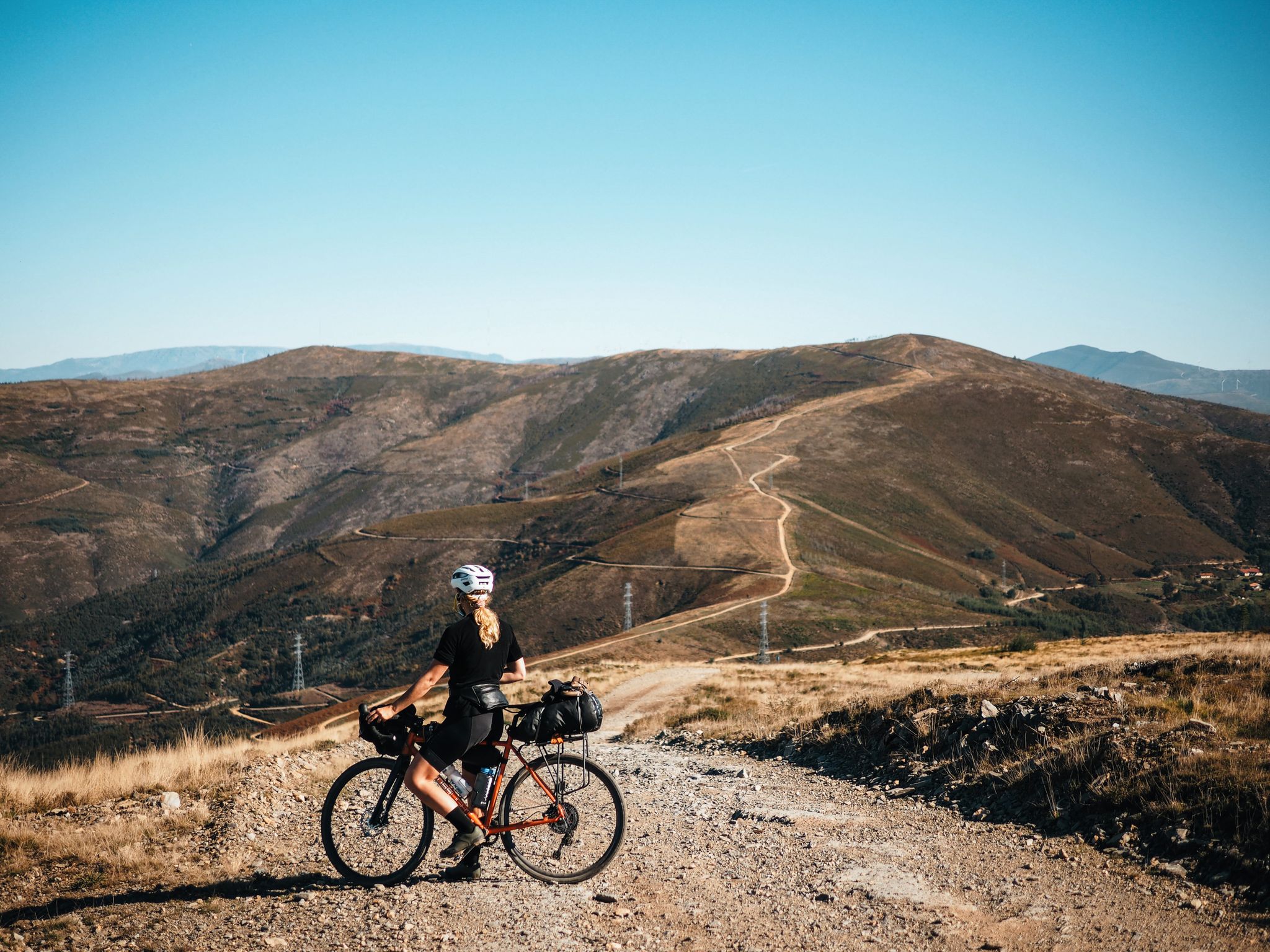
No traffic touring cycling routes around Seia are situated within Portugal's Serra da Estrela mountain range, offering diverse landscapes for cyclists. The region features significant elevation changes, deep valleys, and serene rivers, providing varied terrain for touring. Cyclists will encounter bucolic scenery, including vineyards and fields, alongside rugged mountain trails and well-paved roads. The area is characterized by its dramatic mountain backdrop and glacial valleys.
Best no traffic touring cycling routes around Seia
- The most popular no traffic touring cycling route is Blue Tour of Piódão — Historic Villages of Portugal, a 8.1 miles (13.1 km) trail that takes 1 hour 9 minutes to complete. This difficult route explores the historic villages of the region.
- Another top favourite among local touring cyclists is Bike loop from Mangualde, a difficult 28.7 miles (46.2 km) path. This route offers a challenging ride through varied landscapes.
- Local touring cyclists also love the Gouveia loop from Gouveia, a 11.4 miles (18.3 km) trail leading through the local countryside, often completed in about 1 hour 23 minutes.
- Touring cycling around Seia is defined by mountain ascents, glacial valleys, and historic villages. The network offers options for moderate to difficult ability levels, with no easy routes available.
- The routes in Seia are highly rated by the komoot community with an average score of 4.8 stars from over 10 reviews. More than 200 touring cyclists have used komoot to explore Seia's varied terrain.
Last updated: July 7, 2026
13.1km
01:09
490m
480m
Hard bike ride. Very good fitness required. Mostly paved surfaces. Suitable for all skill levels.
3.0
(1)
6
riders
46.2km
02:58
590m
590m
Hard bike ride. Very good fitness required. Mostly paved surfaces. Suitable for all skill levels.

Sign up for free
5.0
(1)
4
riders
18.3km
01:23
380m
380m
Moderate bike ride. Good fitness required. Mostly paved surfaces. Suitable for all skill levels.
1
riders
17.8km
01:42
400m
400m
Moderate bike ride. Good fitness required. Mostly paved surfaces. Suitable for all skill levels.
7
riders
52.4km
04:28
820m
820m
Hard bike ride. Very good fitness required. You may need to push your bike for some segments of this route.
Get access to more routes and recommendations from other explorers.
Sign up for free
Already have an account?
Our route recommendations are based on thousands of hikes, rides, and runs completed by other people on komoot.
Start today with a free account
Your next adventure awaits.
Login or Signup



Tips from the Community

The way is arduous, but the destination is worth it.
0
0

Covão dos Conchos is an artificial lagoon located in the Serra da Estrela Natural Park, Portugal, near the mountain village of Sabugueiro. Covão dos Conchos became famous for its bell-mouth spillway[1]. The spillway was built in 1955 to allow water to be transferred from the Ribeira das Naves River to Lagoa Comprida. It is part of the Serra da Estrela Hydroelectric System. This science fiction-style spillway became famous when photographs of the hole went viral on social media in 2016. Over the past 60 years, the growth of vegetation at the funnel's mouth has created extraordinary biodiversity and increased its ethereal allure. It is 4.6 meters high and 48 meters in circumference. The tunnel that collects the water is 1,519 meters long.
2
0
Covão dos Conchos is an artificial lagoon located in the Serra da Estrela Natural Park, Portugal, near the mountain village of Sabugueiro. Covão dos Conchos became famous for its bell-mouth spillway[1]. The spillway was built in 1955 to allow water to be transferred from the Ribeira das Naves River to Lagoa Comprida. It is part of the Serra da Estrela Hydroelectric System. This science fiction-style spillway became famous when photographs of the hole went viral on social media in 2016. Over the past 60 years, the growth of vegetation at the funnel's mouth has created extraordinary biodiversity and increased its ethereal allure. It is 4.6 meters high and 48 meters in circumference. The tunnel that collects the water is 1,519 meters long.
1
0

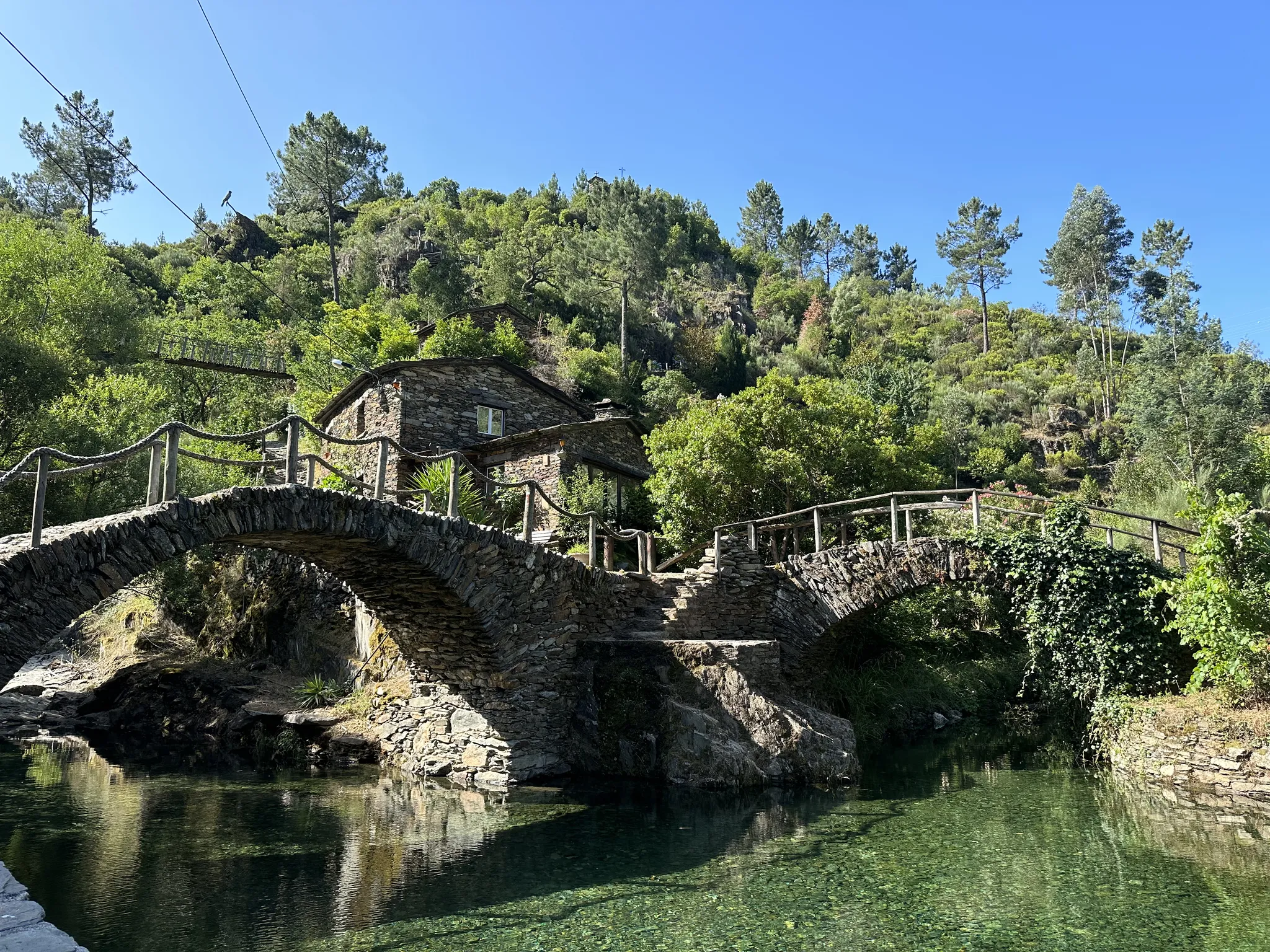
Both Piódão and Foz d'Égua are accessible by car. But it's worth hiking the trail that connects them. It takes about 45 minutes, downhill from Piódão to Foz d'Égua (remember that the return is a slight climb). It's worth crossing the restored suspension bridge in Foz d'Égua before returning to Piódão. The Foz d'Égua pool is a popular spot for a dip in its very cold waters. Dipping your feet in the icy water of the stream is always very pleasant after a hike, immersing yourself in nature. I did it and recommend it. 👍🥾
1
0

A beautiful nature trail, about 9 km round trip to Covão dos Conchos. Unfortunately, on August 15th, the water couldn't reach the hole and thus reveal the waterfalls. It's a reservoir, part of the Serra da Estrela hydroelectric system. A funnel-shaped drainage structure that allows water to flow from this body of water to Lagoa Comprida. The spillway was built in 1955 to divert water from Ribeira das Naves to Lagoa Comprida. Over the past 60 years, moss and foliage have grown over the mouth of the funnel, creating a captivating spectacle. It is 4.6 meters high and 4.8 meters in circumference. The tunnel that collects the water is 1,519 meters long. It's a stunning place to visit, not only for the combination of human intervention and nature, but also for the surrounding landscape.
2
1
This reservoir, part of the Serra da Estrela hydroelectric system, is a popular tourist destination. Part of this attraction comes from a funnel-shaped drainage structure that allows water to flow from this body of water to Lagoa Comprida. The spillway was built in 1955 to divert water from Ribeira das Naves to Lagoa Comprida. The conical spillway was little known until photos of the hole went viral in 2016. Over the past 60 years, moss and foliage have grown over the mouth of the funnel, creating a captivating spectacle. It is 4.6 meters high and 4.8 meters in circumference. The tunnel that collects the water is 1,519 meters long. It is a stunning place to visit, not only for the combination of human intervention on nature, but also for the surrounding landscape. The trail from Lagoa Comprida leads here is truly beautiful in any season. Bring windbreaker and water.
2
0
Located at an altitude of approximately 1,600 meters, Lagoa Comprida is the largest water reservoir in the Serra da Estrela, intended for hydroelectric generation. This natural lake lies in a wide depression of glacial origin, approximately one kilometer long, which fed the Covão Grande glacier. Numerous glacial scars are visible along its banks, making this lake one of the most interesting geomorphological sites in the Serra da Estrela. Construction on this lake began in 1911, and by 1914, it was already six meters high. Later, in 1965, it underwent heightening work that increased its height to 28 meters, currently boasting a storage capacity of approximately 14 cubic hectometers, flooding an area of approximately 80 hectares. Small streams of water flow into this lagoon, as well as water retained in the Covões dos Conchos and Covões do Meio and carried to this lagoon through underground tunnels.
6
1

The other side is actually private property, so no transposing
0
0
Frequently Asked Questions
How many no-traffic touring cycling routes are available in Seia?
There are 9 carefully curated no-traffic touring cycling routes around Seia, offering a variety of experiences. These routes range from moderate to difficult, ensuring options for different skill levels.
What is the best time of year for no-traffic touring cycling in Seia?
The Serra da Estrela region, where Seia is located, offers diverse conditions. Spring and autumn generally provide the most pleasant temperatures for cycling, avoiding the summer heat and potential winter snow at higher elevations. However, the region's diverse terrain means some routes are enjoyable year-round, especially those at lower altitudes.
Are there any family-friendly no-traffic touring cycling routes in Seia?
While many routes in Seia involve significant elevation changes due to the mountainous terrain, some moderate options might be suitable for families with older, experienced children. For example, the Gouveia loop from Gouveia is a moderate route that could be considered, though it still presents a challenge. The availability of e-bikes in the region can also make more demanding routes accessible to a wider range of cyclists.
Can I find circular no-traffic touring cycling routes around Seia?
Yes, several of the no-traffic touring cycling routes around Seia are circular, allowing you to start and end at the same point. Examples include the Bike loop from Mangualde, the Gouveia loop from Gouveia, and the Long Lake – Covão dos Conchos Trail loop from Albufeira de Lagoa Comprida.
What kind of terrain and elevation can I expect on these no-traffic routes?
The no-traffic touring cycling routes around Seia are primarily located within the Serra da Estrela mountain range, meaning you can expect significant elevation changes and diverse terrain. Routes often feature challenging climbs and scenic descents, traversing from rugged mountain trails to well-paved roads. For instance, the Casa das Obras Fountain – Afonso Costa Statue loop from Seia involves over 800 meters of elevation gain, showcasing the region's demanding yet rewarding landscape.
Are there any waterfalls or natural attractions along the no-traffic cycling routes?
Yes, the region around Seia is rich in natural beauty, including several waterfalls and natural attractions. While cycling, you might encounter highlights such as the Hidden cascade at Poço do Inferno or the Waterfall and natural swimming pool in Parque Natural da Serra da Estrela. These offer perfect spots for a refreshing break.
What are some notable landmarks or viewpoints I can discover while cycling in Seia?
The no-traffic routes often lead to breathtaking viewpoints and significant landmarks. You can cycle towards the majestic Torre (Serra da Estrela Summit), mainland Portugal's highest peak, or admire the unique rock formation of Cântaro Magro. Many routes also offer panoramic views of the Serra da Lousã and the surrounding valleys.
Are there any long-distance no-traffic touring cycling routes in the Seia area?
While the listed routes are generally day tours, some, like the Casa das Obras Fountain – Afonso Costa Statue loop from Seia (over 52 km), offer a substantial challenge. The region also connects to the GR 22 - Grande Rota das Aldeias Históricas, which provides options for longer, multi-day touring experiences through historic villages, often on low-traffic roads.
What do other touring cyclists enjoy most about no-traffic cycling in Seia?
The no-traffic touring cycling routes around Seia are highly rated by the komoot community, with an average score of 4.8 stars. Reviewers often praise the stunning mountain scenery, the tranquility of the routes away from vehicle traffic, and the rewarding challenge of the climbs. The opportunity to explore charming historic villages and natural features like glacial valleys is also frequently highlighted.
Are there any dedicated cycling facilities or services in Seia?
Yes, Seia is home to the MTB Center of Seia Aldeias de Montanha, which supports cyclists. Located in Santa Comba de Seia, it provides amenities like changing rooms, a self-service bike service station with tire washing and filling, and a mini workshop. This center also serves as a hub for a network of routes, connecting to other cycling centers and long-distance trails.
Can I explore historic villages on these no-traffic touring cycling routes?
Absolutely. Cycling through the Seia region offers a wonderful opportunity to explore charming historic villages. The Blue Tour of Piódão — Historic Villages of Portugal is a prime example, taking you through picturesque granite villages that showcase the strong local identity and cultural heritage of the area.
Most popular attractions around Seia

Get inspired with the komoot mobile app


Explore more
Browse the best Cycling routes in other regions.
